

Lucie Alden
Lucie Alden is a Ph.D Candidate in English at the University of Virginia where she specializes in early modern literature, book history,…


Economics
45 items in this collection
The following works were written to explain economic ideas to a popular audience. They span a time frame from the late 1820s, when the expansion of the franchise in Britain required an electorate better informed on economic matters, to the present. The title for this Topic comes from one of the earliest practitioners, the ex-British naval officer Thomas Hodgskin, who delivered a series of 4 lectures in 1827 entitled Popular Political Economy at the London Mechanics Institution (a working class organization which was formed to further the education of its members).
In this collection
31 titles, earliest first.
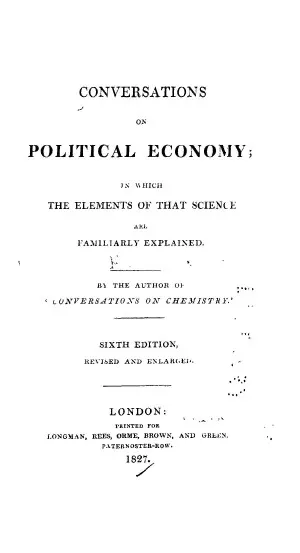
Jane Haldimand Marcet · 1816
One of Marcet’s earlier efforts at popularizing free market economic ideas for ordinary working people. It first appeared in 1816, was enlarged an reprinted in 1827, going through 6 editions (giving some indication of…
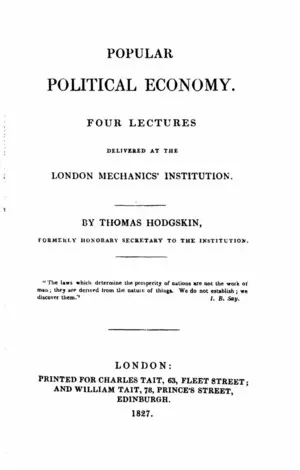
Thomas Hodgskin · 1827
Thomas Hodgskin, an officer in the British Navy who later worked for The Economist, was one of the earliest popularizers of economics for audiences of non-economists. He gave lectures on free trade, the corn laws, and…
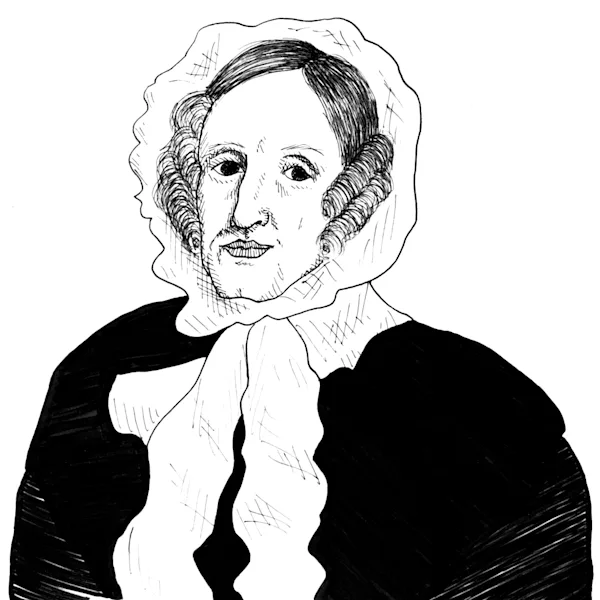
Jane Haldimand Marcet · 1831
These economic fairy tales and parables published by Jane Marcet in the 1830s charm with their light-hearted wit. IMarcet illustrates such topics as the economics of wages and income distribution. The John Hopkins…
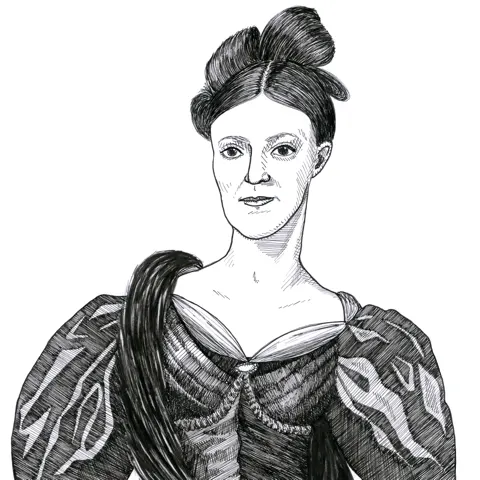
Harriet Martineau · 1832
Martineau writes short “tales” to show ordinary readers how the free market operates.
Harriet Martineau · 1832
The first volume of 9 in which Martineau writes short “tales” to show ordinary readers how the free market operates.
Harriet Martineau · 1832
Vol. 2 of 9 in which Martineau writes short “tales” to show ordinary readers how the free market operates. This volume contains her well known tale “Demerara” about slave labour.
Harriet Martineau · 1832
Vol. 3 of 9 in which Martineau writes short “tales” to show ordinary readers how the free market operates.
Jane Haldimand Marcet · 1833
Marcet was self-taught in many fields and became a successful popularizer of several demanding fields (such as chemistry and economics) in spite of being discriminated against as a women. This book is one of her works…
Harriet Martineau · 1834
Vol. 4 of 9 in which Martineau writes short “tales” to show ordinary readers how the free market operates.
Harriet Martineau · 1834
Vol. 5 of 9 in which Martineau writes short “tales” to show ordinary readers how the free market operates.
Harriet Martineau · 1834
Vol. 6 of 9 in which Martineau writes short “tales” to show ordinary readers how the free market operates.
Harriet Martineau · 1834
Vol. 7 of 9 in which Martineau writes short “tales” to show ordinary readers how the free market operates.
Harriet Martineau · 1834
Vol. 8 of 9 in which Martineau writes short “tales” to show ordinary readers how the free market operates.
Harriet Martineau · 1834
Vol. 9 of 9 in which Martineau writes short “tales” to show ordinary readers how the free market operates.
Harriet Martineau · 1834
Martineau continues her popularization of economic ideas which began with the Illustrations of Political Economy in this series of “Tales” addressed to the working class.
Frédéric Bastiat · 1850
This is the translation by the Foundation for Economic Education of Bastiat’s longest and best known work Economic Harmonies. A new translation of this work by Liberty Fund is in progress. See the Summary of the Bastiat…
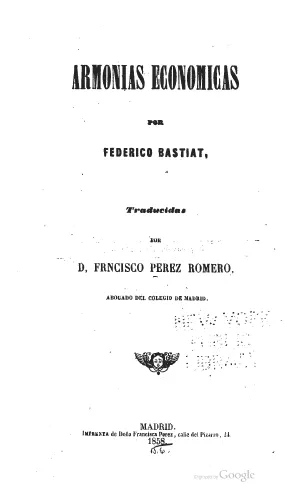
Frédéric Bastiat · 1858
A Spanish translation of Bastiat’s best known work on “economic harmonies” in which he explains in simple terms how the free market operates to everybody’s benefit.
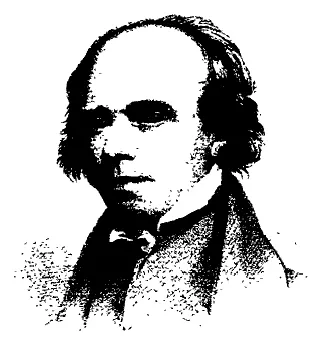
Samuel Smiles · 1859
An early Victorian self-help book that combines Victorian morality with sound free market ideas into moral tales showing the benefits of thrift, hard work, education, perseverance, and a sound character. Smiles drew…
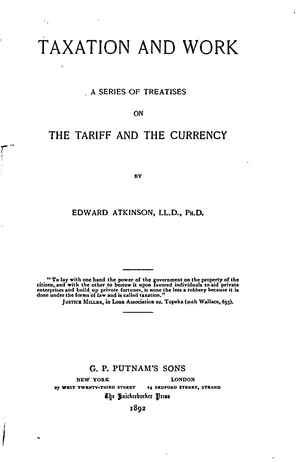
Edward Atkinson · 1892
Atkinson applies the free trade ideas of Bastiat and Cobden to the American situation. He criticizes the tradition of Hamilton, debunks the idea that protection improves the economic condition of ordinary workers,…
Leland B. Yeager · 1954
A brief and succinct defense of free trade.
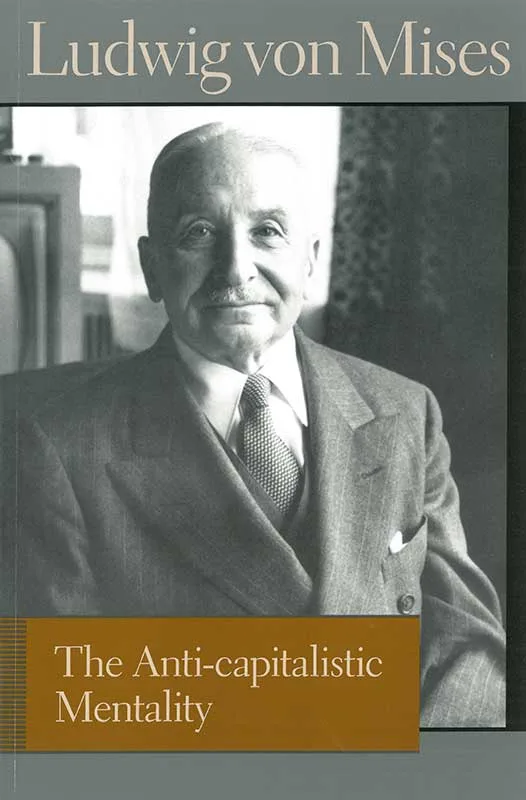
Ludwig von Mises · 1956
In The Anti-capitalistic Mentality, Ludwig von Mises explains the causes of the irrational fear and hatred many intellectuals and others feel for capitalism. Written during the heyday of twentieth-century socialism,…

Leonard E. Read · 1958
A charming story which explains how something as apparently simple as a pencil is in fact the product of a very complex economic process based upon the division of labor, international trade, and comparative advantage.
Benjamin A. Rogge · 1979
The nineteen essays in this volume explore the philosophy of freedom, the nature of economics, the business system, labor markets, money and inflation, the problems of cities, education, and what must be done to ensure…
Frank Chodorov · 1980
A collection of Chodorov’s essays selected from The Freeman and Human Events and other publications.
David R. Henderson · 1993
The Fortune Encyclopedia of Economics was published in 1993. It went online in 2003 as The Concise Encyclopedia of Economics. It contains articles by leading economists on basic concepts of economics, economic systems…
Frédéric Bastiat · 1995
The Foundation for Economic Education translated some of Bastiat’s most famous pamphlets, written as part of his opposition to the growth of socialism in France in the 1840s. The volume contains “What is Seen and What…
Frédéric Bastiat · 1996
The Foundation for Economic Education's translation of Bastiat’s series of short essays in which he tries to correct common misunderstandings about the free market.
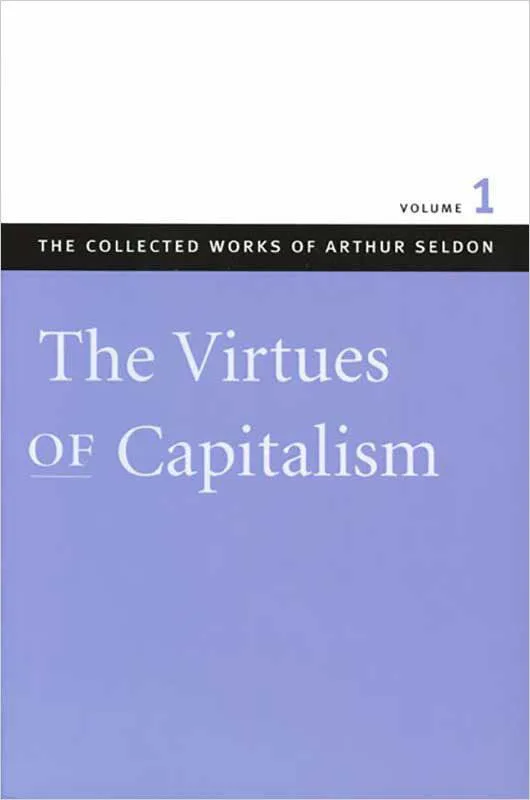
Arthur Seldon · 2004
The Virtues of Capitalism, lays the foundation of Seldon’s views and theories of capitalism and its alternatives. The first part, Corrigible Capitalism; Incorrigible Socialism, was first published in 1980. It explains…
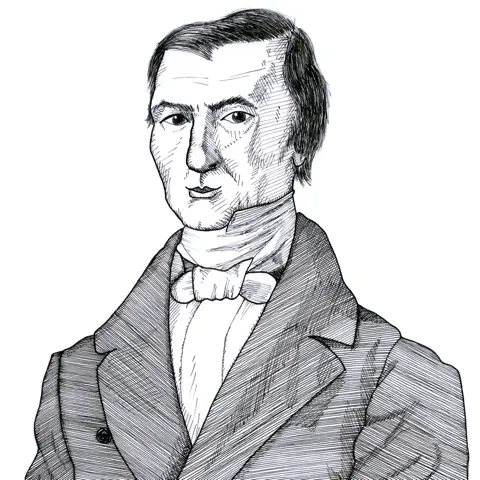
Frédéric Bastiat · 2013
The Best of Bastiat (BOB) is a collection of some of the best material in Liberty Fund’s 6 volume edition of The Collected Works of Frédéric Bastiat (2011-). They are chapter length extracts and have been edited as…

Frédéric Bastiat · 2013
The Best of Bastiat (BOB) is a collection of some of the best material in Liberty Fund’s 6 volume edition of The Collected Works of Frédéric Bastiat (2011-). They are chapter length extracts and have been edited as…
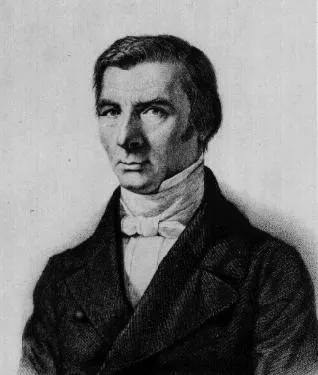
Frédéric Bastiat · 2013
The Best of Bastiat (BOB) is a collection of some of the best material in Liberty Fund’s 6 volume edition of The Collected Works of Frédéric Bastiat (2011-). They are chapter length extracts and have been edited as…
In this collection
10 people central to Popular Political Economy.
Lucie Alden is a Ph.D Candidate in English at the University of Virginia where she specializes in early modern literature, book history,…

1887–1966
Chodorov was an advocate of the free market, individualism, and peace. He began as a supporter of Henry George and edited the Georgeist…

b. 1951
Henry C. Clark has been a visiting professor in the Political Economy Project at Dartmouth College since 2014. Before then, he taught at…

1763–1835
William Cobbett (1763-1835) was an idiosyncratic English Radical who had a large influence on ordinary working people with his many…

1814–1889
Charles Mackay was a famous song-writer and poet, journal editor and colleague of Charles Dickens, and a reporter whose joy was to take the…

Sandra J. Peart is dean of the University of Richmond’s Jepson School of Leadership Studies, E. Claiborne Robins Distinguished Professor,…
1823–1890
Rogers was a member of parliament, a writer of popular economics, and an editor of the Speeches of Richard Cobden.

1812–1904
Samuel Smiles (1812-1904) was a Scot who originally trained as a doctor before turning to journalism full-time. Smiles wrote for a popular…

Josh T. Smith is the Immigration Policy Director at the Center for Growth and Opportunity at Utah State University. You can follow him…

1840–1910
William Graham Sumner (1840-1910) was one of the founding father’s of American sociology. Although he trained as an Episcopalian clergyman,…
Passages on this subject, chosen by OLL editors.
Property, made manifest by labor, participates in the rights of the person whose emanation it is; like him, it is inviolable so long as it does not extend so far as to come into collision with another right; like him, it is individual, because it has its origin in the independence of the individual, and because, when several persons have co-operated in its formation, the latest possessor has purchased with a value, the fruit of his personal labor, the work of all the fellow-laborers who have preceded him; this is what is usually the case with manufactured articles. When property has passed, by sale or by inheritance, from one hand to another, its conditions have not changed; it is still the fruit of human liberty manifested by labor, and the holder has the same rights as the producer who took possession of it by right.
But this theory of our government is wholly different from the practical fact. The fact is that the government, like a highwayman, says to a man: Your money, or your life. And many, if not most, taxes are paid under the compulsion of that threat.
The government does not, indeed, waylay a man in a lonely place, spring upon him from the road side, and, holding a pistol to his head, proceed to rifle his pockets. But the robbery is none the less a robbery on that account; and it is far more dastardly and shameful.
The highwayman takes solely upon himself the responsibility, danger, and crime of his own act. He does not pretend that he has any rightful claim to your money, or that he intends to use it for your own benefit. He does not pretend to be anything but a robber. He has not acquired impudence enough to profess to be merely a “protector,” and that he takes men’s money against their will, merely to enable him to “protect” those infatuated travellers, who feel perfectly able to protect themselves, or do not appreciate his peculiar system of protection. He is too sensible a man to make such professions as these. Furthermore, having taken your money, he leaves you, as you wish him to do. He does not persist in following you on the road, against your will; assuming to be your rightful “sovereign,” on account of the “protection” he affords you. He does not keep “protecting” you, by commanding you to bow down and serve him; by requiring you to do this, and forbidding you to do that; by robbing you of more money as often as he finds it for his interest or pleasure to do so; and by branding you as a rebel, a traitor, and an enemy to your country, and shooting you down without mercy, if you dispute his authority, or resist his demands. He is too much of a gentleman to be guilty of such impostures, and insults, and villanies as these. In short, he does not, in addition to robbing you, attempt to make you either his dupe or his slave.
The only instance of intermeddling, on the part of the civil authorities, with matters which, being of a religious character, properly belong to the religious guides of the people, is the proclamation which it is the custom for the Governor of each state annually to issue, appointing a day of general thanksgiving, or a day of general fasting and prayer. We regret that even this single exception should exist to that rule of entire separation of the affairs of state from those of the church, the observance of which in all other respects has been followed by the happiest results. It is to the source of the proclamation, not to its purpose, that we chiefly object. The recommending a day of thanksgiving is not properly any part of the duty of a political Chief Magistrate: it belongs, in its nature, to the heads of the church, not to the head of the state.
Everywhere a powerful hand is divined which has moulded matter, and an intelligent will which has adapted it, following a uniform plan, to the satisfaction of the wants of one same being. Nature has recognized her master, and man feels that he is at home in nature. Nature has been appropriated by him for his use; she has become his own; she is his property.
This property is legitimate; it constitutes a right as sacred for man as is the free exercise of his faculties. It is his because it has come entirely from himself and in no way anything but an emanation from his being. Before him, there was scarcely anything but matter; since him, and by him, there is interchangeable wealth, that is to say, articles having acquired a value by some industry, by manufacture, by handling, by extraction, or simply by transportation. ... The producer has left a fragment of his own person in the thing which has thus become valuable, and may hence be regarded as a prolongation of the faculties of man acting upon external nature. As a free being be belongs to himself; now, the cause, that is to say, the productive force, is himself; the effect, that is to say, the wealth produced, is still himself.
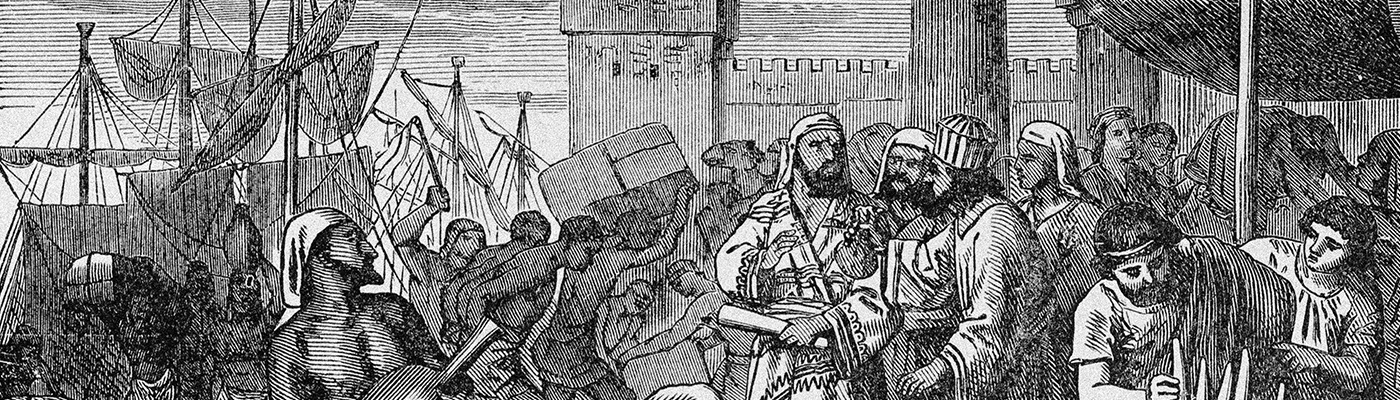
Economic theory. Demography
473 titles · 88 publications · 293 people

Economics
30 titles · 7 publications · 32 people
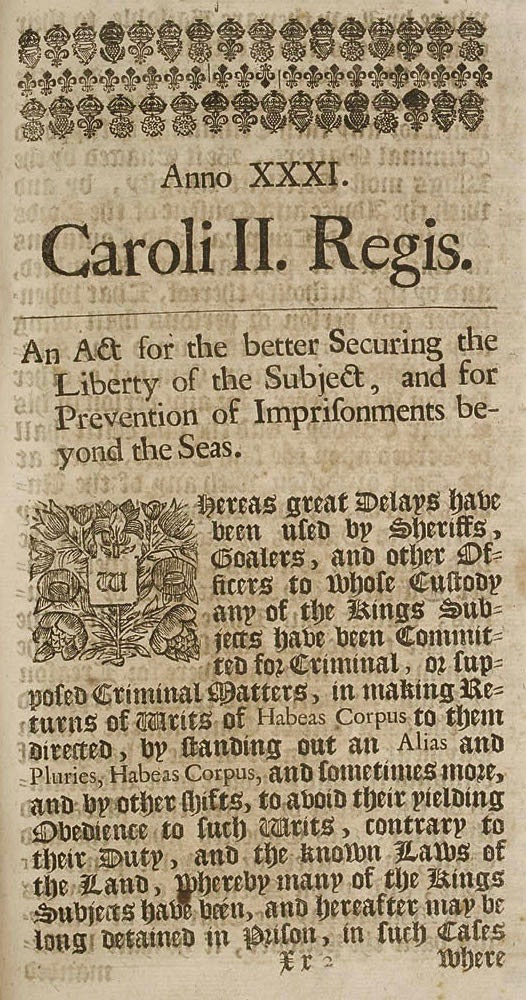
Economics
13 titles · 24 people · 8 quotes

Economics
47 titles · 1 publication · 51 people
Economics
36 titles · 8 publications · 46 people
Economics
11 titles · 3 people