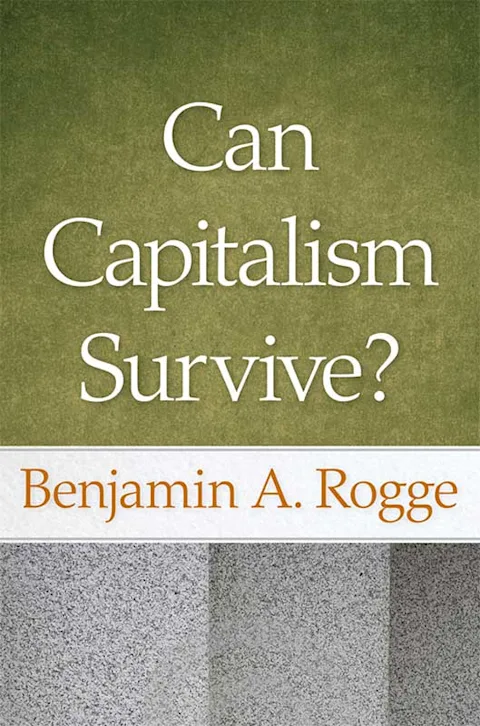
Can Capitalism Survive?
- Benjamin A. Rogge(author)
The nineteen essays in this volume explore the philosophy of freedom, the nature of economics, the business system, labor markets, money and inflation, the problems of cities, education, and what must be done to ensure the survival of free institutions and capitalism.
About This Edition
Citation
Can Capitalism Survive? (Indianapolis: Liberty Fund, 1979). For a reflection on the enduring relevance of Rogge's work, see the Liberty Classic [Can Capitalism Survive? Ben Rogge on Capitalism's Future](https://www.econlib.org/library/Columns/y2019/LeeRogge.html), by Dwight R. Lee.
Rogge, Benjamin A. Can Capitalism Survive?. Liberty Fund, 1979. Online Library of Liberty, https://oll.libertyfund.org/titles/rogge-can-capitalism-survive.
Rogge, B. A. (1979). Can Capitalism Survive?. Liberty Fund. https://oll.libertyfund.org/titles/rogge-can-capitalism-survive
@book{rogge1979survive,
  author = {Benjamin A. Rogge},
  title = {Can Capitalism Survive?},
  publisher = {Liberty Fund},
  address = {Indianapolis},
  year = {1979},
  url = {https://oll.libertyfund.org/titles/rogge-can-capitalism-survive},
  note = {Online Library of Liberty}
}TY - BOOK AU - Rogge, Benjamin A. TI - Can Capitalism Survive? PY - 1979 CY - Indianapolis PB - Liberty Fund UR - https://oll.libertyfund.org/titles/rogge-can-capitalism-survive DB - Online Library of Liberty ER -
Copyright
The copyright to this edition, in both print and electronic forms, is held by Liberty Fund, Inc.

About the author
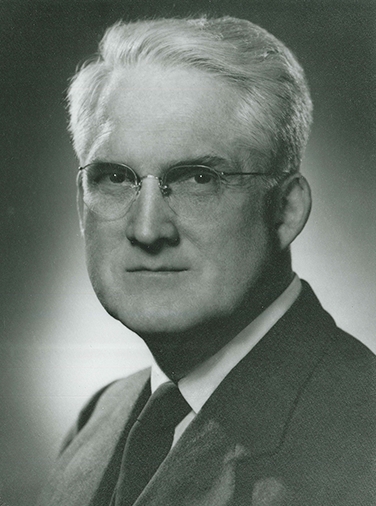
Benjamin A. Rogge 1920–1980
Benjamin A. Rogge (1920-1980) was Distinguished Professor of Political Economy at Wabash College, Crawfordsville, Indiana. He held degrees from Hastings College (A.B.), the University of Nebraska (M.A.), and Northwestern University (Ph.D.), and was a member of both the American Economic Association and the Mont Pelerin Society.
Related People
Joseph Schumpeter
Author
The title of Rogge's volume indicates it is, in part, a response to Schumpeter's thesis in "Capitalism, Socialism, and Democracy," which sugegsts the inevitable demise of capitalism.
Adam Smith
Author
Rogge's first chapter focuse on Smith, recalling his main arguments both in historical context and in terms of their relevance for today.
The founder of Liberty Fund and a close friend of Rogge. Goodrich served as a Trustee of Wabash College, Rogge's home, for many years, and created the Goodrich Seminar Room within its library.


Critical Responses
Works that answer or challenge this text.
- Liberty Classic
Ben Rogge on Capitalism's Future
Dwight R. LeeOn Rogge's response to Schumpeter
Visit site ↗If indeed the masses benefit so much from capitalism, the casual reader of Rogge’s book might conclude that the political influence of those masses in favor of capitalism would cancel out the antagonism of the relatively few businessmen, academics, and bureaucrats. If they keep reading, however, Rogge explains that “the masses of the people [lack] any real understanding of the system that has heaped riches upon them or any instinct to defend from attack the central figure in that system, the businessman.”
 Interactive
The Goodrich Seminar Room
Explore it today.
Visit site ↗“It is hoped that the individual who enters this room will immediately feel the humbling presence of the centuries of written communication portrayed by the walls.”
~Pierre F. Goodrich
Connected Readings
What to read next.
 Book
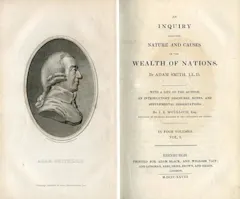
An Inquiry Into the Nature and Causes of the Wealth of Nations (Cannan ed.), vol. 2
Adam SmithThe inspiration of Smith.
View title >Smith's magnum opus in political economy, and a touchstone for the work of Rogge two centuries later.
- Liberty Classic
Restoring the Tools of Liberal Learning
Timothy FullerEducation in a Free Society
Visit site ↗In Liberty Fund's first published book, Education in a Free Society, liberal learning is shown to be the foundation of liberty. The volume features an essay co-authored by Rogge and Goodrich in which they outline their higher education ideal
More in Economic theory. Demography
See all >The Collected Works of Frédéric Bastiat. Vol. 2: The Law, The State, and Other Political Writings, 1843-1850
Frédéric BastiatCost and Choice: An Inquiry in Economic Theory, Vol. 6 of the Collected Works
James M. BuchananAn Essay on the Principle of Population, vol. 1 [1826, 6th ed.]
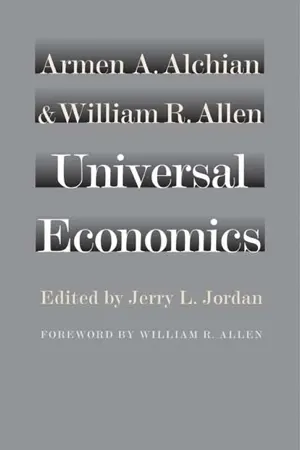
Thomas Robert MalthusUniversal Economics
Armen A. AlchianAn Essay on the Principle of Population [1798, 1st ed.]
Thomas Robert Malthus“The Use of Knowledge in Society” (1945)
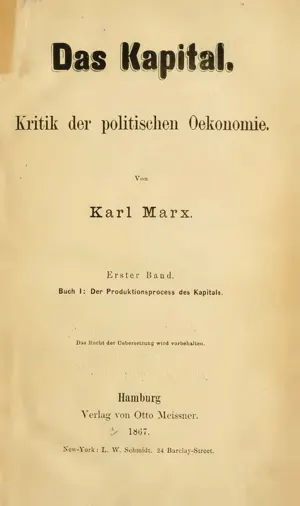
Friedrich August von HayekDas Kapital. Kritik der politischen Oekonomie. Buch 1 (1867)
Karl MarxDas Kapital. Kritik der politischen Ökonomie. Buch III, zweiter Theil (1894)
Karl MarxDas Kapital. Kritik der politischen Ökonomie. Buch III, erster Theil (1894)
Karl Marx