

Bernard Mandeville
1670–1733 · 3 titles


Economics
45 items in this collection
The idea of a “spontaneous order”, i.e. an order which emerges as result of the voluntary activities of individuals and not one which is created by a government, is a key idea in the classical liberal and free market tradition. The idea emerged in the medieval period, but it is closely associated with a number of figures who wrote during the 18th century, in particular a group of writers associated with the Scottish Enlightenment - Bernard Mandeville, David Hume, Adam Ferguson, and Adam Smith.
In this collection
13 titles, earliest first.
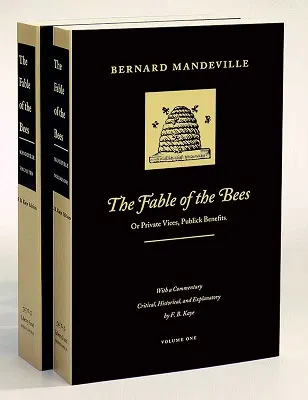
Bernard Mandeville · 1732
Mandeville is a witty satirist who used a poem to make the profound economic point that “private vices” (or self-interest) lead to “publick benefits” (such as orderly social structures like law, language, and markets).
Bernard Mandeville · 1732
Mandeville is a witty satirist who used a poem to make the profound economic point that “private vices” (or self-interest) lead to “publick benefits” (such as orderly social structures like law, language, and markets).
Bernard Mandeville · 1732
Mandeville is a witty satirist who used a poem to make the profound economic point that “private vices” (or self-interest) lead to “publick benefits” (such as orderly social structures like law, language, and markets).
David Hume · 1739
Hume’s first major work of philosophy was published in 1739 when he was just 28 years old. It is made up of three books entitled “Of the Understanding”, “Of the Passions”, and “Of Morals”. In the book he uses his…
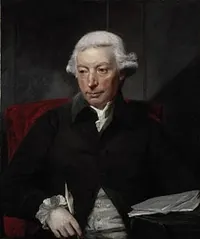
Adam Ferguson · 1767
A pioneering work of the Scottish Enlightenment in the field of “philosophical history”, or what we would today call sociology. It deals with the social, political, economic, intellectual, and legal changes which…
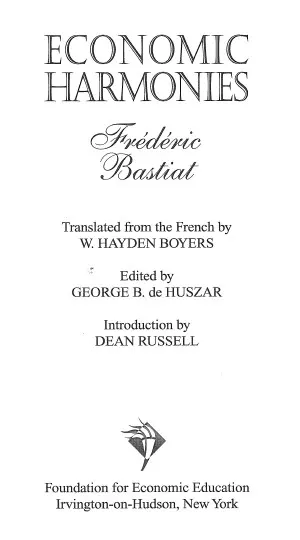
Frédéric Bastiat · 1850
This is the translation by the Foundation for Economic Education of Bastiat’s longest and best known work Economic Harmonies. A new translation of this work by Liberty Fund is in progress. See the Summary of the Bastiat…
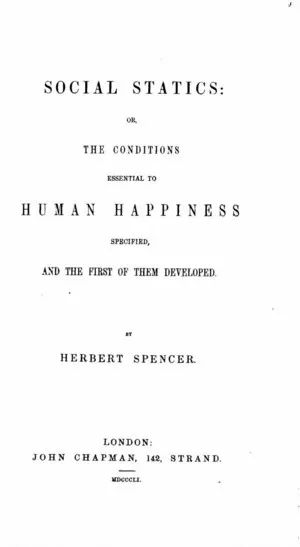
Herbert Spencer · 1851
Spencer’s first major work of political philosophy in which he attempts to lay the basis for a limited state on a rigorous development of a doctrine of natural rights. He begins with a defense of his “first principle”…
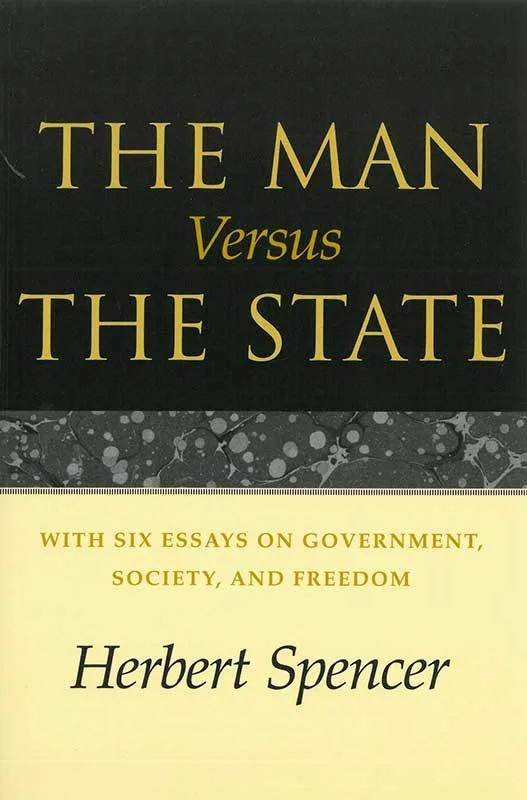
Herbert Spencer · 1884
This volume contains the four essays that Spencer published as The Man Versus the State in 1884 as well as five essays added by later publishers. In addition, it provides “The Proper Sphere of Government,” an important…
Gustave de Molinari · 1899
In this vision of a future society, the Belgian laissez-faire economist Molinari suggests how many, if not most, public goods could be provided by the free market or by radically decentralized local governments.
Bruno Leoni · 1961
The greatest obstacle to rule of law in our time, contends Bruno Leoni, is the problem of overlegislation. In modern democratic societies, legislative bodies are increasingly usurping functions that were and should be…
Israel M. Kirzner · 1976
A volume in the collection Studies in Economic Theory, first published by the Institute for Humane Studies. This is a collection of papers given at a conference on Austrian economics in June 1974. They cover the…
Gerald P. O’Driscoll · 1977
A full-length assessment of the contributions to economics of Friedrich Hayek (Nobel Prize 1974). Hayek is unique for a number of reasons: because of his emphasis on the function of institutions in coordinating the…
Ludwig M. Lachmann · 1978
A collection of papers which explores methodoogy, econometrics, social cost, monopoly theory, the supply of money, interest theory, and macroeconomics.
In this collection
Authors, editors and translators of these titles, most titles first.
1670–1733 · 3 titles
1892–1930 · 3 titles

b. 1947 · 3 titles

1820–1903 · 2 titles

1906–1990 · 2 titles

1926–1995 · 2 titles

1723–1816 · 1 title
b. 1962 · 1 title

1913–1967 · 1 title

1711–1776 · 1 title

1 title

b. 1946 · 1 title

1801–1850 · 1 title

1822–1912 · 1 title

1899–1992 · 1 title
b. 1919 · 1 title

1819–1912 · 1 title

1824–1907 · 1 title

b. 1930 · 1 title
b. 1944 · 1 title
1860–1951 · 1 title
b. 1913 · 1 title
1877–1925 · 1 title
1 title
Passages on this subject, chosen by OLL editors.
The man whose public spirit is prompted altogether by humanity and benevolence, will respect the established powers and privileges even of individuals, and still more those of the great orders and societies, into which the state is divided. Though he should consider some of them as in some measure abusive, he will content himself with moderating what he often cannot annihilate without great violence. When he cannot conquer the rooted prejudices of the people by reason and persuasion, he will not attempt to subdue them by force; but will religiously observe what, by Cicero, is justly called the divine maxim of Plato, never to use violence to his country no more than to his parents. He will accommodate, as well as he can, his public arrangements to the confirmed habits and prejudices of the people; and will remedy, as well as he can, the inconveniencies which may flow from the want of those regulations which the people are averse to submit to. When he cannot establish the right, he will not disdain to ameliorate the wrong; but like Solon, when he cannot establish the best system of laws, he will try to establish the best that the people can bear. (TMS VI.ii.2.16)
THEN leave Complaints: Fools only strive
To make a Great an Honest Hive
T’ enjoy the World’s Conveniencies,
Be fam’d in War, yet live in Ease,
Without great Vices, is a vain
Eutopia seated in the Brain.
Fraud, Luxury and Pride must live,
While we the Benefits receive:
Hunger’s a dreadful Plague, no doubt,
Yet who digests or thrives without?
Do we not owe the Growth of Wine
To the dry shabby crooked
Which, while its Shoots neglected stood,
Chok’d other Plants, and ran to Wood;
But blest us with its noble Fruit,
As soon as it was ty’d and cut:
So Vice is beneficial found,
When it’s by Justice lopt and bound;
Nay, where the People would be great,
As necessary to the State,
As Hunger is to make ’em eat.
Bare Virtue can’t make Nations live
In Splendor; they, that would revive
A Golden Age, must be as free,
For Acorns, as for Honesty.
A Spacious Hive well stockt with Bees,
That liv’d in Luxury and Ease;
And yet as fam’d for Laws and Arms,
As yielding large and early Swarms;
Was counted the great Nursery
Of Sciences and Industry.
No Bees had better Government,
More Fickleness, or less Content:
They were not Slaves to Tyranny,
Nor rul’d by wild Democracy;
But Kings, that could not wrong, because
Their Power was circumscrib’d by Laws.
It is interesting to contemplate a tangled bank, clothed with many plants of many kinds, with birds singing on the bushes, with various insects flitting about, and with worms crawling through the damp earth, and to reflect that these elaborately constructed forms, so different from each other, and dependent upon each other in so complex a manner, have all been produced by laws acting around us... Thus, from the war of nature, from famine and death, the most exalted object which we are capable of conceiving, namely, the production of the higher animals, directly follows. There is grandeur in this view of life, with its several powers, having been originally breathed by the Creator into a few forms or into one; and that, whilst this planet has gone cycling on according to the fixed law of gravity, from so simple a beginning endless forms most beautiful and most wonderful have been, and are being evolved.
That division of labor on which our economic system rests is the best example of such a daily renewed order. In the order created by the market, the participants are constantly induced to respond to events of which they do not directly know, in a way which secures a continuous flow of production, a coordination of the quantities of the different things so that the even flow is not interrupted and everything is produced at least as cheaply as anybody can still provide the last quantities for which others are prepared to pay the costs. That it is an order which consists of the adaptation to the multitudinous circumstances which no single person can know completely is one reason why its existence is not perceived by simple inspection. It is embodied in such relations as those between prices and costs of commodities and the corresponding distribution of resources; and we can confirm that such an order in fact exists only after we have reconstructed its principles in our minds. (FROM: Kinds of Order in Society) - F. A. Hayek
Here we reach the nub of the problem of why people in some societies behave mostly well, while in others they so often misbehave. Law even at its best controls only a small part of human behavior. At its worst, it aspires to control a great part, but largely fails. Vastly more important than the legal system is the much older and more deeply rooted set of unwritten rules (technically, spontaneous conventions) barring and sanctioning torts, nuisances, and incivilities that together define what each of us is free to do and by the same token what no one is free to do to us. If these rules are kept, everyone is free, property is safe, and every two-person transaction is mutually beneficial (though third persons may be exposed to negative externalities—for the rules are no bar to competition or the general rough-and-tumble of ordinary life).
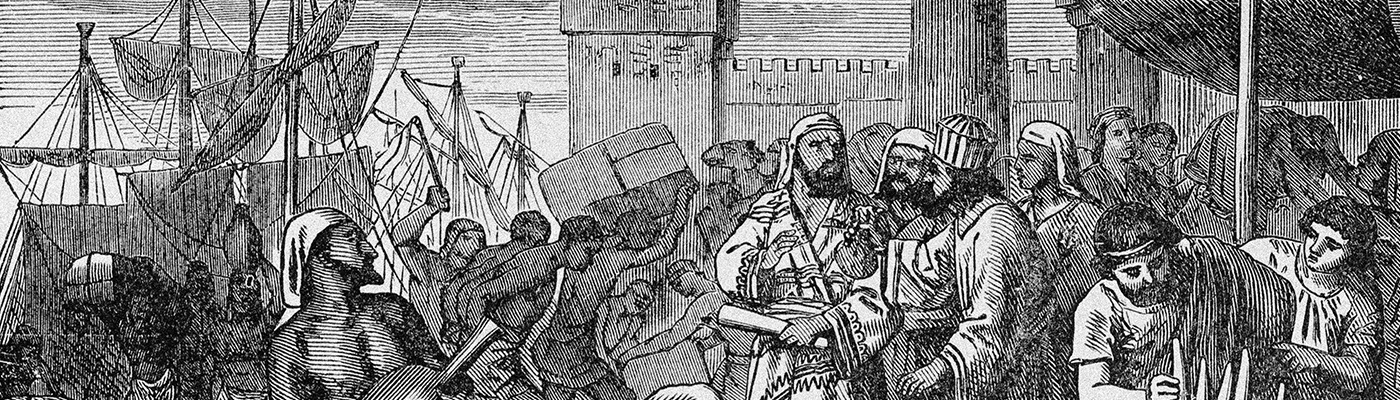
What a Bustle is there to be made in several Parts of the World, before a fine Scarlet or crimson Cloth can be produced, what Multiplicity of Trades and Artificers must be employ’d! Not only such as are obvious, as Wool-combers, Spinners, the Weaver, the Cloth-worker, the Scourer, the Dyer, the Setter, the Drawer and the Packer; but others that are more remote and might seem foreign to it; as the Millwright, the Pewterer and the Chymist, which yet are all necessary as well as a great Number of other Handicrafts to have the Tools, Utensils and other Implements belonging to the Trades already named: But all these things are done at home, and may be perform’d without extraordinary Fatigue or Danger; the most frightful Prospect is left behind, when we reflect on the Toil and Hazard that are to be undergone abroad, the vast Seas we are to go over, the different Climates we are to endure, and the several Nations we must be obliged to for their Assistance.
The modern industrial system is a great (example of) social co-operation. It is automatic and instinctive in its operation. The adjustments of the organs take place naturally. The parties are held together by impersonal force—supply and demand. They may never see each other; they may be separated by half the circumference of the globe. Their co-operation in the social effort is combined and distributed again by financial machinery, and the rights and interests are measured and satisfied without any special treaty or convention at all. All this goes on so smoothly and naturally that we forget to notice it. We think that it costs nothing—does itself, as it were. The truth is, that this great co-operative effort is one of the great products of civilization—one of its costliest products and highest refinements …
As every individual, therefore, endeavours as much as he can both to employ his capital in the support of domestick industry, and so to direct that industry that its produce may be of the greatest value; every individual necessarily labours to render the annual revenue of the society as great as he can. He generally, indeed, neither intends to promote the publick interest, nor knows how much he is promoting it. By preferring the support of domestick to that of foreign industry, he intends only his own security; and by directing that industry in such a manner as its produce may be of the greatest value, he intends only his own gain, and he is in this, as in many other cases, led by an invisible hand to promote an end which was no part of his intention. Nor is it always the worse for the society that it was no part of it. By pursuing his own interest he frequently promotes that of the society more effectually than when he really intends to promote it. I have never known much good done by those who affected to trade for the publick good. It is an affectation, indeed, not very common among merchants, and very few words need be employed in dissuading them from it.
Adam Ferguson, in his _Essay on the History of Civil Society used the phrase (later taken up by Hayek) "the result of human action, but not the execution of any human design":
Men, in general, are sufficiently disposed to occupy themselves in forming projects and schemes: But he who would scheme and project for others, will find an opponent in every person who is disposed to scheme for himself. Like the winds that come we know not whence, and blow whithersoever they list, the forms of society are derived from an obscure and distant origin; they arise, long before the date of philosophy, from the instincts, not from the speculations of men. The crowd of mankind, are directed in their establishments and measures, by the circumstances in which they are placed; and seldom are turned from their way, to follow the plan of any single projector.Every step and every movement of the multitude, even in what are termed enlightened ages, are made with equal blindness to the future; and nations stumble upon establishments, which are indeed the result of human action, but not the execution of any human design.
In the 19th century the idea was pursued by Frederic Bastiat and Gustave de Molinari in France, and Herbert Spencer in England. Later in the 19th century the Austrian school of economics made the idea central to their reformulation of economic theory after 1871. Carl Menger, Ludwig von Mises, and Friedrich Hayek are the key figures in this development.
Related Resources
* Norman Barry, "The Tradition of Spontaneous Order"
Economic theory. Demography
473 titles · 88 publications · 293 people
Economics
36 titles · 8 publications · 46 people
Economics
31 titles · 24 people · 4 quotes

Economics
30 titles · 7 publications · 32 people

Economics
47 titles · 1 publication · 51 people
Economics
11 titles · 3 people