The Online Library of Liberty

Search the library

Press Enter to see all results. Esc closes.

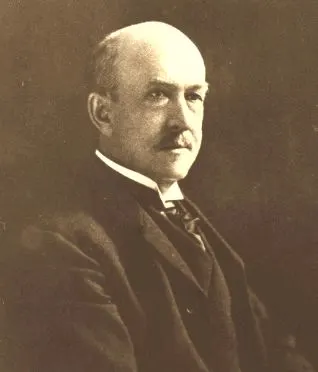
Portrait of William Graham Sumner

Author

William Graham Sumner

1840–1910

See more works by Sumner ›8 titles in the library

Works by William Graham Sumner

8 titles in the library
Quotes from William Graham Sumner

11 quotes from the library

  • War and Other Essays
    Jobbery is any scheme which aims to gain, not by the legitimate fruits of industry and enterprise, but by extorting from somebody a part of his product under guise of some pretended industrial undertaking. Of course it is only a modification when the undertaking in question has some legitimate character, but the occasion is used to graft upon it devices for obtaining what has not been earned. Jobbery is the vice of plutocracy, and it is the especial form under which plutocracy corrupts a democratic and republican form of government. The United States is deeply afflicted with it, and the problem of civil liberty here is to conquer it.
  • Protectionism: the -ism which teaches that waste makes wealth
    If a state well performed its functions of providing peace, order and security, as conditions under which the people could live and work, it would be the proudest proof of its triumphant success that it had nothing to do — that all went so smoothly that it had only to look on and was never called to interfere; just as it is the test of a good business man that his business runs on smoothly and prosperously while he is not harassed or hurried. The people who think that it is proof of enterprise to meddle and “fuss” may believe that a good state will constantly interfere and regulate, and they may regard the other type of state as “non-government.”
  • War and Other Essays
    The Americans have been committed from the outset to the doctrine that all men are equal. We have elevated it into an absolute doctrine as a part of the theory of our social and political fabric. It has always been a domestic dogma in spite of its absolute form, and as a domestic dogma it has always stood in glaring contradiction to the facts about Indians and negroes and to our legislation about Chinamen. In its absolute form it must, of course, apply to Kanakas, Malays, Tagals, and Chinese just as much as to Yankees, Germans, and Irish. It is an astonishing event that we have lived to see American arms carry this domestic dogma out where it must be tested in its application to uncivilized and half-civilized peoples. At the first touch of the test we throw the doctrine away and adopt the Spanish doctrine.
  • The Forgotten Man and Other Essays (corrected edition)
    When you see a drunkard in the gutter, you are disgusted, but you pity him. When a policeman comes and picks him up you are satisfied. You say that “society” has interfered to save the drunkard from perishing. Society is a fine word, and it saves us the trouble of thinking to say that society acts. The truth is that the policeman is paid by somebody, and when we talk about society we forget who it is that pays. It is the Forgotten Man again. It is the industrious workman going home from a hard day's work, whom you pass without noticing, who is mulcted of a percentage of his day's earnings to hire a policeman to save the drunkard from himself. All the public expenditure to prevent vice has the same effect.
  • What Social Classes Owe to Each Other
    The history of the human race is one long story of attempts by certain persons and classes to obtain control of the power of the State, so as to win earthly gratifications at the expense of others. People constantly assume that there is something metaphysical and sentimental about government. At bottom there are two chief things with which government has to deal. They are, the property of men and the honor of women. These it has to defend against crime. The capital which, as we have seen, is the condition of all welfare on earth, the fortification of existence, and the means of growth, is an object of cupidity. Some want to get it without paying the price of industry and economy. In ancient times they made use of force. They organized bands of robbers. They plundered laborers and merchants. Chief of all, however, they found that means of robbery which consisted in gaining control of the civil organization—the State—and using its poetry and romance as a glamour under cover of which they made robbery lawful. They developed high-spun theories of nationality, patriotism, and loyalty. They took all the rank, glory, power, and prestige of the great civil organization, and they took all the rights. They threw on others the burdens and the duties.
  • War and Other Essays
    During the last year the public has been familiarized with descriptions of Spain and of Spanish methods of doing things until the name of Spain has become a symbol for a certain well-defined set of notions and policies. On the other hand, the name of the United States has always been, for all of us, a symbol for a state of things, a set of ideas and traditions, a group of views about social and political affairs. Spain was the first, for a long time the greatest, of the modern imperialistic states. The United States, by its historical origin, its traditions, and its principles, is the chief representative of the revolt and reaction against that kind of a state. I intend to show that, by the line of action now proposed to us, which we call expansion and imperialism, we are throwing away some of the most important elements of the American symbol and are adopting some of the most important elements of the Spanish symbol. We have beaten Spain in a military conflict, but we are submitting to be conquered by her on the field of ideas and policies. Expansionism and imperialism are nothing but the old philosophies of national prosperity which have brought Spain to where she now is. Those philosophies appeal to national vanity and national cupidity. They are seductive, especially upon the first view and the most superficial judgment, and therefore it cannot be denied that they are very strong for popular effect. They are delusions, and they will lead us to ruin unless we are hard-headed enough to resist them.
  • War and Other Essays
    ... when the old-fashioned theories of State interference are applied to the new democratic State, they turn out to be simply a device for setting separate interests in a struggle against each other inside the society. It is plain on the face of all the great questions which are offered to us as political questions to-day, that they are simply struggles of interests for larger shares of the product of industry. One mode of dealing with this distribution would be to leave it to free contract under the play of natural laws. If we do not do this, and if the State interferes with the distribution, how can we stop short of the mediaæval plan of reiterated and endless interference, with constant diminution of the total product to be divided? ... Now that the governmental machine is brought within everyone's reach, the seduction of power is just as masterful over a democratic faction as ever it was over king or barons. No governing organ has yet abstained from any function because it acknowledged itself ignorant or incompetent. The new powers in the State show no disposition to do it. Nevertheless, the activity of the State, under the new democratic system, shows itself every year more at the mercy of clamorous factions, and legislators find themselves constantly under greater pressure to act, not by their deliberate judgment of what is expedient, but in such a way as to quell clamor, although against their judgment of public interests. It is rapidly becoming the chief art of the legislator to devise measures which shall sound as if they satisfied clamor while they only cheat it.
  • What Social Classes Owe to Each Other
    The modern industrial system is a great (example of) social co-operation. It is automatic and instinctive in its operation. The adjustments of the organs take place naturally. The parties are held together by impersonal force—supply and demand. They may never see each other; they may be separated by half the circumference of the globe. Their co-operation in the social effort is combined and distributed again by financial machinery, and the rights and interests are measured and satisfied without any special treaty or convention at all. All this goes on so smoothly and naturally that we forget to notice it. We think that it costs nothing—does itself, as it were. The truth is, that this great co-operative effort is one of the great products of civilization—one of its costliest products and highest refinements …
  • Protectionism: the -ism which teaches that waste makes wealth
    Now free trade is not a theory in any sense of the word. It is only a mode of liberty; one form of the assault (and therefore negative) which the expanding intelligence of the present is making on the trammels which it has inherited from the past. … Free trade is a revolt, a conflict, a reform, a reaction and recuperation of the body politic, just as free conscience, free worship, free speech, free press, and free soil have been. It is in no sense a theory.
  • The Forgotten Man and Other Essays (corrected edition)
    In the definition the word “people” was used for a class or section of the population. It is now asserted that if that section rules, there can be no paternal, that is, undue, government. That doctrine, however, is the very opposite of liberty and contains the most vicious error possible in politics. The truth is that cupidity, selfishness, envy, malice, lust, vindictiveness, are constant vices of human nature. They are not confined to classes or to nations or particular ages of the world. They present themselves in the palace, in the parliament, in the academy, in the church, in the workshop, and in the hovel. They appear in autocracies, theocracies, aristocracies, democracies, and ochlocracies all alike. They change their masks somewhat from age to age and from one form of society to another. All history is only one long story to this effect: men have struggled for power over their fellow-men in order that they might win the joys of earth at the expense of others and might shift the burdens of life from their own shoulders upon those of others.
  • War and Other Essays
    Now what will hasten the day when our present advantages will wear out and when we shall come down to the conditions of the older and densely populated nations? The answer is: war, debt, taxation, diplomacy, a grand governmental system, pomp, glory, a big army and navy, lavish expenditures, political jobbery - in a word, imperialism... The point which I have tried to make in this lecture is that expansion and imperialism are at war with the best traditions, principles, and interests of the American people, and that they will plunge us into a network of difficult problems and political perils, which we might have avoided, while they offer us no corresponding advantage in return.