

Edward Atkinson
1827–1905
Edward Atkinson was a cotton manufacturer in New England before becoming a radical abolitionist who worked to support runaway slaves in the…


Economics
87 items in this collection
As modern economics began to emerge in the late 18th century money and banks quickly became the focus of much attention. Of particular interest were questions about the proper role of government in the issuing of coins, the regulation of interest rates, and other banking activities.
In this collection
47 titles, earliest first.
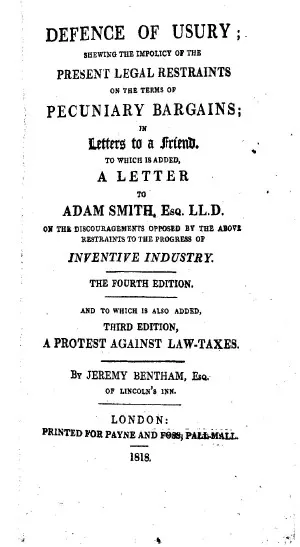
Jeremy Bentham · 1787
An 1818 edition which combines Bentham’s defence of the practice of charging interest on loans with a critique of certain taxes which increased the cost of appearing before the courts. Another copy of this book can be…
Alexander Hamilton · 1788
Vol. II (Convention of New York; Letters of H.G.; Taxation and Finance; Finance) of a twelve volume collection of the works of Alexander Hamilton who served at a formative period of the American Republic. His papers and…
Alexander Hamilton · 1790
Vol. IV (Coinage and the Mint; Industry and Commerce; Commercial Relations; Foreign Relations) of a twelve volume collection of the works of Alexander Hamilton who served at a formative period of the American Republic.…
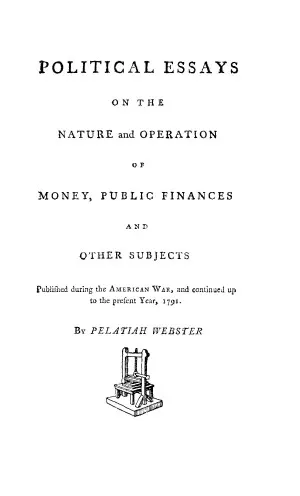
Pelatiah Webster · 1791
Written during the American Revolution these economic essays cover topics such as money, free trade, the rate of interest, the nature of the constitution, public debt, bank credit, and taxation.
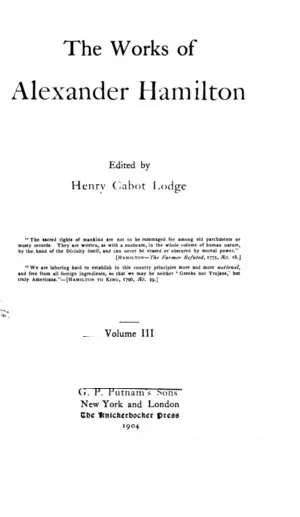
Alexander Hamilton · 1791
Vol. III (Finance; National Bank) of a twelve volume collection of the works of Alexander Hamilton who served at a formative period of the American Republic. His papers and letters are important for understanding this…
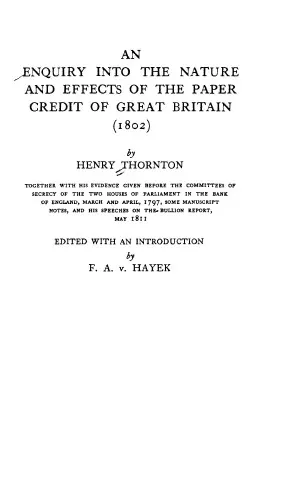
Henry Thornton · 1802
An important work on banking and money which was produced in reaction to the crisis of 1797 when the Bank of England suspended cash payments due to the costs of the wars against France. It has an equally important…
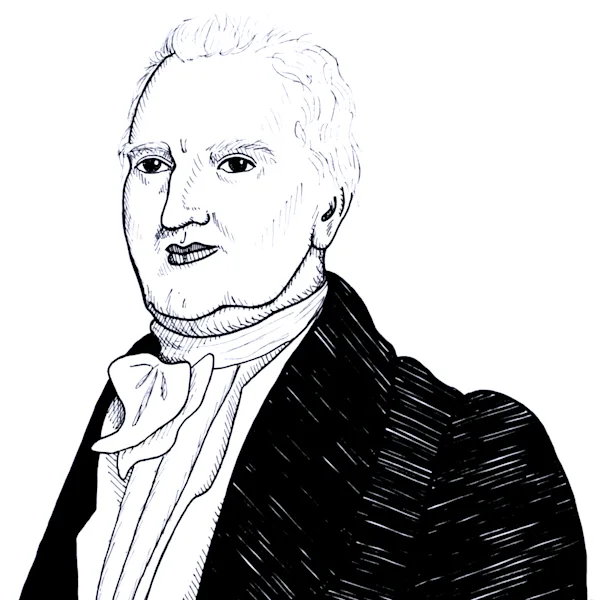
William Cobbett · 1815
Cobbett wrote the first volume of 28 Letters while in prison for two years (1810-11) for opposing the flogging of some militia men. It is a history of how Britain funded the war effort against Napoleon by increasing the…
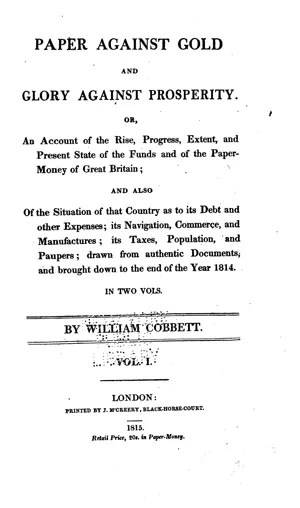
William Cobbett · 1815
Cobbett wrote the first volume of 28 Letters while in prison for two years (1810-11) for opposing the flogging of some militia men. It it a history of how Britain funded the war effort against Napoleon by increasing the…
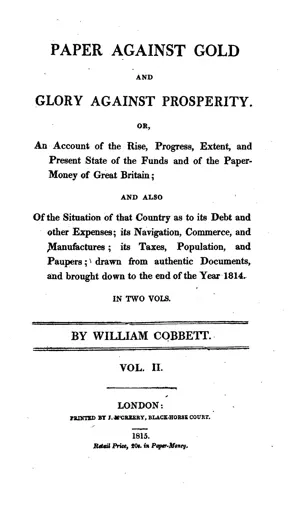
William Cobbett · 1815
Cobbett wrote the first volume of 28 Letters while in prison for two years (1810-11) for opposing the flogging of some militia men. It is a history of how Britain funded the war effort against Napoleon by increasing the…
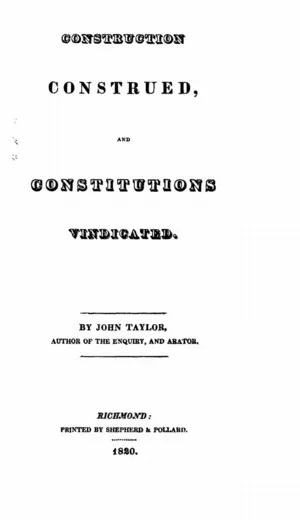
John Taylor · 1820
Taylor defends a strict “states rights” interpretation of the U.S. Constitution and advocates limited republican government.
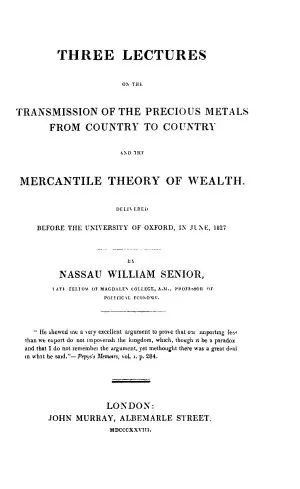
Nassau William Senior · 1828
In a rather grumpy “advertisement” Senior tells us that he rather unwillingly had to give a formal lecture as Professor of Political Economy at Oxford University and have it published. The books contains a lecture on…
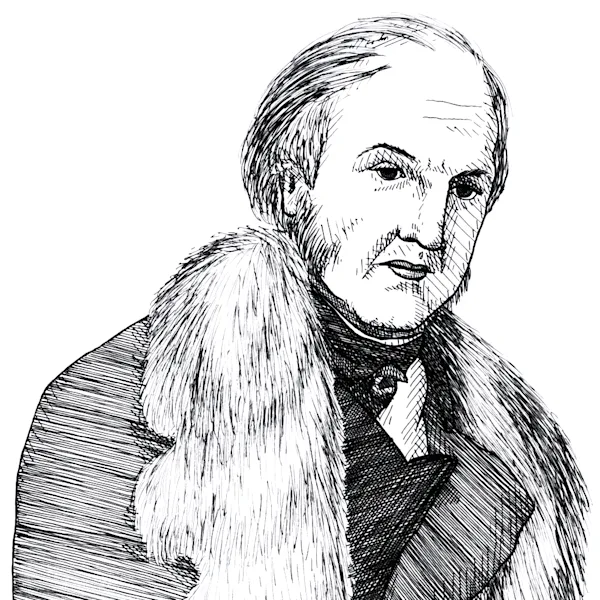
Nassau William Senior · 1830
Senior gave these lectures at the University of Oxford in Trinity Term 1829. The Third Lecture is on "Some Effects of Government Paper Money" and deals with a number of historical episodes of hyper inflation.
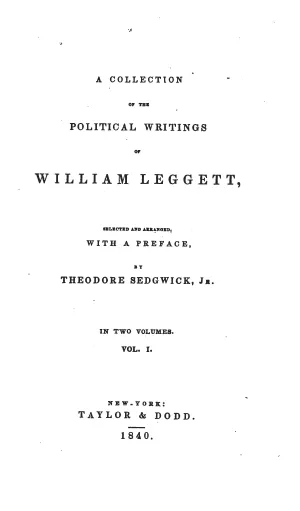
William Leggett · 1840
A two volume collection of newspaper articles and other writings by the Jacksonian era journalist and advocate of free banking and other free market policies, William Leggett.
William Leggett · 1840
Volume 1 of a two volume collection of newspaper articles and other writings by the Jacksonian era journalist and advocate of free banking and other free market policies, William Leggett.
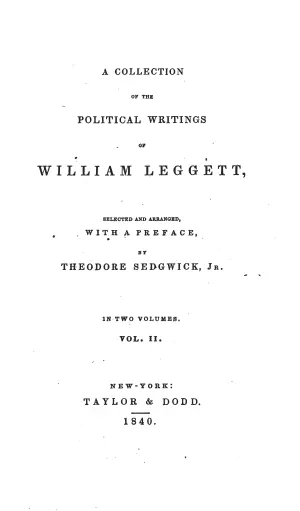
William Leggett · 1840
Volume 2 of a two volume collection of newspaper articles and other writings by the Jacksonian era journalist and advocate of free banking and other free market policies, William Leggett.
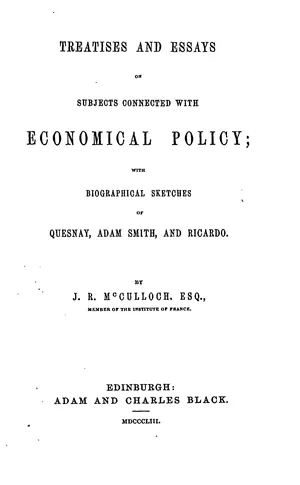
John Ramsay McCulloch · 1853
A collection of essays some of which were previously published in the Encyclopedia Britannica. They cover money, exchange, rent, the history of commerce, maritime law, and biographical essays on Quesnay, Smith, and…
Matthew Raper · 1856
The second of two important collections of early economics works made by McCulloch. This volume deals with coins and coinage, the export of gold and silver, and the history of coinage in Scotland, Ireland, England, and…
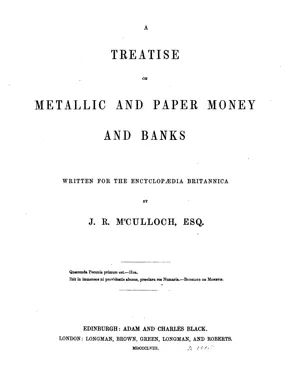
John Ramsay McCulloch · 1858
This is an 80 page encyclopedia article on money and banking which includes a discussion of gold and silver backed money, paper money, private banks, and a brief history of banking in England, France, Scotland, Ireland,…
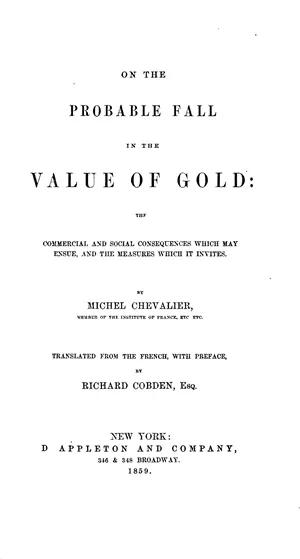
Michel Chevalier · 1859
As a result of Peel’s Bank Act of 1844 and the discovery of gold in California in 1848 a dramatic increase in the amount of gold entered into circulation. Richard Cobden translated an expanded version of Chevalier’s…
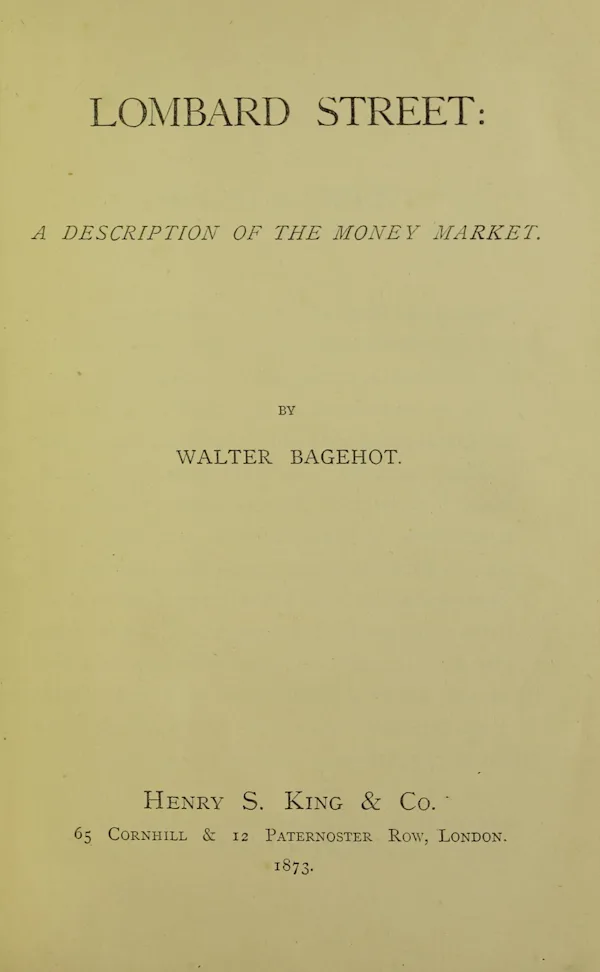
Walter Bagehot · 1873
When Walter Bagehot wrote Lombard Street: A Description of the Money Market, in 1873, he did the unthinkable: In language as fresh and clear today as it was over 100 years ago, he respectfully dissected the Bank of…
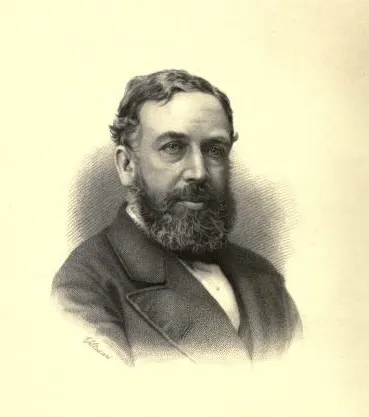
William Stanley Jevons · 1875
Jevons’s formative 1875 classic work came into print at the height of interest in gold, silver, and international monetary standards. Of particular interest are the clear discussions of Gresham's Law (Ch. VIII),…
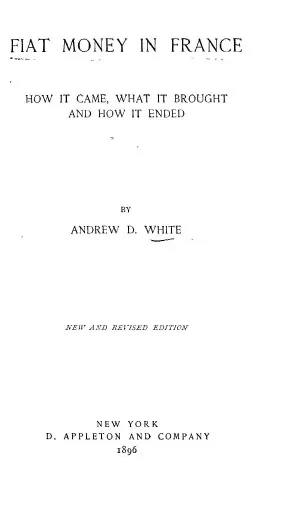
Thomas Babington, Lord Macaulay · 1876
This work began as a paper read before the members of Congress in 1876. The later printed edition also includes a section from Macaulay's History of England on cheap coinage.
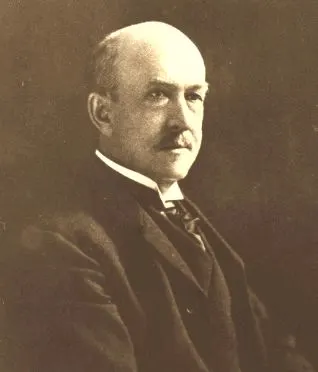
William Graham Sumner · 1876
A thought-provoking collection highlighting individual liberty, personal responsibility, and the unintended consequences of social policies. Sumner’s timeless insights challenge conventional wisdom and offer fresh…
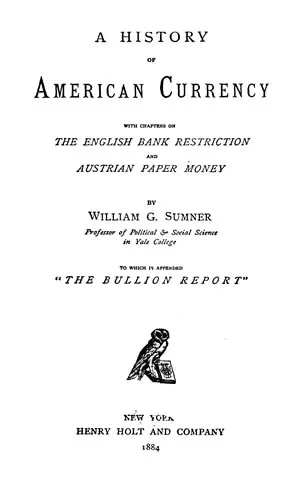
William Graham Sumner · 1878
A collection of Sumner’s writing on money and banking with a reprint of the 1810 British *Report on Bullion”.
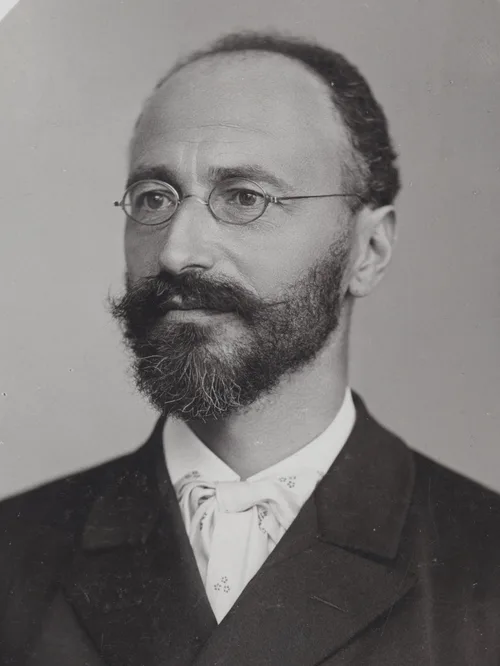
Eugen von Böhm-Bawerk · 1884
Ludwig von Mises described this as a “monumental work” which “is the most eminent contribution to economic theory”. He further stated that “a man not perfectly familiar with all the ideas advanced in theses three…
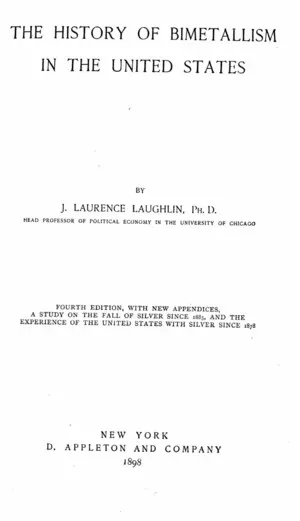
J Laurence Laughlin · 1885
Laughlin states in the introduction that his aim is “to present only the facts bearing on the experiments of the United States with metallic money. No special attention, therefore, has been devoted to the theory of…
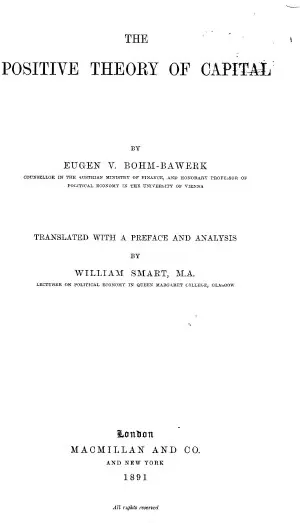
Eugen von Böhm-Bawerk · 1889
The second volume of Boehm-Bawerk’s monumental three volume work on Capital and Interest.
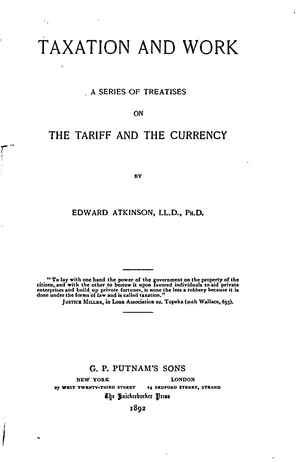
Edward Atkinson · 1892
Atkinson applies the free trade ideas of Bastiat and Cobden to the American situation. He criticizes the tradition of Hamilton, debunks the idea that protection improves the economic condition of ordinary workers,…
Editor of the Journal of Commerce and Commercial Bulletin · 1896
A four volume set edited by the Editor of the Journal of Commerce and Commercial Bulletin in New York city.
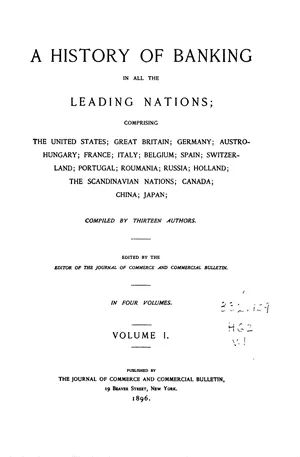
William Graham Sumner · 1896
A four volume set edited by the Editor of the Journal of Commerce and Commercial Bulletin in New York. Vol. 1 consists of “The United States,” by W.G. Sumner.
Antoine E. Horn · 1896
A four volume set edited by the Editor of the Journal of Commerce and Commercial Bulletin in New York city. Vol. 2 consists of: “Great Britain,” by H.D. Macleod; “The Russian Empire,” by A.E. Horn; “Savings Banks in the…
Pierre des Essars · 1896
A four volume set edited by the Editor of the Journal of Commerce and Commercial Bulletin in New York city. Vol. 3 consists of: “The Latin Nations,” by P. Des Essars; “The Banks of Alsace-Lorraine after the Annexation,”…
1896
A four volume set edited by the Editor of the Journal of Commerce and Commercial Bulletin in New York city. Vol. 4 consists of “Germany and Austria-Hungary,” by M. Wirth; “The Netherlands,” by R. van der Borght; “The…
William Brough · 1896
An analysis of money and banking from the free banking perspective, i.e. by privately owned banks which issue their own currency. Another copy of this book can be found in HTML format at our sister website Econlib.
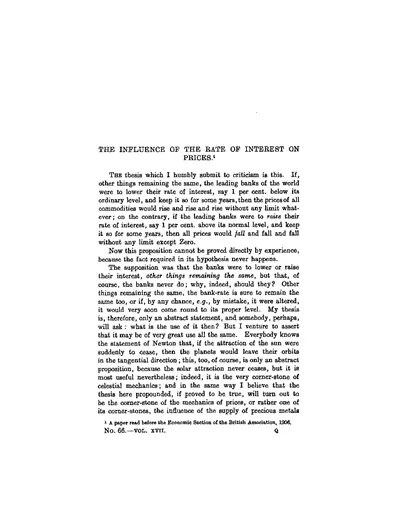
Knut Wicksell · 1907
A paper read before the Economic Section of the British Association, 1906.
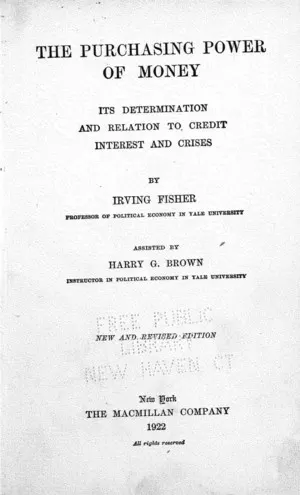
Irving Fisher · 1911
A classic book by one of America’s greatest mathematical economists. Fisher states in the introduction that “The purpose of this book is to set forth the principles determining the purchasing power of money and to apply…
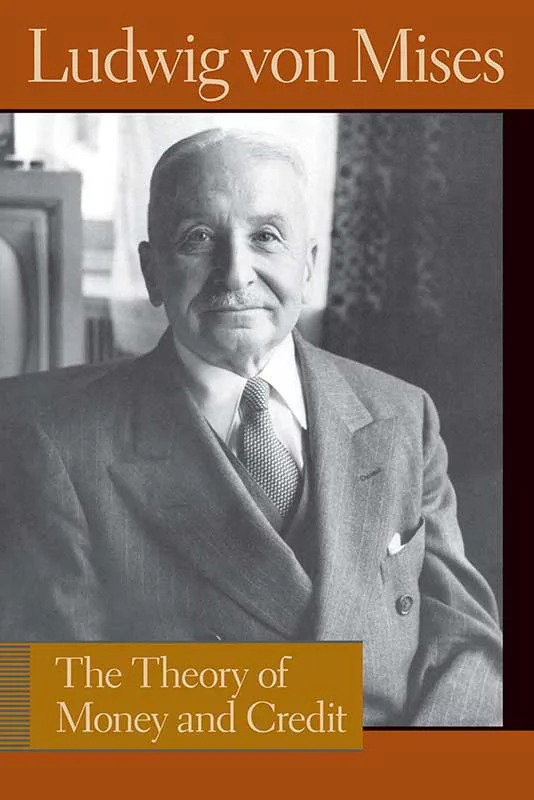
Ludwig von Mises · 1912
The Theory of Money and Credit opened new economic vistas. It integrated monetary theory into the main body of economic analysis for the first time, providing fresh new insights into the nature of money and its role in…
Walter Bagehot · 1915
This volume contains essays on Macaulay, Gibbon, Peel, Shelley, and two essays on banking and the currency crisis.
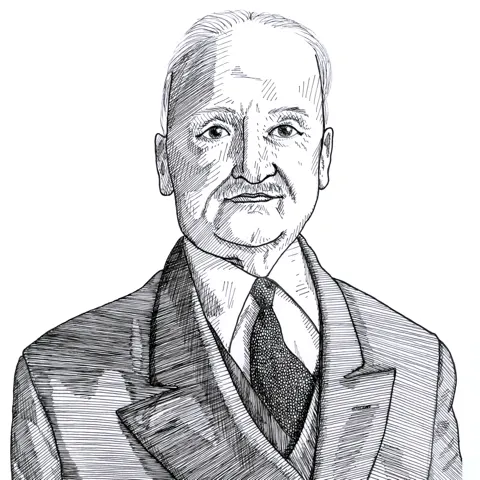
Ludwig von Mises · 1921
The 11th edition of the Encyclopedia Britannica was the last edition which appeared before the First World War destroyed the old liberal order in Europe. The next edition, the 12th, reproduced the 11th edition with the…
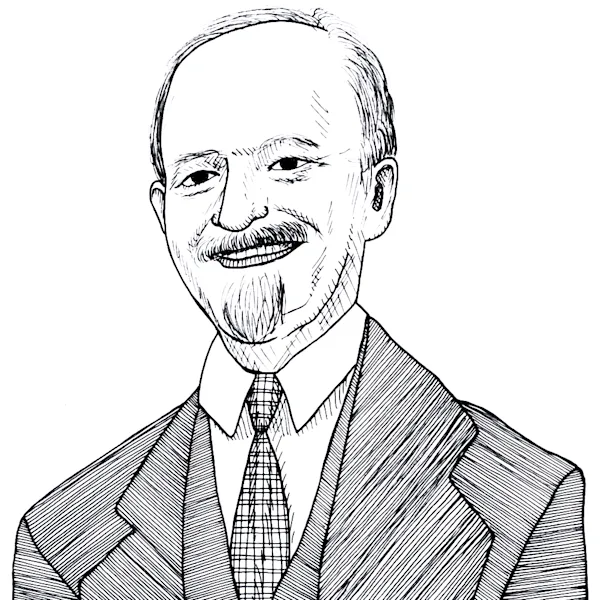
Irving Fisher · 1921
The 11th edition of the Encyclopedia Britannica was the last edition which appeared before the First World War destroyed the old liberal order in Europe. The next edition, the 12th, reproduced the 11th edition with the…
Edwin Cannan · 1921
A pioneering article on currency which was pubished in one of the leading professional economics journals in the early 20th century.
Knut Wicksell · 1922
Volume 2 of a two volume set of lectures given by Wicksell. He bases his ideas on the idea of the marginal principle and covers topics such as money, credit, and banking. It is in German.
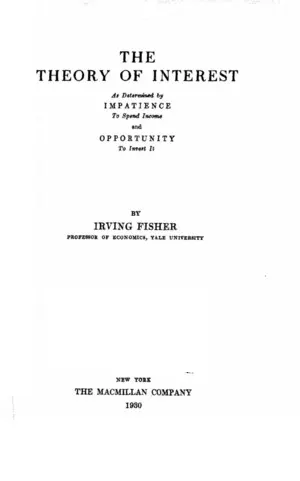
Irving Fisher · 1930
Fisher was one of America’s greatest mathematical economists. This book is still used a textbook and is an outstanding example of clearly written economic theory.
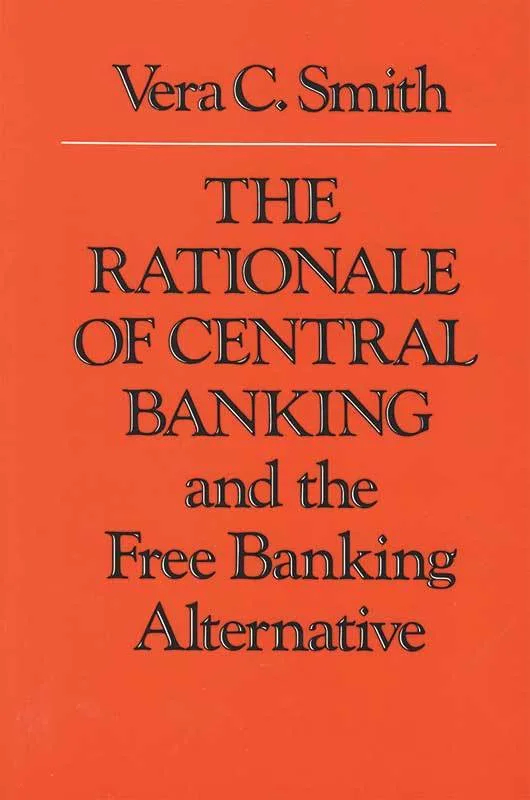
Vera C. Smith · 1936
Written as a doctoral dissertation under Friedrich Hayek at the London School of Economics in the early 1930s, the book covers the history of free banking in the 19th century and reviews the theoretical arguments both…
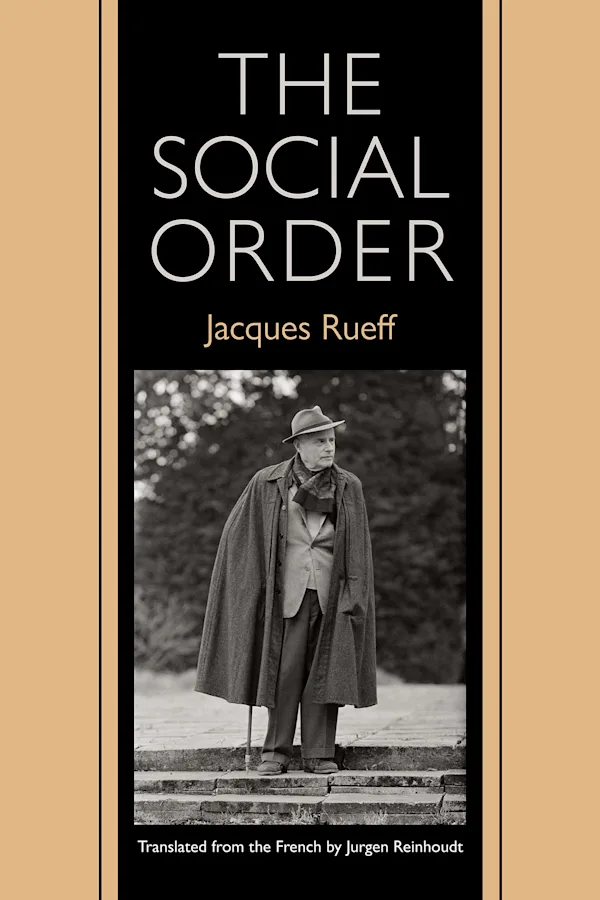
Jacques Rueff · 1945
In The Social Order, Jacques Rueff—one of France’s most distinguished twentieth-century economists—delivers a penetrating analysis of how monetary and fiscal policy shape not only economic outcomes but the very fabric…
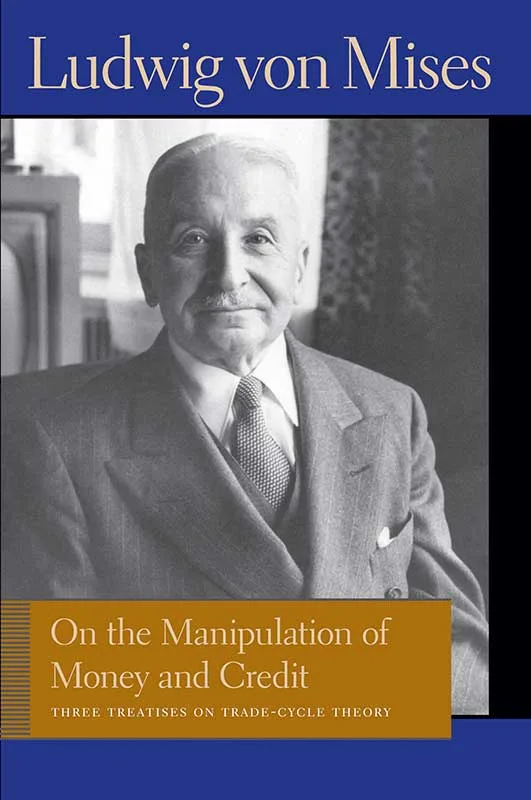
Ludwig von Mises · 1978
On the Manipulation of Money and Credit includes some of Mises’s most important contributions to monetary and trade-cycle theories. “Stabilization of the Monetary Unit from the Viewpoint of Theory,” discusses the…
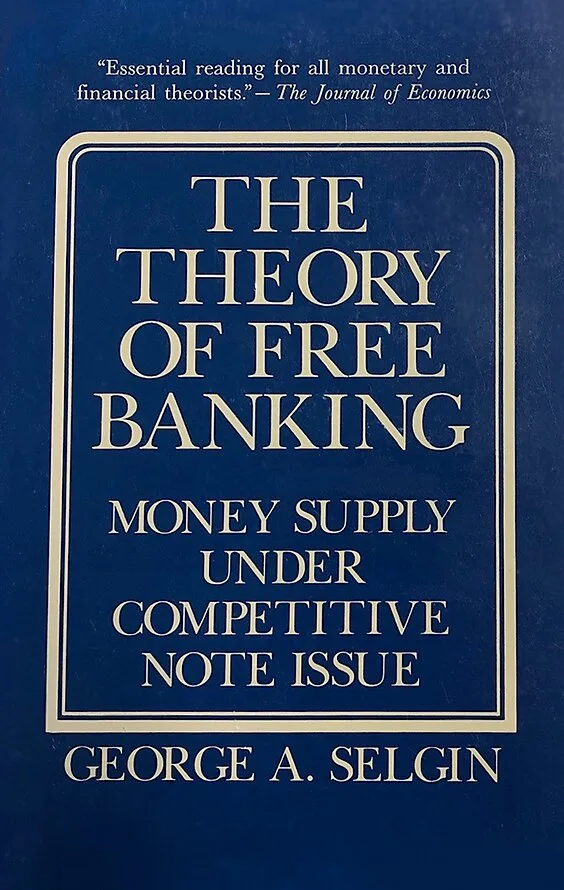
George A. Selgin · 1988
This is a defense of the theory and practice of free banking, i.e. the competitive issue of money by private banks as opposed to the centralised and monopolised issuance of currency under a system of central banking.
In this collection
24 people central to Money and Banking.
1827–1905
Edward Atkinson was a cotton manufacturer in New England before becoming a radical abolitionist who worked to support runaway slaves in the…

1623–1698
Nicholas Barbon was an English physician, London real estate developer, and promoter of fire insurance (after the fire of London of 1664).…

1826–1870
William Brough was born in 1826 in Kelso, Scotland. In his early childhood, the family moved first to Canada and then to Vermont. He began…

1796–1856
John M. Clayton was born in Delaware in 1796 and was educated at Yale College and the Litchfield Law School. He was admitted to the bar in…

1763–1835
William Cobbett (1763-1835) was an idiosyncratic English Radical who had a large influence on ordinary working people with his many…

1571–1631
Author of an early tract on money which appeared in McCulloch's collection.

1867–1947
Irving Fisher was one of America’s greatest mathematical economists and one of the clearest economics writers of all time.
Horn was the editor of the Journal de St. Petersbourg.
1850–1933
Laughlin was head of the University of Chicago Economics Department, founder of its Graduate School of Business, and founder of the Journal…

1765–1832
James Mackintosh was a prominent Scottish Whig politician, a moral philosopher, and a historian of England.
1705–1778
Author of an early tract on ancient Greek and Roman money which appeared in McCulloch’s collection.


George A. Selgin is a Professor of Economics at the University of Georgia’s Terry College of Business. He is a senior fellow at the Cato…

1912–1976
Vera Smith was born in England in 1912. She spent her professional life in a variety of research positions and wrote many articles on…

1864–1929
Soyeda was secretary and counsellor in the Imperial Ministry of Finance, Japan.

1760–1815
Thornton was a merchant banker and founder of the Clapham Sect of evangelical reformers which included William Wilberforce, Thomas…
d. 1672
Rice Vaughan was a seventeenth-century Anglo-Welsh lawyer and economist known for writing a seminal work on economics and currencies…
1725–1795
Pelatiah Webster was a Philadelphia merchant, and author of a number of pamphlets on the finances and government of the United States, most…

1828–1898
David Ames Wells (1828-1898) was born in Springfield, Massachusetts and trained as a scientist and engineer.

b. 1954
Lawrence H. White is a professor of economics at George Mason University and a Distinguished Senior Fellow of the Mercatus Center's F. A.…

1822–1900
Max Wirth was editor of the Neue Freie Presse, Vienna; an Honorary Member of the Royal Statistical Society of London; and late director of…

1924–2018
Leland Yeager was Ludwig von Mises Professor of Economics, Emeritus, at Auburn University.
In this collection
From The Reading Room, Liberty Matters and the library’s other publications.
Passages on this subject, chosen by OLL editors.
That wealth consists in money, or in gold and silver, is a popular notion which naturally arises from the double function of money, as the instrument of commerce, and as the measure of value. In consequence of its being the instrument of commerce, when we have money we can more readily obtain whatever else we have occasion for, than by means of any other commodity. The great affair, we always find, is to get money. When that is obtained, there is no difficulty in making any subsequent purchase. In consequence of its being the measure of value, we estimate that of all other commodities by the quantity of money which they will exchange for. We say of a rich man that he is worth a great deal, and of a poor man that he is worth very little money. A frugal man, or a man eager to be rich, is said to love money; and a careless, a generous, or a profuse man, is said to be indifferent about it. To grow rich is to get money; and wealth and money, in short, are, in common language, considered as in every respect synonymous. (IV.i.1) - Adam Smith
“Now it appears to the Secretary of the Treasury that this general principle is inherent in the very definition of government, and essential to every step of the progress to be made by that of the United States, namely: That every power vested in a government is in its nature sovereign, and includes, by force of the term, a right to employ all the means requisite and fairly applicable to the attainment of the ends of such power, and which are not precluded by restrictions and exceptions specified in the Constitution, or not immoral, or not contrary to the essential ends of political society.” (FROM: Hamilton to Washington, February 23, 1791
Still less should it [the government] give peculiar favour to any one [bank], and by entrusting it with the Government account secure to it a mischievous supremacy above all other banks. The skill of a financier in such an age is to equalise the receipt of taxation, and the outgoing of expenditure; it should be a principal care with him to make sure that more should not be locked up at a particular moment in the Government coffers than is usually locked up there. If the amount of dead capital so buried in the Treasury does not at any time much exceed the common average, the evil so caused is inconsiderable: it is only the loss of interest on a certain sum of money, which would not be much of a burden on the whole nation; the additional taxation it would cause would be inconsiderable. Such an evil is nothing in comparison with that of losing the money necessary for inevitable expense by entrusting it to a bad bank, or that of recovering this money by identifying the national credit with the bad bank and so propping it up and perpetuating it. So long as the security of the Money Market is not entirely to be relied on, the Government of a country had much better leave it to itself and keep its own money. If the banks are bad, they will certainly continue bad and will probably become worse if the Government sustains and encourages them. The cardinal maxim is, that any aid to a present bad bank is the surest mode of preventing the establishment of a future good bank.
I shall have failed in my purpose if I have not proved that the system of entrusting all our reserve to a single board, like that of the Bank directors, is very anomalous; that it is very dangerous; that its bad consequences, though much felt, have not been fully seen; that they have been obscured by traditional arguments and hidden in the dust of ancient controversies.
But it will be said—What would be better? What other system could there be? We are so accustomed to a system of banking, dependent for its cardinal function on a single bank, that we can hardly conceive of any other. But the natural system—that which would have sprung up if Government had let banking alone—is that of many banks of equal or not altogether unequal size. In all other trades competition brings the traders to a rough approximate equality. In cotton spinning, no single firm far and permanently outstrips the others. There is no tendency to a monarchy in the cotton world; nor, where banking has been left free, is there any tendency to a monarchy in banking either.
Why should the mere increase of money have any other effect than to lower its value? How would it cause any increase in the production of commodities?
This is true taking all commodities together, —but fashion or other causes may create an increased demand for one article and consequently the demand for some one or more of others must diminish. Will not this operate on prices?…
In this conclusion I perfectly agree if the author means the mass of prices, but a hundred articles might have risen, whilst another hundred might have fallen in consequence of increased or decreased demand, increased or decreased knowledge in the best means of producing them. Nay the mass of prices might remain the same tho’ each individual article had risen in consequence of taxation.
Money cannot call forth goods, —but goods can call forth money…
Experience, however, shows that neither a State nor a Bank ever have had the unrestricted power of issuing paper money without abusing that power: in all States, therefore, the issue of paper money ought to be under some check and control; and none seems so proper for that purpose as that of subjecting the issuers of paper money to the obligation of paying their notes either in gold coin or bullion. (FROM CHAPTER XXVII.: ON CURRENCY AND BANKS)
The principle of sound money that guided nineteenth-century monetary doctrines and policies was a product of classical political economy. It was an essential part of the liberal program as developed by eighteenth-century social philosophy and propagated in the following century by the most influential political parties of Europe and America...It is impossible to grasp the meaning of the idea of sound money if one does not realize that it was devised as an instrument for the protection of civil liberties against despotic inroads on the part of governments. Ideologically it belongs in the same class with political constitutions and bills of rights. The demand for constitutional guarantees and for bills of rights was a reaction against arbitrary rule and the nonobservance of old customs by kings. The postulate of sound money was first brought up as a response to the princely practice of debasing the coinage. It was later carefully elaborated and perfected in the age which—through the experience of the American continental currency, the paper money of the French Revolution and the British restriction period—had learned what a government can do to a nation’s currency system... Thus the sound-money principle has two aspects. It is affirmative in approving the market’s choice of a commonly used medium of exchange. It is negative in obstructing the government’s propensity to meddle with the currency system.
The people of all countries agree that the present state of monetary affairs is unsatisfactory and that a change is highly desirable... The destruction of the monetary order was the result of deliberate actions on the part of various governments. The government-controlled central banks and, in the United States, the government-controlled Federal Reserve System were the instruments applied in this process of disorganization and demolition. Yet without exception all drafts for an improvement of currency systems assign to the governments unrestricted supremacy in matters of currency and design fantastic images of superprivileged superbanks... The inanity of all these plans is not accidental. It is the logical outcome of the social philosophy of their authors.
Economic theory. Demography
473 titles · 88 publications · 293 people

Economics
30 titles · 7 publications · 32 people
Economics
31 titles · 24 people · 4 quotes
Economics
36 titles · 8 publications · 46 people

Economics
13 titles · 24 people · 8 quotes
Economics
11 titles · 3 people