

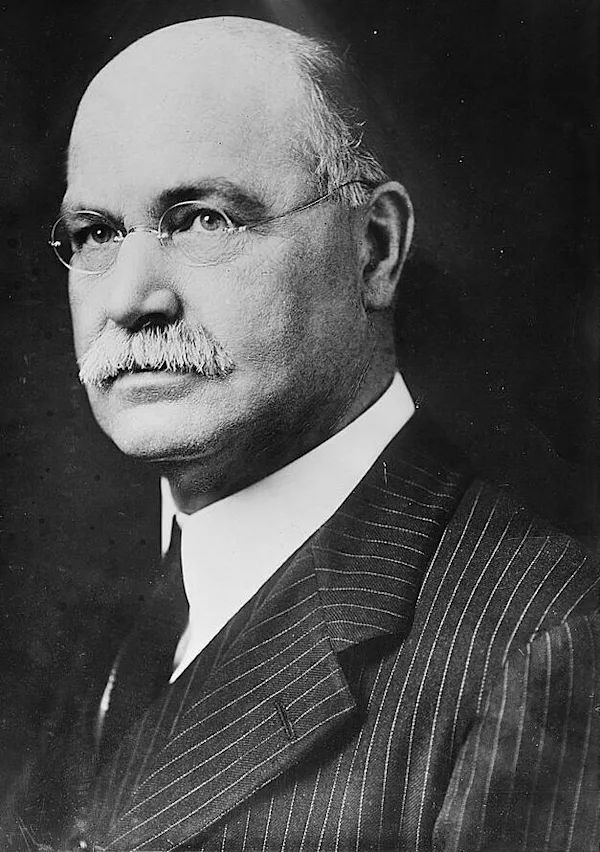
Edward Atkinson
1827–1905
Edward Atkinson was a cotton manufacturer in New England before becoming a radical abolitionist who worked to support runaway slaves in the…


Economics
90 items in this collection
One of the key concepts of economic freedom is free trade, which is the idea that there should be no restriction in the right and ability of individuals to exchange the products of their labor and industry with other people.
In this collection
30 titles, earliest first.
Nicholas Barbon · 1690
Barbon’s A Discourse of Trade, is one of the best-known early tracts for freedom of trade, it also discusses topics as varied as the nature of value, the role of fashion in economic life, the importance of moral…
Richard Cantillon · 1755
Cantillon wrote one major work, Essay on the Nature of Trade in General, which was regarded by Jevons and Hayek as an important early contribution to the theory of marginal utility. It lay forgotten for over 100 years…
James Mill · 1804
Mill provides a brief history of the Corn Laws and argues for their abolition.
James Mill · 1808
This is a critique of both the idea that only agriculture is truly a productive activity and government war-time policy which resulted in rising food prices and taxes which had a deleterious impact on the poor.
Francis W. Hirst · 1820
A collection of speeches and articles illustrating the broad range of views of the British classical liberals and free traders of the 19th century known as the Manchester School. They cover foreign policy, free trade,…
Nassau William Senior · 1828
In a rather grumpy “advertisement” Senior tells us that he rather unwillingly had to give a formal lecture as Professor of Political Economy at Oxford University and have it published. The books contains a lecture on…
Richard Cobden · 1835
An early piece by Cobden on foreign policy and free trade written under the pseudonym of "A Manchester Manufacturer."
Condy Raguet · 1835
A collection of essays written in the early 1830s as part of a campaign in favor of free trade. The second edition of 1840 contains the minutes of a Free Trade Convention held in Philadelphia in 1831 as well as a…
Richard Cobden · 1836
Another early work on foreign policy and trade by Richard Cobden written under the pseudonym of "A Manchester Manufacturer."
Richard Cobden · 1842
A cheap mass produced pamphlet of Cobden's speech distributed by the Anti-Corn Law League.
National Anti-Corn Law League · 1842
This is a collection of essays published by the National Anti-Corn Law League. It consists of three prize winning essays on the Corn Laws and a collection of other Anti-Corn Law League propaganda. It was issued as a…
Thomas Hodgskin · 1843
An example of one of Hodgskin’s popular lectures to a working class audience, this time on the benefits of free trade.
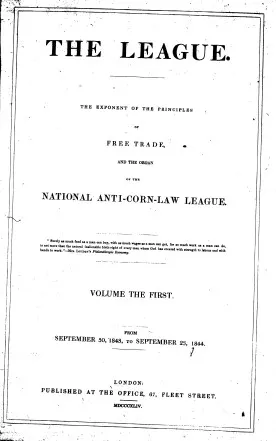
National Anti-Corn Law League · 1846
The organ of the National Anti-Corn-Law League was based in London and appeared between 1843 and 1846. It closed when the League achieved its goal of abolishing the Corn Laws in 1846. It was perhaps the first lobby…
Frédéric Bastiat · 1850
This is the translation by the Foundation for Economic Education of Bastiat’s longest and best known work Economic Harmonies. A new translation of this work by Liberty Fund is in progress. See the Summary of the Bastiat…
Frédéric Bastiat · 1854
Vol.3 of the 1st edition of Bastiat’s works contains a long introduction by Bastiat on the English Anti-Corn Law League’s agitation for free trade and then Bastiat’s translation of a selection of speeches and newspaper…
Frédéric Bastiat · 1855
Vol.2 of the 1st edition of Bastiat’s works contains his writings and speeches on the free trade movement.
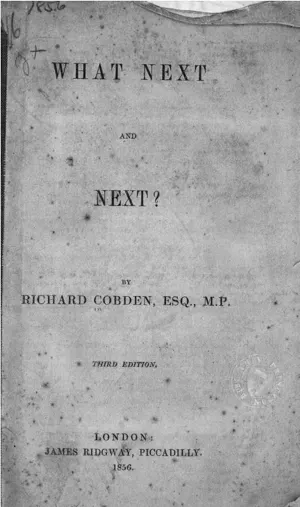
Richard Cobden · 1856
Cobden reflects on how the Crimean War can best be ended without humiliating Russia and helping her be integrated into the world market again.
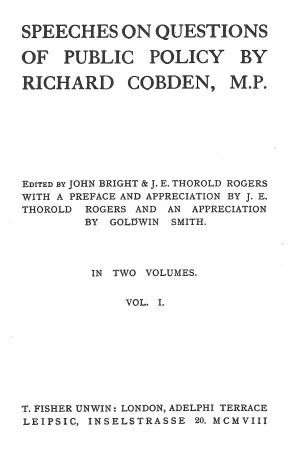
Richard Cobden · 1870
Volume 1 of a two volume collection of Cobden’s speeches on Free Trade, Finance, War, Foreign Policy, and Parliamentary Reform.
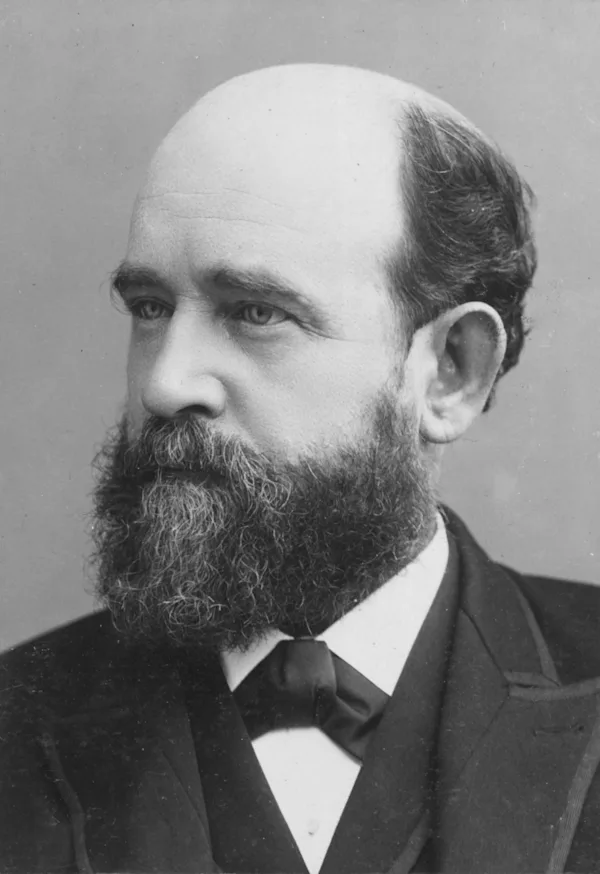
Henry George · 1886
George was not just an advocate of the single tax on the unimproved value of land, but also a strong defender of free trade, as this work demonstrates. Read the Liberty Classic on this title from Econlib
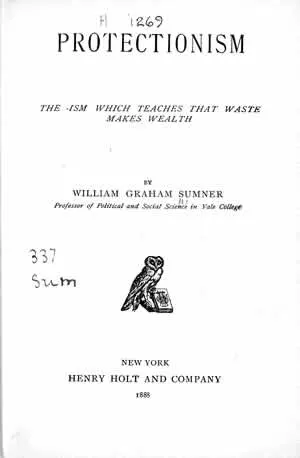
William Graham Sumner · 1888
A clear and strong case for free trade against proctectionism. The chapter of the fallacies of protectionism is very thorough.
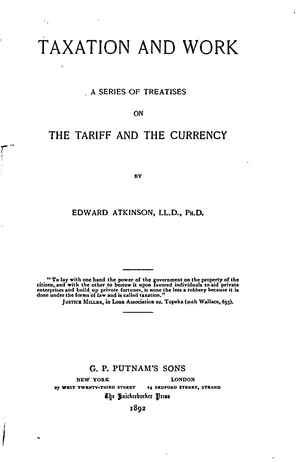
Edward Atkinson · 1892
Atkinson applies the free trade ideas of Bastiat and Cobden to the American situation. He criticizes the tradition of Hamilton, debunks the idea that protection improves the economic condition of ordinary workers,…
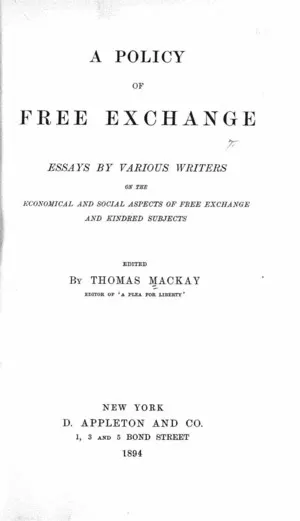
Thomas Mackay · 1894
The companion volume to A Plea for Liberty which continued the argument against the Fabian Socialists and for a policy of strict non-intervention in the economy by the government.
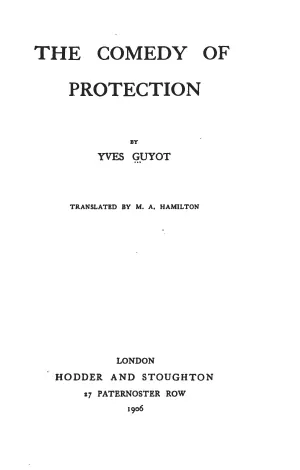
Yves Guyot · 1906
Guyot provides a history of French tariff policy from the time of Colbert and a discussion of its effects on particular industries such as textiles and food. He then discusses protection in the US and Germany and…
Frank William Taussig · 1915
Taussig, a professor of economics at Harvard, wrote what has become a classic work on modern trade theory that critically examines the economic implications of tariffs and protectionism. Taussig explores how tariffs…
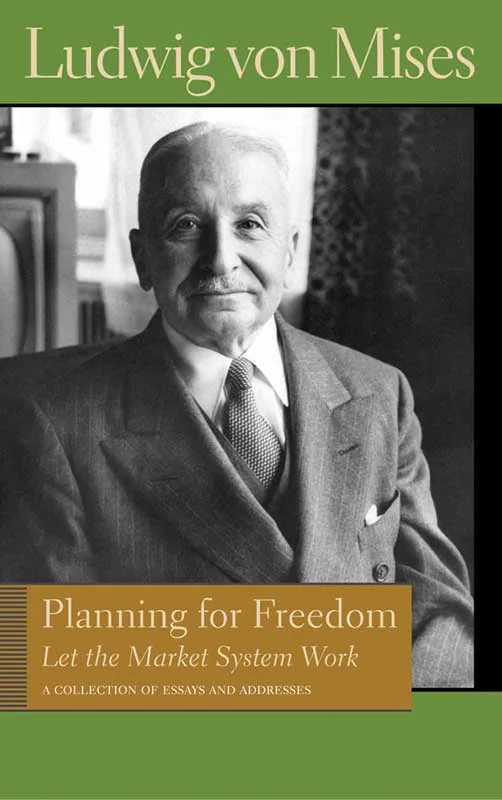
Ludwig von Mises · 1952
In this anthology, Mises offers an articulate and accessible introduction to and critique of two topics he considers especially important: inflation and government interventionism.
Leland B. Yeager · 1954
A brief and succinct defense of free trade.
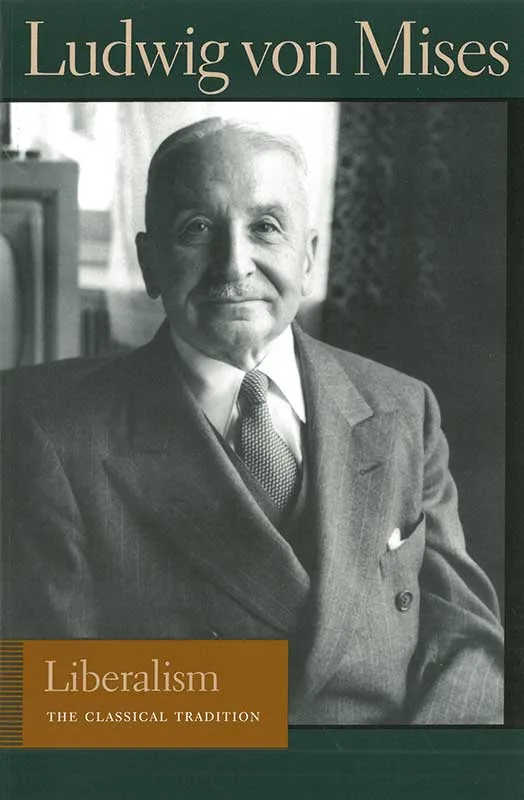
Ludwig von Mises · 1962
The great Austrian economist Ludwig von Mises provides a concise and tightly-argued one volume defense of classical liberalism, focusing on the core concepts of private property, limited government, peace, and the free…
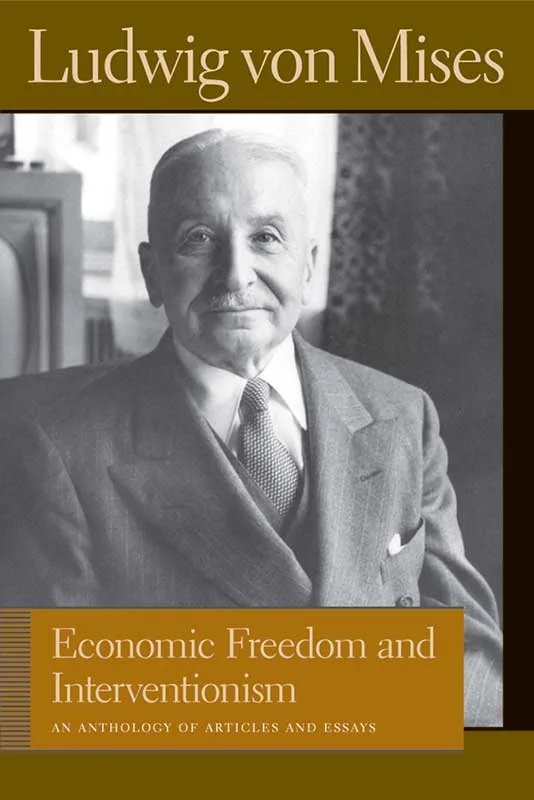
Ludwig von Mises · 1990
Economic Freedom and Interventionism is a primer of the thought of Ludwig von Mises and an anthology of his writings. This volume contains forty-seven articles edited by Mises scholar Bettina Bien Greaves. Among them…
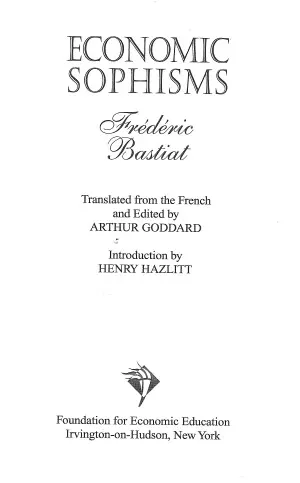
Frédéric Bastiat · 1996
The Foundation for Economic Education's translation of Bastiat’s series of short essays in which he tries to correct common misunderstandings about the free market.
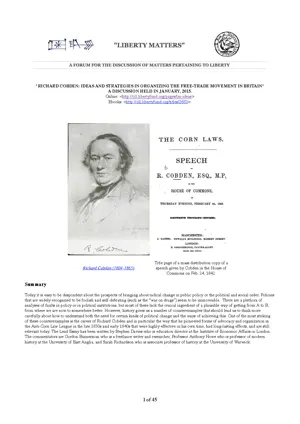
Stephen Davies · 2015
This online discussion is part of the series “Liberty Matters: A Forum for the Discussion of Matters pertaining to Liberty.” Here we examine the career of Richard Cobden and in particular the way that he pioneered forms…
In this collection
19 people central to Free Trade.
1827–1905
Edward Atkinson was a cotton manufacturer in New England before becoming a radical abolitionist who worked to support runaway slaves in the…

1811–1889
John Bright (1811-1889) was a Quaker and a Member of Parliament who was active with Richard Cobden in opposing the Corn Laws and the war…

1777–1852
Clay was a founder of the Whig Party, a defender of Hamilton's "American System" of government subsidies, tariffs, and state-funded…

1804–1865
Richard Cobden (1804-1865) was a member of the British Parliament and an advocate of free trade, a non-interventionist foreign policy,…

1839–1897
A prolific author who was a strong defender of free trade and an advocate of the idea of a single tax on land. George believed that a…

1879–1952
Heckscher was a Swedish economist who, along with his student, Bertil Ohlin, explored trade in goods along with the factors of production -…

1787–1869
Thomas Hodgskin (1787-1869) was an officer in the British Navy before leaving because of his opposition to the brutal treatment of sailors.…

1641–1691
Dudley North was a very successful English merchant who made a fortune in Turkey before returning to London. He was sheriff of London, a…

1784–1842
Raguet (1784-1842) was born in Philadelphia of French parents. He was elected to Congress in the Federalist Party but after the Panic of…

1772–1823
David Ricardo (1772-1823) was born in London of parents recently emigrated from Amsterdam, where he was educated as a youth in yeshivas. He…
1823–1890
Rogers was a member of parliament, a writer of popular economics, and an editor of the Speeches of Richard Cobden.

1773–1842
Sismondi was an economist, historian, and associate of Madame de Stael. Although he believed in free trade he was not a defender of pure…

1859–1940
Frank W. Taussig (1859-1940), American economist, taught at Harvard, and worked on international trade. His articles and books on tariffs,…
1800–1849
W.C. Taylor (1800-1849) was an Irish author and supporter of the Anti-Corn Law League. He wrote prolifically on Irish history, on the…

1892–1970
Jacob Viner was an economist who wrote on international trade, tariff policy, commercial treaties, the role of the U.S. international…

1782–1852
Daniel Webster was elected to Congress as a Federalist and served in the House of Representatives from 1813 to 1817. He was a prominent…

1832–1915
Reginald Earle Welby, 1st Baron Welby GCB, was a British peer, former Permanent Secretary to the Treasury and former President of the Royal…

1828–1898
David Ames Wells (1828-1898) was born in Springfield, Massachusetts and trained as a scientist and engineer.

1810–1876
Wolowski was born in Poland but his family fled to France after the 1830 revolution. He became a French citizen and taught law and…
In this collection
From The Reading Room, Liberty Matters and the library’s other publications.

Peter Carl Mentzel · Apr 10, 2024
Passages on this subject, chosen by OLL editors.
There may be good policy in retaliations of this kind, when there is a probability that they will procure the repeal of the high duties or prohibitions complained of. The recovery of a great foreign market will generally more than compensate the transitory inconveniency of paying dearer during a short time for some sorts of goods. To judge whether such retaliations are likely to produce such an effect, does not, perhaps, belong so much to the science of a legislator, whose deliberations ought to be governed by general principles which are always the same, as to the skill of that insidious and crafty animal, vulgarly called a statesman or politician, whose councils are directed by the momentary fluctuations of affairs. When there is no probability that any such repeal can be procured, it seems a bad method of compensating the injury done to certain classes of our people, to do another injury ourselves, not only to those classes, but to almost all the other classes of them.
(Wealth of Nations, Book IV, Chapter 2)
By means of glasses, hotbeds, and hotwalls, very good grapes can be raised in Scotland, and very good wine too can be made of them at about thirty times the expense for which at least equally good can be brought from foreign countries. Would it be a reasonable law to prohibit the importation of all foreign wines, merely to encourage the making of claret and burgundy in Scotland?
Were all nations to follow the liberal system of free exportation and free importation, the different states into which a great continent was divided would so far resemble the different provinces of a great empire. As among the different provinces of a great empire the freedom of the inland trade appears, both from reason and experience, not only the best palliative of a dearth, but the most effectual preventative of a famine; so would the freedom of the exportation and importation trade be among the different states into which a great continent was divided.
Like you I love all forms of freedom; and among these, the one that is the most universally useful to mankind, the one you enjoy at each moment of the day and in all of life’s circumstances, is the freedom to work and to trade. I know that making things one’s own is the fulcrum of society and even of human life. I know that trade is intrinsic to property and that to restrict the one is to shake the foundations of the other. I approve of your devoting yourself to the defense of this freedom whose triumph will inevitably usher in the reign of international justice and consequently the extinction of hatred, prejudices between one people and another, and the wars that come in their wake.
What immense good our journal might do if it contrasted the inanity and danger of current policy with the grandeur and security of free-trade policies! Before the journal was founded, I had a plan to publish a small book each month in the same mold as the Sophisms, in which I would have free rein. I really think it would have been more useful than the journal itself.
Our campaigning is not very active. We still need a man of action. When will he appear? I do not know. I should be that man, I am propelled forward by the unanimous confidence of my colleagues, but I cannot. My character is not suited to this and all the advice in the world cannot turn a reed into an oak. In the end, when the question will preoccupy people’s minds, I very much hope a Wilson will appear
I am sending you the five or six latest issues of Le Libre échange. It is not very widely distributed, but I have been assured that it was not without some influence on a few of our leading men.
It appears that this year our government will not dare to put forward a customs law that introduces significant changes into the current legislation. This is discouraging a few of our friends. As for me, I do not even want the current amendments. Down with the laws that precede the advance of public opinion! And I want not so much free trade itself as the spirit of free trade for my country. Free trade means a little more wealth; the spirit of free trade is a reform of the mind itself, that is to say, the source of all reform.
That individuals are better judges of the most advantageous mode of employing their labour and capital, than governments—
That wealth cannot be created by the mere enactment of laws—
That commerce is an exchange of equivalents not merely beneficial to one of the parties which carries it on, but to both, by enabling each to exchange with the other, those products which it can furnish upon the most favourable terms—
That commerce must be reciprocal, and consequently, that when one nation restricts its trade with another, and says, “I will not buy,” she declares in the same words, “I will not sell.”
That as far as foreign nations refuse to take our productions, they ipso facto, and without requiring any laws on our part to enforce a retaliation, absolutely deprive us of the power to take their productions—
That it is an error, to suppose that free trade is only advantageous when adopted by all nations, and that the interests of a country are to be promoted by counter restrictions.
Having endeavoured to remove one species of ill-founded jealousy, which is so prevalent among commercial nations, it may not be amiss to mention another, which seems equally groundless. Nothing is more usual, among states which have made some advances in commerce, than to look on the progress of their neighbours with a suspicious eye, to consider all trading states as their rivals, and to suppose that it is impossible for any of them to flourish, but at their expence. In opposition to this narrow and malignant opinion, I will venture to assert, that the encrease of riches and commerce in any one nation, instead of hurting, commonly promotes the riches and commerce of all its neighbours; and that a state can scarcely carry its trade and industry very far, where all the surrounding states are buried in ignorance, sloth, and barbarism.
If I should ask you what kind of economic order the Founding Fathers contemplated when they established the constitutional order, you would doubtless reply capitalism or a market economy. If I addressed that question to a similar number of professional American historians, the answer would be the same, the difference being that most of you would add "Thank God" and most of them would add "unfortunately."
In certain important particulars, your answer is supported by the historical record. For one thing, Americans were committed to John Locke's proposition that mankind has a God-given right to life, liberty, and property, and that legitimate governments are required to protect those rights. In the Constitutional Convention of 1787 James Madison, Gouverneur Morris, and others listed the protection of property rights as the primary reason for instituting government; the sole dissenter was James Wilson.
For a second thing, the Constitution created the largest contiguous area of free trade in the world. Neither the states nor the Congress could levy taxes on the interstate movement of goods which the states had been theoretically able to do prior to the adoption of the Constitution.
Economic theory. Demography
473 titles · 88 publications · 293 people
Economics
31 titles · 24 people · 4 quotes

Economics
13 titles · 24 people · 8 quotes

Economics
47 titles · 1 publication · 51 people
Economics
36 titles · 8 publications · 46 people
Economics
11 titles · 3 people