Commerce1915
Some Aspects of the Tariff Question
- Frank William Taussig(author)
Taussig, a professor of economics at Harvard, wrote what has become a classic work on modern trade theory that critically examines the economic implications of tariffs and protectionism. Taussig explores how tariffs influence domestic industries, trade relations, and economic growth, offering insights into the complex dynamics of international commerce. .
Key Quotes
Passages from this text chosen by OLL editors.
- Economics“
The relation between high wages and the use of machinery calls for a word more of explanation. It is usually said that high wages are cause of the adoption of machinery, and that we find here the explanation of the greater use of machinery in the United States. I believe that the relation is the reverse; high wages are the effect, not the cause.... The abundant resources which so long contributed greatly, and indeed still contribute, to making labor productive and wages high, thereby stimulated the introduction of labor-saving methods in industries not so directly affected by the favor of nature. But the fundamental cause of the prevalent use of machinery was in the intelligence and inventiveness of the people; these being promoted again by the breath of freedom and competition in all their affairs.
About This Edition
Citation
Taussig, Frank William. Some Aspects of the Tariff Question (Cambridge: Harvard University Press, 1915).
Taussig, Frank William. Some Aspects of the Tariff Question. Harvard University Press, 1915. Online Library of Liberty, https://oll.libertyfund.org/titles/taussig-some-aspects-of-the-tariff-question.
Taussig, F. W. (1915). Some Aspects of the Tariff Question. Harvard University Press. https://oll.libertyfund.org/titles/taussig-some-aspects-of-the-tariff-question
@book{taussig1915question,
  author = {Frank William Taussig},
  title = {Some Aspects of the Tariff Question},
  publisher = {Harvard University Press},
  address = {Camridge, Mass.},
  year = {1915},
  url = {https://oll.libertyfund.org/titles/taussig-some-aspects-of-the-tariff-question},
  note = {Online Library of Liberty}
}TY - BOOK AU - Taussig, Frank William TI - Some Aspects of the Tariff Question PY - 1915 CY - Camridge, Mass. PB - Harvard University Press UR - https://oll.libertyfund.org/titles/taussig-some-aspects-of-the-tariff-question DB - Online Library of Liberty ER -
Copyright
The text is in the public domain.

About the author
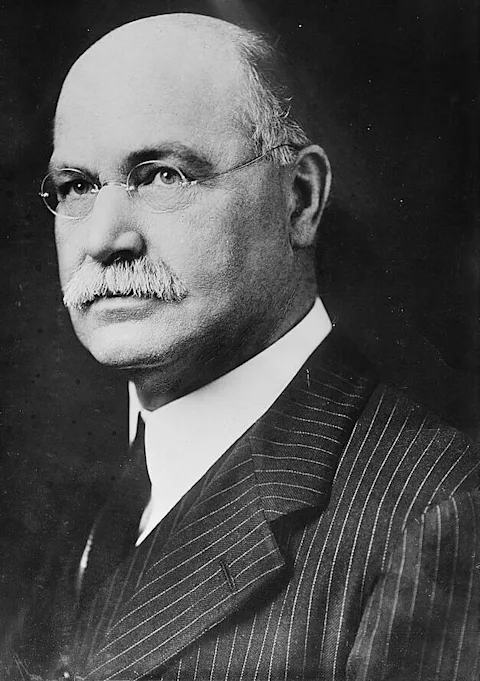
Frank William Taussig 1859–1940
Frank W. Taussig (1859-1940), American economist, taught at Harvard, and worked on international trade. His articles and books on tariffs, both in theory and in careful empirical studies of industries and history, became the foundation of how modern trade theory is taught today. He was editor of the Quarterly Journal of Economics.
Related People
Alfred Marshall
Author
As one of the founding figures of neoclassical economics, Marshall’s ideas on supply, demand, and equilibrium significantly influenced Taussig’s approach to applied economic problems, especially in trade.
Jacob Viner
Author
Viner’s work on the economics of international trade and tariffs complements Taussig’s practical and historical analyses.
Thorstein Veblen
Author
Veblen’s critical analysis of economic practices provided a contrasting perspective to Taussig’s more classical approach, but both addressed economic changes during industrialization.


Critical Responses
Works that answer or challenge this text.
- Article
Review of Taussig in Journal of Political Economy
R.G. BlakeyVisit site ↗Blakey offers insights into Taussig's perspectives on tariffs and trade policy, evaluating the strengths and potential oversights in his analysis.
Connected Readings
What to read next.
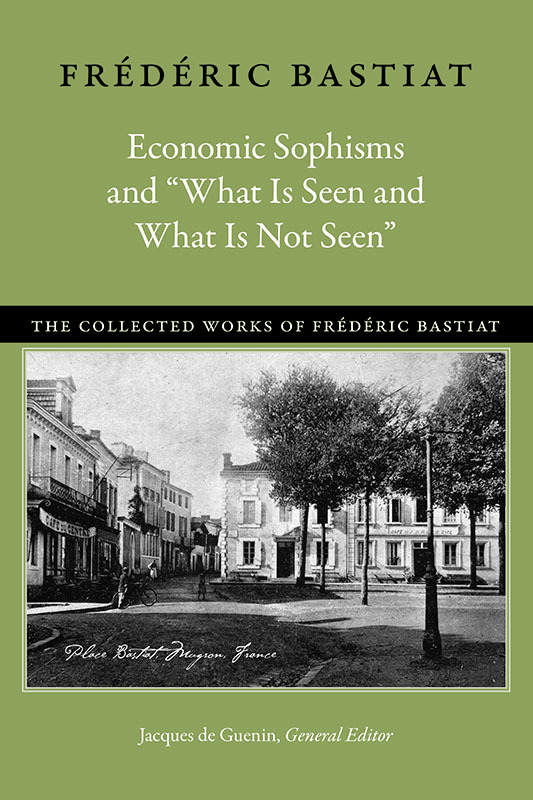 Book
The Collected Works of Frédéric Bastiat. Vol. 3: Economic Sophisms and “What is Seen and What is Not Seen”
Frédéric BastiatEconomic Sophisms
View title >A collection of essays that debunk economic fallacies, including those related to tariffs and protectionism.

Free Trade Under Fire
Visit site ↗Douglas Irwin offers a defense of free trade policies against modern protectionist arguments, providing a contemporary contrast to Taussig’s historical analysis.
More in Commerce
See all >Encouragement of Irish Linen Manufacture (August 1697)
John LockeSpeeches on Free Trade
Richard CobdenCommerce Defended (1808)
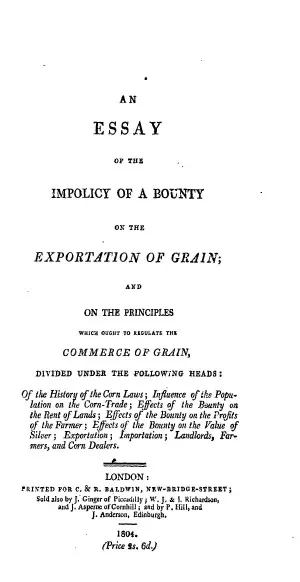
James MillAn Essay of the Impolicy of a Bounty on the Exportation of Grain (1804)
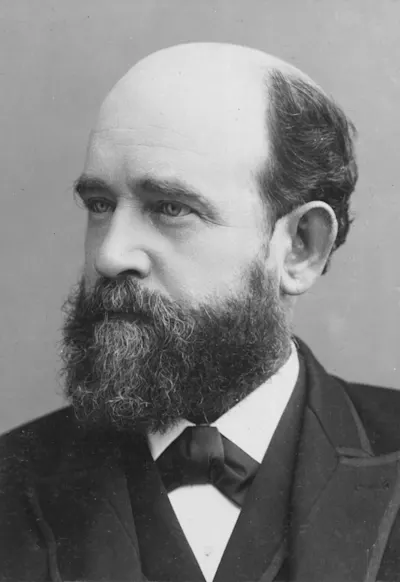
James MillProtection or Free Trade
Henry GeorgeThe League. 1845 Part 2 (July 5 - Dec. 27 1845).
National Anti-Corn Law LeagueThe League. 1844 Part 2 (July 6 - Dec. 28 1844).
National Anti-Corn Law LeagueThe League. (1843-1846).
National Anti-Corn Law LeagueSpeeches on Questions of Public Policy, 2 vols.
Richard Cobden