


Author
Thomas Hodgskin
1787–1869
Thomas Hodgskin (1787-1869) was an officer in the British Navy before leaving because of his opposition to the brutal treatment of sailors. He worked for the free trade magazine The Economist and wrote and lectured on laissez-faire economic ideas to working men’s institutes.
Biography
He was one of the earliest popularizers of economics for audiences of non-economists and gave lectures on free trade, the corn laws, and labor even before Jane Haldimand Marcet. Hodgskin passionately cared about the concerns of laborers after his experience with the maltreatment of sailors. His discussions of the labor theory of value followed up on David Ricardo and pre-dated John Stuart Mill’s expositions on similar themes. He was later cited by Karl Marx and Frederick Engels in Marx’s Capital. He is commonly, though incorrectly, referred to as a Ricardian socialist.
Works by Thomas Hodgskin
7 titles in the library
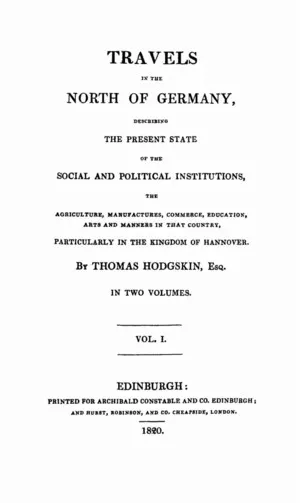
Thomas Hodgskin · 1820
Travels in the North of Germany, 2 vols.
A two volume work in which Hodgskin describes in great detail the economic, political, legal, and social conditions he observed in his travels across northern Germany.
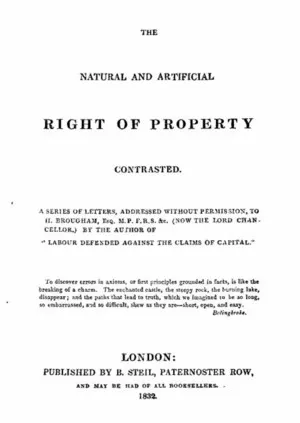
Thomas Hodgskin · 1832
The Natural and Artificial Right of Property Contrasted
In this series of letters to Lord Braugham, Hodgskin distinguishes between the natural right of property (based upon Lockean principles of natural law) and the artificial right of property (which is decreed by…
Thomas Hodgskin · 1820
Travels in the North of Germany, vol. 1
Vol. I of a two volume work in which Hodgskin describes in great detail the economic, political, legal, and social conditions he observed in his travels across northern Germany.
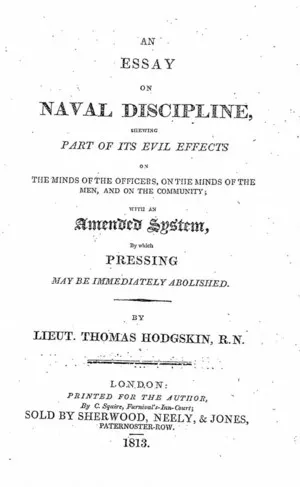
Thomas Hodgskin · 1813
An Essay on Naval Discipline
Hosgskin began his interesting career as a radical individualist and natural rights defender of the free market with this pamphlet criticising the British naval policy of impressing (i.e. conscripting) sailors into the…
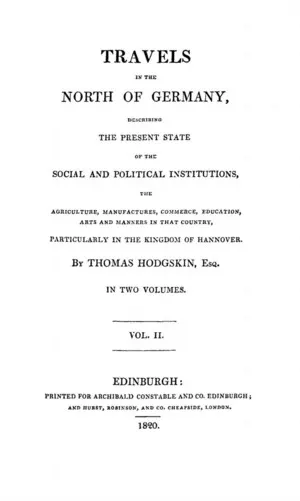
Thomas Hodgskin · 1820
Travels in the North of Germany, vol. 2
Vol. II of a two volume work in which Hodgskin describes in great detail the economic, political, legal, and social conditions he observed in his travels across northern Germany.
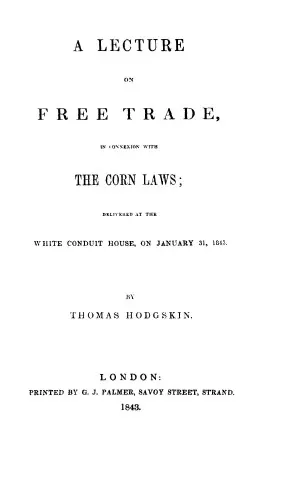
Thomas Hodgskin · 1843
A Lecture on Free Trade, in connexion with the Corn Laws
An example of one of Hodgskin’s popular lectures to a working class audience, this time on the benefits of free trade.
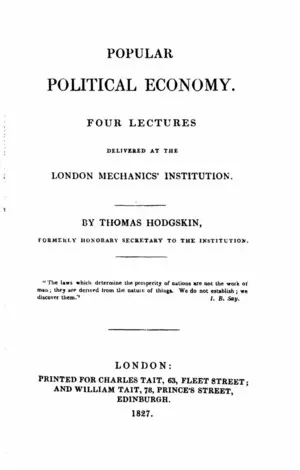
Thomas Hodgskin · 1827
Popular Political Economy. Four lectures delivered at the London Mechanics Institution
Thomas Hodgskin, an officer in the British Navy who later worked for The Economist, was one of the earliest popularizers of economics for audiences of non-economists. He gave lectures on free trade, the corn laws, and…
Quotes from Thomas Hodgskin
5 quotes from the library