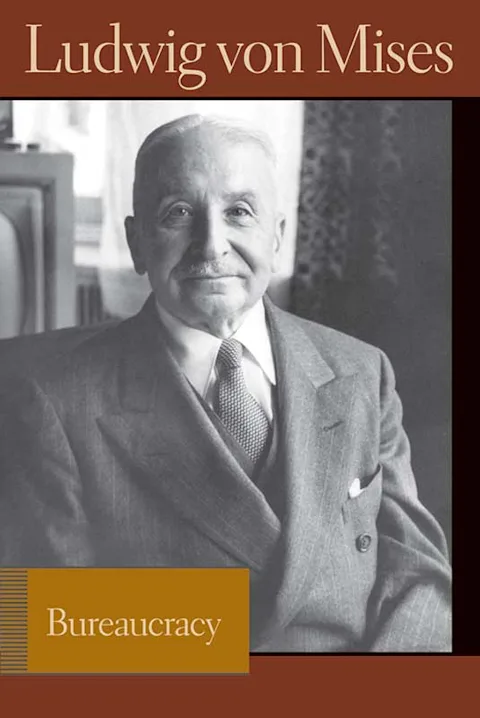
Bureaucracy
- Ludwig von Mises(author)
- Bettina Bien Greaves(editor)
Originally published by Yale University Press in 1944, Bureaucracy is a classic fundamental examination of the nature of bureaucracies and free markets in juxtaposition to various political systems.
Key Quotes
Passages from this text chosen by OLL editors.
- Economics“
The real bosses, in the capitalist system of market economy, are the consumers. They, by their buying and by their abstention from buying, decide who should own the capital and run the plants. They determine what should be produced and in what quantity and quality. Their attitudes result either in profit or in loss for the enterpriser. They make poor men rich and rich men poor. They are no easy bosses. They are full of whims and fancies, changeable and unpredictable. They do not care a whit for past merit. As soon as something is offered to them that they like better or that is cheaper, they desert their old purveyors. With them nothing counts more than their own satisfaction. They bother neither about the vested interests of capitalists nor about the fate of the workers who lose their jobs if as consumers they no longer buy what they used to buy.
About This Edition
Citation
Mises, Ludwig von. Bureaucracy, edited and with a Foreword by Bettina Bien Greaves (Indianapolis: Liberty Fund, 2007).
Mises, Ludwig von. Bureaucracy. Edited by Bettina Bien Greaves, Liberty Fund, 2007. Online Library of Liberty, https://oll.libertyfund.org/titles/greaves-bureaucracy.
Mises, L. v. (2007). Bureaucracy. Liberty Fund. https://oll.libertyfund.org/titles/greaves-bureaucracy
@book{mises2007bureaucracy,
  author = {Ludwig von Mises},
  editor = {Bettina Bien Greaves},
  title = {Bureaucracy},
  publisher = {Liberty Fund},
  address = {Indianapolis},
  year = {2007},
  url = {https://oll.libertyfund.org/titles/greaves-bureaucracy},
  note = {Online Library of Liberty}
}TY - BOOK AU - Mises, Ludwig von A2 - Greaves, Bettina Bien TI - Bureaucracy PY - 2007 CY - Indianapolis PB - Liberty Fund UR - https://oll.libertyfund.org/titles/greaves-bureaucracy DB - Online Library of Liberty ER -
Copyright
The copyright to this edition, in both print and electronic forms, is held by Liberty Fund, Inc.

About the author
Ludwig von Mises 1881–1973
Ludwig von Mises (1881-1973) was the acknowledged leader of the Austrian School of economic thought, a prodigious originator in economic theory, and a prolific author. Mises’ writings and lectures encompassed economic theory, history, epistemology, government, and political philosophy. His contributions to economic theory include important clarifications on the quantity theory of money, the theory of the trade cycle, the integration of monetary theory with economic theory in general, and a demonstration that socialism must fail because it cannot solve the problem of economic calculation.
Mises was the first scholar to recognize that economics is part of a larger science in human action, a science which Mises called “praxeology”. Mises wrote many works on two related economic themes: 1. monetary economics, inflation, and the role of government, and 2. the differences between government-controlled economies and free trade. His influential work on economic freedoms, their causes and consequences, brought him to highlight the interrelationships between economic and non-economic freedoms in societies, and the appropriate role for government.
See also our collection of extracts, essays, and other resources on Mises.
Related People
James M. Buchanan
Author
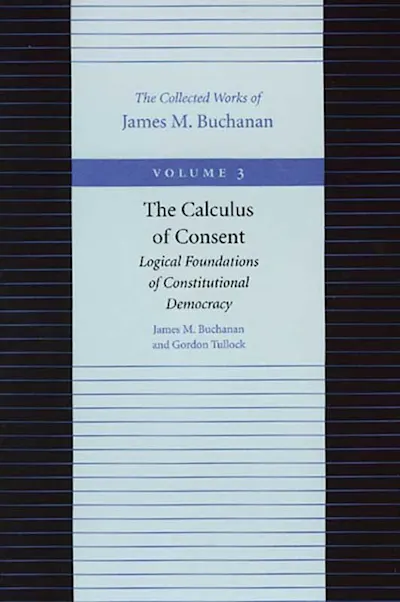
Buchanan's "The Limits of Liberty" and "The Calculus of Consent" (with Gordon Tullock) provide a more nuanced view of government decision-making, showing that bureaucracy is not purely about inefficiency but also about rules that can enable social cooperation.

Critical Responses
Works that answer or challenge this text.
 Book
The Intellectual Crisis in American Public Administration
Vincent OstromVisit site ↗Ostrom questioned Mises' argument that all bureaucracy is inherently rigid and inefficient. He showed that polycentric governance—where multiple institutions interact in a decentralized way—can sometimes be more efficient than private markets in managing public goods.
Connected Readings
What to read next.
 Liberty Classic
Alternatives to a Burgeoning Bureaucracy: Lessons from Ludwig von Mises's Bureaucracy
Stefanie Haeffele and Anne HobsonVisit site ↗Mises identifies the growing scale and scope of the administrative state and issues a warning against the tendency to bureaucratize political, economic, and social life, arguing that such an expansion in the bureaucratization of human activity would infringe upon individual freedom to manage our own affairs.
 Econlib Article
The Thing Itself
Michael MungerVisit site ↗We are always tempted to reform government agencies, to fiddle with organization charts, creating new units and scrapping old ones. We hear the sirens’ song: We could do good, things could be better.
 Book
The Road to Serfdom
F. A. HayekVisit site ↗Friedrich Hayek explains how central planning leads to totalitarianism.
- Book
Bureaucracy and Representative Government
William A. Niskenen, Jr.Visit site ↗Niskanen applies public choice theory to bureaucracy, explaining inefficiencies.
 What to read next.
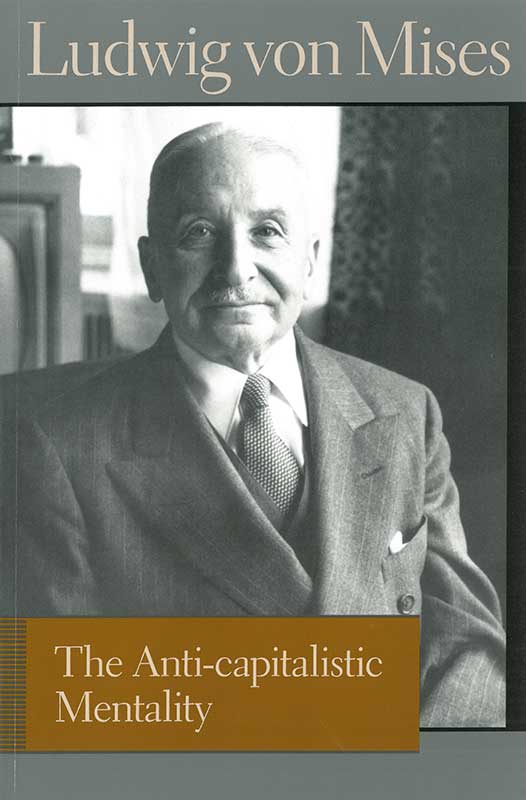
The Anti-capitalistic Mentality
Ludwig von MisesView title >Explores why intellectuals and policymakers often oppose capitalism and free markets.
More in Political Science
See all >The Collected Works of Arthur Seldon, vol. 5 - Government Failure and Over-Government
Arthur SeldonThe American Commonwealth, vol. 1
Viscount James BryceOn Executive Power in Great States
Jacques NeckerEncyclopedic Liberty: Political Articles in the Dictionary of Diderot and D’Alembert
Denis DiderotThe History of the Origins of Representative Government in Europe
François GuizotAmerican Political Writing During the Founding Era: 1760-1805, vol. 2
Charles S. HynemanAmerican Political Writing During the Founding Era: 1760-1805, vol. 1
Charles S. HynemanThe Calculus of Consent: Logical Foundations of Constitutional Democracy
James M. BuchananAmerican Political Writing During the Founding Era: 1760-1805, 2 vols.
Charles S. Hyneman