

Ludwig von Mises
1881–1973 · 4 titles


Political Science
38 items in this collection
These titles provide some general theoretical, historical, or sociological analysis of the State and how it functions.
In this collection
13 titles, earliest first.
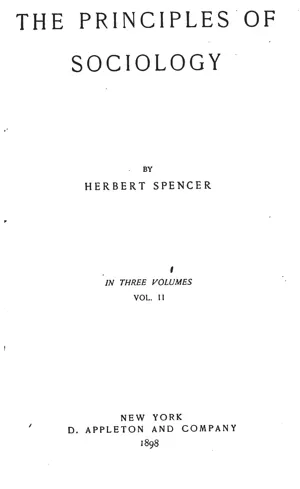
Herbert Spencer · 1876
This is vol. 2 of the third revised edition of Herbert Spencer's magnum opus on sociology which was first published in 1876. Here, he covers "ceremonial" institutions and political institutions (with his famous…
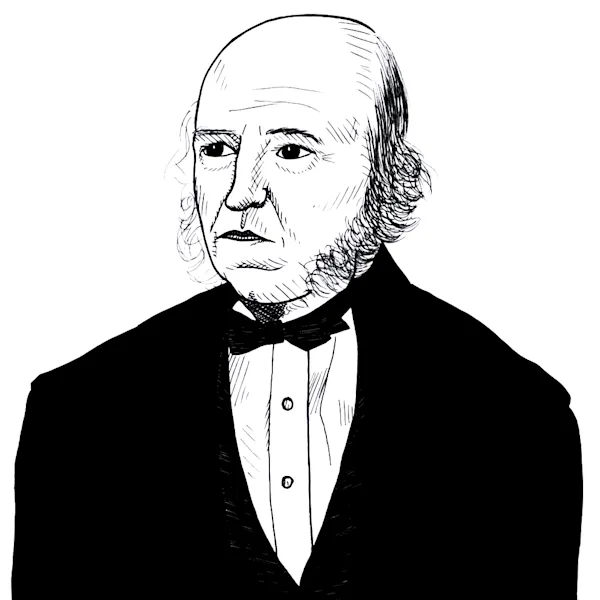
Herbert Spencer · 1884
A facsimile edition of the four essays that Spencer published as The Man Versus the State in 1884. Spencer develops various specific disastrous ramifications of the wholesale substitution of the principle of compulsory…
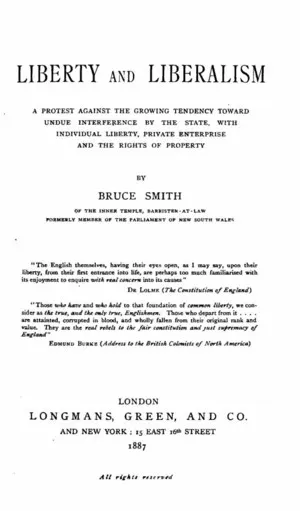
Bruce Smith · 1887
Smith was a follower of Herbert Spencer and the English Liberty and Property Defence League. His book is a critique of the growing intervention of the state in economic and civil matters in Australia and elsewhere in…
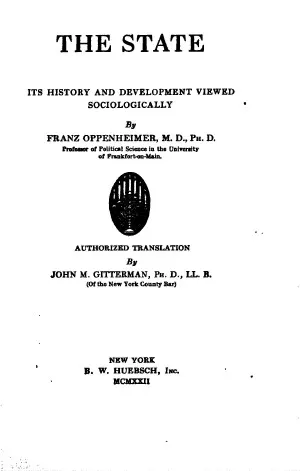
Franz Oppenheimer · 1919
A pioneering historical analysis of the state from a sociological perspective which focuses on the changing nature of political power and the groups who wielded this power. One of his key insights is the distinction…
Ludwig von Mises · 1922
This is a newly annotated edition of the classic first published in German in 1922. It is the definitive refutation of nearly every type of socialism ever devised. Mises presents a wide-ranging analysis of society,…
Ludwig von Mises · 1940
Interventionism provides Mises’s analysis of the problems of government interference in business from the Austrian School perspective. Written in 1940, before the United States was officially involved in World War II,…
Ludwig von Mises · 1944
Originally published by Yale University Press in 1944, Bureaucracy is a classic fundamental examination of the nature of bureaucracies and free markets in juxtaposition to various political systems.
Ludwig von Mises · 1944
Published in 1944, during World War II, Omnipotent Government was written and published after Mises arrived in the United States. In this volume Mises provides in economic terms an explanation of the international…
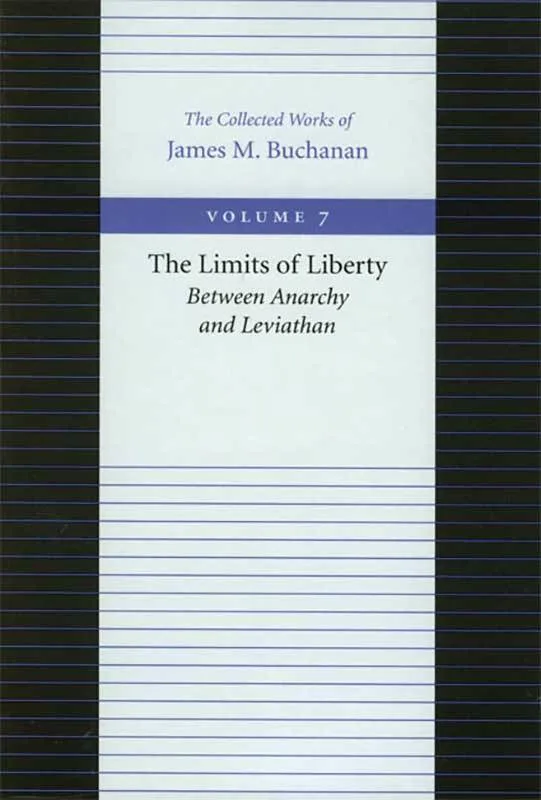
James M. Buchanan · 1975
Vol. 7 of The Collected Works. The Limits of Liberty made James Buchanan’s name more widely known than ever before among political philosophers and theorists and established Buchanan, along with John Rawls and Robert…
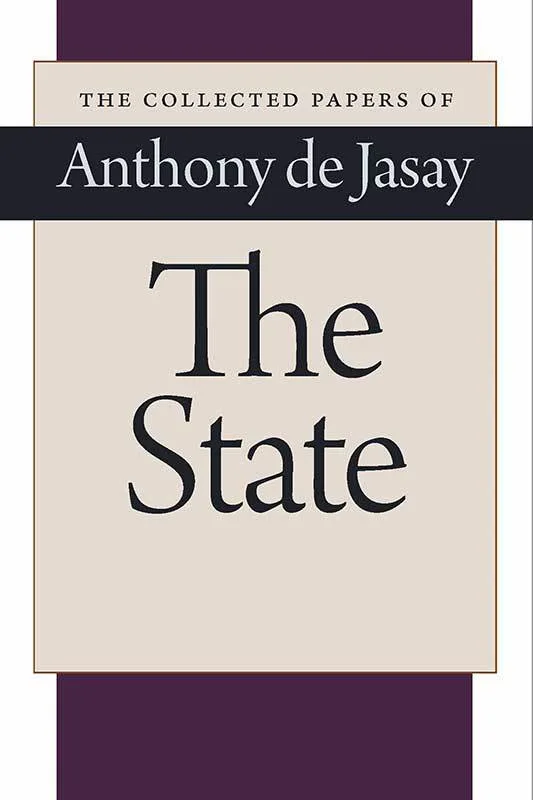
Anthony de Jasay · 1985
The State is a brilliant analysis of modern political arrangements that views the state as acting in its own interest contrary to the interests of individuals and even of an entire society. Read the Liberty Classic on…
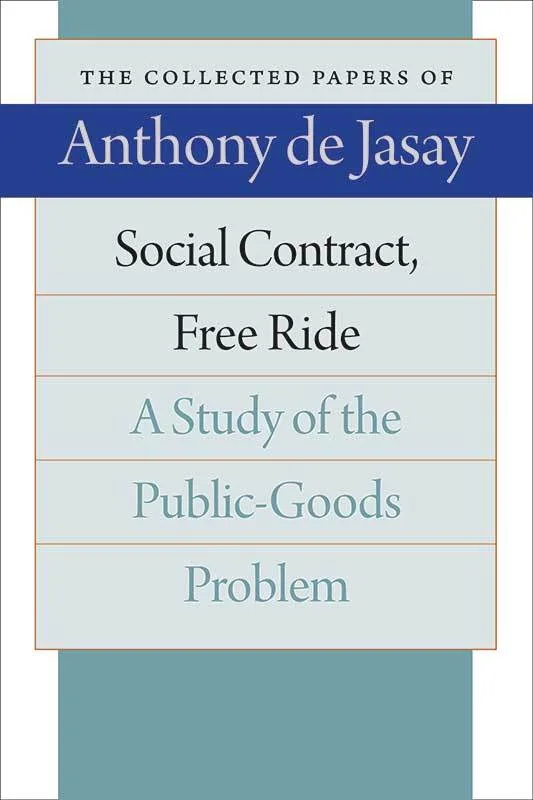
Anthony de Jasay · 1989
Jasay refutes the common idea that we need a government as a provider of public goods. He argues that without taxation voluntary contributions to provide freely accessible benefits would be made by some members of…
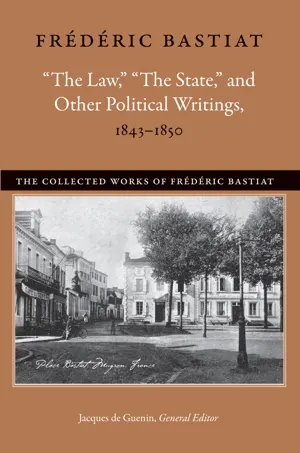
Frédéric Bastiat · 2012
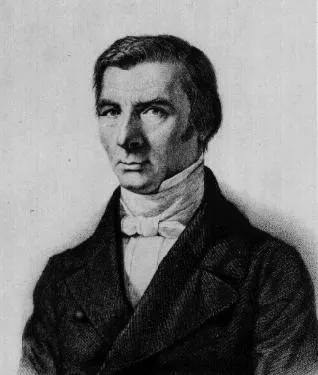
Volume 2 of a collection of the works of the 19th century French political economist Frédéric Bastiat. This volume contains 19 essays on political theory, including “The State,” “The Law,” and “Property and Plunder.” A…
Frédéric Bastiat · 2013
The Best of Bastiat (BOB) is a collection of some of the best material in Liberty Fund’s 6 volume edition of The Collected Works of Frédéric Bastiat (2011-). They are chapter length extracts and have been edited as…
In this collection
Authors, editors and translators of these titles, most titles first.
1881–1973 · 4 titles

1917–2019 · 3 titles

1925–2019 · 2 titles

1801–1850 · 2 titles

1820–1903 · 2 titles

1851–1937 · 1 title

b. 1957 · 1 title

1939–2014 · 1 title

1864–1943 · 1 title

1899–1992 · 1 title

b. 1949 · 1 title
1887–1939 · 1 title

1931–2015 · 1 title

1919–2013 · 1 title
1 title
1 title

b. 1939 · 1 title
In this collection
From The Reading Room, Liberty Matters and the library’s other publications.
Jan 05, 2020
Passages on this subject, chosen by OLL editors.
If, however, we understand by society or the state the government, the question is changed altogether; and we must no longer ask whether charity being a virtue in the individual, is not equally a virtue in society, but whether it is proper, moral and advantageous to have charity practiced by the government, or whether it is even possible for the government to practice charity at all. We say not. It is very evident that Charity and fraternity are virtues only when they are free and spontaneous. State and, therefore, forced, charity is not a virtue, it is a tax.
The state, under either the contractarian or the Marxist hypothesis, has got all the guns. Those who armed it by disarming themselves, are at its mercy. The state’s sovereignty means that there is no appeal against its will, no higher instance which could possibly make it do one thing rather than another. Everything really depends on Leviathan giving no cause to people to rebel (Hobbes is assuming that it would not), or on the state oppressing only the right people, i.e. the workers. There are certainly good reasons, both a priori and empirical, why such assumptions should, at least some of the time, be wrong.
With the state as a source of reward for interest groups, free riding loses most of its destructive potential as a check on group formation and group survival. In terms of the “ecological” parallel used above, prey, predator and parasite no longer balance each other out. The defensive reactions of the prey are blunted: there is no market mechanism to signal society that a given interest group is raising its claims upon it; its exactions are screened from it by the size and complexity of the state’s fiscal and other redistributive apparatus. Moreover, while the mechanism of bilateral contracts between consenting parties works symmetrically, in that it is as efficient in concluding acceptable as in rejecting unacceptable terms, the democratic political process is constructed to work asymmetrically, i.e. to concede a large variety of group claims rather than to deny them. Hence, even if the “prey” were specifically aware of the “predator,” it would have no well-adapted defence mechanism for coping with it.
"Of the laws of nature, on which the condition of man depends, that which is attended with the greatest number of consequences, is the necessity of labour for obtaining the means of subsistence, as well as the means of the greatest part of our pleasures. This is, no doubt, the primary cause of government; for, if nature had produced spontaneously all the objects which we desire, and in sufficient abundance for the desires of all, there would have been no source of dispute or of injury among men; nor would any man have possessed the means of ever acquiring authority over another."
We have seen already, that if one man has power over others placed in his hands, he will make use of it for an evil purpose; for the purpose of rendering those other men the abject instruments of his will. If we, then, suppose, that one man has the power of choosing the Representatives of the people, it follows, that he will choose men, who will use their power as Representatives for the promotion of this his sinister interest.
We have likewise seen, that when a few men have power given them over others, they will make use of it exactly for the same ends, and to the same extent, as the one man. It equally follows, that, if a small number of men have the choice of the Representatives, such Representatives will be chosen as will promote the interests of that small number, by reducing, if possible, the rest of the community to be the abject and helpless slaves of their will.
Whenever the powers of government are placed in any hands other than those of the community, whether those of one man, of a few, or of several, those principles of human nature which imply that government is at all necessary, imply that these persons will make use of them to defeat the very end for which government exists.
From James Mill’s “Government,” in Supplement to the Fourth, Fifth, and Sixth Editions of the Encyclopaedia Britannica. With Preliminary Dissertations on the History of the Science (Edinburgh, Archibald Constable and Company, 1824).
This “spirit of adventure,” especially in the Anglo-Saxon, has taken the shape of “sport,” which in its stronger or “more adventurous” forms involves a direct appeal to the lust of slaughter and the crude struggle for life involved in pursuit. The animal lust of struggle, once a necessity, survives in the blood, and just in proportion as a nation or a class has a margin of energy and leisure from the activities of peaceful industry, it craves satisfaction through “sport,” in which hunting and the physical satisfaction of striking a blow are vital ingredients. The leisured classes in Great Britain, having most of their energy liberated from the necessity of work, naturally specialise on “sport,” the hygienic necessity of a substitute for work helping to support or coalescing with the survival of a savage instinct. As the milder expressions of this passion are alone permissible in the sham or artificial encounters of domestic sports, where wild game disappears and human conflicts more mortal than football are prohibited, there is an ever stronger pressure to the frontiers of civilisation in order that the thwarted “spirit of adventure” may have strong, free play.
Economic theory. Demography
473 titles · 88 publications · 293 people

Political Science
618 titles · 60 publications · 383 people

Sociology
62 titles · 3 publications · 35 people
Socialism. Communism. Anarchism
6 titles · 1 publication · 16 people

Economic theory. Demography
6 titles · 30 publications · 28 people

Language and Literature
282 titles · 6 publications · 321 people