The Online Library of Liberty

Search the library

Press Enter to see all results. Esc closes.

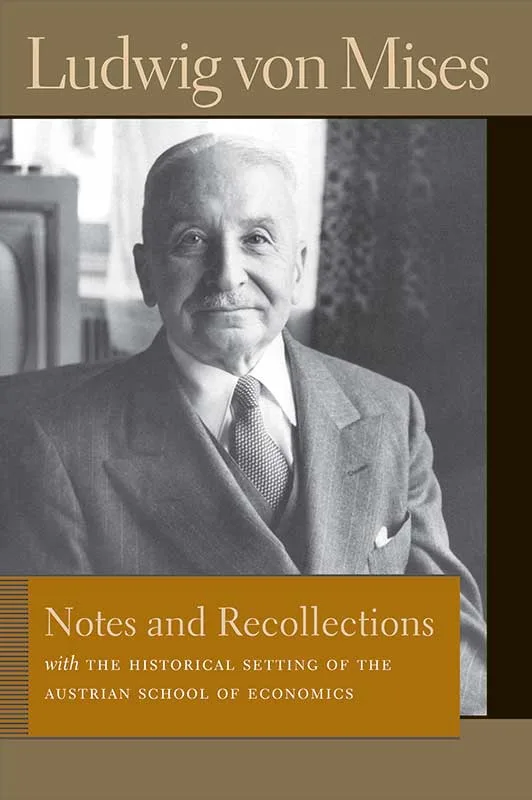
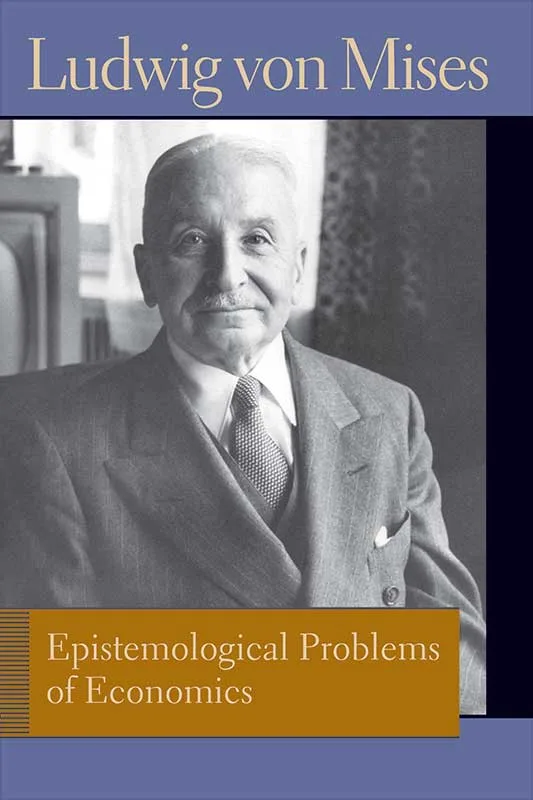
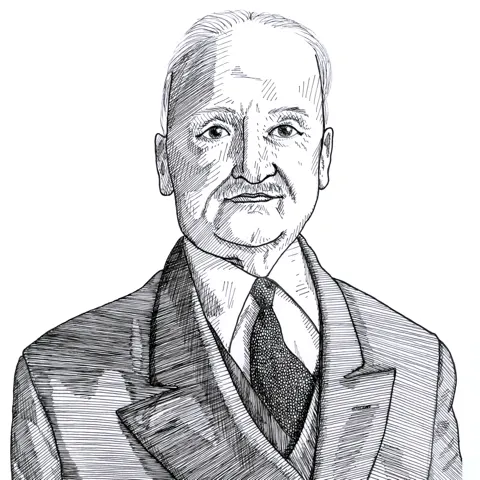
Portrait of Ludwig von Mises

Author

Ludwig von Mises

1881–1973

See more works by Mises ›31 titles in the library

Biography

Works by Ludwig von Mises

30 titles in the library
Foreword by Ludwig von Mises

1 title in the library
Quotes from Ludwig von Mises

25 quotes from the library

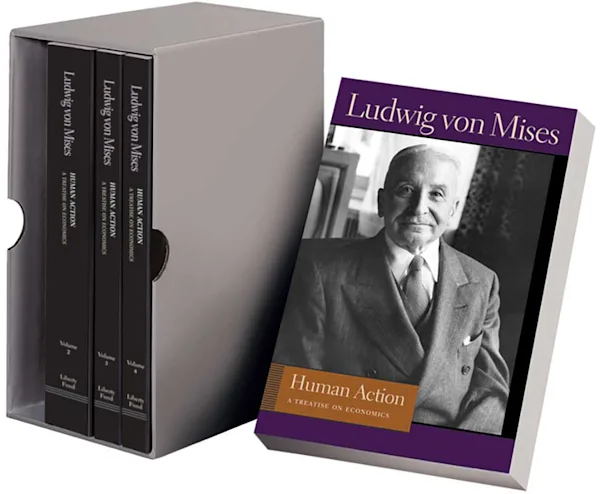
  • Human Action: A Treatise on Economics, vol. 2 (LF ed.)
    Economics recommends neither inflationary nor deflationary policy. It does not urge the governments to tamper with the market’s choice of a medium of exchange. It establishes only the following truths: 1. By committing itself to an inflationary or deflationary policy a government does not promote the public welfare, the commonweal, or the interests of the whole nation. It merely favors one or several groups of the population at the expense of other groups. 2. It is impossible to know in advance which group will be favored by a definite inflationary or deflationary measure and to what extent. These effects depend on the whole complex of the market data involved. They also depend largely on the speed of the inflationary or deflationary movements and may be completely reversed with the progress of these movements. 3. At any rate, a monetary expansion results in misinvestment of capital and overconsumption. It leaves the nation as a whole poorer, not richer. These problems are dealt with in Chapter 20. 4. Continued inflation must finally end in the crack-up boom, the complete breakdown of the currency system. 5. Deflationary policy is costly for the treasury and unpopular with the masses. But inflationary policy is a boon for the treasury and very popular with the ignorant. Practically, the danger of deflation is but slight and the danger of inflation tremendous.
  • The Theory of Money and Credit
    The principle of sound money that guided nineteenth-century monetary doctrines and policies was a product of classical political economy. It was an essential part of the liberal program as developed by eighteenth-century social philosophy and propagated in the following century by the most influential political parties of Europe and America...It is impossible to grasp the meaning of the idea of sound money if one does not realize that it was devised as an instrument for the protection of civil liberties against despotic inroads on the part of governments. Ideologically it belongs in the same class with political constitutions and bills of rights. The demand for constitutional guarantees and for bills of rights was a reaction against arbitrary rule and the nonobservance of old customs by kings. The postulate of sound money was first brought up as a response to the princely practice of debasing the coinage. It was later carefully elaborated and perfected in the age which—through the experience of the American continental currency, the paper money of the French Revolution and the British restriction period—had learned what a government can do to a nation’s currency system... Thus the sound-money principle has two aspects. It is affirmative in approving the market’s choice of a commonly used medium of exchange. It is negative in obstructing the government’s propensity to meddle with the currency system.
  • Economic Freedom and Interventionism
    This country, and with it most of the Western world, is presently going through a period of inflation and credit expansion. As the quantity of money in circulation and deposits subject to check increases, there prevails a general tendency for the prices of commodities and services to rise. Business is booming. Yet such a boom, artificially engineered by monetary and credit expansion, cannot last forever. It must come to an end sooner or later. For paper money and bank deposits are not a proper substitute for nonexisting capital goods. Economic theory has demonstrated in an irrefutable way that a prosperity created by an expansionist monetary and credit policy is illusory and must end in a slump, an economic crisis. It has happened again and again in the past, and it will happen in the future, too.
  • Human Action: A Treatise on Economics, vol. 3 (LF ed.)
    How far we are today from the rules of international law developed in the age of limited warfare! Modern war is merciless, it does not spare pregnant women or infants; it is indiscriminate killing and destroying. It does not respect the rights of neutrals. Millions are killed, enslaved, or expelled from the dwelling places in which their ancestors lived for centuries. Nobody can foretell what will happen in the next chapter of this endless struggle.
  • Human Action: A Treatise on Economics, vol. 1 (LF ed.)
    Two football teams, the Blues and the Yellows, will play tomorrow. In the past the Blues have always defeated the Yellows. This knowledge is not knowledge about a class of events. If we were to consider it as such, we would have to conclude that the Blues are always victorious and that the Yellows are always defeated. We would not be uncertain with regard to the outcome of the game. We would know for certain that the Blues will win again. The mere fact that we consider our forecast about tomorrow’s game as only probable shows that we do not argue this way. On the other hand, we believe that the fact that the Blues were victorious in the past is not immaterial with regard to the outcome of tomorrow’s game. We consider it as a favorable prognosis for the repeated success of the Blues. If we were to argue correctly according to the reasoning appropriate to class probability, we would not attach any importance to this fact. If we were not to resist the erroneous conclusion of the “gambler’s fallacy,” we would, on the contrary, argue that tomorrow’s game will result in the success of the Yellows.
  • Socialism: An Economic and Sociological Analysis
    Society is co-operation; it is community in action. To say that Society is an organism, means that society is division of labour. To do justice to this idea we must take into account all the aims which men set themselves and the means by which these are to be attained. It includes every inter-relation of thinking and willing man. Modern man is a social being, not only as one whose material needs could not be supplied in isolation, but also as one who has achieved a development of reason and of the perceptive faculty that would have been impossible except within society. Man is inconceivable as an isolated being …
  • Human Action: A Treatise on Economics, vol. 3 (LF ed.)
    It is important to realize that what those benefited by these measures (tariffs) consider an advantage for themselves lasts only for a limited time. In the long run the privilege accorded to a definite class of producers loses its power to create specific gains. The privileged branch attracts newcomers, and their competition tends to eliminate the specific gains derived from the privilege. Thus the eagerness of the law’s pet children to acquire privileges is insatiable. They continue to ask for new privileges because the old ones lose their power.
  • Liberalism: The Classical Tradition (1927) (LF ed.)
    The ultimate ideal envisioned by liberalism is the perfect cooperation of all mankind, taking place peacefully and without friction. Liberal thinking always has the whole of humanity in view and not just parts. It does not stop at limited groups; it does not end at the border of the village, of the province, of the nation, or of the continent. Its thinking is cosmopolitan and ecumenical: it takes in all men and the whole world. Liberalism is, in this sense, humanism; and the liberal, a citizen of the world, a cosmopolite.
  • Human Action: A Treatise on Economics, vol. 2 (LF ed.)
    The eminence of the Western nations consisted in the fact that they succeeded better in checking the spirit of predatory militarism than the rest of mankind and that they thus brought forth the social institutions required for saving and investment on a broader scale. Even Marx did not contest the fact that private initiative and private ownership of the means of production were indispensable stages in the progress from primitive man’s penury to the more satisfactory conditions of nineteenth-century Western Europe and North America.
  • Selected Writings of Ludwig von Mises, vol. 1: Monetary and Economic Problems Before, During, and After the Great War
    Interventionism does not want to abolish private ownership of the means of production but only to restrict it. It declares, on the one hand, that unlimited private ownership of the means of production is harmful to society; but it maintains, on the other hand, that public ownership of the means of production—socialism—is, either in general or at least for the time being, impractical. Thus it wants to create some third way: a state of society that is midway between private ownership of the means of production, on the one hand, and collective ownership of the means of production, on the other hand. In this way the “excesses” and damages of capitalism are supposed to be prevented, while the advantages of free initiative and vitality, which socialism cannot provide, are preserved.
  • Liberalism: The Classical Tradition (1927) (LF ed.)
    When liberal ideas began to spread to central and eastern Europe from their homeland in western Europe, the traditional powers—the monarchy, the nobility, and the clergy—trusting in the instruments of repression that were at their disposal, felt completely safe. They did not consider it necessary to combat liberalism and the mentality of the Enlightenment with intellectual weapons. Suppression, persecution, and imprisonment of the malcontents seemed to them to be more serviceable. They boasted of the violent and coercive machinery of the army and the police. Too late they realized with horror that the new ideology snatched these weapons from their hands by conquering the minds of officials and soldiers. It took the defeat suffered by the old regime in the battle against liberalism to teach its adherents the truth that there is nothing in the world more powerful than ideologies and ideologists and that only with ideas can one fight against ideas. They realized that it is foolish to rely on arms, since one can deploy armed men only if they are prepared to obey, and that the basis of all power and dominion is, in the last analysis, ideological.
  • Omnipotent Government: The Rise of the Total State and Total War
    It has been necessary to dwell upon these truisms because the mythologies and metaphysics of etatism have succeeded in wrapping them in mystery. The state is a human institution, not a superhuman being. He who says “state” means coercion and compulsion. He who says: There should be a law concerning this matter, means: The armed men of the government should force people to do what they do not want to do, or not to do what they like. He who says: This law should be better enforced, means: The police should force people to obey this law. He who says: The state is God, deifies arms and prisons. The worship of the state is the worship of force. There is no more dangerous menace to civilization than a government of incompetent, corrupt, or vile men. The worst evils which mankind ever had to endure were inflicted by bad governments. The state can be and has often been in the course of history the main source of mischief and disaster.
  • The Theory of Money and Credit
    It is not only the monetary and credit system that is out of gear, but the whole economic system. For years past, the economic policy of all countries has been in conflict with the principles on which the nineteenth century built up the welfare of the nations. International division of labor is now regarded as an evil, and there is a demand for a return to the autarky of remote antiquity. Every importation of foreign goods is heralded as a misfortune, to be averted at all costs. With prodigious ardour, mighty political parties proclaim the gospel that peace on earth is undesirable and that war alone means progress. They do not content themselves with describing war as a reasonable form of international intercourse, but recommend the employment of force of arms for the suppression of opponents even in the solution of questions of domestic politics. Whereas liberal economic policy took pains to avoid putting obstacles in the way of developments that allotted every branch of production to the locality in which it secured the greatest productivity to labor, nowadays the endeavor to establish enterprises in places where the conditions of production are unfavorable is regarded as a patriotic action that deserves government support. To demand of the monetary and credit system that it should do away with the consequences of such perverse economic policy, is to demand something that is a little unfair.
  • The Theory of Money and Credit
    Another acatallactic doctrine seeks to explain the value of money by the command of the state. According to this theory the value of money rests on the authority of the highest civil power, not on the estimation of commerce. The law commands, the subject obeys. This doctrine can in no way be fitted into a theory of exchange; for apparently it would have a meaning only if the state fixed the actual level of the money prices of all economic goods and services as by means of general price regulation. Since this cannot be asserted to be the case, the state theory of money is obliged to limit itself to the thesis that the state command establishes only the Geltung or validity of the money in nominal units, but not the validity of these nominal units in commerce.
  • Human Action: A Treatise on Economics, vol. 2 (LF ed.)
    Freedom, as people enjoyed it in the democratic countries of Western civilization in the years of the old liberalism’s triumph, was not a product of constitutions, bills of rights, laws, and statutes. Those documents aimed only at safeguarding liberty and freedom, firmly established by the operation of the market economy, against encroachments on the part of officeholders. No government and no civil law can guarantee and bring about freedom otherwise than by supporting and defending the fundamental institutions of the market economy. Government means always coercion and compulsion and is by necessity the opposite of liberty. Government is a guarantor of liberty and is compatible with liberty only if its range is adequately restricted to the preservation of what is called economic freedom. Where there is no market economy, the best-intentioned provisions of constitutions and laws remain a dead letter.
  • Human Action: A Treatise on Economics, vol. 2 (LF ed.)
    The gold standard was the world standard of the age of capitalism, increasing welfare, liberty, and democracy, both political and economic. In the eyes of the free traders its main eminence was precisely the fact that it was an international standard as required by international trade and the transactions of the international money and capital market. It was the medium of exchange by means of which Western industrialism and Western capital had borne Western civilization into the remotest parts of the earth’s surface, everywhere destroying the fetters of age-old prejudices and superstitions, sowing the seeds of new life and new well-being, freeing minds and souls, and creating riches unheard of before. It accompanied the triumphal unprecedented progress of Western liberalism ready to unite all nations into a community of free nations peacefully cooperating with one another. It is easy to understand why people viewed the gold standard as the symbol of this greatest and most beneficial of all historical changes. All those intent upon sabotaging the evolution toward welfare, peace, freedom, and democracy loathed the gold standard, and not only on account of its economic significance. In their eyes the gold standard was the labarum [(Latin) derived from the Roman, or Imperial, standard or symbol for which men live or die], the symbol, of all those doctrines and policies they wanted to destroy. In the struggle against the gold standard much more was at stake than commodity prices and foreign exchange rates. The nationalists are fighting the gold standard because they want to sever their countries from the world market and to establish national autarky as far as possible. Interventionist governments and pressure groups are fighting the gold standard because they consider it the most serious obstacle to their endeavors to manipulate prices and wage rates. But the most fanatical attacks against gold are made by those intent upon credit expansion. With them credit expansion is the panacea for all economic ills. It could lower or even entirely abolish interest rates, raise wages and prices for the benefit of all except the parasitic capitalists and the exploiting employers, free the state from the necessity of balancing its budget—in short, make all decent people prosperous and happy. Only the gold standard, that devilish contrivance of the wicked and stupid “orthodox” economists, prevents mankind from attaining everlasting prosperity.
  • Omnipotent Government: The Rise of the Total State and Total War
    The prices set on the unhampered market correspond to an equilibrium of demand and supply. Everybody who is ready to pay the market price can buy as much as he wants to buy. Everybody who is ready to sell at the market price can sell as much as he wants to sell. If the government, without a corresponding increase in the quantity of goods available for sale, decrees that buying and selling must be done at a lower price, and thus makes it illegal either to ask or to pay the potential market price, then this equilibrium can no longer prevail. With unchanged supply there are now more potential buyers on the market, namely, those who could not afford the higher market price but are prepared to buy at the lower official rate. There are now potential buyers who cannot buy, although they are ready to pay the price fixed by the government or even a higher price. The price is no longer the means of segregating those potential buyers who may buy from those who may not. A different principle of selection has come into operation. Those who come first can buy; others are too late in the field. The visible outcome of this state of things is the sight of housewives and children standing in long lines before the groceries, a spectacle familiar to everybody who has visited Europe in this age of price control. If the government does not want only those to buy who come first (or who are personal friends of the salesman), while others go home empty-handed, it must regulate the distribution of the stocks available. It has to introduce some kind of rationing. ... The isolated measures of price fixing fail to attain the ends sought. In fact, they produce effects contrary to those aimed at by the government. If the government, in order to eliminate these inexorable and unwelcome consequences, pursues its course further and further, it finally transforms the system of capitalism and free enterprise into socialism. Many American and British supporters of price control are fascinated by the alleged success of Nazi price control. They believe that the German experience has proved the practicability of price control within the framework of a system of market economy. You have only to be as energetic, impetuous, and brutal as the Nazis are, they think, and you will succeed. These men who want to fight Nazism by adopting its methods do not see that what the Nazis have achieved has been the building up of a system of socialism, not a reform of conditions within a system of market economy. There is no third system between a market economy and socialism. Mankind has to choose between those two systems—unless chaos is considered an alternative.****
  • Economic Freedom and Interventionism
    The financial embarrassment of the main European countries is predominantly caused by the bankruptcy of the nationalized public utilities. The deficit of these enterprises is incurable. A further rise in their rates would bring about a drop in total net proceeds. The traffic could not bear it. Daily experience proves clearly to everybody but the most bigoted fanatics of socialism that governmental management is inefficient and wasteful. But it is impossible to sell these enterprises back to private capital because the threat of a new expropriation by a later government would deter potential buyers. In a capitalist country the railroads and the telegraph and telephone companies pay considerable taxes. In the countries of the mixed economy, the yearly losses of these public enterprises are a heavy drain upon the nation’s purse. They are not taxpayers, but tax-eaters. Under the conditions of today, the nationalized public utilities of Europe are not merely feasting on taxes paid by the citizens of their own country; they are also living at the expense of the American taxpayer. A considerable part of the foreign-aid billions is swallowed by the deficits of Europe’s nationalization experiments...
  • Human Action: A Treatise on Economics, vol. 1 (LF ed.)
    The fundamental social phenomenon is the division of labor and its counterpart human cooperation. Experience teaches man that cooperative action is more efficient and productive than isolated action of self-sufficient individuals. The natural conditions determining man’s life and effort are such that the division of labor increases output per unit of labor expended.
  • Bureaucracy
    The real bosses, in the capitalist system of market economy, are the consumers. They, by their buying and by their abstention from buying, decide who should own the capital and run the plants. They determine what should be produced and in what quantity and quality. Their attitudes result either in profit or in loss for the enterpriser. They make poor men rich and rich men poor. They are no easy bosses. They are full of whims and fancies, changeable and unpredictable. They do not care a whit for past merit. As soon as something is offered to them that they like better or that is cheaper, they desert their old purveyors. With them nothing counts more than their own satisfaction. They bother neither about the vested interests of capitalists nor about the fate of the workers who lose their jobs if as consumers they no longer buy what they used to buy.
  • On the Manipulation of Money and Credit: Three Treatises on Trade-Cycle Theory
    Monetary policy of the preliberal era was either crude coin debasement, for the benefit of financial administration (only rarely intended as Seisachtheia, i.e., to nullify outstanding debts), or still more crude paper money inflation. However, in addition to, sometimes even instead of, its fiscal goal, the driving motive behind paper money inflation very soon became the desire to favor the debtor at the expense of the creditor... With the attainment of gold monometallism, liberals believed the goal of monetary policy had been reached.... The value of gold was then independent of any direct manipulation by governments, political policies, public opinion or parliaments. So long as the gold standard was maintained, there was no need to fear severe price disturbances from the side of money. The adherents of the gold standard wanted no more than this, even though it was not clear to them at first that this was all that could be attained.
  • Omnipotent Government: The Rise of the Total State and Total War
    The most important event in the history of the last hundred years is the displacement of liberalism by etatism. Etatism appears in two forms: socialism and interventionism. Both have in common the goal of subordinating the individual unconditionally to the state, the social apparatus of compulsion and coercion... Etatism assigns to the state the task of guiding the citizens and of holding them in tutelage. It aims at restricting the individual’s freedom to act. It seeks to mold his destiny and to vest all initiative in the government alone. It came into Germany from the West. Saint Simon, Owen, Fourier, Pecqueur, Sismondi, Auguste Comte laid its foundations. Lorenz von Stein was the first author to bring the Germans comprehensive information concerning these new doctrines. The appearance in 1842 of the first edition of his book, Socialism and Communism in Present-Day France, was the most important event in pre-Marxian German socialism. The elements of government interference with business, labor legislation, and trade-unionism also reached Germany from the West. In America Frederick List became familiar with the protectionist theories of Alexander Hamilton.
  • Socialism: An Economic and Sociological Analysis
    The fundamental objection advanced against the practicability of socialism refers to the impossibility of economic calculation. It has been demonstrated in an irrefutable way that a socialist commonwealth would not be in a position to apply economic calculation. Where there are no market prices for the factors of production because they are neither bought nor sold, it is impossible to resort to calculation in planning future action and in determining the result of past action. A socialist management of production would simply not know whether or not what it plans and executes is the most appropriate means to attain the ends sought. It will operate in the dark, as it were. It will squander the scarce factors of production both material and human (labour). Chaos and poverty for all will unavoidably result.
  • The Theory of Money and Credit
    The people of all countries agree that the present state of monetary affairs is unsatisfactory and that a change is highly desirable... The destruction of the monetary order was the result of deliberate actions on the part of various governments. The government-controlled central banks and, in the United States, the government-controlled Federal Reserve System were the instruments applied in this process of disorganization and demolition. Yet without exception all drafts for an improvement of currency systems assign to the governments unrestricted supremacy in matters of currency and design fantastic images of superprivileged superbanks... The inanity of all these plans is not accidental. It is the logical outcome of the social philosophy of their authors.
  • Human Action: A Treatise on Economics, vol. 2 (LF ed.)
    As has been pointed out already, there is no such tendency toward monopolization. It is a fact that with many commodities in many countries monopoly prices prevail, and moreover, some articles are sold at monopoly prices on the world market. However, almost all of these instances of monopoly prices are the outgrowth of government interference with business. They were not created by the interplay of the factors operating on a free market. They are not products of capitalism, but precisely of the endeavors to counteract the forces determining the height of the market prices. It is a distortion of fact to speak of monopoly capitalism. It would be more appropriate to speak of monopoly interventionism or of monopoly statism.