

Susan Love Brown
b. 1948
Susan Love Brown is a recently retired Professor of Anthropology at Florida Atlantic University in Boca Raton, Florida.


Sociology
104 items in this collection
How do human societies constitute themselves? How do they interact with one another? How do they preserve and change themselves? The study of sociology is the exploration of these questions.
In this collection
62 titles, earliest first.
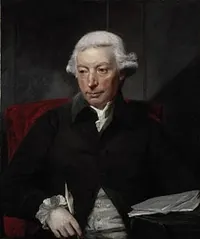
Adam Ferguson · 1767
A pioneering work of the Scottish Enlightenment in the field of “philosophical history”, or what we would today call sociology. It deals with the social, political, economic, intellectual, and legal changes which…
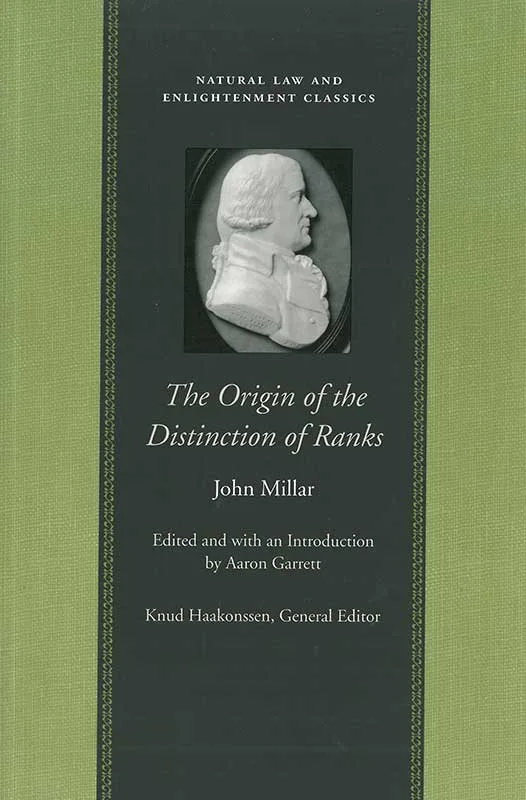
John Millar · 1771
The Origin of the Distinction of Ranks is one of the major products of the Scottish Enlightenment and a masterpiece of jurisprudence and social theory. Millar developed a progressive account of the nature of authority…
Constantin-François Chasseboeuf, Marquis de Volney · 1789
Volney’s best known work deals with the origins of human society, of government and laws, the evolution of society, and the reasons for the decline and fall of empires.
Marie-Jean-Antoine-Nicolas Caritat, Marquis de Condorcet · 1795
Condorcet wrote this while in prison awaiting execution by the Jacobins. It is an optimistic view of the progress the human race will undergo when political and economic liberty are gradually introduced.
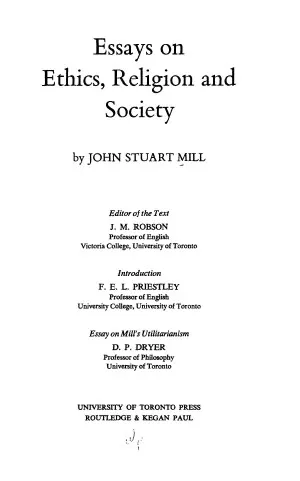
John Stuart Mill · 1833
Vol. 10 of the 33 vol. Collected Works contains a number of Mill’s essays on religion and moral philosophy as well as his works on Utilitarianism and Auguste Comte.
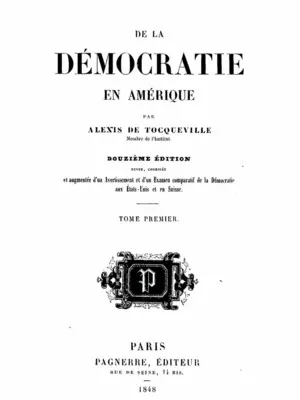
Alexis de Tocqueville · 1835
A revised and corrected 12th edition in French of Tocqueville’s famous analysis of the nature and consequences of democracy in the American Republic. In 4 vols.
Alexis de Tocqueville · 1835
Vol. 1 of 4 vols. A revised and corrected 12th edition in French of Tocqueville’s famous analysis of the nature and consequences of democracy in the American Republic.
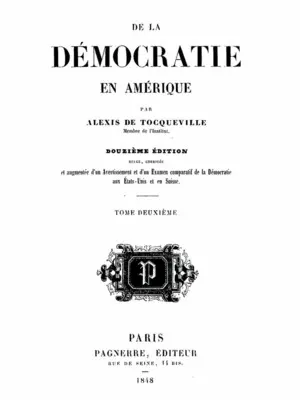
Alexis de Tocqueville · 1835
Vol. 2 of 4 vols. A revised and corrected 12th edition in French of Tocqueville’s famous analysis of the nature and consequences of democracy in the American Republic.
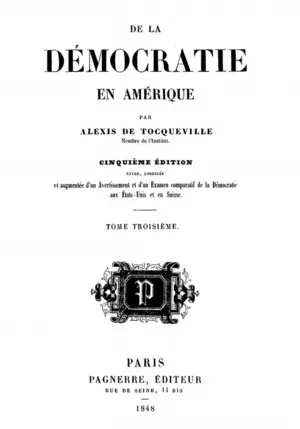
Alexis de Tocqueville · 1835
Vol. 3 of 4 vols. A revised and corrected 12th edition in French of Tocqueville’s famous analysis of the nature and consequences of democracy in the American Republic.
Alexis de Tocqueville · 1835
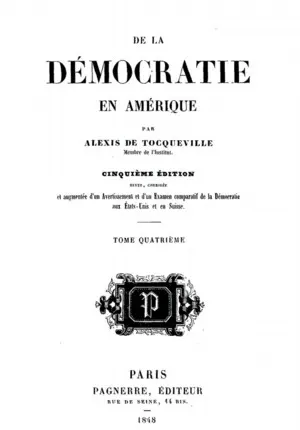
Vol. 4 of 4 vols. A revised and corrected 12th edition in French of Tocqueville’s famous analysis of the nature and consequences of democracy in the American Republic.

Alexis de Tocqueville · 1835
A new 4 volume edition of Tocqueville’s classic text De la Démocratie en Amérique. The Liberty Fund bilingual edition includes Eduardo Nolla’s historical-critical edition of the French text and notes on the lefthand…

Alexis de Tocqueville · 1835
A new 4 volume edition of Tocqueville’s classic text De la Démocratie en Amérique. The original was published in two large volumes, the first in 1835, the second in 1840. The first volume focused primarily on political…

Alexis de Tocqueville · 1835
A new 4 volume edition of Tocqueville’s classic text De la Démocratie en Amérique. The original was published in two large volumes, the first in 1835, the second in 1840. The first volume focused primarily on political…
Harriet Martineau · 1838
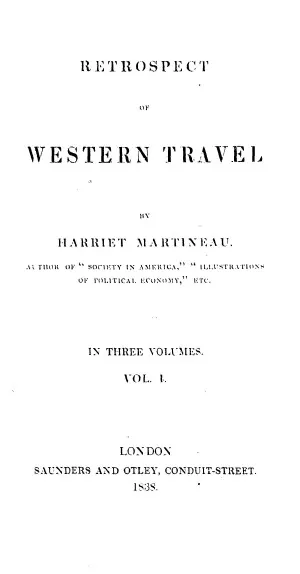
After her trip to American in 1834-36, Martineau wrote a perceptive analysis of social and economic conditions in the U.S.
Harriet Martineau · 1838
After her trip to American in 1834-36, Martineau wrote a perceptive analysis of social and economic conditions in the U.S.
Harriet Martineau · 1838
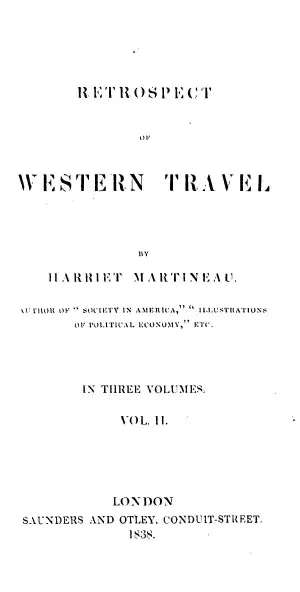
After her trip to American in 1834-36, Martineau wrote a perceptive analysis of social and economic conditions in the U.S.
Harriet Martineau · 1838
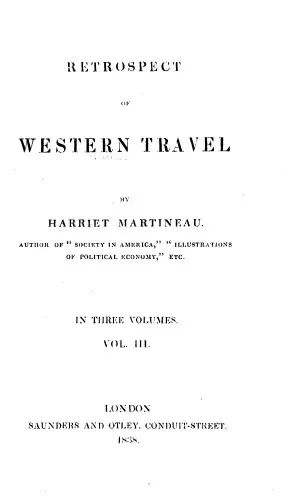
After her trip to American in 1834-36, Martineau wrote a perceptive analysis of social and economic conditions in the U.S.
Gustave de Beaumont · 1839
A 2 volume work on the history and current economic and political problems of Ireland. Vol. 1 contains the historical section and his analysis of the Irish aristocracy. Vol. 2 continues Beaumont’s discussion of the…
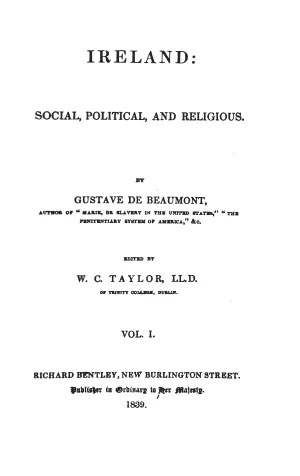
Gustave de Beaumont · 1839
Volume 1 of a 2 volume work on the history and current economic and political problems of Ireland. Vol. 1 contains the historical section and his analysis of the Irish aristocracy. This books seems to have been hastily…
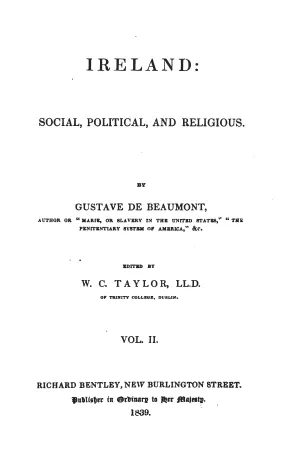
Gustave de Beaumont · 1839
Volume 2 of a 2 volume work on the history and current economic and political problems of Ireland. Vol. 2 continues Beaumont’s discussion of the Irish aristocracy. This book seems to have been hastily translated into…
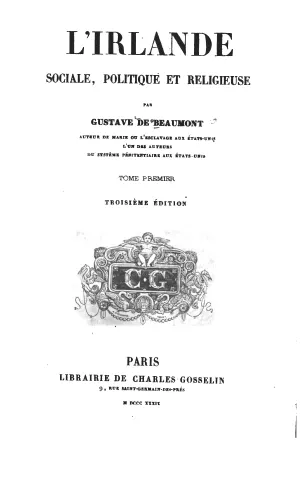
Gustave de Beaumont · 1839
The original French edition of Beaumont’s 2 volume work on the history and social and political structure of Ireland. This contains the footnotes which are missing from the English translation.
Gustave de Beaumont · 1839
Volume 1 of the original French edition of Beaumont’s 2 volume work on the history and social and political structure of Ireland. Vol. 1 contains the lengthy historical introduction and his analysis of the civil,…
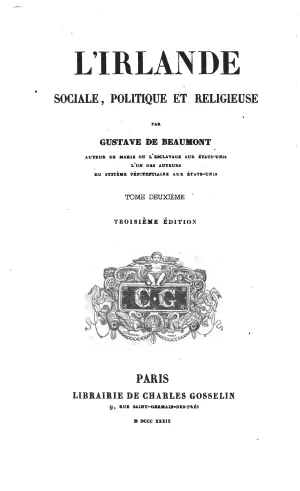
Gustave de Beaumont · 1839
Volume 2 of the original French edition of Beaumont’s 2 volume work on the history and social and political structure of Ireland. Vol. 2 contains a discussion of political changes in Ireland and the need to abolish the…

Alexis de Tocqueville · 1840
A new 4 volume edition of Tocqueville’s classic text De la Démocratie en Amérique. The original was published in two large volumes, the first in 1835, the second in 1840. The first volume focused primarily on political…

Alexis de Tocqueville · 1840
A new 4 volume edition of Tocqueville’s classic text De la Démocratie en Amérique. The original was published in two large volumes, the first in 1835, the second in 1840. The first volume focused primarily on political…
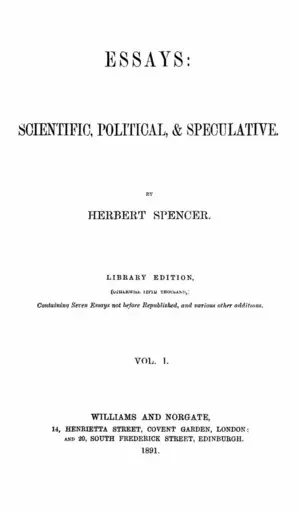
Herbert Spencer · 1852
Volume 1 of a three volume collection of Spencer’s essays which cover political philosophy, sociology, science, and current affairs.
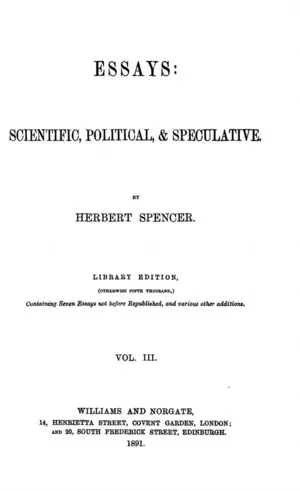
Herbert Spencer · 1854
Volume 3 of a three volume collection of Spencer’s essays which cover political philosophy, sociology, science, and current affairs.
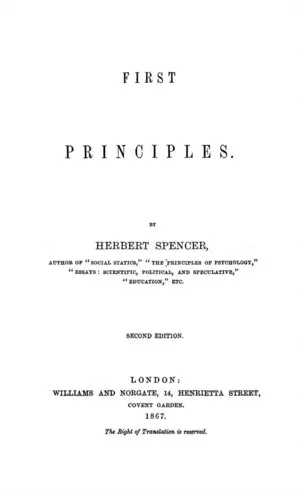
Herbert Spencer · 1867
Spencer attempts a synthesis of his thought and expounds the first systematic theory of evolution in this work.
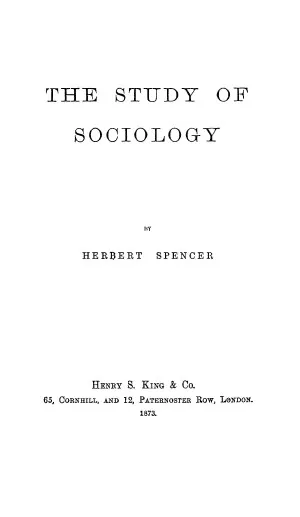
Herbert Spencer · 1873
Spencer was one of the pioneers of the discipline of sociology. This is is a survey of the topic and one his innovations was the application of the idea of natural selection to the survival of groups and institutional…
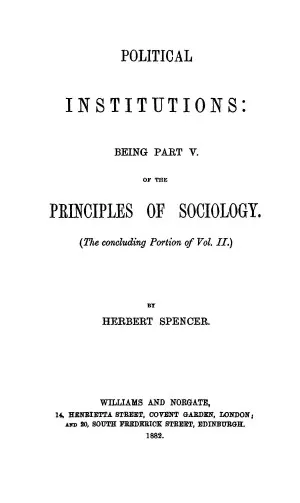
Herbert Spencer · 1876
This is part of Spencer’s most extensive treatment of sociology, The Principles of Sociology. It is the section dealing with the nature of political institutions such as political heads like chiefs and kings,…
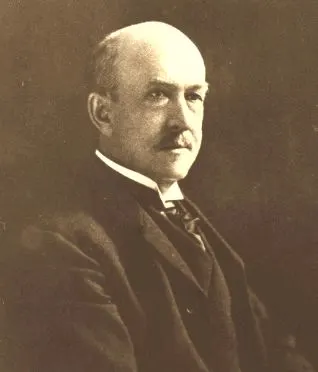
William Graham Sumner · 1876
A thought-provoking collection highlighting individual liberty, personal responsibility, and the unintended consequences of social policies. Sumner’s timeless insights challenge conventional wisdom and offer fresh…
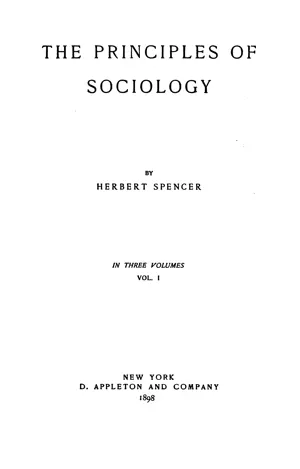
Herbert Spencer · 1876
Volume 1 of a three volume set. This volume covers the scope and methodology of sociology, the nature of society, and domestic institutions such as the family, women, and children.
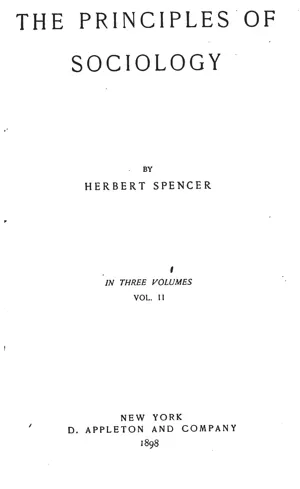
Herbert Spencer · 1876
This is vol. 2 of the third revised edition of Herbert Spencer's magnum opus on sociology which was first published in 1876. Here, he covers "ceremonial" institutions and political institutions (with his famous…
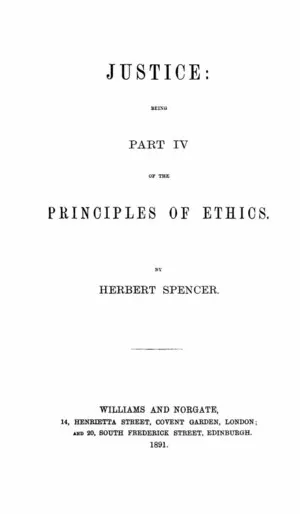
Herbert Spencer · 1879
Spencer’s most developed version of his political philosophy which grounds his theory of the state on an idea of justice based on certain rights of physical integrity, movement, property, and exchange. He then expands…

Herbert Spencer · 1879
Spencer continues his exploration of individualist moral philosophy in this book. He examines the nature of human conduct, different ways in which conduct might be judged, the conflict between egoism and altruism, and…
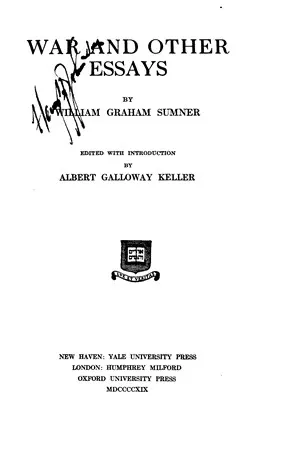
William Graham Sumner · 1881
One of several collections of Sumner’s essays which were published in the early 20th century. This volume contains his famous essay on the Spanish-American War.
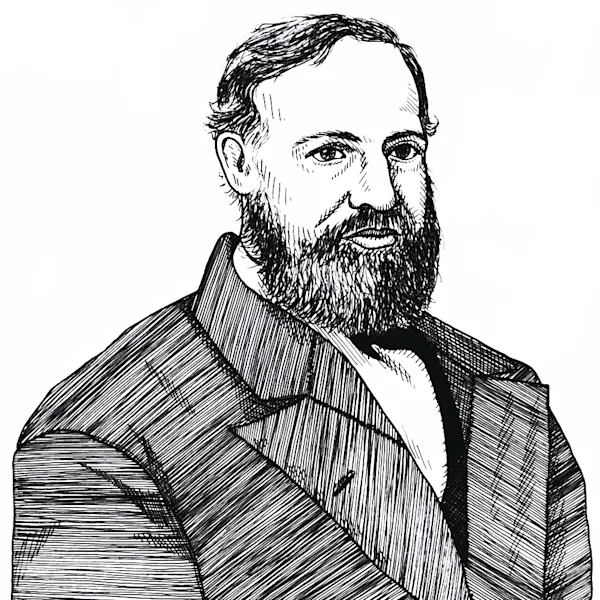
William Stanley Jevons · 1883
A collection of Jevon’s papers and addresses on topics as diverse as public libraries and museums, trade societies and partnerships, married women in factories, cruelty to animals, and the post office and railways.
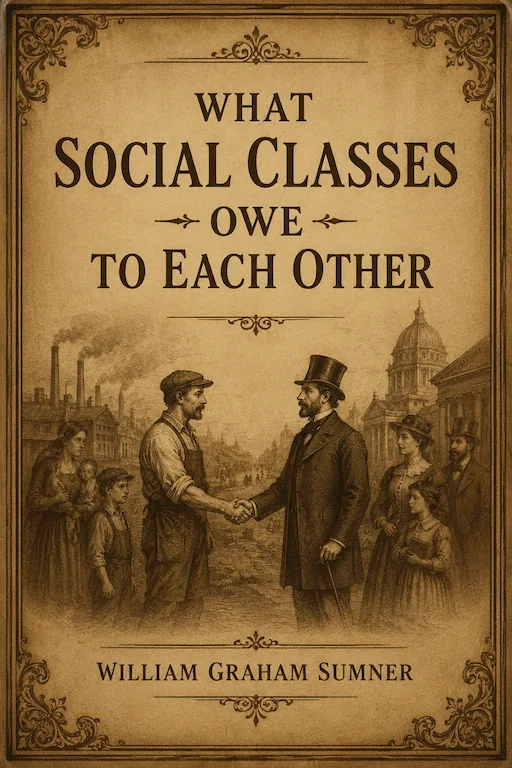
William Graham Sumner · 1883
Sumner was one of the founding fathers of American sociology who explored the relationship between the individual and the state from an individualist and free market perspective. This collection of essays is a good…
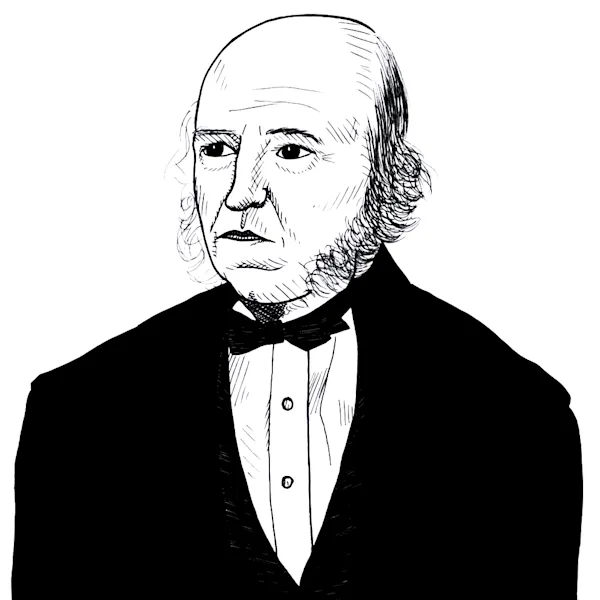
Herbert Spencer · 1884
A facsimile edition of the four essays that Spencer published as The Man Versus the State in 1884. Spencer develops various specific disastrous ramifications of the wholesale substitution of the principle of compulsory…
Herbert Spencer · 1885
This is vol. 3 of the third revised edition of Herbert Spencer's magnum opus on sociology which was first published in 1876. Here, he discusses ecclesiastical institutions, professional institutions, and "industrial"…
Hippolyte Taine · 1890
The 1st volume of Hippolyte Taine’s 2 volume history of the Modern Regime which is part of his history of modern France, The Origins of Contemporary France. This volume deals with the state created by Napoleon and how…
Herbert Spencer · 1891
A three volume collection of Spencer’s essays which cover political philosophy, sociology, science, and current affairs.
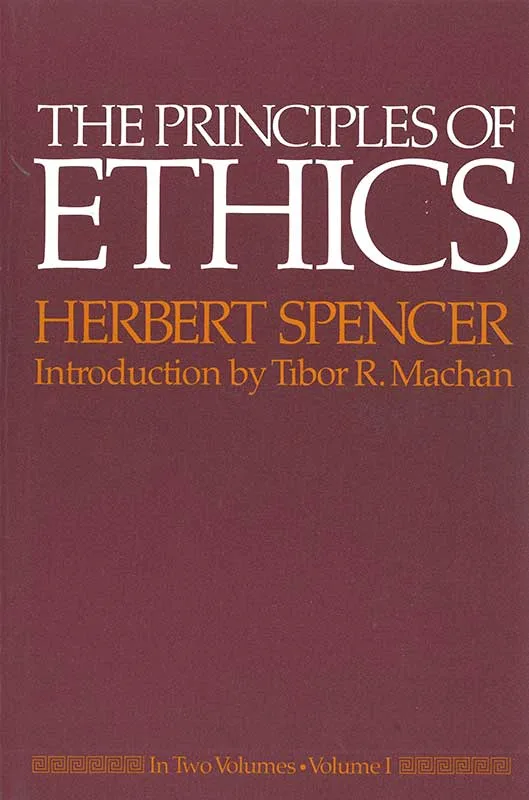
Herbert Spencer · 1897
A two volume work which Spencer considered to be his finest work. In volume I he covers the data of ethics, the inductions of ethics, and the ethics of individual life. In the second volume he covers the ethics of…
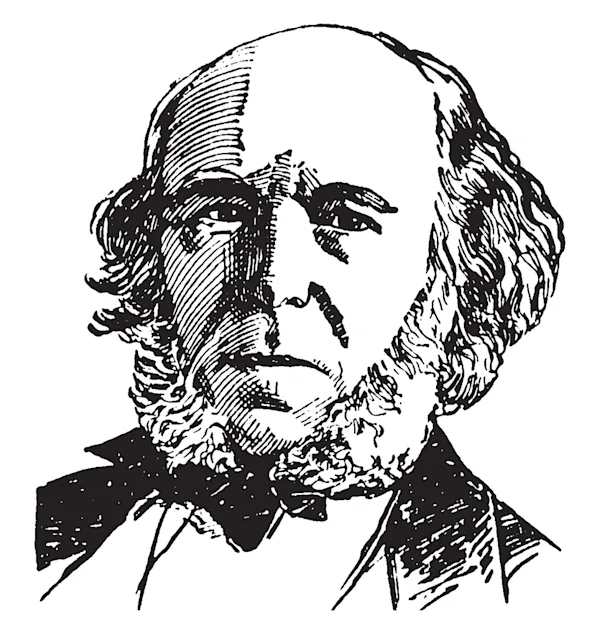
Herbert Spencer · 1898
A foundational work in sociological theory that applies evolutionary principles to the study of human societies. Spencer argues that societies, like biological organisms, evolve from simple to complex structures through…
Thorstein Veblen · 1899
A pioneering work of sociology in which the nature of the ruling elite was explored.
Herbert Spencer · 1904
A 2 volume work. In volume 1 Spencer talks about the period from his early childhood up to 1856 soon after he left work on The Economist and was working on his second book. In volume 2 he covers the period from 1856 to…
Herbert Spencer · 1904
Volume 1 of a 2 volume work. In volume 1 Spencer talks about the period from his early childhood up to 1856 soon after he left work on The Economist and was working on his second book.
Herbert Spencer · 1904
Volume 2 of a 2 volume work. In volume 2 Spencer covers the period from 1856 to 1889 soon after he had completed his trip to the United States.
William Graham Sumner · 1913
This is the first of four volumes of essays by Sumner published by Yale University Press after his death in 1910. It includes a series of 15 essays about liberty which he wrote between 1887 and 1889, along with several…
William Graham Sumner · 1914
A large collection of Sumner’s shorter writings, newspaper and magazine articles, speeches, etc. on socialism, economic growth, the social question, legislation, democracy, and sociology.
Franz Oppenheimer · 1919
A pioneering historical analysis of the state from a sociological perspective which focuses on the changing nature of political power and the groups who wielded this power. One of his key insights is the distinction…
Ludwig von Mises · 1922
This is a newly annotated edition of the classic first published in German in 1922. It is the definitive refutation of nearly every type of socialism ever devised. Mises presents a wide-ranging analysis of society,…
Ludwig von Mises · 1933
Epistemological Problems of Economics presents Ludwig von Mises’s views on the logical and epistemological features of social interpretation as well as his argument that the Austrian theory of value is the core element…
Ludwig von Mises · 1944
Originally published by Yale University Press in 1944, Bureaucracy is a classic fundamental examination of the nature of bureaucracies and free markets in juxtaposition to various political systems.

Helmut Schoeck · 1987
This classic study is one of the few books to explore extensively the many facets of envy—“a drive which lies at the core of man’s life as a social being.” Ranging widely over literature, philosophy, psychology, and the…
Robert A. Nisbet · 1988
Nisbet examines the role of the United States in the world since World War I focusing on the threats that the unprecedented militarization of American life in the decades after 1914, bureaucracy, centralization, and…

Alexis de Tocqueville · 2012
A two volume English only version of Liberty Fund's 4 volume bi-lingual critical edition. In 1831, Alexis de Tocqueville and his friend Gustave de Beaumont visited the United States. From Tocqueville’s copious notes of…
Alexis de Tocqueville · 2012
Volume 1 of a two volume English only version of Liberty Fund's 4 volume bi-lingual critical edition. In 1831, Alexis de Tocqueville and his friend Gustave de Beaumont visited the United States. From Tocqueville’s…

Alexis de Tocqueville · 2012
Volume 2 of a two volume English only version of Liberty Fund's 4 volume bi-lingual critical edition. In 1831, Alexis de Tocqueville and his friend Gustave de Beaumont visited the United States. From Tocqueville’s…

Charles Murray · 2013
In Pursuit: Of Happiness and Good Government begins by examining James Madison’s statement: “A good government implies two things; first, fidelity to the object of government, which is the happiness of the people;…
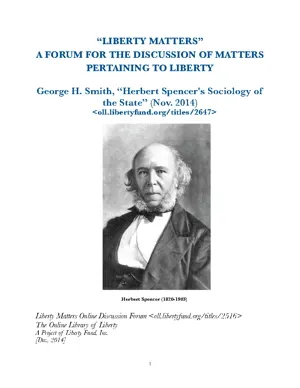
George H. Smith · 2014
The English sociologist and individualist political philosopher Herbert Spencer has been either completely neglected or badly misinterpreted by scholars for over one hundred years. In this discussion George Smith…
David M. Hart · 2016
This online discussion is part of the series “Liberty Matters: A Forum for the Discussion of Matters pertaining to Liberty.”
In this collection
14 people central to Sociology.
b. 1948
Susan Love Brown is a recently retired Professor of Anthropology at Florida Atlantic University in Boca Raton, Florida.

1798–1857
Auguste Comte (1798 – 1857) was a French philosopher and the founder of positivism, a social doctrine based on science. His ideas were…

b. 1991
Irakli Javakhishvili is currently an associate professor at Webster University in Georgia, and adjunct professor at Webster University in…

b. 1967
Robert Leroux is a professor of sociology at the University of Ottawa. He is interested by epistemology, the history of social science, and…

1913–1996
Robert Nisbet (1913-1996), former professor of sociology at Columbia University.

1864–1943
Franz Oppenheimer (1864-1943) was a German sociologist whose pioneering historical analysis of the development of the state was based upon…

Angel Adams Parham’s research is in the historical and comparative-historical sociology of race.
Fabio Rojas is professor of sociology at Indiana University. He studies organizational behavior in political, economic, and educational…

Megan M. Russo is a contributor to the Reading Room.
1922–1993
Helmut Schoeck was a German sociologist and philosopher best known for his work on envy and its impact on society.His most influential…

1820–1903
Herbert Spencer (1820-1903) was one of the leading 19th century English radical individualists. He began working as a journalist for the…

1840–1910
William Graham Sumner (1840-1910) was one of the founding father’s of American sociology. Although he trained as an Episcopalian clergyman,…

1805–1859
Alexis de Tocqueville (1805-1859) was an enormously influential French political philosopher, politician, and historian. After a trip to…

1864–1920
Max Weber (1864 - 1920) was a German sociologist, historian, jurist, and political economist. He was one of the founding fathers of…
In this collection
From The Reading Room, Liberty Matters and the library’s other publications.

Peter Carl Mentzel · Apr 20, 2023

Peter Carl Mentzel · Mar 28, 2023
Passages on this subject, chosen by OLL editors.
Those who are forced to send their children to this or that school, those who have, directly or indirectly, to help in supporting a State priesthood, those from whom rates are demanded that parish officers may administer public charity, those who are taxed to provide gratis reading for people who will not save money for library subscriptions, those whose businesses are carried on under regulation by inspectors, those who have to pay the costs of State science-and-art-teaching, State emigration, &c., all have their individualities trenched upon, either by compelling them to do what they would not spontaneously do, or by taking away money which else would have furthered their private ends. Coercive arrangements of such kinds, consistent with the militant type, are inconsistent with the industrial type.
As a corollary to the proposition that all institutions must be subordinated to the law of equal freedom, we cannot choose but admit the right of the citizen to adopt a condition of voluntary outlawry. If every man has freedom to do all that he wills, provided he infringes not the equal freedom of any other man, then he is free to drop connection with the state—to relinquish its protection, and to refuse paying towards its support. It is self-evident that in so behaving he in no way trenches upon the liberty of others; for his position is a passive one; and whilst passive he cannot become an aggressor. It is equally selfevident that he cannot be compelled to continue one of a political corporation, without a breach of the moral law, seeing that citizenship involves payment of taxes; and the taking away of a man’s property against his will, is an infringement of his rights.
Whence it follows that the desire "not to be dependent on foreigners' is one appropriate to the militant type of society. So long as there is constant danger that the supplies of needful things derived from other countries will be cut off by the breaking out of hostilities, it is imperative that there shall be maintained a power of producing these supplies at home, and that to this end the required structures shall be maintained. Hence there is a manifest direct relation between militant activities and a protectionist policy.
Making him more despotic at the same time that it augments his kingdom, continuance of this process [of fighting wars] increases his ability to enforce contributions, alike from his original subjects and from tributaries; while the necessity for supplies, now to defend his kingdom, now to invade adjacent kingdoms, is ever made the plea for increasing his demands of established kinds and for making new ones.
Where the life is permanently peaceful, definite class-divisions do not exist. … As, at first, the domestic relation between the sexes passes into a political relation, such that men and women become, in militant groups, the ruling class and the subject class; so does the relation between master and slave, originally a domestic one, pass into a political one as fast as, by habitual war, the making of slaves becomes general. It is with the formation of a slave-class, that there begins that political differentiation between the regulating structures and the sustaining structures, which continues throughout all higher forms of social evolution.
We find, then, that rules of behaviour are not results of conventions at one time or other deliberately made, as people tacitly assume. Contrariwise, they are natural products of social life which have gradually evolved. Apart from detailed proofs of this, we find a general proof in their conformity to the laws of Evolution at large.
An argument fatal to the communist theory, is suggested by the fact, that a desire for property is one of the elements of our nature. ... And if a propensity to personal acquisition be really a component of man’s constitution, then that cannot be a right form of society which affords it no scope. ... it is also true that no change in the state of society will alter its nature and its office. To whatever extent moderated, it must still be a desire for personal acquisition. Whence it follows that a system affording opportunity for its exercise must ever be retained; which means, that the system of private property must be retained; and this presupposes a right of private property, for by right we mean that which harmonizes with the human constitution as divinely ordained.
The days when “paper constitutions” were believed in have gone by—if not with all, still with instructed people. The general truth that the characters of the units determine the character of the aggregate, though not admitted overtly and fully, is yet admitted to some extent—to the extent that most politically-educated persons do not expect forthwith completely to change the state of a society by this or that kind of legislation. But when fully admitted, this truth carries with it the conclusion that political institutions cannot be effectually modified faster than the characters of citizens are modified; and that if greater modifications are by any accident produced, the excess of change is sure to be undone by some counter-change. …
When, as in the United States, republican institutions, instead of being slowly evolved, are all at once created, there grows up within them an agency of wirepulling politicians, exercising a real rule which overrides the nominal rule of the people at large. When, as at home, an extended franchise, very soon re-extended, vastly augments the mass of those who, having before been controlled are made controllers, they presently fall under the rule of an organized body that chooses their candidates and arranges for them a political programme, which they must either accept or be powerless. So that in the absence of a duly-adapted character, liberty given in one direction is lost in another.

Political Science
13 titles · 1 publication · 17 people
Economic theory. Demography
473 titles · 88 publications · 293 people

Economic theory. Demography
6 titles · 30 publications · 28 people
Socialism. Communism. Anarchism
6 titles · 1 publication · 16 people
Social media
25 titles · 17 publications · 22 people

Social Sciences
18 titles · 22 people