Adam Smith on Men of Public Spirit
The man whose public spirit is prompted altogether by humanity and benevolence, will respect the established powers and privileges even of individuals, and still more those of the great orders and societies, into which the state is divided. Though he should consider some of them as in some measure abusive, he will content himself with moderating what he often cannot annihilate without great violence. When he cannot conquer the rooted prejudices of the people by reason and persuasion, he will not attempt to subdue them by force; but will religiously observe what, by Cicero, is justly called the divine maxim of Plato, never to use violence to his country no more than to his parents. He will accommodate, as well as he can, his public arrangements to the confirmed habits and prejudices of the people; and will remedy, as well as he can, the inconveniencies which may flow from the want of those regulations which the people are averse to submit to. When he cannot establish the right, he will not disdain to ameliorate the wrong; but like Solon, when he cannot establish the best system of laws, he will try to establish the best that the people can bear. (TMS VI.ii.2.16)
Context
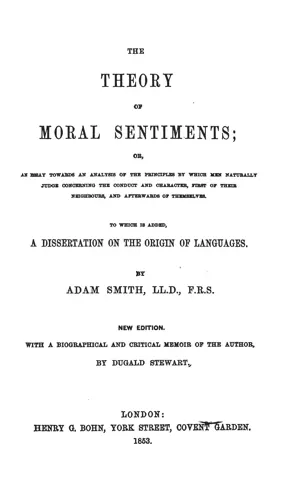
The Scottish moral philosopher Adam Smith (1723–1790) was the author of two books, The Theory of Moral Sentiments (1759) and An Inquiry into the Nature and Causes of the Wealth of Nations (1776).
Near the end of chapter 2 of Section 2 of Part VI of Theory of Moral Sentiments, Smith writes:
Further thoughts
This is the paragraph Smith holds in contrast to his famous “man of system” passage. In them, he is discussing what governing figures might do when confronted with the “turbulence and disorder of civil faction”, a time in which “a certain spirit of system is apt to mix itself with that public spirit which is founded upon the love of humanity”. (TMS VI.ii.2.15). In order to explain each of these inclinations, Smith contrasts the archetypal statesman motivated by each spirit.
In contrast to the man of system, who would remake the constitution and laws of a country all at once according to an imagined perfect ideal, someone who is motivated entirely by humanity and public spirit is concerned with “that system of government under which the subjects of a great empire have enjoyed, perhaps, peace, security, and even glory, during the course of several centuries together.” (VI.ii.2.15)
Someone motivated by trying to preserve the safety and flourishing of the people of a nation, says Smith, will try to protect the good done by an “established order of society”, or what we might call an evolved or emergent order. Emergent orders arise bit by bit over time as the result of the choices that people and groups make, as opposed to an order that was designed from the top down by a planner or group of planners.
By vowing not to remake the laws and constitution of a country all at once, nor to use violence to force change, a statesperson will respect not only the lives of individuals within the society, but the rules and plans of the organizations, towns, cities, and institutions into which those people have established themselves—even if the reforming statesperson considers those organizations oppressive. Only the reforms that can be pushed forward through reason and persuasion will take place, ensuring a more gradual and piecemeal sort of change that continues the evolution of the order.
Visit our sister site, AdamSmithWorks for a classroom bellringer based on this quote.
Found in
Read the passage in context, or cite the edition.