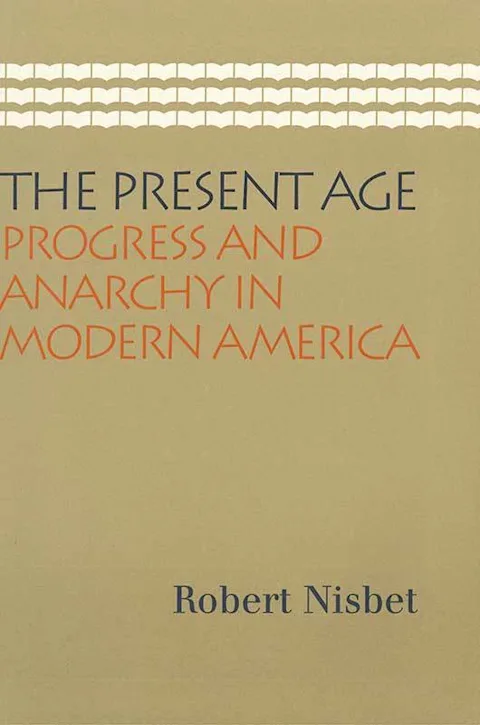
The Present Age: Progress and Anarchy in Modern America
- Robert A. Nisbet(author)
Nisbet examines the role of the United States in the world since World War I focusing on the threats that the unprecedented militarization of American life in the decades after 1914, bureaucracy, centralization, and creeping conformity pose to liberty and individual independence in the western world.
Key Quotes
Passages from this text chosen by OLL editors.
- War & Peace“
What would the Framers (of the U.S. Constitution) be most struck by in America today? ... Three aspects of the present age in America would surely draw their immediate, concerned, and perhaps incredulous attention. First, the prominence of war in American life since 1914, amounting to a virtual Seventy-Five Years War, and with this the staggering size of the American military establishment since World War II. ... Second, the Leviathan-like presence of the national government in the affairs of states, towns, and cities, and in the lives, cradle to grave, of individuals.
- Sport and Liberty“
It is good that sports are so important. They—and especially the contact or “violent” ones like football, hockey, and boxing—play a role of reliving pressures in human beings which once had no other outlets but wars, Bedlams, and public hangings. If by some major accident we ever lose the mayhem of the hockey rink, gridiron, and prize ring, if we are limited, say, to track and field, heaven help the ordinary American who wants only law and order and peace.
About This Edition
Citation
Nisbet, Robert A. The Present Age: Progress and Anarchy in Modern America (Indianapolis: Liberty Fund, 2003).
Nisbet, Robert A. The Present Age. Liberty Fund, 2003. Online Library of Liberty, https://oll.libertyfund.org/titles/nisbet-the-present-age.
Nisbet, R. A. (2003). The Present Age. Liberty Fund. https://oll.libertyfund.org/titles/nisbet-the-present-age
@book{nisbet2003age,
  author = {Robert A. Nisbet},
  title = {The Present Age},
  publisher = {Liberty Fund},
  address = {Indianapolis},
  year = {2003},
  url = {https://oll.libertyfund.org/titles/nisbet-the-present-age},
  note = {Online Library of Liberty}
}TY - BOOK AU - Nisbet, Robert A. TI - The Present Age PY - 2003 CY - Indianapolis PB - Liberty Fund UR - https://oll.libertyfund.org/titles/nisbet-the-present-age DB - Online Library of Liberty ER -
Copyright
The copyright to this edition, in both print and electronic forms, is held by Liberty Fund, Inc.

About the author
Robert A. Nisbet 1913–1996
Robert Nisbet (1913-1996), former professor of sociology at Columbia University.
Related People
Edmund Burke
Author
Burke emphasized organic society, tradition, and the dangers of abstract rationalism. Nisbet admired Burke's defense of civil society against centralized power.
Alexis de Tocqueville
Author
Tocqueville explored how democratic societies can foster tyranny of the majority if not balanced by local associations. Nisbet echoed Tocqueville's emphasis on voluntary associations and civic life.
Michael Oakeshott
Author
A conservative philosopher who, like Nisbet, was skeptical of rationalist politics and emphasized tradition, authority, and civil association.


Critical Responses
Works that answer or challenge this text.
 Book
Spheres of Justice
Michael WalzerVisit site ↗Though not a direct critique, Walzer provides a pluralistic vision of justice and community that indirectly challenges Nisbet’s notion that older, more organic communities are normatively superior.
 Book
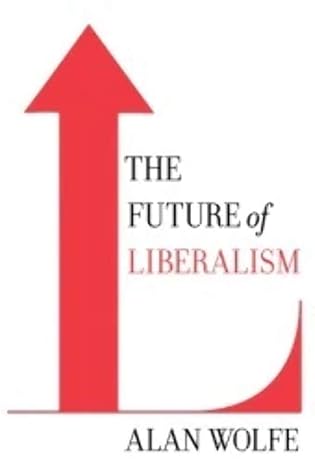
The Future of Liberalism
Alan WolfeRobert Nisbet: Conservatism’s Sociologist
Visit site ↗Wolfe argues that Nisbet was overly nostalgic about premodern social structures and insufficiently attentive to the benefits of modern individualism and pluralism. While Wolfe respects Nisbet's concern with community, he contends that Nisbet underestimated the liberating aspects of modernity, particularly for marginalized groups.
Connected Readings
What to read next.
 Liberty Classic
The Forever-War State
John G. GroveVisit site ↗Robert Nisbet warned against those who claim to promote freedom and community, but are really only interested in grasping a power that destroys both.
 Book
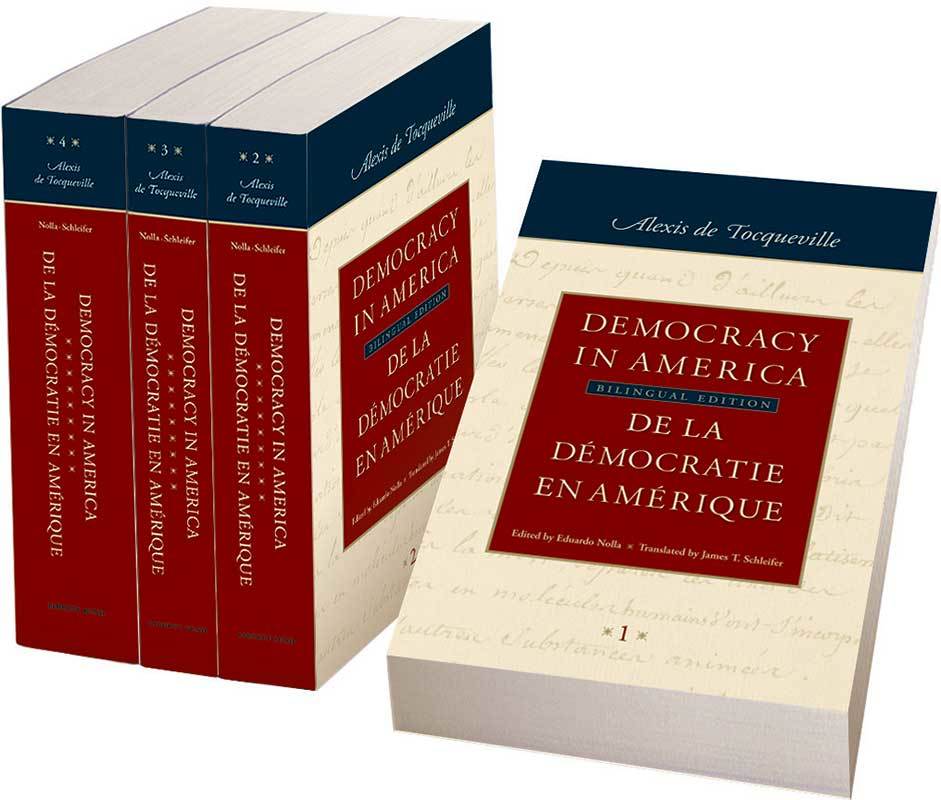
Democracy in America: Historical-Critical Edition, 4 vols. (LF ed. 2010)
Alexis de TocquevilleView title >A foundational critique of democratic centralization and the loss of intermediary institutions—central to Nisbet’s own thesis.
 Book
After Virtue
Alasdair MacIntyreVisit site ↗A parallel philosophical critique of the moral fragmentation of modernity and the loss of shared ethical traditions.
 What to read next.
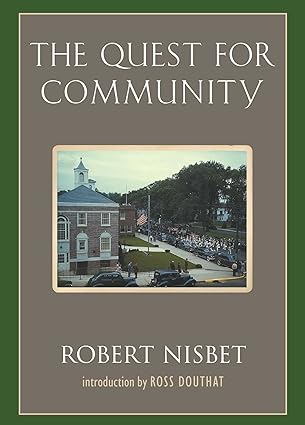
The Quest for Community
Robert NisbetVisit site ↗Nisbet's most famous and philosophically rich work, focused on the historical and sociological roots of modern alienation.
More in Economic history and conditions
See all >Selected Writings of Ludwig von Mises, vol. 1: Monetary and Economic Problems Before, During, and After the Great War
Ludwig von MisesThe Collected Works of Arthur Seldon, vol. 1 - The Virtues of Capitalism
Arthur SeldonDemocracy in Deficit: The Political Legacy of Lord Keynes
James M. BuchananProposed Poor Law Reform (October 1697)
John LockeNation, State, and Economy: Contributions to the Politics and History of Our Time
Ludwig von MisesDie Irrthümer des Historismus in der deutschen Nationalökonomie
Carl Menger“Richard Cantillon”
Friedrich August von HayekThe Collected Works of Arthur Seldon
Arthur SeldonDemocratick Editorials: Essays in Jacksonian Political Economy
William Leggett