Social Sciences1876
The Forgotten Man and Other Essays (corrected edition)
- William Graham Sumner(author)
- Albert Galloway Keller(editor)
A thought-provoking collection highlighting individual liberty, personal responsibility, and the unintended consequences of social policies. Sumner’s timeless insights challenge conventional wisdom and offer fresh perspectives on economics and ethics. This volume includes 24 essays and papers on topics ranging from protection, gold and silver currency, commercial crises, strikes, sociology, and education.
Key Quotes
Passages from this text chosen by OLL editors.
- Taxation“
In the definition the word “people” was used for a class or section of the population. It is now asserted that if that section rules, there can be no paternal, that is, undue, government. That doctrine, however, is the very opposite of liberty and contains the most vicious error possible in politics. The truth is that cupidity, selfishness, envy, malice, lust, vindictiveness, are constant vices of human nature. They are not confined to classes or to nations or particular ages of the world. They present themselves in the palace, in the parliament, in the academy, in the church, in the workshop, and in the hovel. They appear in autocracies, theocracies, aristocracies, democracies, and ochlocracies all alike. They change their masks somewhat from age to age and from one form of society to another. All history is only one long story to this effect: men have struggled for power over their fellow-men in order that they might win the joys of earth at the expense of others and might shift the burdens of life from their own shoulders upon those of others.
- Food & Drink“
When you see a drunkard in the gutter, you are disgusted, but you pity him. When a policeman comes and picks him up you are satisfied. You say that “society” has interfered to save the drunkard from perishing. Society is a fine word, and it saves us the trouble of thinking to say that society acts. The truth is that the policeman is paid by somebody, and when we talk about society we forget who it is that pays. It is the Forgotten Man again. It is the industrious workman going home from a hard day's work, whom you pass without noticing, who is mulcted of a percentage of his day's earnings to hire a policeman to save the drunkard from himself. All the public expenditure to prevent vice has the same effect.
About This Edition
Citation
Sumner, William Graham. The Forgotten Man and Other Essays, ed. Albert Galloway Keller (New Haven: Yale University Press, 1918).
Sumner, William Graham. The Forgotten Man and Other Essays (corrected edition). Edited by Albert Galloway Keller, Yale University Press, 1918. Online Library of Liberty, https://oll.libertyfund.org/titles/keller-the-forgotten-man-and-other-essays-corrected-edition.
Sumner, W. G. (1918). The Forgotten Man and Other Essays (corrected edition). Yale University Press. https://oll.libertyfund.org/titles/keller-the-forgotten-man-and-other-essays-corrected-edition
@book{sumner1918edition,
  author = {William Graham Sumner},
  editor = {Albert Galloway Keller},
  title = {The Forgotten Man and Other Essays (corrected edition)},
  publisher = {Yale University Press},
  address = {New Haven},
  year = {1918},
  url = {https://oll.libertyfund.org/titles/keller-the-forgotten-man-and-other-essays-corrected-edition},
  note = {Online Library of Liberty}
}TY - BOOK AU - Sumner, William Graham A2 - Keller, Albert Galloway TI - The Forgotten Man and Other Essays (corrected edition) PY - 1918 CY - New Haven PB - Yale University Press UR - https://oll.libertyfund.org/titles/keller-the-forgotten-man-and-other-essays-corrected-edition DB - Online Library of Liberty ER -
Copyright
The text is in the public domain.

About the author
William Graham Sumner 1840–1910
William Graham Sumner (1840-1910) was one of the founding father’s of American sociology. Although he trained as an Episcopalian clergyman, Sumner went on to teach at Yale University where he wrote his most influential works. His interests included money and tariff policy, critiques of socialism, social classes, and anti-imperialism.
Related People
Herbert Spencer
Author
Henry George
Author
George odvocated land-value taxation; provided a popular, contrasting perspective on economic reform and inequality.
Thorstein Veblen
Author
Veblen critiqued capitalist society’s consumption patterns and economic status, contrasting sharply with Sumner’s individualistic views.


Critical Responses
Works that answer or challenge this text.
 Book
Anarchy, State, and Utopia
Robert NozickVisit site ↗Explores libertarian philosophy but also addresses limits and tensions around inequality, complementing and critiquing Sumner’s views.
 Book
The Road to Serfdom
F. A. HayekVisit site ↗Hayek also challenges central planning and emphasizes unintended consequences, but acknowledges societal complexities that Sumner tends to overlook.
Connected Readings
What to read next.
 Book
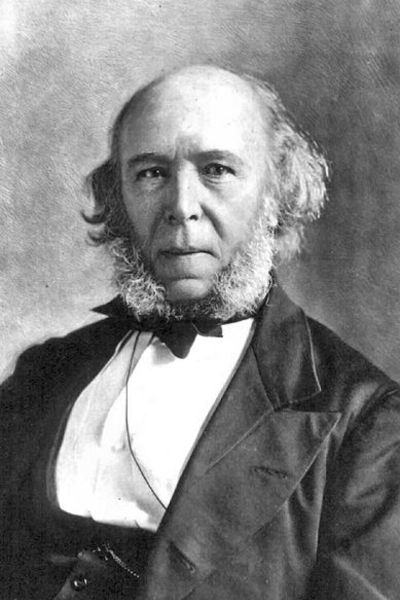
Social Statics (1851)
Herbert SpencerView title >Influential on Sumner, it expands upon individual liberty, social Darwinism, and laissez-faire principles.
 Podcast
Amity Shlaes on the Forgotten Lessons of the New Deal Era
The Future of Liberty with Gov. Mitch Daniels
Visit site ↗Governor Mitch Daniels and historian Amity Shlaes discuss misconceptions about the Great Depression and the New Deal; reevaluate the reputations of Presidents Coolidge, Hoover, and FDR; and consider the idea of the Forgotten Man.
 What to read next.
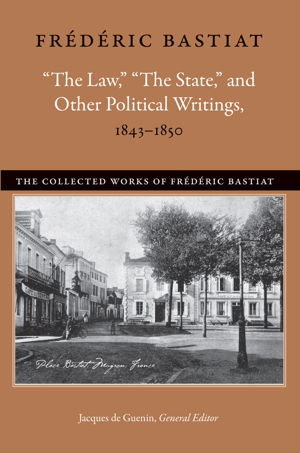
The Collected Works of Frédéric Bastiat. Vol. 2: The Law, The State, and Other Political Writings, 1843-1850
Frédéric BastiatThe Law
View title >A natural next step, exploring themes of individual liberty, unintended consequences, and critiques of government intervention.
 What to read next.
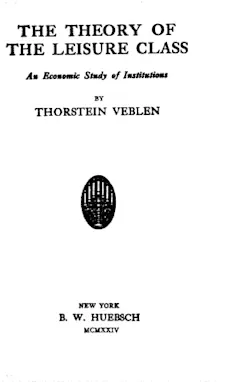
The Theory of the Leisure Class: An Economic Study of Institutions
Thorstein VeblenView title >A pioneering work of sociology in which the nature of the ruling elite was explored.
More in Social Sciences
See all >The Collected Works of James M. Buchanan, Vol. 9 (The Power to Tax)
Geoffrey BrennanThe Collected Works of James M. Buchanan, vol. 7 (The Limits of Liberty)
James M. BuchananZum Abschluss des Marxschen Systems
Earth-Hunger and Other Essays (1913)
William Graham SumnerAn Inquiry Into the Nature and Causes of the Wealth of Nations (Cannan ed.), vol. 2
Adam SmithThe Collected Works of Lysander Spooner (1834-1886), vol. 1 (1834-1850)
Lysander SpoonerThe Works and Life of Walter Bagehot, vol. 10 (The Life)
Mrs. Russell BarringtonThe Works and Life of Walter Bagehot, vol. 6
Walter BagehotCyclopaedia of Political Science, Political Economy vol. 1 Abdication-Duty
John Joseph Lalor