

Herbert Spencer
1820–1903 · 2 titles


Language and Literature
14 items in this reading list
-><-
This is a list of one volume surveys of the classical liberal position which have appeared over the past two centuries. The defining characteristic is that they are an attempt to provide the reader with a survey of the basic political and economic principles behind the classical liberal tradition as well as some concrete proposals for reform in order to bring about a freer society. With the exception of Wilhelm von Humboldt's The Limits of State Action which was written in 1792 but was not published in full until 1854, it seems that it was not until the mid-19th century before people began thinking of classical liberalism as a coherent body of thought which could be encapsulated in a one volume treatment.
In this reading list
6 titles, earliest first.
Wilhelm von Humboldt · 1792
In The Limits of State Action Humboldt explores the role that liberty plays in individual development, discusses criteria for permitting the state to limit individual actions, and suggests ways of confining the state to…
Gustave de Molinari · 1849
Following the rise of socialism in France during the 1840s and the 1848 Revolution, Molinari wrote this fictitious “dialogue” between an economist, a conservative, and a socialist, to expose the folly of socialism,…
Herbert Spencer · 1851
Spencer’s first major work of political philosophy in which he attempts to lay the basis for a limited state on a rigorous development of a doctrine of natural rights. He begins with a defense of his “first principle”…
John Stuart Mill · 1859
Mill had been somewhat coy about publishing The Subjection of Women during his lifetime because he feared the condemnation of his peers for daring to apply the general notions of individual liberty which he had clearly…
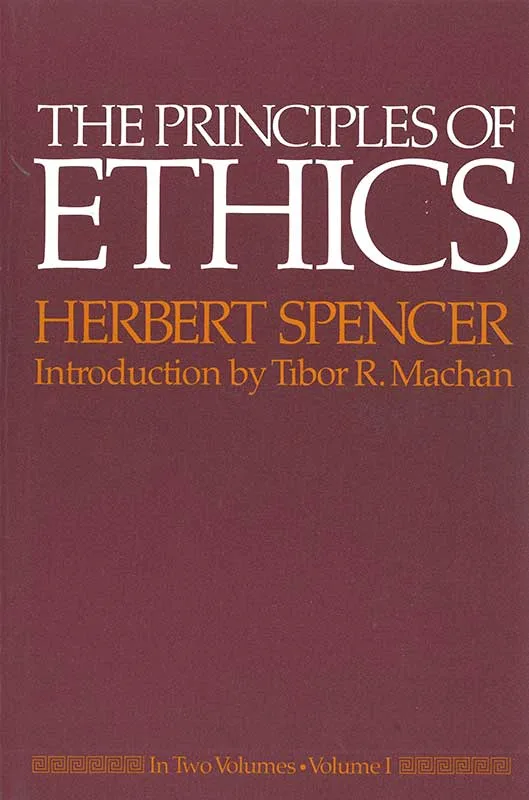
Herbert Spencer · 1897
A two volume work which Spencer considered to be his finest work. In volume I he covers the data of ethics, the inductions of ethics, and the ethics of individual life. In the second volume he covers the ethics of…
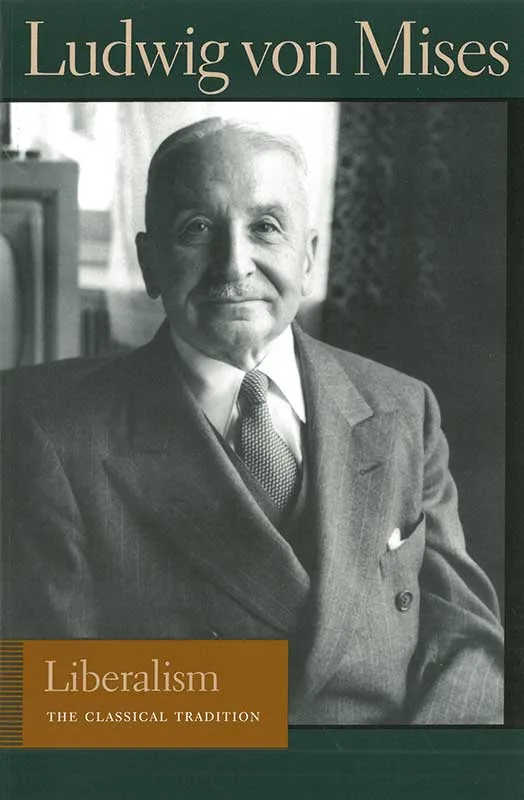
Ludwig von Mises · 1962
The great Austrian economist Ludwig von Mises provides a concise and tightly-argued one volume defense of classical liberalism, focusing on the core concepts of private property, limited government, peace, and the free…
In this reading list
Authors, editors and translators of these titles, most titles first.
1820–1903 · 2 titles

1917–2019 · 1 title

1819–1912 · 1 title
1806–1873 · 1 title
1 title

1881–1973 · 1 title

b. 1939 · 1 title

1767–1835 · 1 title
Passages from titles in this collection, chosen by OLL editors.
When liberal ideas began to spread to central and eastern Europe from their homeland in western Europe, the traditional powers—the monarchy, the nobility, and the clergy—trusting in the instruments of repression that were at their disposal, felt completely safe. They did not consider it necessary to combat liberalism and the mentality of the Enlightenment with intellectual weapons. Suppression, persecution, and imprisonment of the malcontents seemed to them to be more serviceable. They boasted of the violent and coercive machinery of the army and the police. Too late they realized with horror that the new ideology snatched these weapons from their hands by conquering the minds of officials and soldiers. It took the defeat suffered by the old regime in the battle against liberalism to teach its adherents the truth that there is nothing in the world more powerful than ideologies and ideologists and that only with ideas can one fight against ideas. They realized that it is foolish to rely on arms, since one can deploy armed men only if they are prepared to obey, and that the basis of all power and dominion is, in the last analysis, ideological.
The ultimate ideal envisioned by liberalism is the perfect cooperation of all mankind, taking place peacefully and without friction. Liberal thinking always has the whole of humanity in view and not just parts. It does not stop at limited groups; it does not end at the border of the village, of the province, of the nation, or of the continent. Its thinking is cosmopolitan and ecumenical: it takes in all men and the whole world. Liberalism is, in this sense, humanism; and the liberal, a citizen of the world, a cosmopolite.
As a corollary to the proposition that all institutions must be subordinated to the law of equal freedom, we cannot choose but admit the right of the citizen to adopt a condition of voluntary outlawry. If every man has freedom to do all that he wills, provided he infringes not the equal freedom of any other man, then he is free to drop connection with the state—to relinquish its protection, and to refuse paying towards its support. It is self-evident that in so behaving he in no way trenches upon the liberty of others; for his position is a passive one; and whilst passive he cannot become an aggressor. It is equally selfevident that he cannot be compelled to continue one of a political corporation, without a breach of the moral law, seeing that citizenship involves payment of taxes; and the taking away of a man’s property against his will, is an infringement of his rights.
An argument fatal to the communist theory, is suggested by the fact, that a desire for property is one of the elements of our nature. ... And if a propensity to personal acquisition be really a component of man’s constitution, then that cannot be a right form of society which affords it no scope. ... it is also true that no change in the state of society will alter its nature and its office. To whatever extent moderated, it must still be a desire for personal acquisition. Whence it follows that a system affording opportunity for its exercise must ever be retained; which means, that the system of private property must be retained; and this presupposes a right of private property, for by right we mean that which harmonizes with the human constitution as divinely ordained.
The list in chronological order is:
Other important one volume surveys which are not available at the OLL:

Political Science
618 titles · 60 publications · 383 people

Language and Literature
282 titles · 6 publications · 321 people
Law
41 titles · 25 publications · 75 people

General Works
37 titles · 3 publications · 72 people
Language and Literature
112 titles · 156 people

Language and Literature
17 titles · 3 publications · 40 people