OLL

Search the library

Press Enter to see all results. Esc closes.

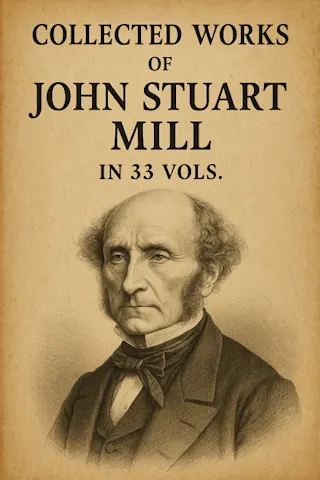
Portrait of John Stuart Mill

Person

John Stuart Mill

1806–1873

Biography

Works by John Stuart Mill

36 titles in the library

Quotations from John Stuart Mill

  • Socialism & Interventionism
    “A government cannot have too much of the kind of activity which does not impede, but aids and stimulates, individual exertion and development. The mischief begins when, instead of calling forth the activity and powers of individuals and bodies, it substitutes its own activity for theirs; when, instead of informing, advising, and, upon occasion, denouncing, it makes them work in fetters, or bids them stand aside and does their work instead of them. The worth of a State, in the long run, is the worth of the individuals composing it; and a State which postpones the interests of their mental expansion and elevation, to a little more of administrative skill, or of that semblance of it which practice gives, in the details of business; a State which dwarfs its men, in order that they may be more docile instruments in its hands even for beneficial purposes—will find that with small men no great thing can really be accomplished; and that the perfection of machinery to which it has sacrificed everything, will in the end avail it nothing, for want of the vital power which, in order that the machine might work more smoothly, it has preferred to banish.”

    John Stuart Mill: Mill on the dangers of the state turning men into "docile instruments" of its will (1859)

    The Collected Works of John Stuart Mill, Volume XVIII - Essays on Politics and Society Part I

  • Politics & Liberty
    “To prevent the weaker members of the community from being preyed upon by innumerable vultures, it was needful that there should be an animal of prey stronger than the rest, commissioned to keep them down. But as the king of the vultures would be no less bent upon preying on the flock than any of the minor harpies, it was indispensable to be in a perpetual attitude of defence against his beak and claws. The aim, therefore, of patriots was to set limits to the power which the ruler should be suffered to exercise over the community; and this limitation was what they meant by liberty. It was attempted in two ways. First, by obtaining a recognition of certain immunities, called political liberties or rights, which it was to be regarded as a breach of duty in the ruler to infringe, and which, if he did infringe, specific resistance, or general rebellion, was held to be justifiable. A second, and generally a later expedient, was the establishment of constitutional checks, by which the consent of the community, or of a body of some sort, supposed to represent its interests, was made a necessary condition to some of the more important acts of the governing power.”
  • Property Rights
    “The object of this Essay is to assert one very simple principle, as entitled to govern absolutely the dealings of society with the individual in the way of compulsion and control, whether the means used be physical force in the form of legal penalties, or the moral coercion of public opinion. That principle is, that the sole end for which mankind are warranted, individually or collectively, in interfering with the liberty of action of any of their number, is self-protection. That the only purpose for which power can be rightfully exercised over any member of a civilized community, against his will, is to prevent harm to others. ... In the part which merely concerns himself, his independence is, of right, absolute. Over himself, over his own body and mind, the individual is sovereign.”

    John Stuart Mill: J.S. Mill's great principle was that "over himself, over his own body and mind, the individual is sovereign" (1859)

    The Collected Works of John Stuart Mill, Volume XVIII - Essays on Politics and Society Part I

  • Religion & Toleration
    “If, then, persons could be trained, as we see they were, not only to believe in theory that the good of their country was an object to which all others ought to yield, but to feel this practically as the grand duty of life, so also may they be made to feel the same absolute obligation towards the universal good. A morality grounded on large and wise views of the good of the whole, neither sacrificing the individual to the aggregate nor the aggregate to the individual, but giving to duty on the one hand and to freedom and spontaneity on the other their proper province, would derive its power in the superior natures from sympathy and benevolence and the passion for ideal excellence: in the inferior, from the same feelings cultivated up to the measure of their capacity, with the superadded force of shame. This exalted morality would not depend for its ascendancy on any hope of reward; but the reward which might be looked for, and the thought of which would be a consolation in suffering, and a support in moments of weakness, would not be a problematical future existence, but the approbation, in this, of those whom we respect, and ideally of all those, dead or living, whom we admire or venerate.”

    John Stuart Mill: John Stuart Mill on the "religion of humanity" (c. 1858)

    The Collected Works of John Stuart Mill, Volume X - Essays on Ethics, Religion, and Society

  • Women’s Rights
    “… men suppose that all is now as it should be in regard to the marriage contract; and we are continually told that civilization and Christianity have restored to the woman her just rights. Meanwhile the wife is the actual bondservant of her husband: no less so, as far as legal obligation goes, than slaves commonly so called. She vows a lifelong obedience to him at the altar, and is held to it all through her life by law. Casuists may say that the obligation of obedience stops short of participation in crime, but it certainly extends to everything else. She can do not act whatever but by his permission, at least tacit. She can acquire no property but for him: the instant it becomes hers, even if by inheritance, it becomes ipso facto his. In this respect the wife’s position under the common law of England is worse than that of slaves in the laws of many countries…”

    John Stuart Mill: J.S. Mill on the wife as the "actual bondservant of her husband" in the 19th century (1869)

    The Collected Works of John Stuart Mill, Volume XXI - Essays on Equality, Law, and Education

  • Colonies, Slavery & Abolition
    “But we are told, by a strange misapplication of a true principle, that the South had a right to separate; that their separation ought to have been consented to, the moment they showed themselves ready to fight for it; and that the North, in resisting it, are committing the same error and wrong which England committed in opposing the original separation of the thirteen colonies. This is carrying the doctrine of the sacred right of insurrection rather far. It is wonderful how easy, and liberal, and complying, people can be in other people’s concerns. Because they are willing to surrender their own past, and have no objection to join in reprobation of their great-grandfathers, they never put to themselves the question what they themselves would do in circumstances far less trying, under far less pressure of real national calamity. Would those who profess these ardent revolutionary principles consent to their being applied to Ireland, or India, or the Ionian Islands? How have they treated those who did attempt so to apply them? But the case can dispense with any mere argumentum ad hominem. I am not frightened at the word rebellion. I do not scruple to say that I have sympathized more or less ardently with most of the rebellions, successful and unsuccessful, which have taken place in my time. But I certainly never conceived that there was a sufficient title to my sympathy in the mere fact of being a rebel; that the act of taking arms against one’s fellow citizens was so meritorious in itself, was so completely its own justification, that no question need be asked concerning the motive. It seems to me a strange doctrine that the most serious and responsible of all human acts imposes no obligation on those who do it, of showing that they have a real grievance; that those who rebel for the power of oppressing others, exercise as sacred a right as those who do the same thing to resist oppression practised upon themselves. Neither rebellion, nor any other act which affects the interests of others, is sufficiently legitimated by the mere will to do it. Secession may be laudable, and so may any other kind of insurrection; but it may also be an enormous crime. It is the one or the other, according to the object and the provocation. And if there ever was an object which, by its bare announcement, stamped rebels against a particular community as enemies of mankind, it is the one professed by the South. Their right to separate is the right which Cartouche or Turpin would have had to secede from their respective countries, because the laws of those countries would not suffer them to rob and murder on the highway. The only real difference is, that the present rebels are more powerful than Cartouche or Turpin, and may possibly be able to effect their iniquitous purpose.”

    John Stuart Mill: John Stuart Mill on "the sacred right of insurrection" (1862)

    The Collected Works of John Stuart Mill, Volume XXI - Essays on Equality, Law, and Education

  • Class
    “There is no need to expatiate on the influence exercised over the economical interests of society by the degree of completeness with which this duty of government [the protection of person and property] is performed. Insecurity of person and property, is as much as to say, uncertainty of the connexion between all human exertions or sacrifice, and the attainment of the ends for the sake of which they are undergone. It means, uncertainty whether they who sow shall reap, whether they who produce shall consume, and they who spare to-day shall enjoy to-morrow. It means, not only that labour and frugality are not the road to acquisition, but that violence is. When person and property are to a certain degree insecure, all the possessions of the weak are at the mercy of the strong. No one can keep what he has produced, unless he is more capable of defending it, than others who give no part of their time and exertions to useful industry are of taking it from him. The productive classes, therefore, when the insecurity surpasses a certain point, being unequal to their own protection against the predatory population, are obliged to place themselves individually in a state of dependence on some member of the predatory class, that it may be his interest to shield them from all depredation except his own. In this manner, in the Middle Ages, allodial property generally became feudal, and numbers of the poorer freemen voluntarily made themselves and their posterity serfs of some military lord.”
  • Women’s Rights
    “One thing we may be certain of—that what is contrary to women’s nature to do, they never will be made to do by simply giving their nature free play. The anxiety of mankind to interfere in behalf of nature, for fear lest nature should not succeed in effecting its purpose, is an altogether unnecessary solicitude. What women by nature cannot do, it is quite superfluous to forbid them from doing. What they can do, but not so well as the men who are their competitors, competition suffices to exclude them from; since nobody asks for protective duties and bounties in favour of women; it is only asked that the present bounties and protective duties in favour of men should be recalled. If women have a greater natural inclination for some things than for others, there is no need of laws or social inculcation to make the majority of them do the former in preference to the latter. Whatever women’s services are most wanted for, the free play of competition will hold out the strongest inducements to them to undertake. And, as the words imply, they are most wanted for the things for which they are most fit; by the apportionment of which to them, the collective faculties of the two sexes can be applied on the whole with the greatest sum of valuable result.”
  • Colonies, Slavery & Abolition
    “A disturbance in Jamaica, provoked in the first instance by injustice, and exaggerated by rage and panic into a premeditated rebellion, had been the motive or excuse for taking hundreds of innocent lives by military violence or by sentence of what were called courts martial, continuing for weeks after the brief disturbance had been put down; with many added atrocities of destruction of property, flogging women as well as men, and a great display of the brutal recklessness which generally prevails when fire and sword are let loose. The perpetrators of these deeds were defended and applauded in England by the same kind of people who had so long upheld negro slavery: and it seemed at first as if the British nation was about to incur the disgrace of letting pass without even a protest, excesses of authority as revolting as any of those for which, when perpetrated by the instruments of other governments, Englishmen can hardly find terms sufficient to express their abhorrence.”
  • Women’s Rights
    “Some will object, that a comparison cannot fairly be made between the government of the male sex and the forms of unjust power which I have adduced in illustration of it, since these are arbitrary, and the effect of mere usurpation, while it on the contrary is natural. But was there ever any domination which did not appear natural to those who possessed it? There was a time when the division of mankind into two classes, a small one of masters and a numerous one of slaves, appeared, even to the most cultivated minds, to be a natural, and the only natural, condition of the human race. No less an intellect, and one which contributed no less to the progress of human thought, than Aristotle, held this opinion without doubt or misgiving; and rested it on the same premises on which the same assertion in regard to the dominion of men over women is usually based, namely that there are different natures among mankind, free natures, and slave natures; that the Greeks were of a free nature, the barbarian races of Thracians and Asiatics of a slave nature. But why need I go back to Aristotle? Did not the slaveowners of the Southern United States maintain the same doctrine, with all the fanaticism with which men cling to the theories that justify their passions and legitimate their personal interests? Did they not call heaven and earth to witness that the dominion of the white man over the black is natural, that the black race is by nature incapable of freedom, and marked out for slavery? some even going so far as to say that the freedom of manual labourers is an unnatural order of things anywhere. Again, the theorists of absolute monarchy have always affirmed it to be the only natural form of government: issuing from the patriarchal, which was the primitive and spontaneous form of society, framed on the model of the paternal, which is anterior to society itself, and, as they contend, the most natural authority of all. Nay, for that matter, the law of force itself, to those who could not plead any other, has always seemed the most natural of all grounds for the exercise of authority.”
  • Women’s Rights
    “Sir, I rise to make the Motion of which I have given notice... When the complaint is made that certain citizens of this nation, fulfilling all the conditions and giving all the guarantees which the Constitution and the law require from those who are admitted to a voice in determining who shall be their rulers, are excluded from that privilege for what appears to them, and for what appears to me, an entirely irrelevant consideration, the least we can do is to ascertain what number of persons are affected by the grievance, and how great an addition would be made to the constituency if this disability were removed... I entertain the firmest conviction that whatever holds out an inducement to one-half of the community to exercise their minds on the great social and political questions which are discussed in Parliament, and whatever causes the great influence they already possess to be exerted under the guidance of greater knowledge, and under a sense of responsibility, cannot be ultimately advantageous to the Conservative or any other cause, except so far as that cause is a good one. And I rejoice in the knowledge that in the estimation of many honourable Gentlemen of the party opposite, the proposal made in the petition is, like many of the most valuable Reforms, as truly Conservative, as I am sure it is truly Liberal. I listened with pleasure and gratitude to the right honourable Gentleman who is now Chancellor of the Exchequer, when in his speech on the second reading of the Reform Bill, he said he saw no reason why women of independent means should not possess the electoral franchise, in a country where they can preside in manorial courts and fill parish offices--to which let me add, and the Throne. (Hear, hear. )”
  • Politics & Liberty
    “A change has taken place in the human mind; a change which, being effected by insensible gradations, and without noise, had already proceeded far before it was generally perceived. When the fact disclosed itself, thousands awoke as from a dream. They knew not what processes had been going on in the minds of others, or even in their own, until the change began to invade outward objects; and it became clear that those were indeed new men, who insisted upon being governed in a new way. But mankind are now conscious of their new position. The conviction is already not far from being universal, that the times are pregnant with change; and that the nineteenth century will be known to posterity as the era of one of the greatest revolutions of which history has preserved the remembrance, in the human mind, and in the whole constitution of human society.”
  • Law
    “The occasion was one for deep grief, not for irritation. He agreed with the honourable Member for Birmingham (Mr. Bright) that this Bill was a cause for shame and humiliation to this country. We were present at the collapsing of a great delusion. England had for a considerable number of years been flattering itself that the Irish people had come to their senses; that they were now sensible that they had got Catholic Emancipation and the Incumbered Estates Bill, which were the only things they could possibly want; and had become aware that a nation could not have anything to complain of when it was under such beneficent rulers as us, who, if we do but little for them, would so gladly do much if we only knew how... But we had fallen into the mistake of thinking that good intentions were enough... He hardly knew to what to compare the position of England towards Ireland, but some illustration of his meaning might be drawn from the practice of flogging. Flogging in some few cases was probably a necessary abomination, because there were some men and boys whom long persistence in evil had so brutalized and perverted that no other punishment had any chance of doing them good. But when any man in authority-- whether he was the captain of a ship or the commander of a regiment, or the master of a school, needed the instrument of flogging to maintain his authority--that man deserved flogging as much as any of those who were flogged by his orders.”
  • Women’s Rights
    “... the principle which regulates the existing social relations between the two sexes—the legal subordination of one sex to the other—is wrong in itself, and now one of the chief hindrances to human improvement; and that it ought to be replaced by a principle of perfect equality, admitting no power or privilege on the one side, nor disability on the other.”