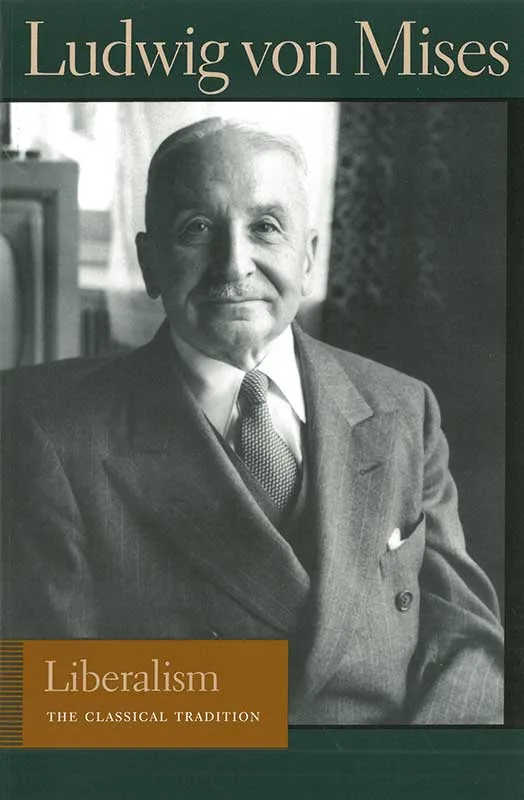
When Mises wrote these words in his book Liberalism (1927) the German speaking world was being torn apart by ultra-nationalist "German Firsters", also known as Nazis, and communist thugs who fought each other in the streets. This soon led to increased votes for the Nazi Party (37% of the vote in the 1932 elections) and soon after to Hitler being appointed Reichskanzler. Thus, Mises was swimming very much against the current by espousing these views of international cosmopolitanism, social cooperation, ecumenism, humanism, in a word "liberalism."
He would eventually be forced to flee Austria to seek refuge in neutral Switzerland, with his recently finished German-language version of what would become his magnum opus in his bags (Nationalökonomie: Theorie des Handels und Wirtschaftens which was rewritten and expanded into the English-language Human Action (1949)). He left behind his papers and books in his Vienna apartment which were confiscated by the Russian Red Army at the end of the war and taken to Moscow. No doubt to be read by mystified Communist Party apparatchiks who would have reacted in completely disbelief to his arguments about the impossibility of rational economic calculation under socialism. If anyone had a reason to be pessimistic and bitter it was the laissez-faire, cosmopolitan, classical liberal Ludwig von Mises in 1927. But instead, he wrote this optimistic paean to peace and international cooperation.