

Armen A. Alchian
1914–2013
Armen A. Alchian was one of the 20th century’s great teachers of economic science, and the co-author, with William R. Allen, of the classic…


Law
93 items in this collection
Property can be thought of as a “right” which all individuals have, as the basis for the rule of law in a free society, as a key aspect of any properly functioning free market society, and as an important part of the emergence of free societies in the West. The wide range of texts collected here reflects these multiple approaches to property.
In this collection
41 titles, earliest first.

Gaius · 160
An edition with Latin, English translations, and extensive editorial commentary. The Institutes of Roman Law is Gaius’ best known work which became the authoritative legal text during the late Roman Empire. It was the…
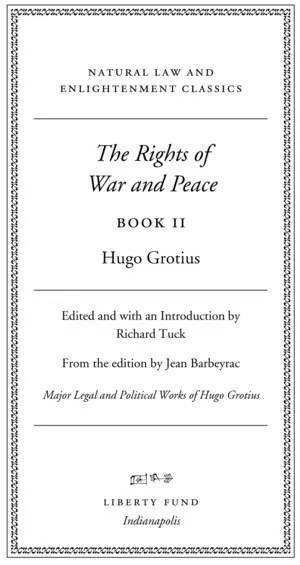
Hugo Grotius · 1625
Grotius’s Rights of War and Peace is a classic of modern public international law which lays the foundation for a universal code of law and which strongly defends the rights of individual agents - states as well as…
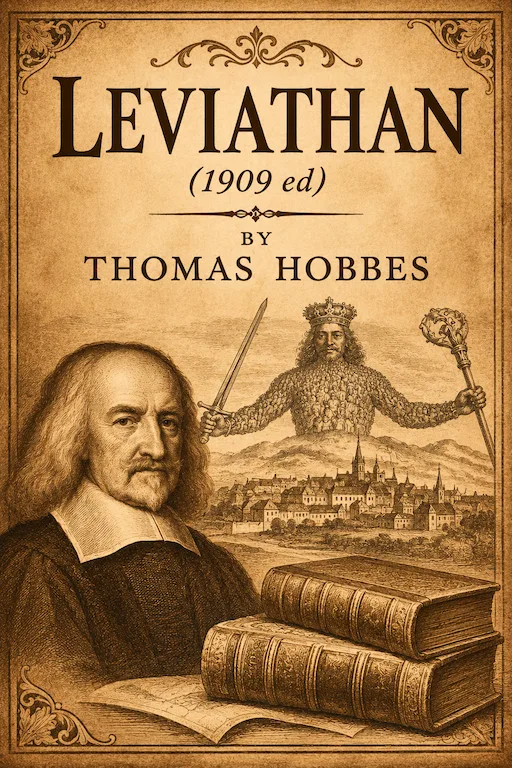
Thomas Hobbes · 1651
The 1909 edition of Hobbe’s best known work of political philosophy is the edition used by Michael Oakeshott in his discussion of Hobbe’s ideas in Hobbes on Civil Association (1937, 1975 Liberty Fund).
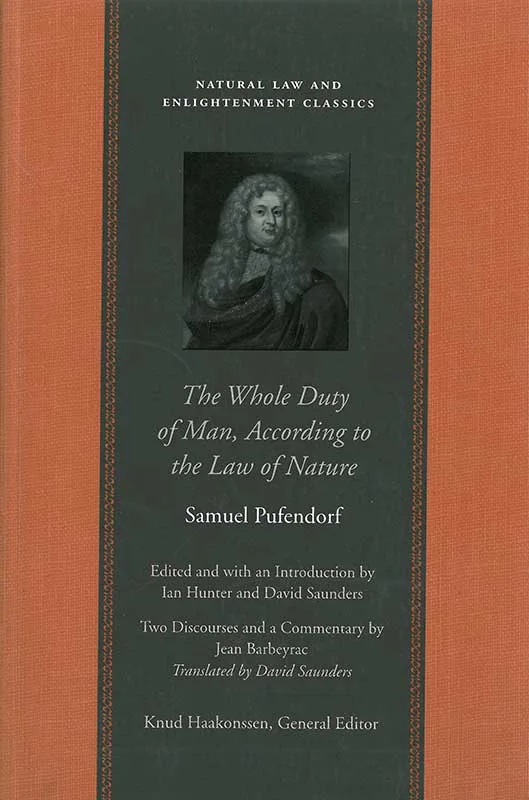
Samuel von Pufendorf · 1673
The Whole Duty of Man (first published in Latin in 1673), was among the first works to suggest a purely conventional basis for natural law. Rejecting scholasticism’s metaphysical theories, Pufendorf found the source of…
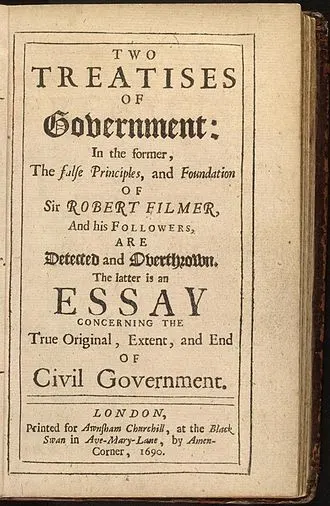
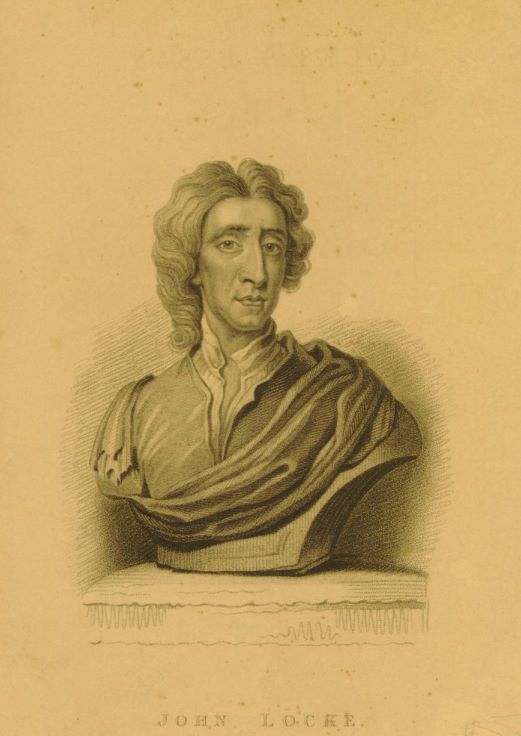
John Locke · 1689
Locke’s most famous work of political philosophy began as a reply to Filmer’s defense of the idea of the divine right of kings and ended up becoming a defense of natural rights, especially property rights, and of…
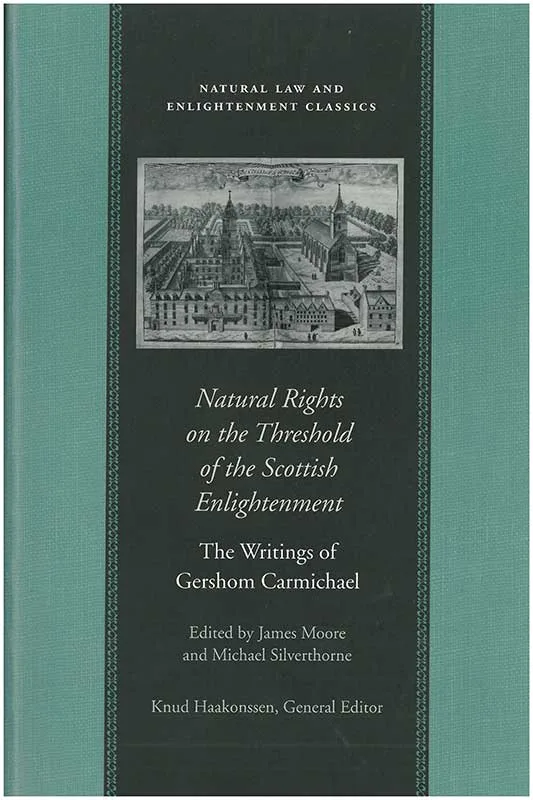
Gershom Carmichael · 1724
Carmichael was a Scottish jurist and philosopher who became the first Professor of Moral Philosophy at the University of Glasgow in 1727. His writings on natural rights theory, theology, and logic were very influential.
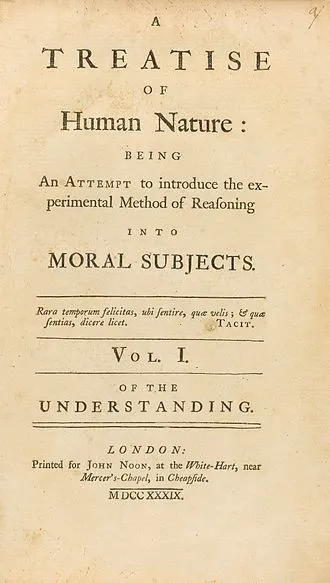
David Hume · 1739
Hume’s first major work of philosophy was published in 1739 when he was just 28 years old. It is made up of three books entitled “Of the Understanding”, “Of the Passions”, and “Of Morals”. In the book he uses his…
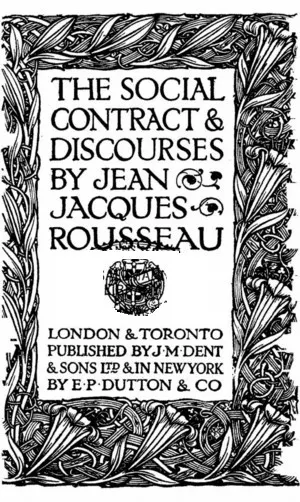
Jean-Jacques Rousseau · 1761
This 1913 edition of Rousseau’s works includes the famous Social Contract as well as 3 discourses on Arts and Sciences, the Origin of Inequality, and Political Economy. Rousseau’s writings inspired liberals and…
Adam Ferguson · 1767
A pioneering work of the Scottish Enlightenment in the field of “philosophical history”, or what we would today call sociology. It deals with the social, political, economic, intellectual, and legal changes which…
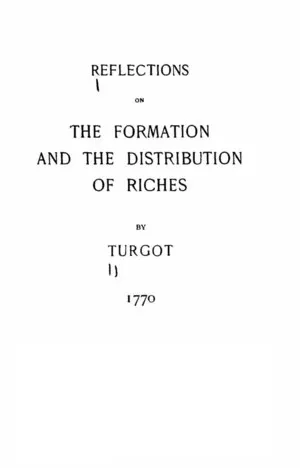
Anne-Robert-Jacques Turgot · 1770
An 1898 edition of one of the more important works on economics before Adam Smith’s Wealth of Nations. It covers a broad range of topics including money, exchange, value, and capital investment in agriculture. Turgot…
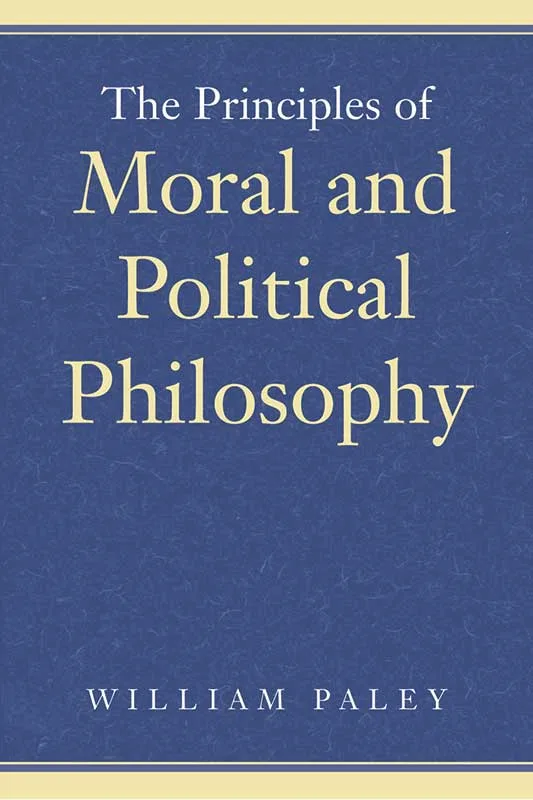
William Paley · 1785
This classic work by William Paley was one of the most popular books in England and America in the early nineteenth century. Its significance lies in the fact that it marks an important point at which eighteenth century…
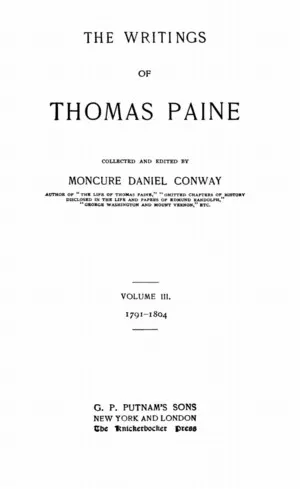
Thomas Paine · 1791
Vol. 3 of a 4 vol. collection of the works of Thomas Paine. Vol. 3 (1791-1804) contains various letters and articles on the French Revolution, Paine’s draft of the French Declaration of Rights, Agrarian Justice, and To…
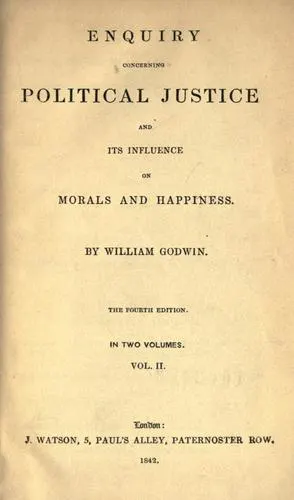
William Godwin · 1793
Godwin’s best known work of political theory. Written in the early years of the French Revolution before the Terror had begun, Godwin provides a devastating critique of unjust government institutions and optimistically…
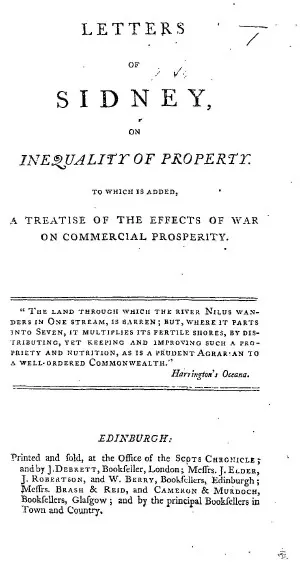
John Millar · 1796
Millar continues his critique of the war against France with letters to the Earl of Lauderdale.
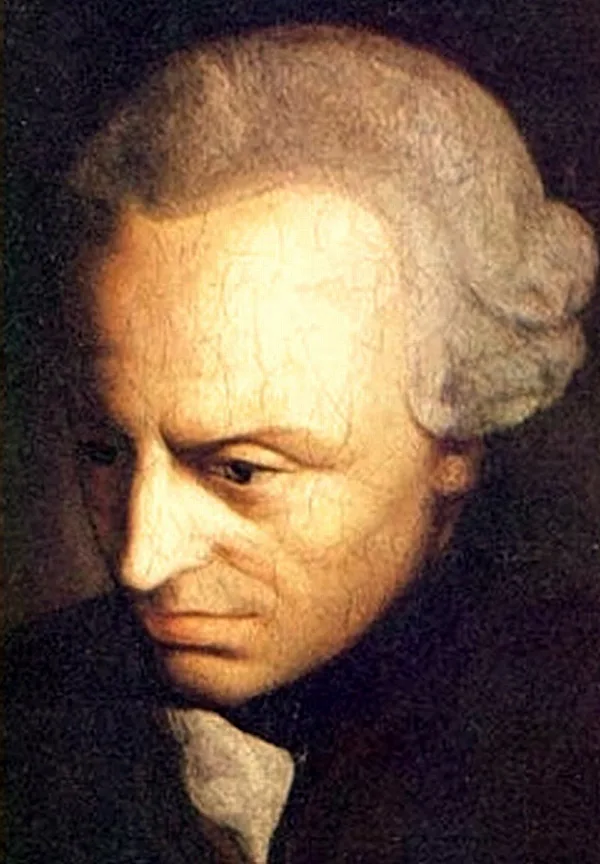
Immanuel Kant · 1796
This 1887 translation contains Kant’s General Introduction to the Metaphysic of Morals and both parts of The Science of Right.
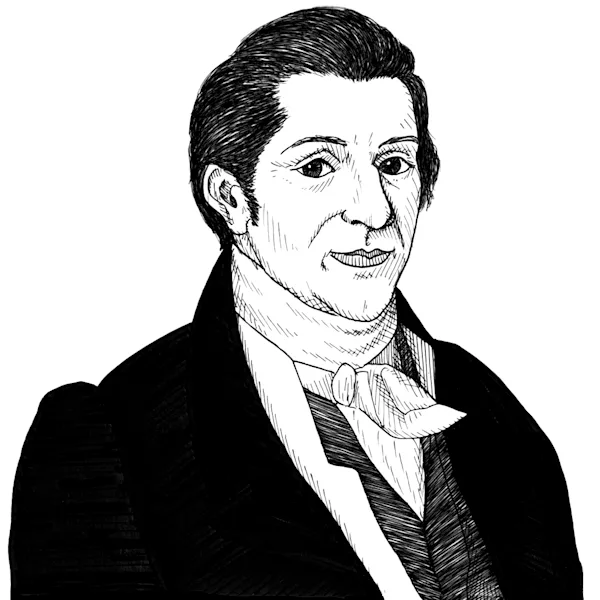
Jean-Baptiste Say · 1803
One of the most influential works on Political Economy in the 19thC. It set the stage for the development of the study of political economy in France and an early translation into English helped make it become the most…
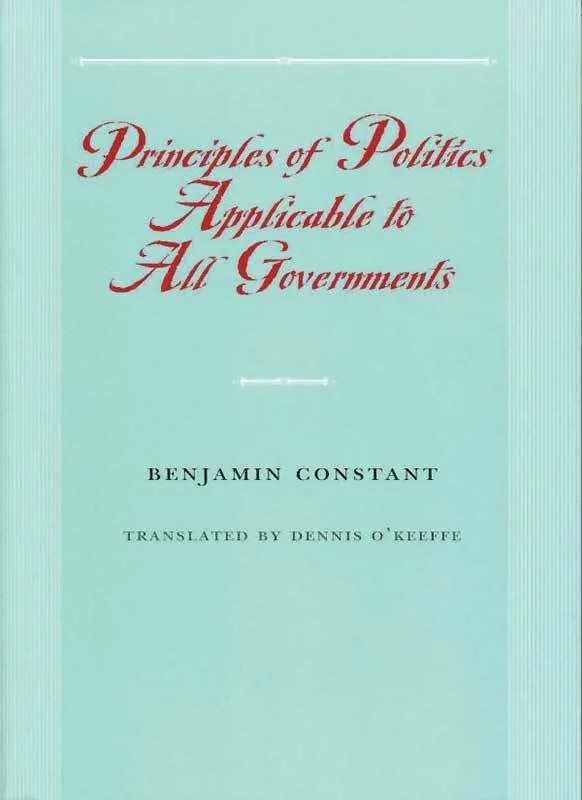
Benjamin Constant · 1815
In Principles of Politics, Constant “explores many subjects: law, sovereignty, and representation; power and accountability; government, property and taxation; wealth and poverty; war, peace, and the maintenance of…
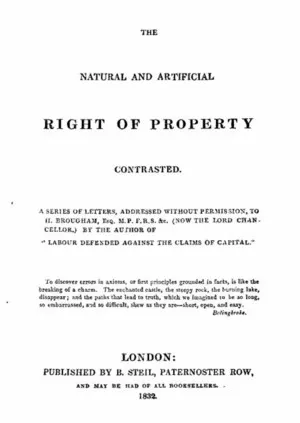
Thomas Hodgskin · 1832
In this series of letters to Lord Braugham, Hodgskin distinguishes between the natural right of property (based upon Lockean principles of natural law) and the artificial right of property (which is decreed by…
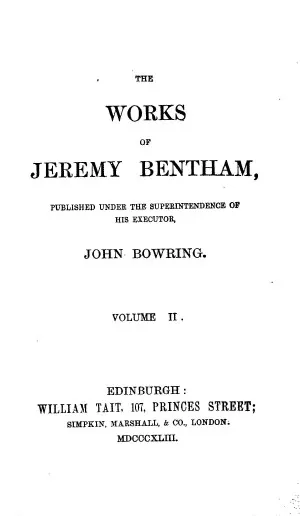
Jeremy Bentham · 1843
An 11 volume collection of the works of Jeremy Bentham edited by the philosophic radical and political reformer John Bowring.
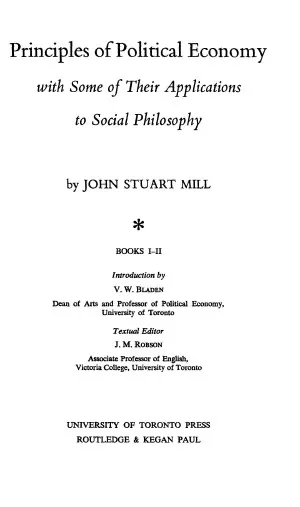
John Stuart Mill · 1848
Vol. 2 of the 33 vol. Collected Works contains Part 1 of Mill’s Principles of Political Economy.
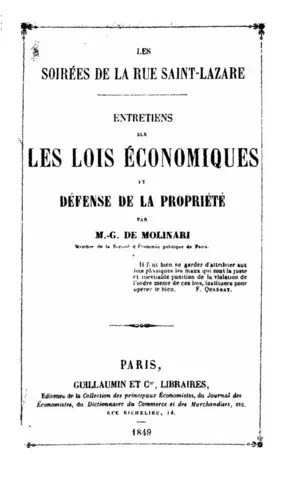
Gustave de Molinari · 1849
Following the rise of socialism in France during the 1840s and the 1848 Revolution, Molinari wrote this fictitious “dialogue” between an economist, a conservative, and a socialist, to expose the folly of socialism,…
Frédéric Bastiat · 1850
This is the translation by the Foundation for Economic Education of Bastiat’s longest and best known work Economic Harmonies. A new translation of this work by Liberty Fund is in progress. See the Summary of the Bastiat…
John Stuart Mill · 1850
Vol. 5 of the 33 vol. Collected Works contains a number of Mill’s essays on economic topics, including the Chapters on Socialism.
Herbert Spencer · 1851
Spencer’s first major work of political philosophy in which he attempts to lay the basis for a limited state on a rigorous development of a doctrine of natural rights. He begins with a defense of his “first principle”…
Francis Lieber · 1853
Lieber discusses the nature of civil iberty, its history, the rule of law, parliament, the independence of the judiciary, and includes a nuber of English, American, and French constitutinal documents.
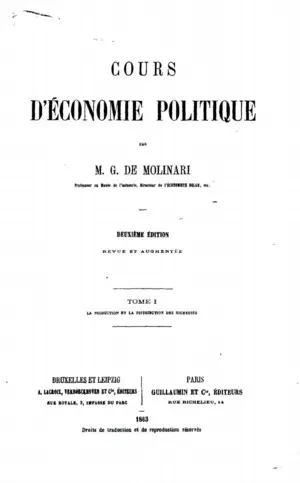
Gustave de Molinari · 1854
Vol. 1 of a 2 volume textbook on classical liberal political economy written by one of the leaders of the French laissez-faire school. It was written when Molinari was in exile in Belgium following the 1848 Revolution.
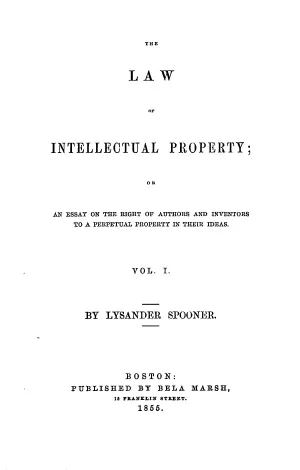
Lysander Spooner · 1855
Although this is entitled volume 1 and a proposed list of contents for a volume 2 was appended to the work, no volume 2 ever appeared. Spooner takes a strong position on the property right of an author to his ideas in…
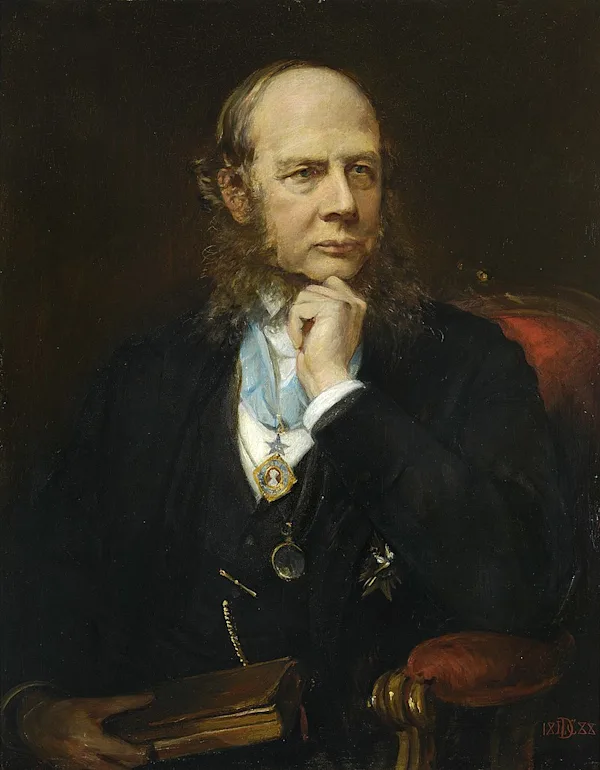
Sir Henry Sumner Maine · 1861
A classic work on the history of law by one of the great English jurists of the 19th century. Another great English jurist, Sir Frederick Pollock wrote an introduction and extensive notes.
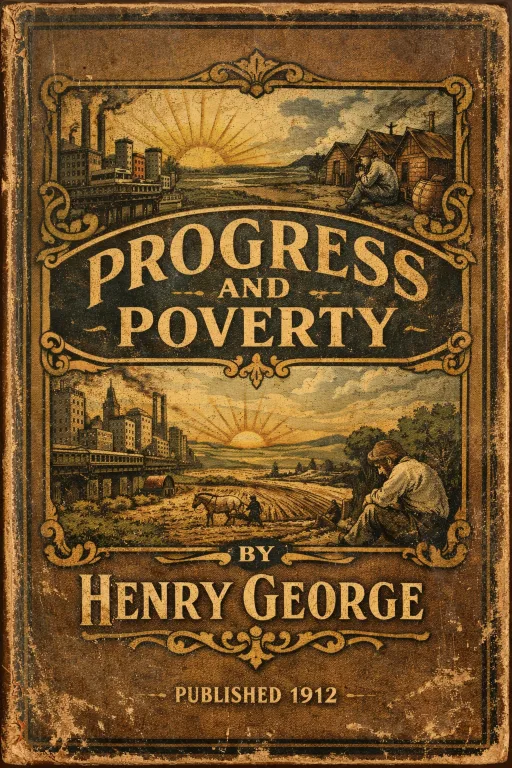
Henry George · 1879
Perhaps Henry George’s best known work in which he examines the casuses of poverty and, among other things, blames it on the monopoly of land ownership.
John Joseph Lalor · 1881
Vol. III of a massive 3 volume, 3,000 page compendium of nearly every aspect of 19th century American economics and political institutions. An additional bonus are the numerous translation of articles written for the…
Wordsworth Donisthorpe · 1889
Donisthorpe provides a theory of politics from the individualist standpoint in the tradition of Herbert Spencer and Auberon Herbert. He also attacks the rise of socialism which he regards as the greatest threat to…
Gustave de Molinari · 1891
Towards the end of the 19th century the doyen of laissez-faire economic thought in France evaluates the successes and failures of the liberal reform agenda.
Herbert Spencer · 1897
Spencer considered The Principles of Ethics to be his finest work. In the second volume he covers the ethics of social life (or justice), negative beneficence, positive beneficence, and a number of topics in several…
Yves Guyot · 1910
Guyot wrote sseveral books attacking socialism in the late 19th and early 20th centuries. Here he provides a brief history of socialist ideas, especially utopian thinking from Plato to Paraguay, and an extensive…
Yves Guyot · 1912
One of several books Guyot wrote attacking socialism in the late 19th and early 20th centuries. In this volume, drawing upon his experience as the French Minister for Public Works, Guyot discusses the differences…
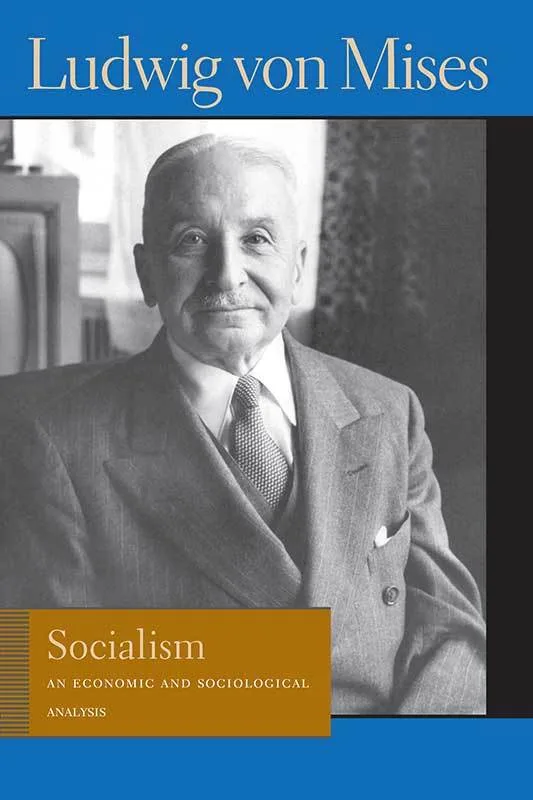
Ludwig von Mises · 1922
This is a newly annotated edition of the classic first published in German in 1922. It is the definitive refutation of nearly every type of socialism ever devised. Mises presents a wide-ranging analysis of society,…
John Maxcy Zane · 1927
Written for the layman as well as the attorney, The Story of Law is the only complete outline history of the law ever published. Zane lucidly describes the growth and improvement of the law over thousands of years, and…
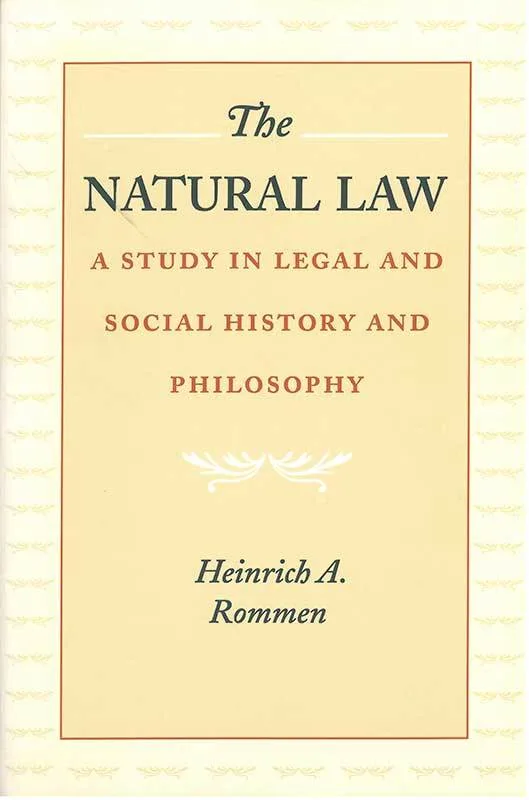
Heinrich Rommen · 1936
Originally published in German in 1936, The Natural Law is the first work to clarify the differences between traditional natural law as represented in the writings of Cicero, Aquinas, and Hooker and the revolutionary…
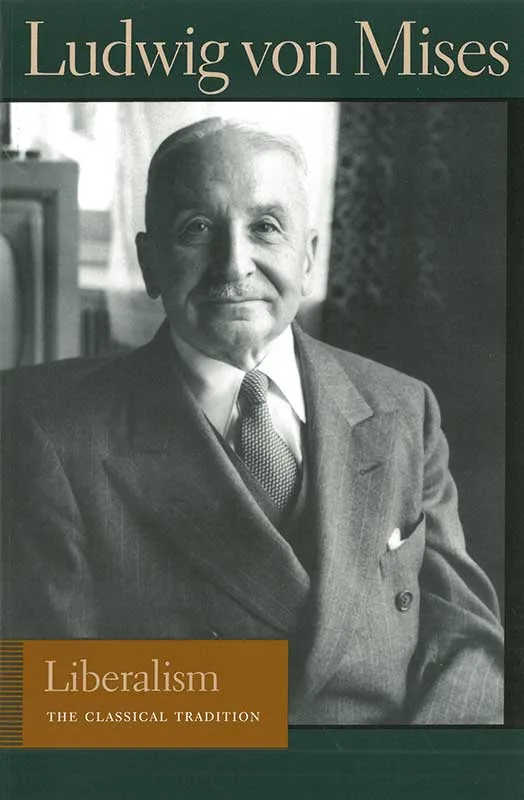
Ludwig von Mises · 1962
The great Austrian economist Ludwig von Mises provides a concise and tightly-argued one volume defense of classical liberalism, focusing on the core concepts of private property, limited government, peace, and the free…
James M. Buchanan · 1985
Vol. 10 of The Collected Works. In his foreword, Robert D. Tollison identifies the main objective of Geoffrey Brennan and James M. Buchanan’s The Reason of Rules: ” . . a book-length attempt to focus the energies of…
Ludwig von Mises · 1996
In the foreword to Human Action: A Treatise on Economics, Mises explains complex market phenomena as “the outcomes of countless conscious, purposive actions, choices, and preferences of individuals, each of whom was…
In this collection
4 people central to Property.
1914–2013
Armen A. Alchian was one of the 20th century’s great teachers of economic science, and the co-author, with William R. Allen, of the classic…

Pierre Desrochers is an Associate Professor in the Department of Geography, Geomatics and Environment at the University of Toronto…

1860–1927
John St Loe Strachey (1860–1927) was a British journalist and newspaper proprietor. Between 1887 and 1925, he was editor of The Spectator.…
b. 1942
Michael Zuckert is Nancy R. Dreux Professor of Political Science at University of Notre Dame. He is the author of many studies on early…
In this collection
From The Reading Room, Liberty Matters and the library’s other publications.

Billy Christmas · May 03, 2022
Sarah Skwire, Jacob T. Levy, Aeon J. Skoble · Mar 29, 2022
Passages on this subject, chosen by OLL editors.
If you surround property with state restrictions, interfere with free trade and any part of the open market, interfere with free contract, make compulsory arrangements for tenant and landowner, allow the present burdens of rate and tax to discourage ownership and penalize improvements, you will weaken the motives for acquiring property, and blunt the edge of the most powerful material instrument that exists for your own advancement. Only remember—as we have said—that great as is your material interest in safeguarding the rights of individual property, yet higher and greater are and ever will be the moral reasons that forbid our sanctioning any attack upon it, or our suffering state burdens and restrictions and impediments to grow round it. True liberty—as we said—cannot exist apart from the full rights of property; for property is—so to speak—only the crystallized form of free faculties.
The only true use of force is for the destruction, the annihilation of itself, to rid the world of its own mischief-making existence. Even when used defensively, it still remains an evil, only to be tolerated in order to get rid of the greater evil. It is the one thing in the world to be bound down with chains, to be treated as a slave, and only as a slave, that must always act under command of something better and higher than itself. Wherever and whenever we use it, we must surround it with the most stringent limits, looking on it, as we should look on a wild and dangerous beast, to which we deny all will and free movement of its own. It is one of the few things in our world to which liberty must be forever denied. Within those limits the force, that keeps a clear and open field for every effort and enterprise of human activity—that are in themselves untainted by force and fraud—such force is in our present world a necessary and useful servant, like the fire which burns in the fireplaces of our rooms and the ranges of our kitchens; force, which once it passes beyond that purely defensive office, becomes our worst, our most dangerous enemy, like the fire which escapes from our fireplaces and takes its own wild course. If then we are wise and clear-seeing, we shall keep the fire in the fireplace, and never allow it to pass away from our control.
Whatever might be his gains after such a principle (of redistribution) had been admitted would be held by a very insecure tenure, and the chance of his making any future gains would be greatly diminished; for the quantity of employment in the country must depend, not only on the quantity of capital, but upon its advantageous distribution, and, above all, on the conviction of each capitalist that he will be allowed to enjoy unmolested the fruits of his capital, his skill, and his enterprise. To take from him this conviction is at once to annihilate half the productive industry of the country, and would be more fatal to the poor labourer than to the rich capitalist himself. This is so self-evident, that men very little advanced beyond the very lowest stations in the country cannot be ignorant of it ...
An argument fatal to the communist theory, is suggested by the fact, that a desire for property is one of the elements of our nature. ... And if a propensity to personal acquisition be really a component of man’s constitution, then that cannot be a right form of society which affords it no scope. ... it is also true that no change in the state of society will alter its nature and its office. To whatever extent moderated, it must still be a desire for personal acquisition. Whence it follows that a system affording opportunity for its exercise must ever be retained; which means, that the system of private property must be retained; and this presupposes a right of private property, for by right we mean that which harmonizes with the human constitution as divinely ordained.
There are some truths so completely self-evident, that demonstration is quite superfluous. This is one of that number. For who will attempt to deny, that the certainty of enjoying the fruits of one's land, capital and labour, is the most powerful inducement to render them productive? Or who is dull enough to doubt, that no one knows so well as the proprietor how to make the best use of his property? Yet how often in practice is that inviolability of property disregarded, which, in theory, is allowed by all to be so immensely advantageous? How often is it broken in upon for the most insignificant purposes; and its violation, that should naturally excite indignation, justified upon the most flimsy pretexts? So few persons are there who have a lively sense of any but a direct injury, or, with the most lively feelings, have firmness enough to act up to their sentiments! There is no security of property, where a despotic authority can possess itself of the property of the subject against his consent. Neither is there such security, where the consent is merely nominal and delusive.
...no arrangement of society, consistent with any tolerable degree of freedom and security, seems capable of preventing this wonderful agent [the disposition to accumulation] from adding something every year to the fund of production, from continually increasing the annual produce. As it is this gradual produce on which the happiness of the great body of the people depends, we may reflect with satisfaction and wonder on the strength of the principle on which it is secured; on the provision which is laid in the original laws of human nature for the well-being of the species!
An adoration of military fame, specious projects and eminent individuals, has in all ages brought on mankind a multitude of evils; and a sound freedom of property is the only mode that I know of, able to destroy the worship of these idols, by removing beyond their reach the sacrifices upon which themselves, and their proselytes, subsist.
A relation is formed betwixt every man and the fruits of his own labour, the very thing we call property, which he himself is sensible of, and of which every other is equally sensible. Yours and mine are terms in all languages, familiar among savages, and understood even by children. This is a fact, which every human creature can testify.

Law
140 titles · 14 publications · 134 people

Political Science
17 titles · 1 publication · 35 people
Law
20 titles · 7 publications · 25 people
Law
49 titles · 1 publication · 69 people

Law
7 titles · 14 people · 4 quotes
Language and Literature
6 titles · 8 people