

John Emerich Edward Dalberg, Lord Acton
1834–1902
Lord Acton (1834-1902) was one of the great historians of the Victorian period and one of the greatest classical liberal historians of all…


France - Andorra - Monaco
96 items in this collection
Like the American Revolution (1775-1783), the French Revolution (1789-1815), had its roots in the Enlightenment and attempted to put enlightened ideas about individual liberty and constitutional government into practice. That one attempt was successful and that the other one failed, leading instead to the Terror and Napoleon’s empire and militarism, has engaged thinkers ever since.
In this collection
46 titles, earliest first.
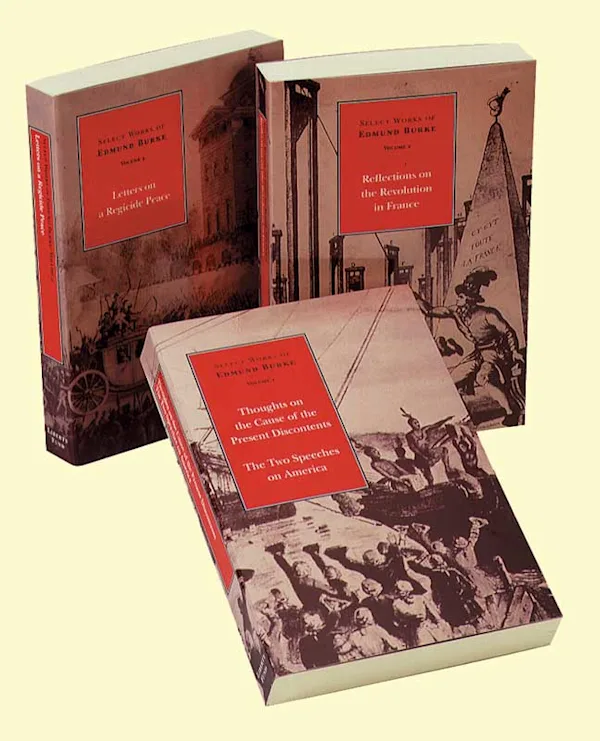
Edmund Burke · 1770
A 4 volume collection on Burke’s speeches and writings on economics, the American Revolution and the French Revolution.
Thomas Paine · 1779
Vol. 2 of a 4 vol. collection of the works of Thomas Paine. Vol. 2 (1779-1792) contains the Letter to Abbey Raynal, Dissertations on Government, The Rights of Man (1 and 2) and various articles.
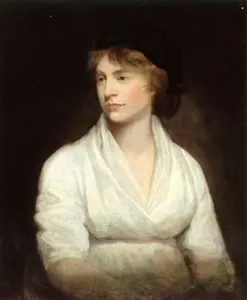
Mary Wollstonecraft · 1790
One of the first responses to Burke’s Reflections on the Revolution in France. Wollstonecraft later lived in France during the Terror and wrote a history of the events she witnessed.
Edmund Burke · 1790
Burke continued arguing about the French Revolution throughout the 1790s in a series of letters and pamphlets, the most significant being “An Appeal from the New to the Old Whigs”.
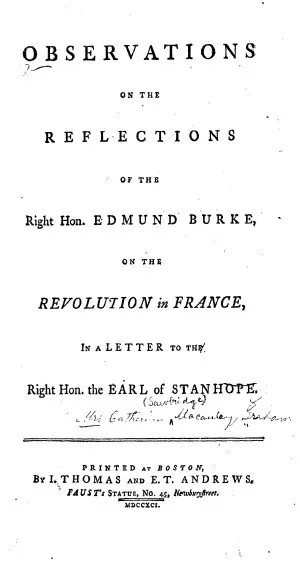
Catharine Macaulay · 1790
An early reply to Burke by an English supporter of republicanism.
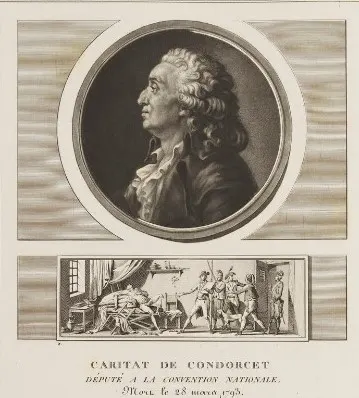
Marie-Jean-Antoine-Nicolas Caritat, Marquis de Condorcet · 1790
Condorcet’s essay is an early defence of the right of women to particpate in politcs. It was written during the first years of the French Revolution.
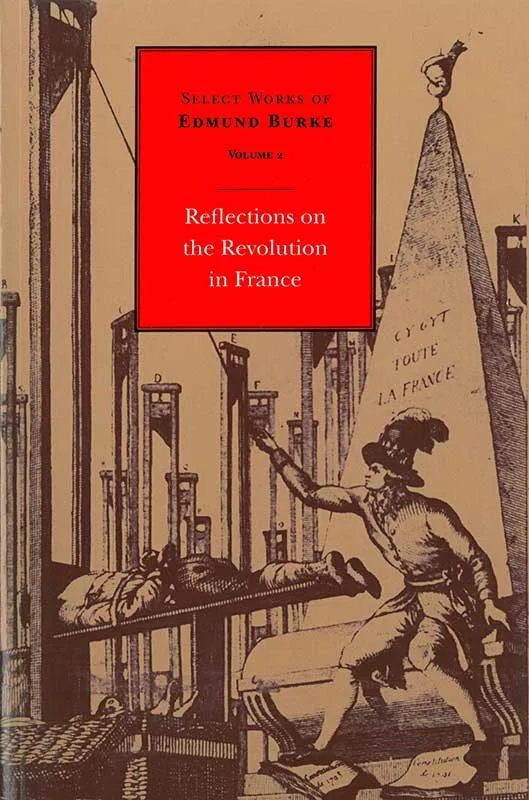
Edmund Burke · 1790
Burke’s classic criticism of the French Revolution. It provoked many replies and Burke returned to the issue again and again.
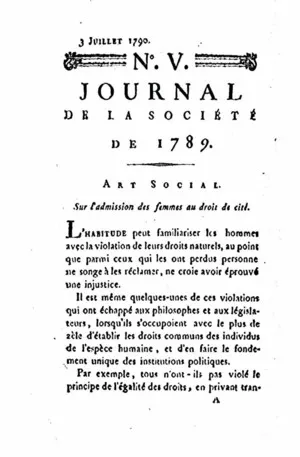
Marie-Jean-Antoine-Nicolas Caritat, Marquis de Condorcet · 1790
A facsimile of the first edition of this essay. Condorcet’s essay is an early defence of the right of women to particpate in politcs. It was written during the first years of the French Revolution.
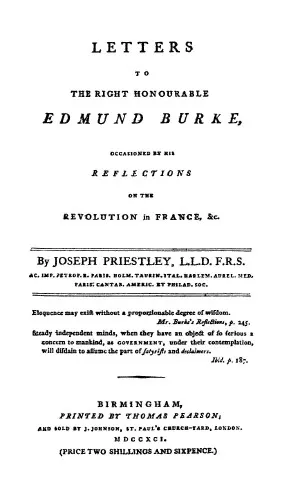
Joseph Priestley · 1791
Priestley supported the early phase of the French Revolution and saw it as an advance in human liberty, thus objecting to Burke’s severe criticisms.
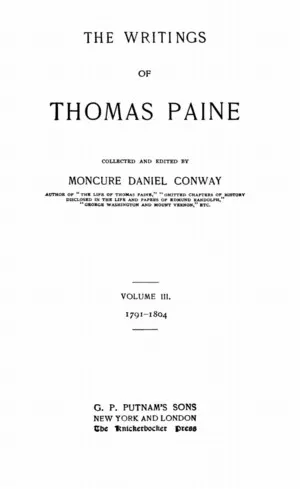
Thomas Paine · 1791
Vol. 3 of a 4 vol. collection of the works of Thomas Paine. Vol. 3 (1791-1804) contains various letters and articles on the French Revolution, Paine’s draft of the French Declaration of Rights, Agrarian Justice, and To…
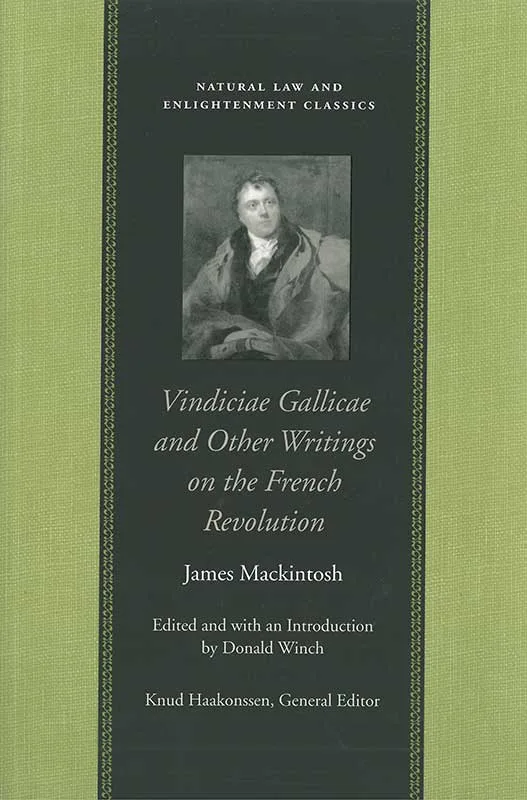
Sir James Mackintosh · 1791
Vindiciae Gallicae was Mackintosh’s contribution to the debate begun by Burke’s Reflections on the Revolution in France. A Discourse on the Law of Nature and Nations was the introduction to a popular course of public…
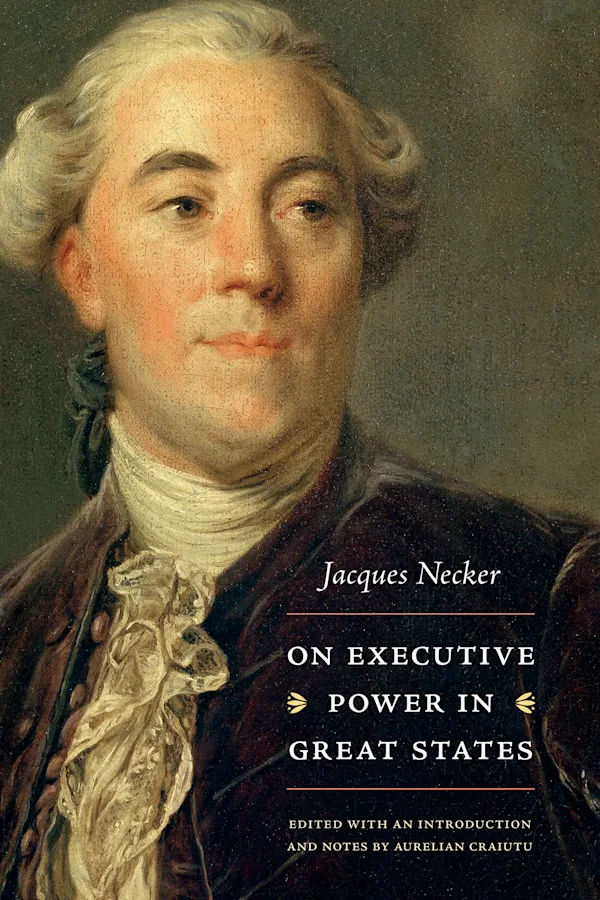
Jacques Necker · 1792
On Executive Power in Great States (1792) is arguably one of the most important texts ever written on the issue of executive power in modern society. It includes memorable formulations regarding liberty and public…
Jeanne Marie Roland de la Platière · 1793
Whilst in prison for her liberal views Roland wrote a series of letters and reflections which were published in 2 volumes.
Jeanne Marie Roland de la Platière · 1793
Whilst in prison for her liberal views Roland wrote a series of letters and reflections which were published in 2 volumes.
Jeanne Marie Roland de la Platière · 1793
Whilst in prison for her liberal views Roland wrote a series of letters and reflections which were published in 2 volumes.
Mary Wollstonecraft · 1795
An optimistic and rationalist account of the French Revolution based upon first-hand, eyewitness experiences. It was intended to defend the Revolution against critics like Burke. Wollstonecraft explained the violent…
John Thelwall · 1796
The English radical John Thelwall defended the ideals of the French Revolution and the idea of natural rights against critics such as Edmund Burke.
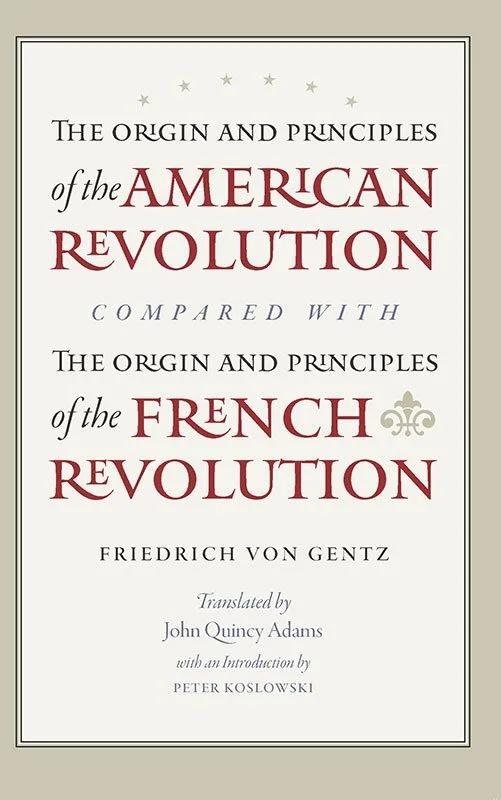
Friedrich von Gentz · 1800
Gentz was a conservative German who supported the American Revolution but strongly opposed the French. This work was originally published in a journal Gentz edited in May and June 1800 and was translated by John Quincy…
Germaine de Staël · 1818
One of the earliest histories of the French Revolution by the daughter of the last minister of Financer of the Old Regime (Necker) and one of the leading classical liberals of her day.
Germaine de Staël · 1818
Volume 1 of a 3 volume work. This work is the first full-length history of the French Revolution written by a participant. Staël was the daughter of the last Controller-General before the Revolution, was active in…
Germaine de Staël · 1818
Volume 2 of a 3 volume work.This work is the first full-length history of the French Revolution written by a participant. Staël was the daughter of the last Controller-General before the Revolution, was active in…
Germaine de Staël · 1818
Volume 3 of a 3 volume work. This work is the first full-length history of the French Revolution written by a participant. Staël was the daughter of the last Controller-General before the Revolution, was active in…
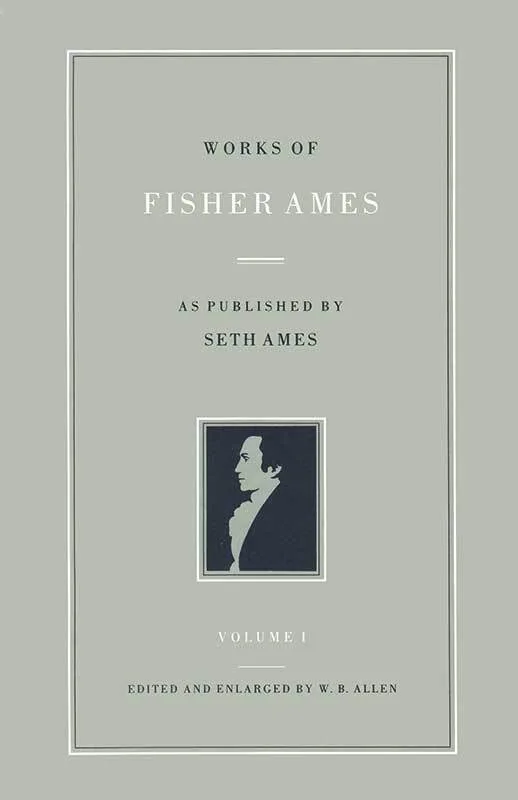
Fisher Ames · 1854
This volume continues the comprehensive collection of writings by Fisher Ames (1758–1808), one of early America’s most influential Federalist statesmen and orators. Edited and enlarged by W. B. Allen from the…
Fisher Ames · 1854
Works of Fisher Ames is an edited and expanded collection of the writings, speeches, and correspondence of Fisher Ames (1758–1808), one of the most prominent Federalist statesmen of the early American republic. Edited…
Alexis de Tocqueville · 1856
Tocqueville’s last major work which he left unfinished on the continuities between the old regime and the French Revolution.
Augustin Thierry · 1856
In this influential work Thierry combines two of his main interests, the study of the ruling elites of French history and the rise of the third estate to challenge this rule from the middle ages until the outbreak of…
Augustin Thierry · 1856
In this influential work Thierry combines two of his main interests, the study of the ruling elites of French history and the rise of the third estate to challenge this rule from the middle ages until the outbreak of…
Augustin Thierry · 1856
In this influential work Thierry combines two of his main interests, the study of the ruling elites of French history and the rise of the third estate to challenge this rule from the middle ages until the outbreak of…
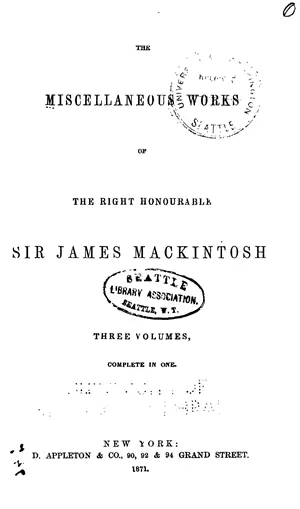
Sir James Mackintosh · 1871
This collections contains his philosophical writings on Locke, natural law, Thomas More, and Machiavelli; his historical writings on the Glorious Revolution, his defence of the French Revolution Vindiciae Gallicae; and…
Hippolyte Taine · 1878
Taine’s 3 volume history of the French Revolution, written from a conservative perspective.
Hippolyte Taine · 1878
The 1st volume of Hippolyte Taine’s 3 volume history of the French Revolution which is part of his history of modern France, The Origins of Contemporary France
Hippolyte Taine · 1878
The 2nd volume of Hippolyte Taine’s 3 volume history of the French Revolution which is part of his 5 part history of modern France, The Origins of Contemporary France.
Hippolyte Taine · 1878
The 3rd volume of Hippolyte Taine’s 3 volume history of the French Revolution which is part of his history of modern France, The Origins of Contemporary France.
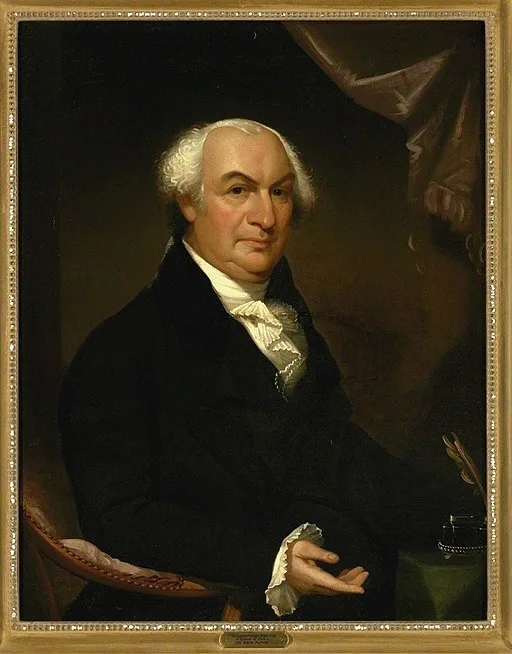
Gouverneur Morris · 1888
A two volume diary which Morris kept while he was Minister to France for the new American Republic from 1792-94. It provides much detail about the social life and political turmoil of Paris during a critical phase of…
Gouverneur Morris · 1888
Volume 1 of a two volume diary which Morris kept while he was Minister to France for the new American Republic from 1792-94. It provides much detail about the social life and political turmoil of Paris during a critical…
Gouverneur Morris · 1888
Volume 2 of a two volume diary which Morris kept while he was Minister to France for the new American Republic from 1792-94. It provides much detail about the social life and political turmoil of Paris during a critical…
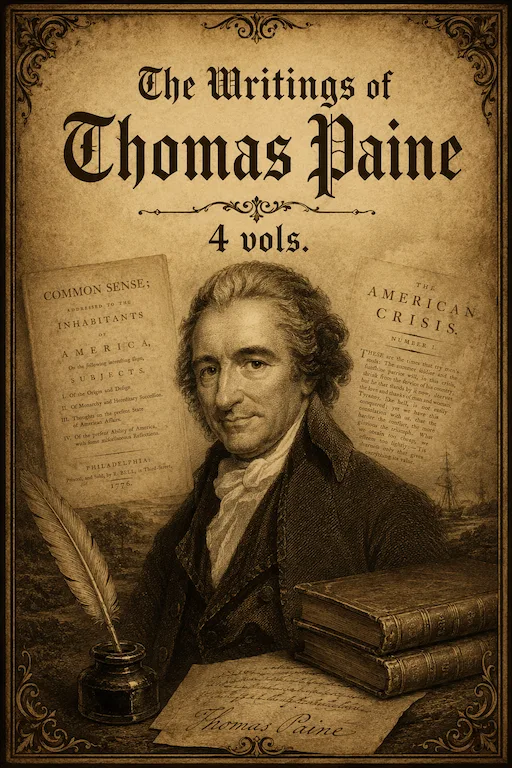
Thomas Paine · 1894
A 4 volume collection of the works of Thomas Paine.
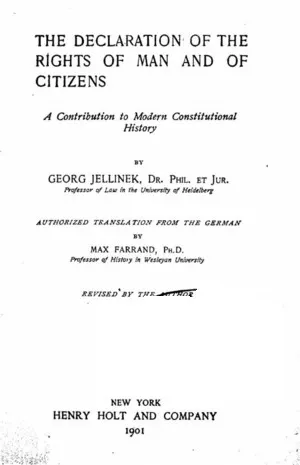
Georg Jellinek · 1895
An analysis of the French Declaration of the Rights of Man and the Citizen showing the impact which American practice and theory had on French thinking about constitutional law.
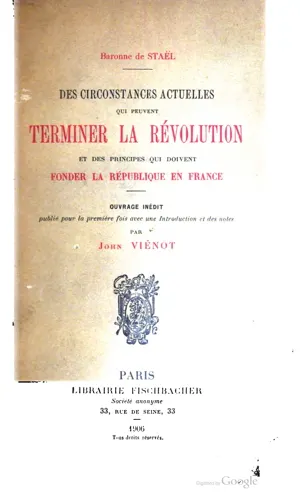
Germaine de Staël · 1906
In this posthumously published work, the French classical liberal Germain Necker (de Staël), provides the most coherent account of her thoughts on constitutional government, property rights, public opinion, and…
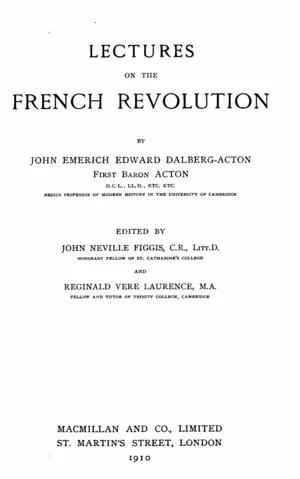
John Emerich Edward Dalberg, Lord Acton · 1910
Delivered at Cambridge University between 1895 and 1899, Lectures on the French Revolution is a distinguished account of the entire epochal chapter in French experience by one of the most remarkable English historians…
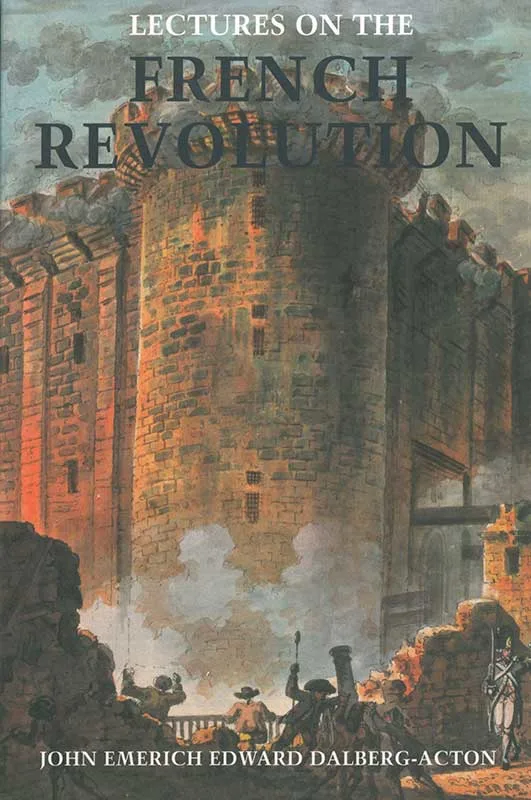
John Emerich Edward Dalberg, Lord Acton · 1910
Delivered at Cambridge University between 1895 and 1899, Lectures on the French Revolution is a distinguished account of the entire epochal chapter in French experience by one of the most remarkable English historians…
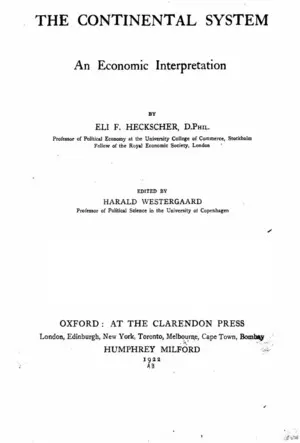
Eli F. Heckscher · 1918
The great Swedish economist, Heckscher’s, first effort to show how interventionist economic policies fail. He began with this 1918 study of Napoleon’s effort to wage economic warfare against the British known as The…
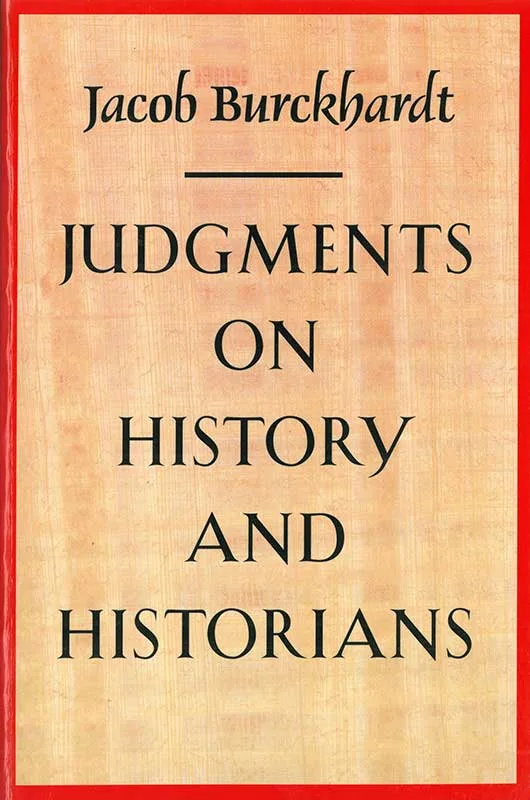
Jacob Burckhardt · 1929
Judgments on History and Historians consists of records collected by Emil Dürr from Burckhardt’s lecture notes for history courses at the University of Basel from 1865 to 1885. The notes span five eras: Antiquity, the…
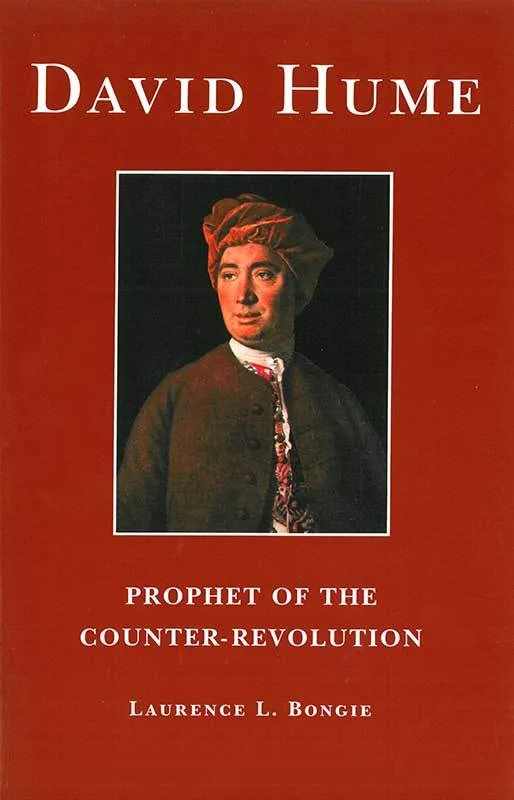
Laurence L. Bongie · 1965
The bulk of Bongie’s work consists of the writings of French readers of Hume who were confronted, first, by the ideology of human perfection and, finally, by the actual terrors of the French Revolution. These vitally…
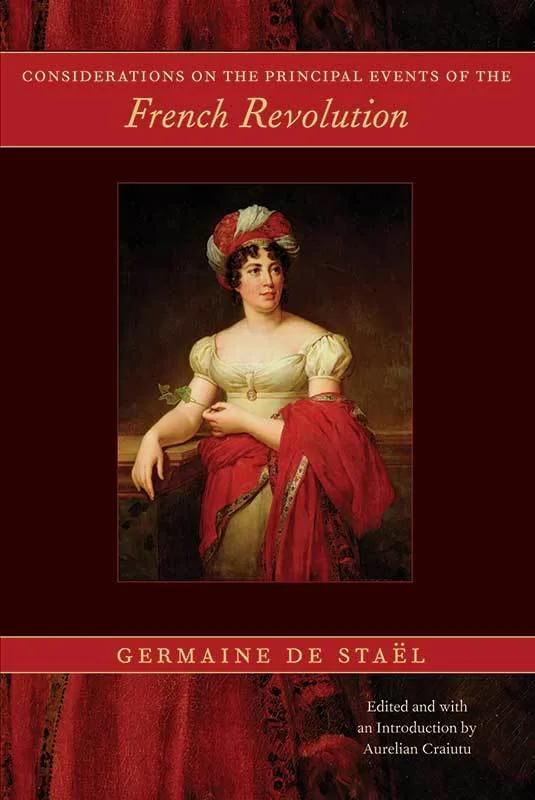
Germaine de Staël · 2008
Considerations is considered de Staël’s magnum opus and sheds renewed light on the familiar figures and events of the Revolution, among them, the financier and statesman Jacques Necker, her father.
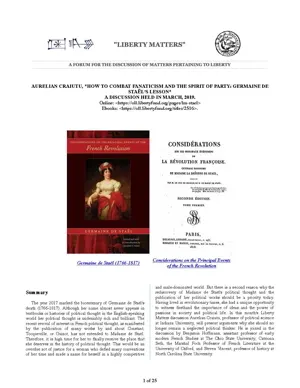
Aurelian Craiutu · 2019
The year 2017 marked the bicentenary of Germaine de Staël's death (1766-1817). Although her name almost never appears in textbooks or histories of political thought in the English-speaking world her political thought is…
In this collection
18 people central to French Revolution.
1834–1902
Lord Acton (1834-1902) was one of the great historians of the Victorian period and one of the greatest classical liberal historians of all…

1769–1821
Napoléon Bonaparte (1769-1821) was an artillery officer in the French Army during the French Revolution before becoming First Consul in…

1763–1834
Edmond-Charles Genêt, known as Citizen Genêt, was a French envoy to the United States during the early 1790s, sent by the revolutionary…

1764–1832
Friedrich von Gentz (1764-1832) came under the influence of the classical liberal philosopher Immanuel Kant at the University of Königsberg…

1748–1793
Marie Gouze (1748-1793), who wrote under the name of Marie-Olympe de Gouges, was the daughter of a butcher who became a playwright and…

1757–1834
Gilbert du Motier, Marquis de La Fayette (1757-1834) was a French aristocrat and military officer who fought in the American Revolutionary…

1731–1791
Macaulay was a radical republican historian who wrote a poplar 8 volume History of England which argued that English history was a failed…
1754–1793
Madame de Roland (1754-1793) was a supporter of the French Revolution and active in the liberal Gironde group. She was arrested and…
Ritchie is the editor of Liberty Fund’s edition of Burke’s Further Reflections on the Revolution in France.

1758–1794
Maximilien François Marie Isidore de Robespierre (1758 - 1794) was a French lawyer and statesman. He was one of the primary leaders of the…

1766–1817
Madame Germaine de Staël (née Necker) (1766-1817) was the daughter of the last Controller-General of France before the Revolution and was…

1764–1834
John Thelwall (1764-1834) was a radical English journalist and writer who supported the ideals of the French Revolution and sought similar…

1805–1859
Alexis de Tocqueville (1805-1859) was an enormously influential French political philosopher, politician, and historian. After a trip to…

1754–1836
Destutt de Tracy (1754-1836) was a philosophe and one of the founders in the 1790s of the classical liberal republican group known as the…

1757–1820
Volney was associated with liberal groups such as the Girondins and the Ideologues during the French Revoltuon and the Napoleonic Empire.…
1810–1888
Wells was the rector of Woodchurch in Kent and the translator of Thierry's Formation and Progress of the Third Estate.

1853–1936
Westergaard was Professor of Political Science at the Uiversity of Copenhagen.
In this collection
From The Reading Room, Liberty Matters and the library’s other publications.


Passages on this subject, chosen by OLL editors.
One circumstance, which especially struck me, is, that during the space of six centuries, from the twelfth to the eighteenth, the history of the Tiers Etat and that of the royal power are indissolubly bound together in such a manner that, in the eyes of him who really understands them, one is, to use the expression, the counterpart of the other. From the accession of Louis le Gros to the death of Louis XIV., each decisive epoch in the progress of the different classes of the roture in liberty, prosperity, enlightenment, and social importance, corresponds, in the series of the reigns, to the name of some great king or of some great minister. The eighteenth century alone shows an exception to this law of our national development; it introduced distrust, and prepared a fatal divorce between the Tiers Etat and the Crown. At the point at which a last step, the guarantee and crowning point of all the others, would naturally have completed civil, and founded political liberty by the establishment of a new constitution, the necessary agreement was wanting in the conditions of a Government at once free and monarchical. The work of the Constituent Assembly of 1791, badly put together, crumbled to pieces almost immediately, and the monarchy was destroyed.
To this very ingenious reasoning, and these refined distinctions between natural and social rights, the people may possibly object, that in delivering themselves passively over to the unrestrained rule of others on the plea of controling their inordinate inclinations and passions, they deliver themselves over to men, who, as men, and partaking of the same nature as themselves, are as liable to be governed by the same principles and errors; and to men who, by the great superiority of their station, having no common interest with themselves which might lead them to preserve a salutary check over their vices, must be inclined to abuse in the grossest manner their trust.
It was more complete, more entire than that of America, and of consequence was attended with greater convulsions in the interior of the nation, because the Americans, satisfied with the code of civil and criminal legislation which they had derived from England, having no corrupt system of finance to reform, no feodal tyrannies, no hereditary distinctions, no privileges of rich and powerful corporations, no system of religious intolerance to destroy, had only to direct their attention to the establishment of new powers to be substituted in the place of those hitherto exercised over them by the British government. In these innovations there was nothing that extended to the mass of the people, nothing that altered the subsisting relations formed between individuals: whereas the French revolution, for reasons exactly the reverse, had to embrace the whole economy of society, to change every social relation, to penetrate to the smallest link of the political chain, even to those individuals, who, living in peace upon their property, or by their industry, were equally unconnected with public commotions, whether by their opinions and their occupations, or by the interests of fortune, of ambition, or of glory.
Our hopes, as to the future condition of the human species, may be reduced to three points: the destruction of inequality between different nations; the progress of equality in one and the same nation; and lastly, the real improvement of man.
Will not every nation one day arrive at the state of civilization attained by those people who are most enlightened, most free, most exempt from prejudices, as the French, for instance, and the Anglo-Americans? Will not the slavery of countries subjected to kings, the barbarity of African tribes, and the ignorance of savages gradually vanish? Is there upon the face of the globe a single spot the inhabitants of which are condemned by nature never to enjoy liberty, never to exercise their reason?
Permit me then to continue our conversation, and to tell you what the freedom is that I love, and that to which I think all men entitled. This is the more necessary, because, of all the loose terms in the world, liberty is the most indefinite. It is not solitary, unconnected, individual, selfish liberty, as if every man was to regulate the whole of his conduct by his own will. The liberty I mean is social freedom. It is that state of things in which liberty is secured by the equality of restraint. A constitution of things in which the liberty of no one man, and no body of men, and no number of men, can find means to trespass on the liberty of any person, or any description of persons, in the society. This kind of liberty is, indeed, but another name for justice; ascertained by wise laws, and secured by well-constructed institutions.
The rights of men in governments are their advantages; and these are often in balances between differences of good; in compromises sometimes between good and evil, and sometimes, between evil and evil. (FROM: Reflections on the Revolution in France)
To provide for us in our necessities is not in the power of Government. It would be a vain presumption in statesmen to think they can do it. The people maintain them, and not they the people. It is in the power of Government to prevent much evil; it can do very little positive good in this, or perhaps in any thing else. It is not only so of the state and statesman, but of all the classes and descriptions of the Rich—they are the pensioners of the poor, and are maintained by their superfluity. (FROM: thoughts and details on scarcity)
The conception of a declaration of rights had found expression in France even before the assembling of the States General. It had already appeared in a number of cahiers. The cahier of the Bailliage of Nemours is well worth noting, as it contained a chapter entitled “On the Necessity of a Declaration of the Rights of Man and of Citizens”, and sketched a plan of such a declaration with thirty articles. Among other plans that in the cahier des tiers état of the city of Paris has some interest.
In the National Assembly, however, it was Lafayette who on July 11, 1789, made the motion to enact a declaration of rights in connection with the constitution, and he therewith laid before the assembly a plan of such a declaration.
...[i]n his Memoirs ... Lafayette mentions the model that he had in mind when making his motion in the Constituent Assembly. He very pertinently points out that the Congress of the newly formed Confederation of North American free states was then in no position to set up, for the separate colonies, which had already become sovereign states, rules of right which would have binding force. He brings out the fact that in the Declaration of Independence there are asserted only the principles of the sovereignty of the people and the right to change the form of government. Other rights are included solely by implication from the enumeration of the violations of right, which justified the separation from the mother country.
The constitutions of the separate states, however, were preceded by declarations of rights, which were binding upon the people’s representatives. The first state to set forth a declaration of rights properly so called was Virginia.
The declarations of Virginia and of the other individual American states were the sources of Lafayette’s proposition. They influenced not only Lafayette, but all who sought to bring about a declaration of rights. Even the above-mentioned cahiers were affected by them.
See also the following resources:

France - Andorra - Monaco
19 titles · 4 publications · 19 people

History of the Americas
343 titles · 67 publications · 239 people

Great Britain
38 titles · 1 publication · 41 people

Political Science
618 titles · 60 publications · 383 people

Language and Literature
73 titles · 10 publications · 81 people

History of scholarship and learning. The humanities
9 titles · 4 publications · 92 people