

Woodrow Wilson
1856–1924
The 28th President of the U.S. He was a professor of jurisprudence and politcal economy at Princeton University before being elected the…


Social Sciences
19 items in this collection
Many classical liberal and free market thinkers believe that through hard work and initiative both individuals and society can be improved indefinitely. This comes about through both increases in population and through wealth creation brought about by voluntary free market activity and trade. The titles included here include works of economics, history, and philosophy.
In this collection
18 titles, earliest first.
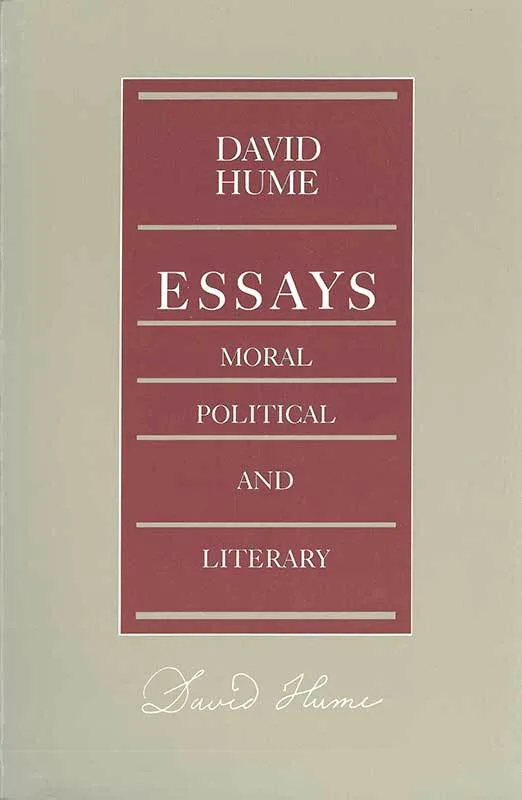
David Hume · 1777
This edition of Hume's much neglected philosophical essays contains the thirty-nine essays included in Essays, Moral, and Literary, that made up Volume I of the 1777 posthumous Essays and Treatises on Several Subjects.…
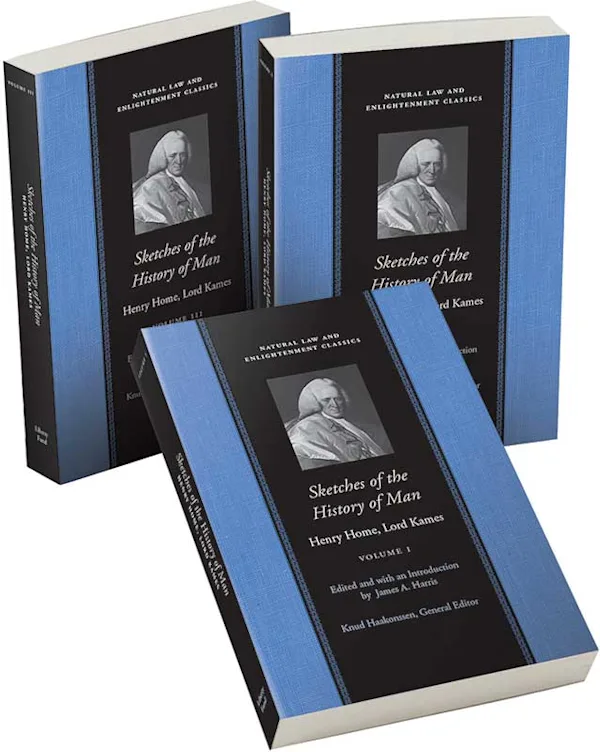
Henry Home, Lord Kames · 1778
Written late in his life, this 3 volume work deals with the idea of human progress. Vol. 1 deals with progress in property law, commerce, the treatment of women, and luxury. Vol. 2 deals with the development of states,…
Henry Home, Lord Kames · 1778
Written late in his life, this 3 volume work deals with the idea of human progress. Vol. 1 deals with progress in property law, commerce, the treatment of women, and luxury. Vol. 2 deals with the development of states,…
Henry Home, Lord Kames · 1778
Written late in his life, this 3 volume work deals with the idea of human progress. Vol. 1 deals with progress in property law, commerce, the treatment of women, and luxury. Vol. 2 deals with the development of states,…
Henry Home, Lord Kames · 1778
Written late in his life, this 3 volume work deals with the idea of human progress. Vol. 1 deals with progress in property law, commerce, the treatment of women, and luxury. Vol. 2 deals with the development of states,…

David Hume · 1778
Volume 2 of “Hume’s great History of England the theme of which is liberty, above all English constitutional development from the Anglo-Saxon period to the Revolution of 1688. This Liberty Fund edition is based on the…
Marie-Jean-Antoine-Nicolas Caritat, Marquis de Condorcet · 1795
Condorcet wrote this while in prison awaiting execution by the Jacobins. It is an optimistic view of the progress the human race will undergo when political and economic liberty are gradually introduced.

John Millar · 1803
An Historical View of the English Government consists of three parts, concerned with the most substantive revolutions in English government and manners: from the Saxon settlement to the Norman Conquest, from the Norman…
William Godwin · 1820
A lengthy and belated reply to Malthus by the radical individualist Godwin. Whereas Malthus took a pessimistic view of the pressures of population growth, Godwin was more optimistic about the capacity of people to limit…
Augustin Thierry · 1856
In this influential work Thierry combines two of his main interests, the study of the ruling elites of French history and the rise of the third estate to challenge this rule from the middle ages until the outbreak of…
William Edward Hartpole Lecky · 1865
Lecky discusses the decline in the belief of magic and miracles, the rise of religious persecution, the gradual secularisation of politics, and the rise of toleration and rationalism.
Herbert Spencer · 1897
Spencer considered The Principles of Ethics to be his finest work. In the second volume he covers the ethics of social life (or justice), negative beneficence, positive beneficence, and a number of topics in several…
Gustave de Molinari · 1899
In this vision of a future society, the Belgian laissez-faire economist Molinari suggests how many, if not most, public goods could be provided by the free market or by radically decentralized local governments.
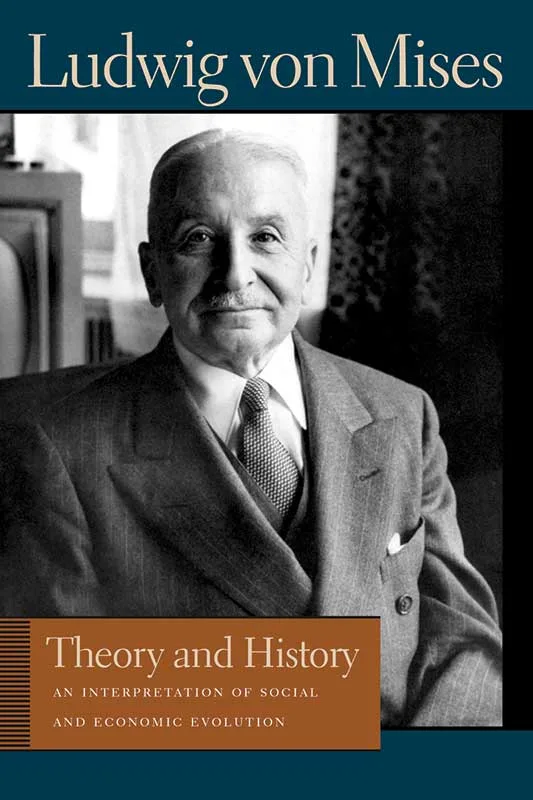
Ludwig von Mises · 1957
Theory and History is primarily a critique of Karl Marx, his materialism, and his prediction of the inevitability of socialism. This book discusses the theory of economics, i.e., the study of purposive human action, and…
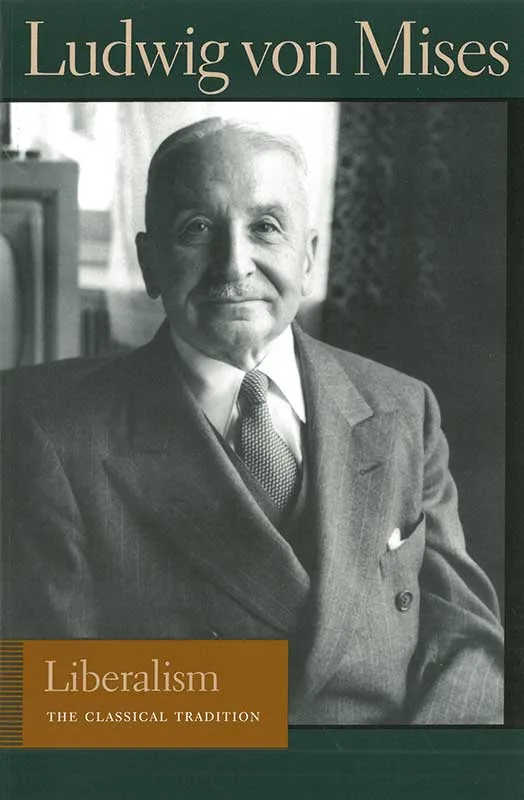
Ludwig von Mises · 1962
The great Austrian economist Ludwig von Mises provides a concise and tightly-argued one volume defense of classical liberalism, focusing on the core concepts of private property, limited government, peace, and the free…
John Passmore · 1969
Thoroughly and elegantly, Passmore explores the history of the idea of perfectibility - manifest in the ideology of perfectibilism - and its consequences, which have invariably been catastrophic for individual liberty…

Leonard P. Liggio · 1981
Literature of Liberty: A Review of Contemporary Liberal Thought was published first by the Cato Institute (1978-1979) and later by the Institute for Humane Studies (1980-1982) under the editorial direction of Leonard P.…
Ludwig von Mises · 1996
In the foreword to Human Action: A Treatise on Economics, Mises explains complex market phenomena as “the outcomes of countless conscious, purposive actions, choices, and preferences of individuals, each of whom was…
In this collection
1 person central to Progress.
1856–1924
The 28th President of the U.S. He was a professor of jurisprudence and politcal economy at Princeton University before being elected the…
Passages from titles in this collection, chosen by OLL editors.
Political writers have established it as a maxim, that, in contriving any system of government, and fixing the several checks and controuls of the constitution, every man ought to be supposed a knave, and to have no other end, in all his actions, than private interest. By this interest we must govern him, and, by means of it, make him, notwithstanding his insatiable avarice and ambition, co-operate to public good. Without this, say they, we shall in vain boast of the advantages of any constitution, and shall find, in the end, that we have no security for our liberties or possessions, except the good-will of our rulers; that is, we shall have no security at all.
As has been pointed out already, there is no such tendency toward monopolization. It is a fact that with many commodities in many countries monopoly prices prevail, and moreover, some articles are sold at monopoly prices on the world market. However, almost all of these instances of monopoly prices are the outgrowth of government interference with business. They were not created by the interplay of the factors operating on a free market. They are not products of capitalism, but precisely of the endeavors to counteract the forces determining the height of the market prices. It is a distortion of fact to speak of monopoly capitalism. It would be more appropriate to speak of monopoly interventionism or of monopoly statism.
Economics recommends neither inflationary nor deflationary policy. It does not urge the governments to tamper with the market’s choice of a medium of exchange. It establishes only the following truths:
1. By committing itself to an inflationary or deflationary policy a government does not promote the public welfare, the commonweal, or the interests of the whole nation. It merely favors one or several groups of the population at the expense of other groups.
2. It is impossible to know in advance which group will be favored by a definite inflationary or deflationary measure and to what extent. These effects depend on the whole complex of the market data involved. They also depend largely on the speed of the inflationary or deflationary movements and may be completely reversed with the progress of these movements.
3. At any rate, a monetary expansion results in misinvestment of capital and overconsumption. It leaves the nation as a whole poorer, not richer. These problems are dealt with in Chapter 20.
4. Continued inflation must finally end in the crack-up boom, the complete breakdown of the currency system.
5. Deflationary policy is costly for the treasury and unpopular with the masses. But inflationary policy is a boon for the treasury and very popular with the ignorant. Practically, the danger of deflation is but slight and the danger of inflation tremendous.
The gold standard was the world standard of the age of capitalism, increasing welfare, liberty, and democracy, both political and economic. In the eyes of the free traders its main eminence was precisely the fact that it was an international standard as required by international trade and the transactions of the international money and capital market. It was the medium of exchange by means of which Western industrialism and Western capital had borne Western civilization into the remotest parts of the earth’s surface, everywhere destroying the fetters of age-old prejudices and superstitions, sowing the seeds of new life and new well-being, freeing minds and souls, and creating riches unheard of before. It accompanied the triumphal unprecedented progress of Western liberalism ready to unite all nations into a community of free nations peacefully cooperating with one another.
It is easy to understand why people viewed the gold standard as the symbol of this greatest and most beneficial of all historical changes. All those intent upon sabotaging the evolution toward welfare, peace, freedom, and democracy loathed the gold standard, and not only on account of its economic significance. In their eyes the gold standard was the labarum [(Latin) derived from the Roman, or Imperial, standard or symbol for which men live or die], the symbol, of all those doctrines and policies they wanted to destroy. In the struggle against the gold standard much more was at stake than commodity prices and foreign exchange rates.
The nationalists are fighting the gold standard because they want to sever their countries from the world market and to establish national autarky as far as possible. Interventionist governments and pressure groups are fighting the gold standard because they consider it the most serious obstacle to their endeavors to manipulate prices and wage rates. But the most fanatical attacks against gold are made by those intent upon credit expansion. With them credit expansion is the panacea for all economic ills. It could lower or even entirely abolish interest rates, raise wages and prices for the benefit of all except the parasitic capitalists and the exploiting employers, free the state from the necessity of balancing its budget—in short, make all decent people prosperous and happy. Only the gold standard, that devilish contrivance of the wicked and stupid “orthodox” economists, prevents mankind from attaining everlasting prosperity.
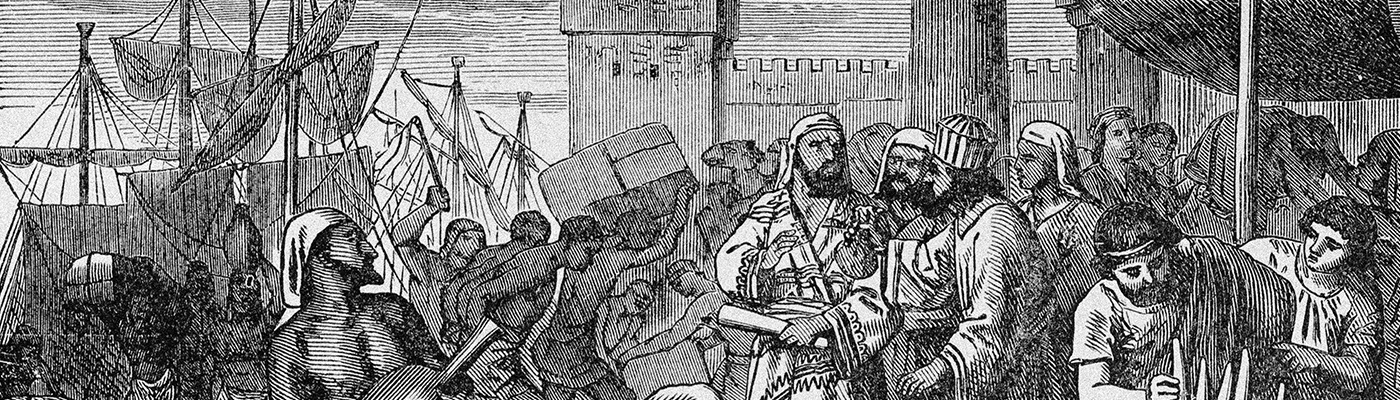
Economic theory. Demography
473 titles · 88 publications · 293 people
Socialism. Communism. Anarchism
6 titles · 1 publication · 16 people

History of the Americas
343 titles · 67 publications · 239 people

Language and Literature
282 titles · 6 publications · 321 people

Language and Literature
17 titles · 3 publications · 40 people

Sociology
62 titles · 3 publications · 35 people