

William Talbot Allison
1874–1941
Allison edited and annotated Milton's Tenure of Kings and Magistrates as his PhD thesis which was subsequently published by Yale University.


Great Britain
57 items in this collection
The English Civil War (1642 -1660) pitted supporters of Parliament against the Crown. The period includes the trial and execution of Charles I, the replacement of the monarchy with the Commonwealth of England (1649-1653), the rise of Oliver Cromwell to a virtual military dictatorship, and the eventual restoration of the monarchy. The ultimate outcome of the Revolution was the discrediting of the the divine right of kings and the beginnings of parliamentary sovereignty and constitutional monarchy.
For additional reading see our collection of Key Documents.
In this collection
38 titles, earliest first.
Sir Edward Coke · 1593
Vol. 3 of a 3 vol. set of The Selected Writings. This volume contains Coke’s speech in Parliament (including the Petition of Right), a number of official acts related to Coke’s career, and other matters.
Sir Edward Coke · 1600
Vol. 1 of a 3 vol. set of The Selected Writings. This volume contains a long introduction by the editor and 13 parts of the Reports.
Sir Edward Coke · 1606
Vol. 2 of a 3 vol. set of The Selected Writings. This volume contains Coke’s Speech at Norwich, excerpts from the small treatises, and excerpts from the 4 parts of the Institutes.
John Milton · 1649
Written during the English Revolution, Milton’s pamphlet argues that there exists a voluntary contract between free men and their rulers, and that if a ruler becomes a tyrant then the people have the right to depose him…
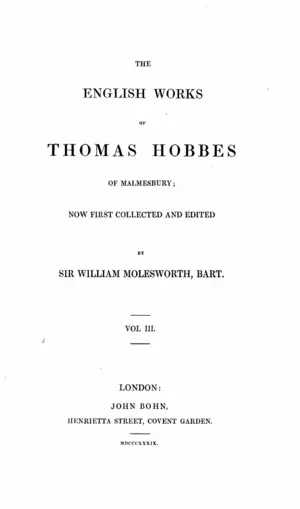
Thomas Hobbes · 1651
One of the major works of English political philosophy, Hobbes’ Leviathan was written during the English Revolution. It deals with the nature of sovereignty, how stable political power might be created, how wars might…
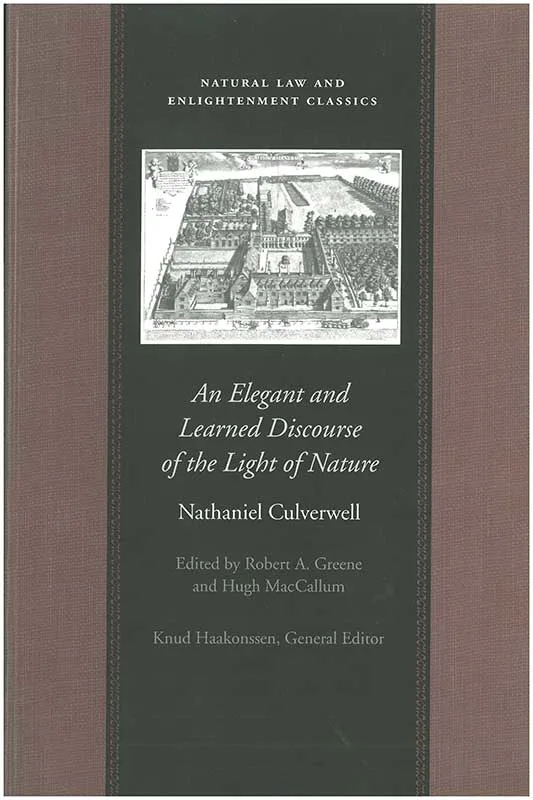
Nathaniel Culverwell · 1652
An Elegant and Learned Discourse of the Light of Nature is a concerted effort to find a middle way between the two extremes that dominated the religious dispute of the English civil war in the seventeenth century.…
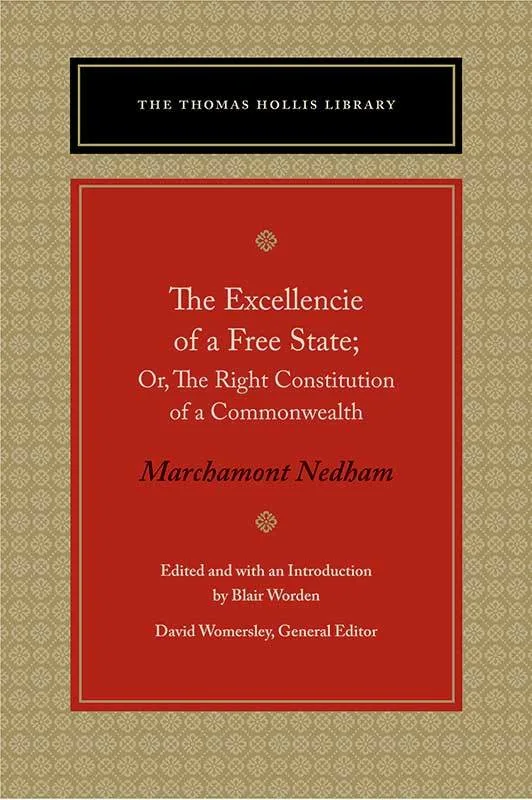
Marchamont Nedham · 1656
First published in 1656, The Excellencie of a Free-State addressed a dilemma in English politics, namely, what kind of government should the Commonwealth adopt? One possibility was to revert to the ancient constitution…
James Harrington · 1656
An edition of Harrington’s works by an 18th century Commonwealthman.
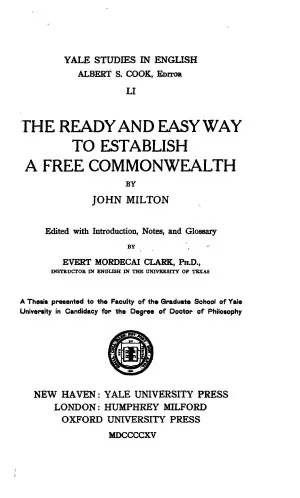
John Milton · 1660
A defence of the Republic written on the eve of the restoration of the monarchy. Milton persisted in opposing rule by one man in favor of rule by those to whom power had been delegated by the people.
Algernon Sidney · 1698
Written in response to Sir Robert Filmer’s Patriarcha (1680), the Discourses Concerning Government is a classic defense of republicanism and popular government. Sidney rejected Filmer’s theories of royal absolutism and…
Augustin Thierry · 1845
This volume contains many essays on 17th century English history, the revolution, the restoration, Scotland, the Roman Empire, books reviews, and French history. It also contains his narrative history of France from…
John Milton · 1847
A mid-19th century 2 volume collection of Milton’s most significant prose works.
John Milton · 1847
Vol. 1 of a mid-19th century 2 volume of Milton’s most significant prose works. Vol. 1 contains Areopagitica, The Tenure of Kings and Magistrates.
John Milton · 1847
Vol. 2 of a mid-19th century 2 volume of Milton’s most significant prose works. Vol. 2 contains The Ready and Easy way to Establish a Free Commonwealth, The History of Britain, Of True Religion, and other works.
Sir James Mackintosh · 1871
This collections contains his philosophical writings on Locke, natural law, Thomas More, and Machiavelli; his historical writings on the Glorious Revolution, his defence of the French Revolution Vindiciae Gallicae; and…
Sir William Clarke · 1894
Vol. 2 of the Clarke Papers which chronicle the debates which took place in the Army during the English Civil War over the relationship between Parliament and the Army.
Sir William Clarke · 1899
Vol. 3 of the Clarke Papers which chronicle the debates which took place in the Army during the English Civil War over the relationship between Parliament and the Army.
Sir William Clarke · 1901
The Clarke Papers chronicle the debates which took place in the Army during the English Civil War over the relationship between Parliament and the Army.
Sir William Clarke · 1901
Vol. 1 of the Clarke Papers which chronicle the debates which took place in the Army during the English Civil War over the relationship between Parliament and the Army.
Sir William Clarke · 1901
Vol. 4 of the Clarke Papers which chronicle the debates which took place in the Army during the English Civil War over the relationship between Parliament and the Army.
Samuel Rawson Gardiner · 1906
A collection of constitutional documents from the English Revolution of the mid-17th century. They include parliamentary speeches, letters and declarations by the monarch, legal proceedings, and other documents. They…
George Thomason · 1908
This is the catalog of the collection of 22,000 books and pamphlets made by the London bookseller George Thomason between 1641 and 1662, known as the Thomason Tracts. It is an unparalleled collection which documents the…
George Thomason · 1908
This is vol. 1 of the catolog of the collection of 22,000 books and pamphlets made by the London bookseller George Thomason between 1641 and 1662, known as the Thomason Tracts. It is an unparalleled collection which…
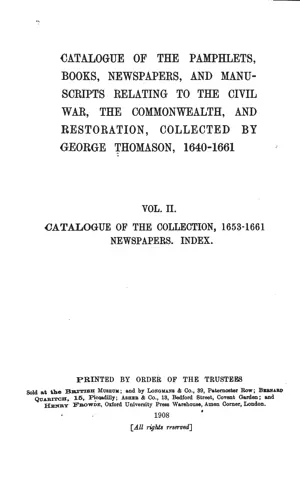
George Thomason · 1908
This is vol. 2 of the catolog of the collection of 22,000 books and pamphlets made by the London bookseller George Thomason between 1641 and 1662, known as the Thomason Tracts. It is an unparalleled collection which…
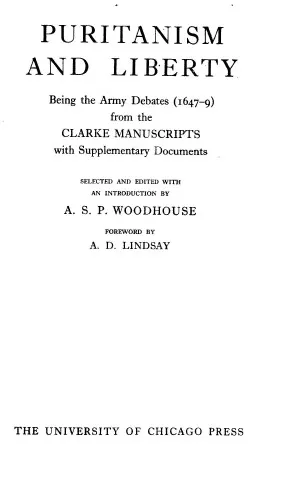
John Calvin · 1938
This collection contains the Putney Debates, the Whitehall Debates, and numerous other documents about Puritan religious and political views during the English Revolution. The collection has pieces by many authors…
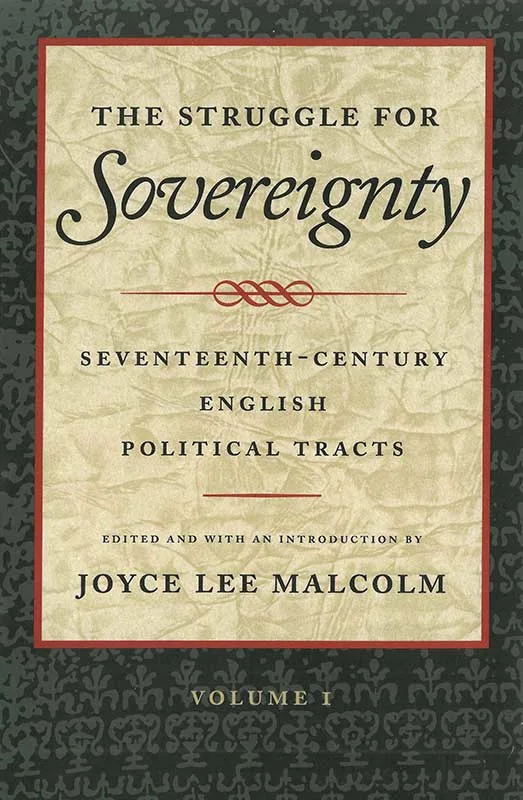
Joyce Lee Malcolm · 1999
The political tracts of the English peoples in the seventeenth century established enduring principles of governance and of liberty that benefited not only themselves but the founders of the American republic. These…
Joyce Lee Malcolm · 1999
The political tracts of the English peoples in the seventeenth century established principles of governance and of liberty that benefited not only themselves but the founders of the American republic. These writings, by…
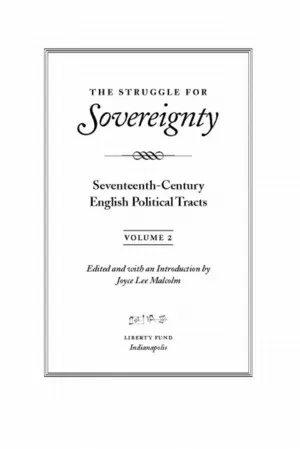
Joyce Lee Malcolm · 1999
The political tracts of the English peoples in the seventeenth century established principles of governance and of liberty that benefited not only themselves but the founders of the American republic. These writings, by…
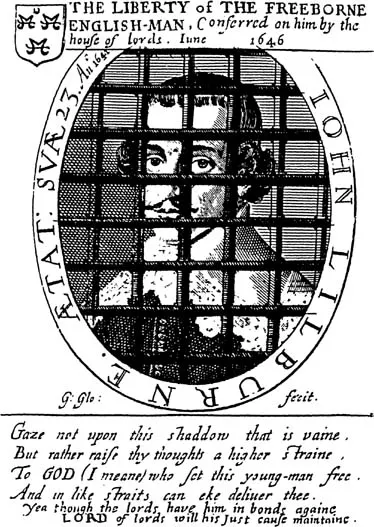
David M. Hart · 2014
The Levellers were a political movement active in England from 1646 to 1649. They were a populist movement that emphasized equal rights, religious toleration, and reformation of political and judicial corruption. They…
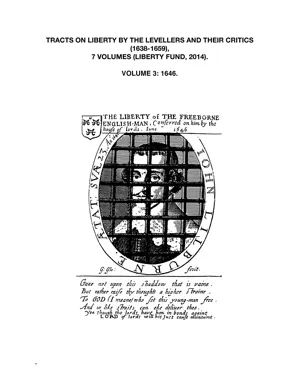
John Lilburne · 2014
The Levellers were a political movement active in England from 1646 to 1649. They were a populist movement that emphasized equal rights, religious toleration, and reformation of political and judicial corruption. They…
David M. Hart · 2015
The Levellers were a political movement active in England from 1646 to 1649. They were a populist movement that emphasized equal rights, religious toleration, and reformation of political and judicial corruption. They…
William Prynne · 2015
A collection of 11 pamphlets from 1638-1643 including works by John Lilburne, William Walwyn, Robert Greville, Henry Parker, John Goodwin, and William Prynne. Every effort has been made to transcribe these 17th century…
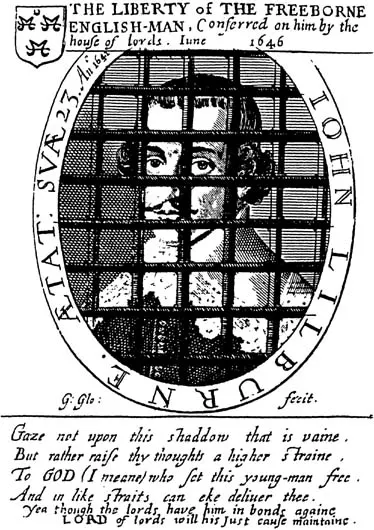
John Lilburne · 2015
The Levellers were a political movement active in England from 1646 to 1649. They were a populist movement that emphasized equal rights, religious toleration, and reformation of political and judicial corruption. They…
David M. Hart · 2015
The Levellers were a political movement active in England from 1646 to 1649. They were a populist movement that emphasized equal rights, religious toleration, and reformation of political and judicial corruption. They…
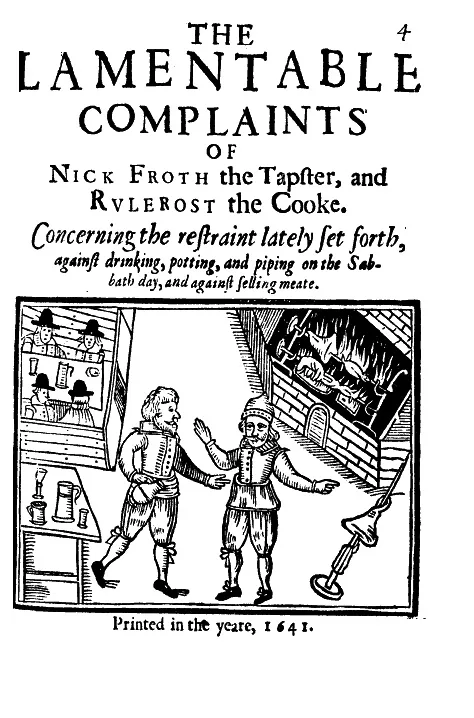
Ross Kenyon · 2015
The Levellers were a political movement active in England from 1646 to 1649. They were a populist movement that emphasized equal rights, religious toleration, and reformation of political and judicial corruption. They…
John Lilburne · 2016
The Levellers were a political movement active in England from 1646 to 1649. They were a populist movement that emphasized equal rights, religious toleration, and reformation of political and judicial corruption. They…
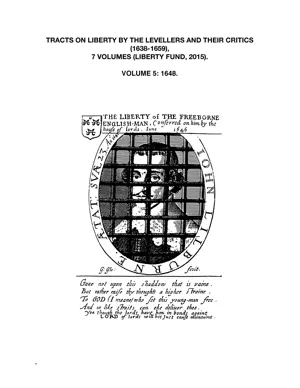
David M. Hart · 2017
The Levellers were a political movement active in England from 1646 to 1649. They were a populist movement that emphasized equal rights, religious toleration, and reformation of political and judicial corruption. They…
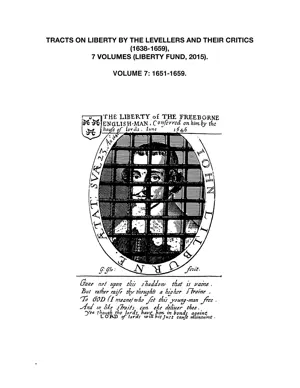
David M. Hart · 2018
The Levellers were a political movement active in England from 1646 to 1649. They were a populist movement that emphasized equal rights, religious toleration, and reformation of political and judicial corruption. They…
In this collection
10 people central to English Civil War.
1874–1941
Allison edited and annotated Milton's Tenure of Kings and Magistrates as his PhD thesis which was subsequently published by Yale University.
1623–1666
Clarke studied law before joining the New Model Army as an assistant to the Secretary of the General. He participated in the invasion of…

1559–1658
Cromwell played a very important part in the English revolution, helping to form the New Model Army, conquering Ireland and Scotland, and…

Dr. Rachel Foxley is the author of The Levellers: Radical Political Thought in the English Revolution (Manchester, 2013), which grew out of…

1829–1902
Gardiner was a Fellow of Merton College, Oxford and an historian of the English Revolution.

1611–1677
James Harrington (1611-1677) was a leading English Republican political theorist of the 17th century. His views on voting by ballot and the…

1620–1678
Marchamont Nedham (1620-1678) was a republican journalist during the English Civil War and was the editor of the Mercurius Politicus.

1644–1718
William Penn (1644-1718) lived during the two great political and religious upheavals in seventeenth-century England: the Civil Wars of the…

1600–1681
William Walwyn (1600-1681) was one of the leading Leveller pamphleteers and activists during the 1640s.
1895–1964
Woodhouse wrote on Milton and edited a collection of documents and manuscripts on the Puritan Revolution in England.
In this collection
From The Reading Room, Liberty Matters and the library’s other publications.
Passages on this subject, chosen by OLL editors.
I know nothing that makes a man a Magistrate over me but law, and while he walkes by the rules of that Law which make him a Magistrate, I shall own him as a Magistrate, but when he tramples it under his feet, and walkes by the law of his own will, I for my part in such a condition cannot own him for a Magistrate.
[F]or of all governments a Commonwealth aims most to make the people flourishing, vertuous, noble and high spirited. Monarchs will never permitt: whose aim is to make the people, wealthy indeed perhaps and wel-fleec’t for thir own shearing , and [for] the supply of regal prodigalitie; but otherwise softest, basest, vitiousest, servilest, easiest to be kept under; and not only in fleece, but in minde also sheepishest.
Why therefore shall I crave my own, or beg my right? to turn supplicant in such a case is a disfranchising of my self, and an acknowledgement that the thing is not my own, but at another mans pleasure; so that I forsake and cast off my property, and am inslav’d to his arbitrary pleasure: if the other will, I may have possession, otherwise not. Which indignity to my own, or to my Countreys rights, their Lordships shall never enforce me; for it is no better then a branch of tyranny to force a man to turn supplicant for his own, and of self-robbery to submit thereto. Though this inslaved Nation be most deeply and miserably involved in that intolerable condition, so that indeed we cannot have our own naturall rights and immunities, but we must be either patient sufferers, or actuall Petitioners, as if our own were not our own of right, but of favour.
To every individual in nature is given an individual property by nature not to be invaded or usurped by any. For every one, as he is himself, so he has a self-propriety, else could he not be himself; and of this no second may presume to deprive any of without manifest violation and affront to the very principles of nature and of the rules of equity and justice between man and man. Mine and thine cannot be, except this be. No man has power over my rights and liberties, and I over no man's. I may be but an individual, enjoy my self and my self-propriety and may right myself no more than my self, or presume any further; if I do, I am an encroacher and an invader upon another man's right — to which I have no right. For by natural birth all men are equally and alike born to like propriety, liberty and freedom; and as we are delivered of God by the hand of nature into this world, every one with a natural, innate freedom and propriety — as it were writ in the table of every man's heart, never to be obliterated — even so are we to live, everyone equally and alike to enjoy his birthright and privilege; even all whereof God by nature has made him free.
Since nature hath not distinguished the habitable world into Kingdomes, nor determined what part of a people shall belong to one Kingdome, and what to another, it follows that the originall freedome of mankind being supposed, every man is at liberty to be of what Kingdome he please, and so every petty company hath a right to make a Kingdome by it self, and not only every City, but every Village, and every Family; nay, and every particular man a liberty to chuse himself to be his owne King if he please, and he were a mad man that being by nature free would chuse any man but himself to be his own Governour. Thus to avoid the having but of one King of the whole world, we shall run into a liberty of having as many Kings as there be men in the world, which upon the matter, is to have no King at all, but to leave all men to their naturall liberty, which is the mischief the Pleaders for naturall liberty do pretend they would most avoid.
... till the right of dominion be proved and justified, liberty subsists as arising from the nature and being of a man. Tertullian speaking of the emperors says, ab eo imperium a quo spiritus [Dominion comes from the same source as one’s spirit]; and we taking man in his first condition may justly say, ab eo libertas a quo spiritus [Liberty comes from the same source as one’s spirit]; for no man can owe more than he has received. The creature having nothing, and being nothing but what the creator makes him, must owe all to him, and nothing to anyone from whom he has received nothing. Man therefore must be naturally free, unless he be created by another power than we have yet heard of.
That as no Civill Government is more just in the constitution, then that of Parliaments, having its foundation in the free choice of the people; and as the end of all Government is the safetie and freedome of the governed, even so the people of this Nation in all times have manifested most heartie affections unto Parliaments as the most proper remedie of their grievances; yet such hath been the wicked policies of those who from time to time have endeavoured to bring this Nation into bondage; that they have in all times either by the disuse or abuse of Parliaments deprived the people of their hopes … And do most earnestly entreat, that ye will stir up your affections to a zealous love and tender regard of the people, who have chosen and trusted you, and that ye will seriously consider, that the end of their trust, was freedome and deliverance from all kind of temporall grievances and oppressions.
The cause of all this is desire of rule, out of avarice and ambition; and the zeal of contention from those two proceeding. For such as were of authority in the cities, both of the one and the other faction, preferring under decent titles, one the political equality of the multitude, the other the moderate aristocracy; though in words they seemed to be servants of the public, they made it in effect but the prize of their contention: and striving by whatsoever means to overcome, both ventured on most horrible outrages, and prosecuted their revenges still farther, without any regard of justice or the public good, but limiting them, each faction, by their own appetite: and stood ready, whether by unjust sentence, or with their own hands, when they should get power, to satisfy their present spite. So that neither side made account to have any thing the sooner done for religion [of an oath], but he was most commended, that could pass a business against the hair with a fair oration. The neutrals of the city were destroyed by both factions; partly because they would not side with them, and partly for envy that they should so escape.

Political Science
618 titles · 60 publications · 383 people

World History
4 titles · 6 people · 1 quote

History of the Americas
343 titles · 67 publications · 239 people

France - Andorra - Monaco
46 titles · 5 publications · 44 people

France - Andorra - Monaco
19 titles · 4 publications · 19 people

Language and Literature
73 titles · 10 publications · 81 people