

Fisher Ames
1758–1808 · 3 titles


France - Andorra - Monaco
42 items in this collection
The publication of Richard Price's sermon on "A Discourse on the Love of Our Country" in November 1789, in which he praised both the American and the French Revolutions, prompted Edmund Burke to write his critique of the French Revolution Reflections on the Revolution in France in 1790. This began a debate about the nature of the French Revolution which continues to this day: was it a step towards individual liberty and constitutional government or towards chaos and tyranny?
In this collection
19 titles, earliest first.
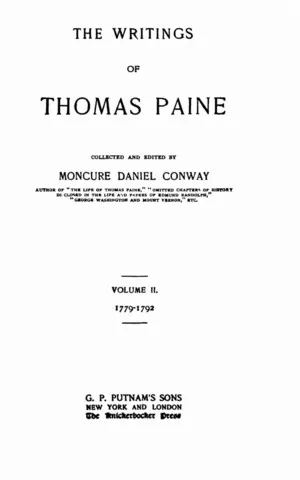
Thomas Paine · 1779
Vol. 2 of a 4 vol. collection of the works of Thomas Paine. Vol. 2 (1779-1792) contains the Letter to Abbey Raynal, Dissertations on Government, The Rights of Man (1 and 2) and various articles.
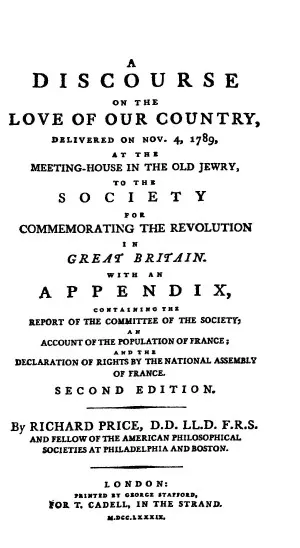
Richard Price · 1789
Price gave this sermon to commemorate the 101st anniversary of the Glorious Revolution of 1688. As a vigorous supporter of this revolution as well as the American and French Revolutions he incurred the wrath of Edmund…
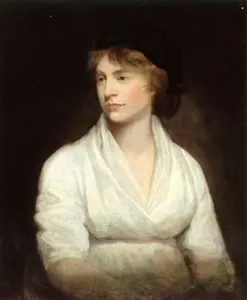
Mary Wollstonecraft · 1790
One of the first responses to Burke’s Reflections on the Revolution in France. Wollstonecraft later lived in France during the Terror and wrote a history of the events she witnessed.
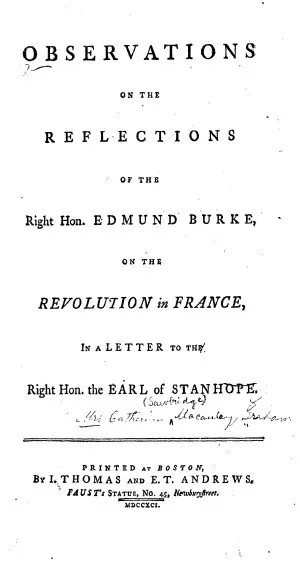
Catharine Macaulay · 1790
An early reply to Burke by an English supporter of republicanism.
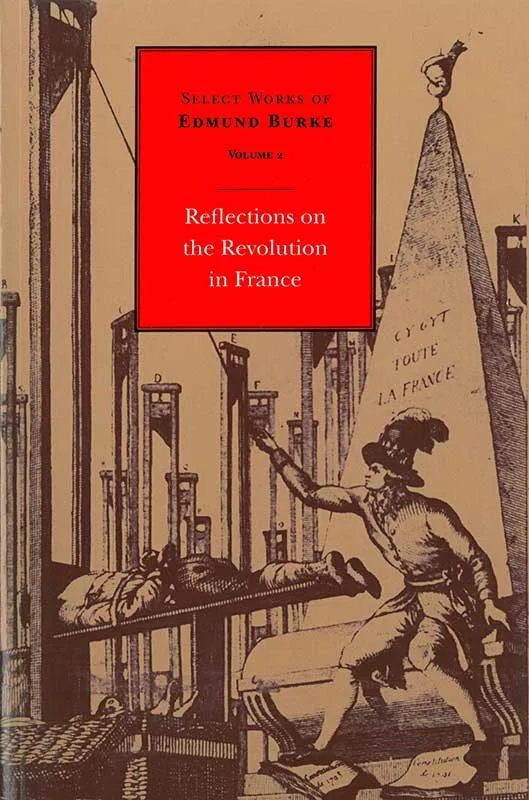
Edmund Burke · 1790
Burke’s classic criticism of the French Revolution. It provoked many replies and Burke returned to the issue again and again.
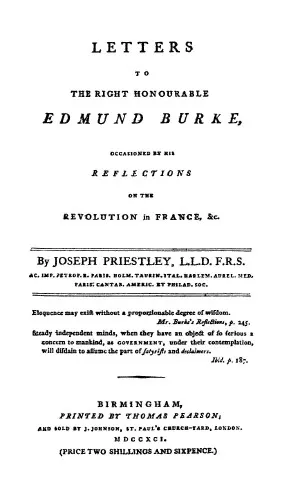
Joseph Priestley · 1791
Priestley supported the early phase of the French Revolution and saw it as an advance in human liberty, thus objecting to Burke’s severe criticisms.
Thomas Paine · 1791
Paine’s pamphlet defending the early liberal phase of the French Revolution was written in response to Edmund Burke’s critique.
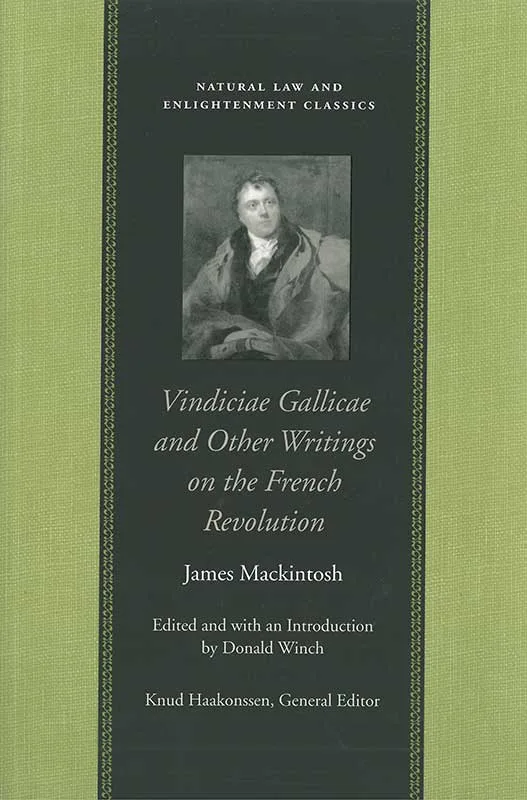
Sir James Mackintosh · 1791
Vindiciae Gallicae was Mackintosh’s contribution to the debate begun by Burke’s Reflections on the Revolution in France. A Discourse on the Law of Nature and Nations was the introduction to a popular course of public…
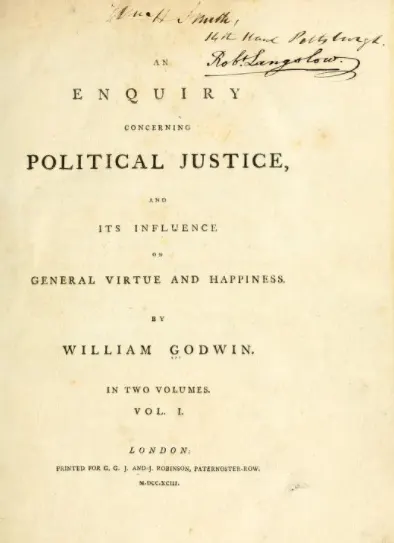
William Godwin · 1793
Godwin’s best known work of political theory. Written in the early years of the French Revolution before the Terror had begun, Godwin provides a devastating critique of unjust government institutions and optimistically…
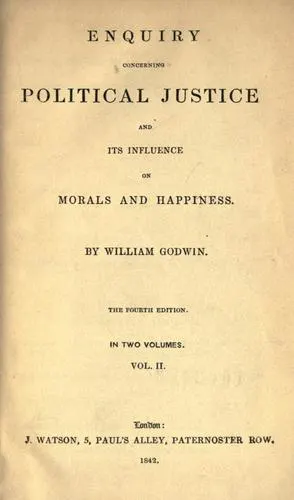
William Godwin · 1793
Godwin’s best known work of political theory. Written in the early years of the French Revolution before the Terror had begun, Godwin provides a devastating critique of unjust government institutions and optimistically…
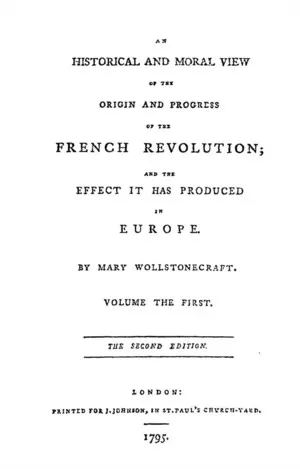
Mary Wollstonecraft · 1795
An optimistic and rationalist account of the French Revolution based upon first-hand, eyewitness experiences. It was intended to defend the Revolution against critics like Burke. Wollstonecraft explained the violent…
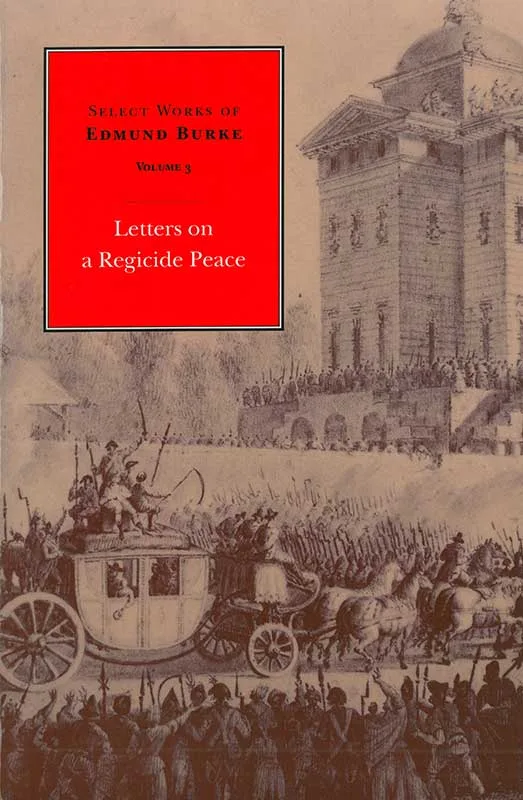
Edmund Burke · 1795
The four letters in this volume (1795) were Burke’s last writings on the French Revolution. Even though the Terror had come to an end and a more moderate government known as the Directory had come to power Burke still…
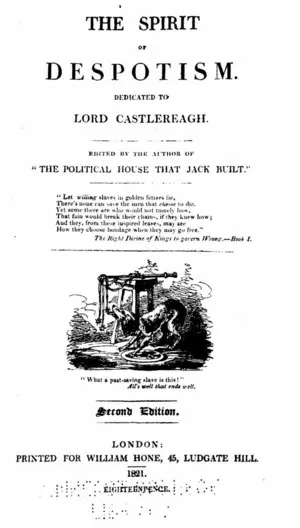
Vicesimus Knox · 1795
An edition from 1821. It was written in 1795 when Britain was leading the Coalition of monarchies in a war against the French Revolution, this is Knox’s warning that war against a foreign enemy helps create despotic…
John Thelwall · 1796
The English radical John Thelwall defended the ideals of the French Revolution and the idea of natural rights against critics such as Edmund Burke.
Friedrich von Gentz · 1800
Gentz was a conservative German who supported the American Revolution but strongly opposed the French. This work was originally published in a journal Gentz edited in May and June 1800 and was translated by John Quincy…
Desiderius Erasmus · 1824
This volume contains Knox’s letters written to a lord on “Personal Nobility” and his criticism of the British state during its war against the French, “The Spirit of Despotism” (1795), and his translation of a work of…
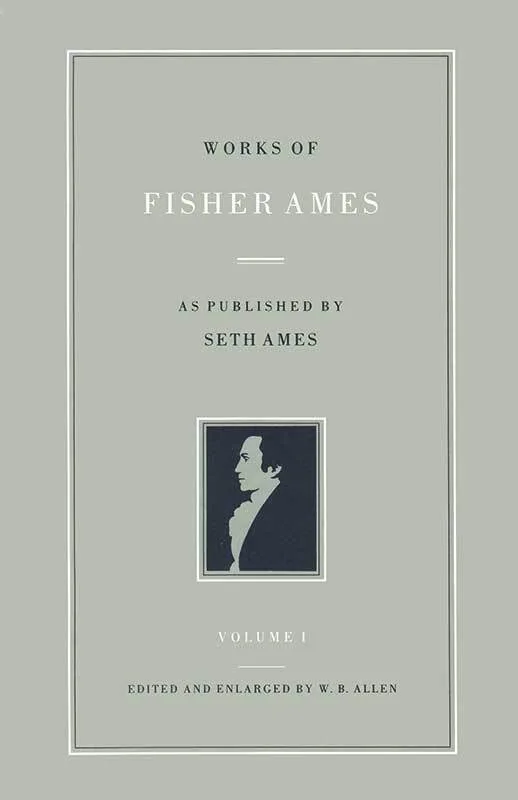
Fisher Ames · 1854
Fisher Ames was a leading New England Federalist and sublime critic of Jacobin Democracy and the French Revolution. During the presidency of George Washington, he was the leader of his party in the House of…
Fisher Ames · 1854
This volume continues the comprehensive collection of writings by Fisher Ames (1758–1808), one of early America’s most influential Federalist statesmen and orators. Edited and enlarged by W. B. Allen from the…
Fisher Ames · 1854
Works of Fisher Ames is an edited and expanded collection of the writings, speeches, and correspondence of Fisher Ames (1758–1808), one of the most prominent Federalist statesmen of the early American republic. Edited…
In this collection
Authors, editors and translators of these titles, most titles first.
1758–1808 · 3 titles

b. 1944 · 3 titles

1729–1797 · 2 titles
b. 1917 · 2 titles

1759–1797 · 2 titles

1737–1809 · 2 titles

1752–1821 · 2 titles

1756–1836 · 2 titles

1731–1791 · 1 title

1466–1536 · 1 title
1935–2017 · 1 title

1764–1832 · 1 title

1767–1848 · 1 title

1764–1834 · 1 title

1733–1804 · 1 title

1832–1907 · 1 title
1952–2012 · 1 title

1723–1791 · 1 title

1765–1832 · 1 title
In this collection
From The Reading Room, Liberty Matters and the library’s other publications.
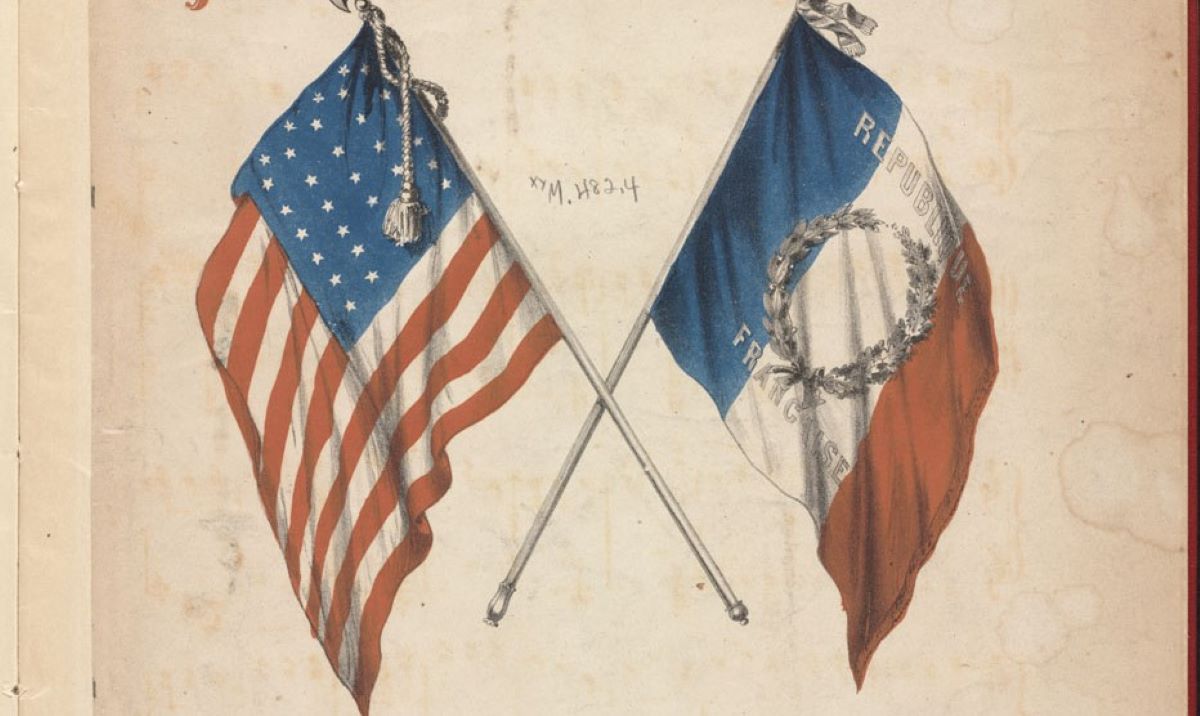

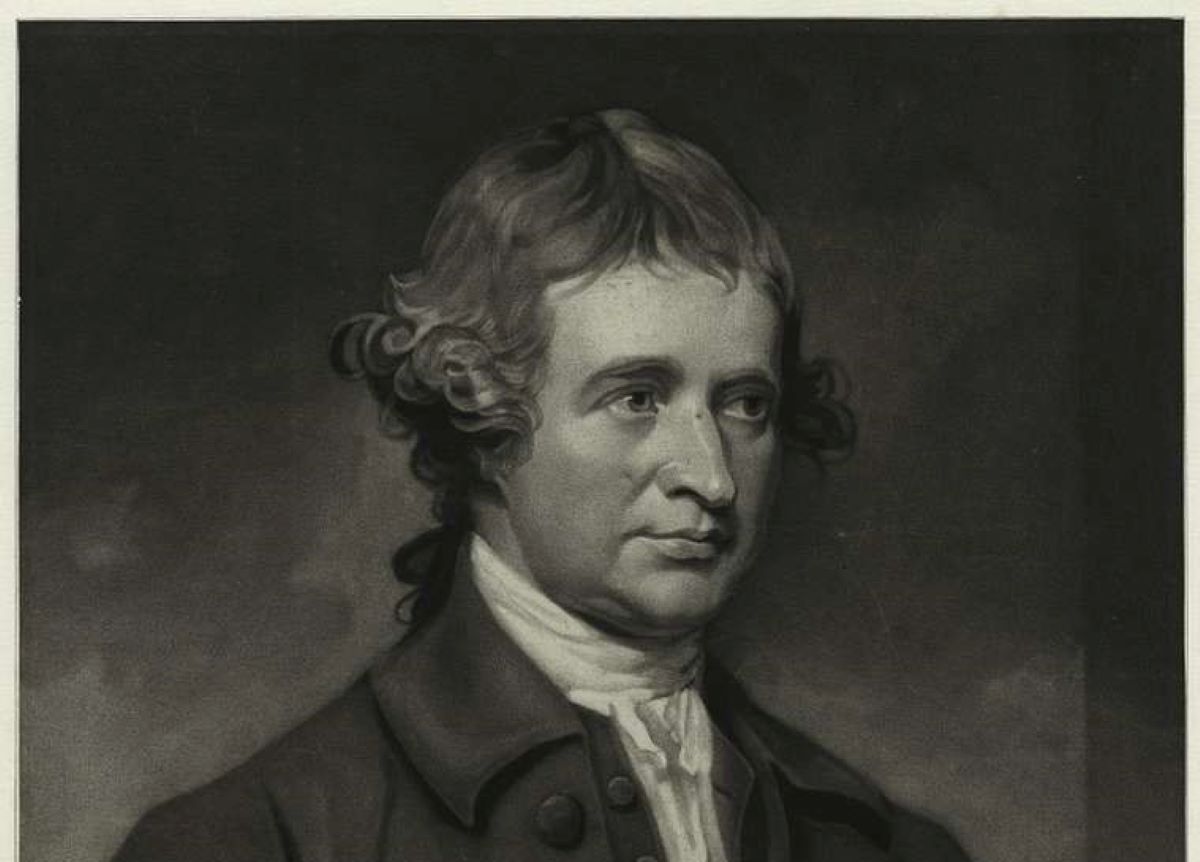
Walter Donway · Mar 21, 2023
Passages from titles in this collection, chosen by OLL editors.
If I recollect rightly, Aristotle observes, that a democracy has many striking points of resemblance with a tyranny. Of this I am certain, that in a democracy, the majority of the citizens is capable of exercising the most cruel oppressions upon the minority, whenever strong divisions prevail in that kind of polity, as they often must; and that oppression of the minority will extend to far greater numbers, and will be carried on with much greater fury, than can almost ever be apprehended from the dominion of a single sceptre. (FROM: The Policy of the National Assembly Criticised)
In history a great volume is unrolled for our instruction, drawing the materials of future wisdom from the past errors and infirmities of mankind.
Justice is expediency, but it is expediency, speaking by general maxims, into which reason has concentrated the experience of mankind. Every general principle of justice is demonstrably expedient, and it is this utility alone that confers on it a moral obligation. But it would be fatal to the existence of morality, if the utility of every particular act were to be the subject of deliberation in the mind of every moral agent. A general moral maxim is to be obeyed, even if the inutility is evident, because the precedent of deviating more than balances any utility that may exist in the particular deviation. Political first principles are of this description.
Such a body of political laws (the constitution of a state) must in all countries arise out of the character and situation of a people; they must grow with its progress, be adapted to its peculiarities, change with its changes, and be incorporated with its habits. Human wisdom cannot form such a constitution by one act, for human wisdom cannot create the materials of which it is composed. The attempt, always ineffectual, to change by violence the ancient habits of men, and the established order of society, so as to fit them for an absolutely new scheme of government, flows from the most presumptuous ignorance, requires the support of the most ferocious tyranny, and leads to consequences which its authors can never foresee,—generally, indeed, to institutions the most opposite to those of which they profess to seek the establishment.
For additional information about the Debate about the French Revolution see the Timeline on the Debate about the French Revolution.

France - Andorra - Monaco
46 titles · 5 publications · 44 people

History of the Americas
343 titles · 67 publications · 239 people

Political Science
618 titles · 60 publications · 383 people

Great Britain
38 titles · 1 publication · 41 people

Language and Literature
73 titles · 10 publications · 81 people

History of scholarship and learning. The humanities
9 titles · 4 publications · 92 people