


Author
John Emerich Edward Dalberg, Lord Acton
1834–1902
Lord Acton (1834-1902) was one of the great historians of the Victorian period and one of the greatest classical liberal historians of all time. His theme was “the history of liberty” and even though he was never able to complete his magnum opus of that name he did write numerous essays, book reviews, and lectures. He also was the inspiration behind the multi-volume Cambridge Modern History.
Biography
See also our collection of extracts, essays, and study guides about Lord Acton.
Acton featured as the January 2023 OLL Birthday. Read it here
Works by John Emerich Edward Dalberg, Lord Acton
8 titles in the library
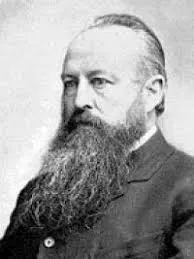
John Emerich Edward Dalberg, Lord Acton · 1887
Acton-Creighton Correspondence
In one of these 3 letters to Archbishop Creighton Lord Acton makes his famous statement about “power corrupts and absolute power absolutely”. He also makes other remarks about the proper role for moral judgments in…
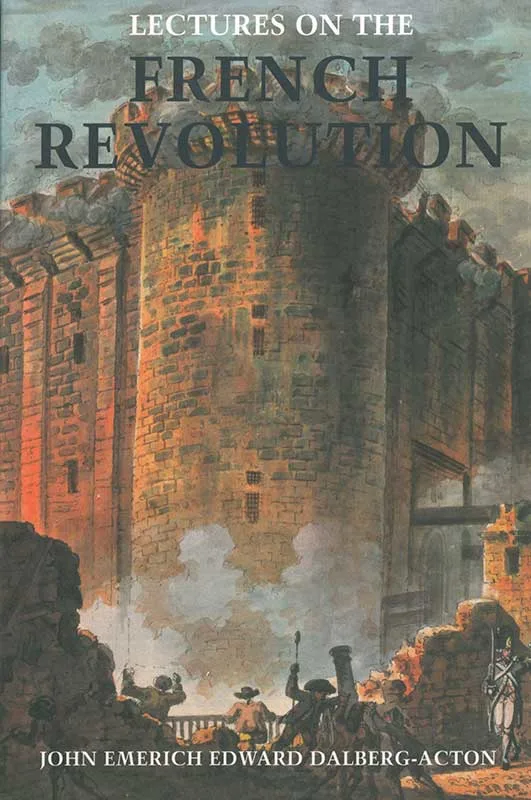
John Emerich Edward Dalberg, Lord Acton · 1910
Lectures on the French Revolution (LF ed.)
Delivered at Cambridge University between 1895 and 1899, Lectures on the French Revolution is a distinguished account of the entire epochal chapter in French experience by one of the most remarkable English historians…
John Emerich Edward Dalberg, Lord Acton · 1907
The History of Freedom and Other Essays
Acton never completed his projected History of Liberty. The collection contains two chapters from this planned history - on liberty in antiquity and Christianity - and many book reviews where one can piece together…
John Emerich Edward Dalberg, Lord Acton · 1917
Selections from the Correspondence of the First Lord Acton, Vol. I
A selection from Acton’s large mass of correspondence including a number to Gladstone on the budget, foreign affairs, Acton’s library, and women’s suffrage.
John Emerich Edward Dalberg, Lord Acton · 1907
Historical Essays and Studies
A collection of Acton’s articles from journals such as the Quarterly Review, the English Historical Review, the Nineteenth Century, the Rambler, the Home and Foreign Review, the North British Review, and the Bridgnorth…
John Emerich Edward Dalberg, Lord Acton · 1904
Letters of Lord Acton to Mary, Daughter of the Right Hon. W.E. Gladstone
A collection of letters from Acton to Gladstone’s daughter Mary which shows a “family” side to Acton’s life.
John Emerich Edward Dalberg, Lord Acton · 1910
Lectures on the French Revolution (1910 ed.)
Delivered at Cambridge University between 1895 and 1899, Lectures on the French Revolution is a distinguished account of the entire epochal chapter in French experience by one of the most remarkable English historians…
John Emerich Edward Dalberg, Lord Acton · 1906
Lectures on Modern History
These are the lectures given by the great English classical liberal historian, Lord Acton, in the academic years 1899-1901 at Cambridge University. It is a survey of modern history from the rise of the modern nation…
Introduced by John Emerich Edward Dalberg, Lord Acton
1 title in the library
Quotes from John Emerich Edward Dalberg, Lord Acton
4 quotes from the library