Political Theory1651
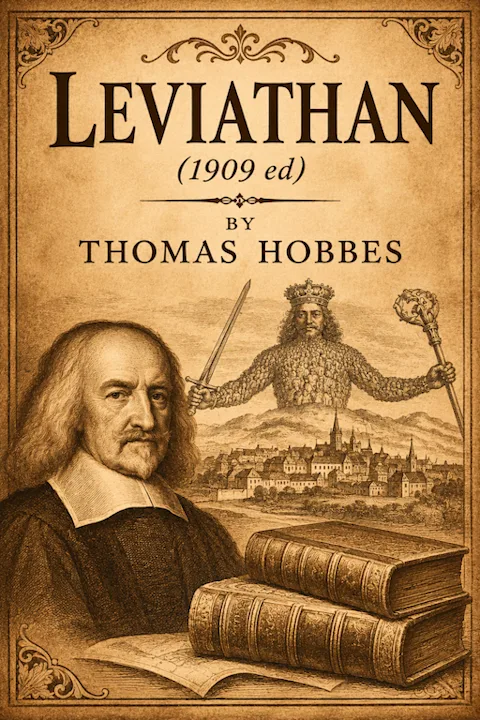
Leviathan (1909 ed)
- Thomas Hobbes(author)
- William George Pogson Smith(introduction)
The 1909 edition of Hobbe’s best known work of political philosophy is the edition used by Michael Oakeshott in his discussion of Hobbe’s ideas in Hobbes on Civil Association (1937, 1975 Liberty Fund).
Key Quotes
Passages from this text chosen by OLL editors.
- Philosophy“
... The Light of humane minds is Perspicuous Words, but by exact definitions first snuffed, and purged from ambiguity; Reason is the pace; Encrease of Science, the way; and the Benefit of man-kind, the end. And on the contrary, Metaphors, and senslesse and ambiguous words, are like ignes fatui; and reasoning upon them, is wandering amongst innumerable absurdities; and their end, contention, and sedition, or contempt.
About This Edition
Citation
Hobbes’s Leviathan reprinted from the edition of 1651 with an Essay by the Late W.G. Pogson Smith (Oxford: Clarendon Press, 1909).
Hobbes, Thomas. Leviathan (1909 ed). Clarendon Press, 1909. Online Library of Liberty, https://oll.libertyfund.org/titles/smith-leviathan-1909-ed.
Hobbes, T. (1909). Leviathan (1909 ed). Clarendon Press. https://oll.libertyfund.org/titles/smith-leviathan-1909-ed
@book{hobbes1909ed,
  author = {Thomas Hobbes},
  title = {Leviathan (1909 ed)},
  publisher = {Clarendon Press},
  address = {Oxford},
  year = {1909},
  url = {https://oll.libertyfund.org/titles/smith-leviathan-1909-ed},
  note = {Online Library of Liberty}
}TY - BOOK AU - Hobbes, Thomas TI - Leviathan (1909 ed) PY - 1909 CY - Oxford PB - Clarendon Press UR - https://oll.libertyfund.org/titles/smith-leviathan-1909-ed DB - Online Library of Liberty ER -
Copyright
The text is in the public domain.

About the author
Thomas Hobbes 1588–1679
Thomas Hobbes (1588-1679) was an English philosopher who lived during the English Revolution. He is most famous for his work of political philosophy The Leviathan.
Related People
John Locke
Author
Like Hobbes, Locke employs social contract theory to explore the nature and origins of political society.
Jean-Jacques Rousseau
Author
Rousseau's conception of the state of nature and his theory of the general will contrasts with Hobbes by asserting an optimistic view of human urges and desires with the state of nature being morally neutral and peaceful.
David Hume
Author
Hume rejected the idea of the state of nature. He claimed that due to humanity’s innate sociability it is not possible to conceive of human existence prior to society.
Immanuel Kant
Author
Kant, like Hobbes, engaged in discussion around the social contract and the state of nature.


Critical Responses
Works that answer or challenge this text.
 Book
The Hunting of Leviathan: Seventeenth-century Reactions to the Materialism and Moral Philosophy of Thomas Hobbes
Samuel I. MintzVisit site ↗Mintz examines 17th century responses to Hobbes’ Leviathan, to set this work against his intellectual context of the time.
 Essay
What Would Hobbes Do?
Geoffrey M. VaughanLaw and Liberty
Visit site ↗Vaughan’s essay explores what the 17th century thinker might have to say about the politics and institutions of today, as well as how much of his legacy remains pertinent.
 Article
The Tolerant Leviathan: Hobbes and the Paradox of Liberalism
J. Judd OwenVisit site ↗Owen discusses the question of liberalism and tolerance within Leviathan, discussing the paradox between Liberal toleration and Hobbesian absolutism.
Connected Readings
What to read next.
 Podcast
Hobbes on Power from the History of Ideas Podcast
David RuncimanVisit site ↗David Runciman explores what Hobbes sought to achieve in Leviathan, and how a politics arose from the English Civil War can still hold truths for the modern world.
 Book
The Works of John Locke, vol. 4 Economic Writings and Two Treatises of Government
John LockeView title >Like Leviathan, the Second Treatise discusses the origin and purpose of civil society and government starting with the state of nature.
 Book
The Social Contract and Discourses
G.D.H. ColeView title >Rousseau offers an alternate interpretation of the social contract than Hobbes’ does in Leviathan, asserting that it is in the state of nature that life is peaceful and equality reigns.
 Econlib Article
Is Leviathan Required for a Peaceful Order?
Anthony de JasayVisit site ↗Jasay discusses whether the Hobbesian social contracts that make up the political order within Leviathan is conducive to a peaceful world order.
 Book
The Collected Works of James M. Buchanan, vol. 7 (The Limits of Liberty)
James M. BuchananView title >Buchman stands on the shoulders of enlightenment era social contract theorists by using modern economic analysis to develop a new theory on the paradox of individual freedom and the state in civil society.
More in Political Theory
See all >The Political Writings of Jean Jacques Rousseau vol. 1
Jean-Jacques RousseauThe Writings of Thomas Paine, Vol. I (1774-1779)
Thomas PaineDissertations on Early Law and Custom
Sir Henry Sumner MaineAncient Law
Sir Henry Sumner MaineThe Political Writings of Jean Jacques Rousseau, 2 vols.
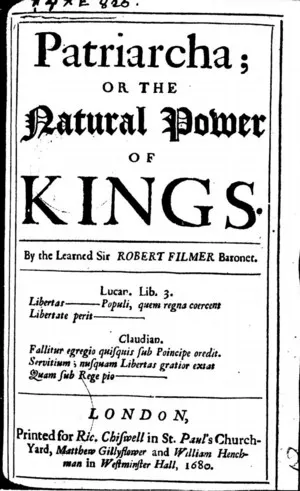
Jean-Jacques RousseauPatriarcha, or the Natural Power of Kings
Sir Robert FilmerThe Man versus the State (1885 ed.)
Herbert SpencerThe Man versus the State, with Six Essays on Government, Society and Freedom (LF ed.)
Herbert SpencerSelect Works of Edmund Burke, vol. 1
Edmund Burke