


Author
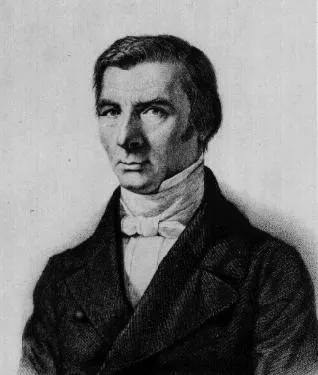
Frédéric Bastiat
1801–1850
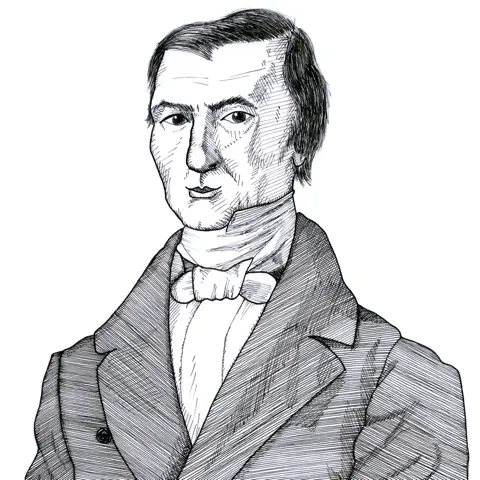
Frédéric Bastiat (1801-1850) was one of the leading advocates of free markets and free trade in the mid-19th century. He was inspired by the activities of Richard Cobden and the organization of the Anti-Corn Law League in Britain in the 1840s and tried to mimic their success in France.
Biography
Bastiat was an elected member of various French political bodies and opposed both protection and the rise of socialist ideas in these forums. His writings for a broader audience were very popular and were quickly translated and republished in the U.S. and throughout Europe. His incomplete magnum opus, Economic Harmonies, is full of insights into the operation of the market and is still of great interest to economists. He died at a young age from cancer of the throat.
See also our collection of extracts, essays, and other resources about Bastiat.
See the Liberty Matters online discussions on Bastiat and Political Economy and Reassessing Bastiat's Economic Harmonies After 160 Years
**For additional information about Frédéric Bastiat see the following:
**
* in the Forum: Essays on Bastiat
* at our sister website Econlib: the Concise Encyclopedia of Economics entry on Bastiat
For tables of contents of Bastiat’s Works:
- table of contents of the Guillaumin edition of the Works (in French)
- table of contents of LF’s translation (in English)
- table of contents of LF’s translation (in French)
- chronological list of Bastiat’s works
See the Timeline of the Life and Work of Frédéric Bastiat:
- Expanded and enlarged Timeline Part 1 (1801-1844) 123 KB PDF
- Expanded and enlarged Timeline Part 2 (1844-1850) 82 KB PDF
- JPG (1200 px, 410 KB)
- PDF (45 KB)

Works by Frédéric Bastiat
40 titles in the library
Frédéric Bastiat · 2017
The Collected Works of Frédéric Bastiat. Vol. 3: Economic Sophisms and “What is Seen and What is Not Seen”
Volume 3 of a 6 volume collection of the works of the 19th century French political economist Frédéric Bastiat. This volume contains the complete collection of Economic Sophisms, a third of which have never been…
Frédéric Bastiat · 2012
The Collected Works of Frédéric Bastiat. Vol. 2: The Law, The State, and Other Political Writings, 1843-1850
Volume 2 of a collection of the works of the 19th century French political economist Frédéric Bastiat. This volume contains 19 essays on political theory, including “The State,” “The Law,” and “Property and Plunder.” A…
Frédéric Bastiat · 1864
Oeuvres complètes de Frédéric Bastiat, 2nd ed. vol. 6: Harmonies économiques
Vol. 6 of a 7 volume set of the works of Bastiat. It contains the 5th edition of the Economic Harmonies.
Frédéric Bastiat · 1863
Oeuvres complètes de Frédéric Bastiat, 2nd ed. vol. 5: Sophismes économiques. Petits pamphlets II
Vol. 5 of a 7 volume set of the Works of Bastiat. It contains several smaller pamphlets, his debate with Proudhon Free Credit, and What is Seen and What is Not Seen.
Frédéric Bastiat · 2013
The Best of Bastiat 1.2: Bastiat the Revolutionary Part 1
The Best of Bastiat (BOB) is a collection of some of the best material in Liberty Fund’s 6 volume edition of The Collected Works of Frédéric Bastiat (2011-). They are chapter length extracts and have been edited as…
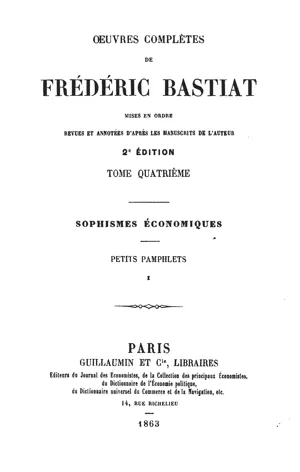
Frédéric Bastiat · 1863
Oeuvres complètes de Frédéric Bastiat, 2nd ed. vol. 4 Sophismes Économiques. Petits pamphlets I
Vol. 4 of a 7 volume set of the works of Bastiat. It contains the 1st and 2nd series of Economic Sophisms and a number of pamphlets such The Law and The State.
Frédéric Bastiat · 2013
The Best of Bastiat 3.3: The Utopian
The Best of Bastiat (BOB) is a collection of some of the best material in Liberty Fund’s edition of The Collected Works of Frédéric Bastiat (2011-). These extracts should be useful in the classroom, or discussion…
Frédéric Bastiat · 2013
The Best of Bastiat1.3: Bastiat the Revolutionary Part 2
The Best of Bastiat (BOB) is a collection of some of the best material in Liberty Fund’s 6 volume edition of The Collected Works of Frédéric Bastiat (2011-). They are chapter length extracts and have been edited as…
Frédéric Bastiat · 2013
The Best of Bastiat 3.2: The Broken Window
The Best of Bastiat (BOB) is a collection of some of the best material in Liberty Fund’s 6 volume edition of The Collected Works of Frédéric Bastiat (2011-). They are chapter length extracts and have been edited as…

Frédéric Bastiat · 2013
The Best of Bastiat 3.1: Petition of the Manufacturers of Candles
The Best of Bastiat (BOB) is a collection of some of the best material in Liberty Fund’s 6 volume edition of The Collected Works of Frédéric Bastiat (2011-). They are chapter length extracts and have been edited as…
Frédéric Bastiat · 2013
The Best of Bastiat 2.3: The Law
The Best of Bastiat (BOB) is a collection of some of the best material in Liberty Fund’s 6 volume edition of The Collected Works of Frédéric Bastiat (2011-). They are chapter length extracts and have been edited as…
Frédéric Bastiat · 2013
The Best of Bastiat 2.2: Property Plunder
The Best of Bastiat (BOB) is a collection of some of the best material in Liberty Fund’s 6 volume edition of The Collected Works of Frédéric Bastiat (2011-). They are chapter length extracts and have been edited as…
Frédéric Bastiat · 2013
The Best of Bastiat 2.1: The State
The Best of Bastiat (BOB) is a collection of some of the best material in Liberty Fund’s 6 volume edition of The Collected Works of Frédéric Bastiat (2011-). They are chapter length extracts and have been formatted as…
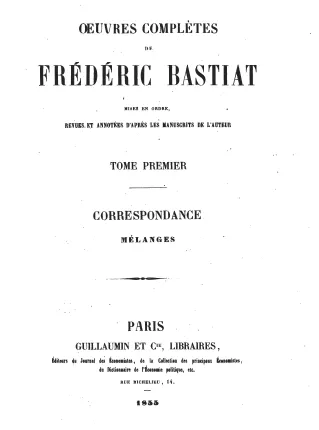
Frédéric Bastiat · 1855
Oeuvres complètes de Frédéric Bastiat, 1st ed. vol 1 Correspondance. Mélanges
Vol.1 of the 1st edition of Bastiat’s works contains his correspondence, his first writings from 1830-44, and a number of essays and book reviews.

Frédéric Bastiat · 2013
The Best of Bastiat 1.1: A Life in Letters
The Best of Bastiat (BOB) is a collection of some of the best material in Liberty Fund’s 6 volume edition of The Collected Works of Frédéric Bastiat (2011-). They are chapter length extracts and have been edited as…
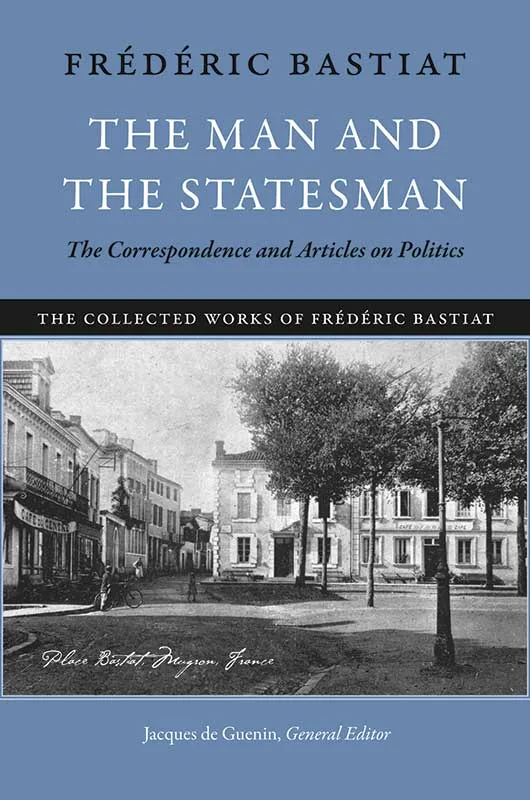
Frédéric Bastiat · 2011
The Collected Works of Frédéric Bastiat. Vol. 1: The Man and the Statesman: The Correspondence and Articles on Politics
Vol. 1 of a 6 vol. collection of the works of the 19th century French political economist Frédéric Bastiat. This volume contains 209 letters and a selection of his articles on politics. A detailed glossary contains…
Frédéric Bastiat · 1855
Oeuvres complètes de Frédéric Bastiat, 1st ed. vol. 2 Le libre-échange
Vol.2 of the 1st edition of Bastiat’s works contains his writings and speeches on the free trade movement.
Frédéric Bastiat · 2018
The State (revised LF ed.)
This is a thoroughly revised edition of one of Bastiat’s best known essays. It is the third and longest version he wrote between June 1848 and April 1849 when he was engaged in challenging the growing socialist movement…
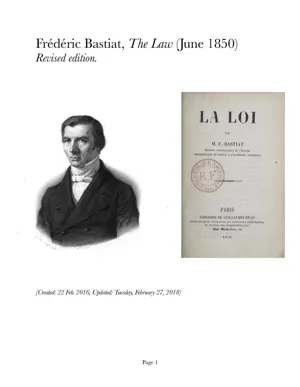
Frédéric Bastiat · 2018
The Law (revised LF ed.)
This is a revised edition of Liberty Fund's translation of Bastiat's famous essay on The State which was one of the last things he wrote before he died in 1850.
Frédéric Bastiat · 2011
The Collected Works of Frédéric Bastiat, in 6 Vols.
A 6 vol. collection of the works of the 19th century French political economist Frédéric Bastiat. More than half of the material has never been translated into English before. The texts are accompanied by extensive…
Frédéric Bastiat · 1854
Oeuvres complètes de Frédéric Bastiat, 1st ed. 6 vols.
The 1st edition of Bastiat’s works is in 6 volumes and was published only 4 years after his death. A second edition in 1862 contained an essay on his life and work and an additional 7th volume of material.
Frédéric Bastiat · 1862
Oeuvres complètes de Frédéric Bastiat, 2nd ed. 7 vols.
A 7 volume collection of Bastiat’s writings.
Frédéric Bastiat · 1850
Economic Harmonies (FEE ed.)
This is the translation by the Foundation for Economic Education of Bastiat’s longest and best known work Economic Harmonies. A new translation of this work by Liberty Fund is in progress. See the Summary of the Bastiat…
Frédéric Bastiat · 1873
Oeuvres complètes de Frédéric Bastiat, 3rd ed. vol. 4 Sophismes économiques et Petits pamphlets I
Volume IV of Bastiat’s collected writings in 7 volumes, which contains 1st and 2nd series of essays called Economic Sophisms in which Bastiat tries to refute some of the most common misunderstandings about the free…
Frédéric Bastiat · 1995
Selected Essays on Political Economy (FEE ed.)
The Foundation for Economic Education translated some of Bastiat’s most famous pamphlets, written as part of his opposition to the growth of socialism in France in the 1840s. The volume contains “What is Seen and What…
Frédéric Bastiat · 1996
Economic Sophisms (FEE ed.)
The Foundation for Economic Education's translation of Bastiat’s series of short essays in which he tries to correct common misunderstandings about the free market.
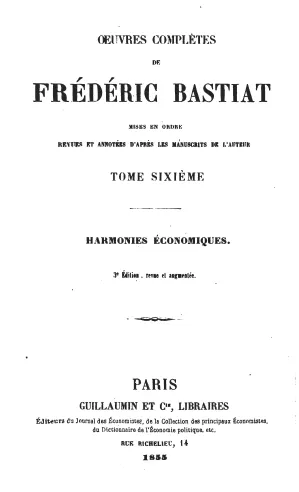
Frédéric Bastiat · 1855
Oeuvres complètes de Frédéric Bastiat, 1st ed. vol. 6 Harmonies économiques
Vol. 6 of the 1st edition of Bastiat’s works contains the 3rd revised edition of Bastiat’s magnum opus Harmonies économiques. The first incomplete edition was published in early in 1850. The second was posthumously…
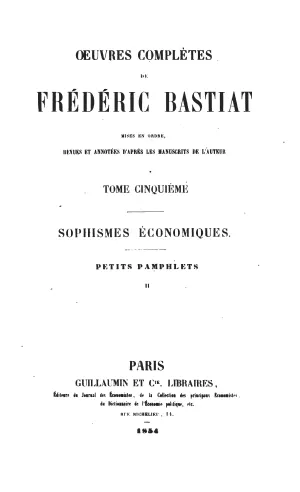
Frédéric Bastiat · 1854
Oeuvres complètes de Frédéric Bastiat, 1st ed. vol. 5 Sophismes économiques. Petits pamphlets II
Vol. 5 of the 1st edition of Bastiat’s works contains a selection of shorter pamphlets, the exchagne between Bastiat and Proudhon on Gratuité du crédit, and Ce qu’on voit et ce qu’on ne voit pas.
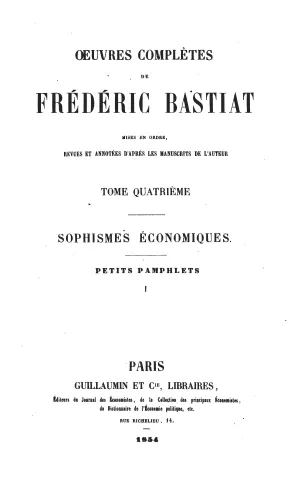
Frédéric Bastiat · 1854
Oeuvres complètes de Frédéric Bastiat, 1st ed. vol. 4 Sophismes économiques. Petits pamphlets I
Vol. 4 of the 1st edition of Bastiat’s works contains the first and second series of Economic Sophisms and a selection of shorter pamphlets such as L’État and Le Loi.
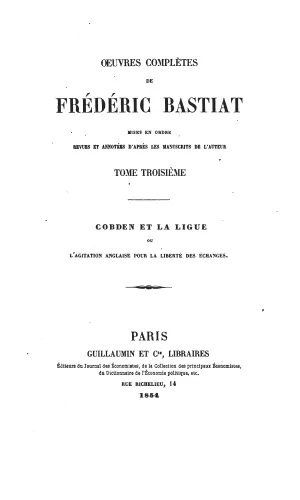
Frédéric Bastiat · 1854
Oeuvres complètes de Frédéric Bastiat, 1st ed. vol. 3 Cobden et la ligue
Vol.3 of the 1st edition of Bastiat’s works contains a long introduction by Bastiat on the English Anti-Corn Law League’s agitation for free trade and then Bastiat’s translation of a selection of speeches and newspaper…
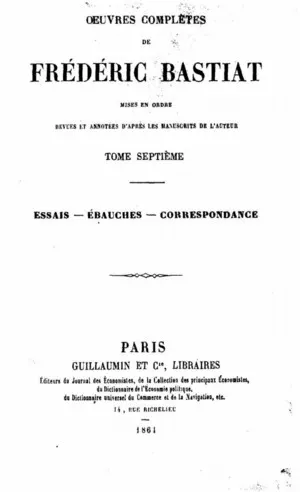
Frédéric Bastiat · 1864
Oeuvres complètes de Frédéric Bastiat, 2nd ed. vol. 7 Essais, Ébauches, Correspondance
Volume VII of Bastiat’s collected writings in 7 volumes, which contains numerous shorter works, sketches, book reviews, journalism, and letters.
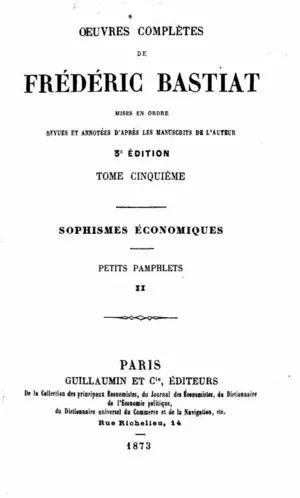
Frédéric Bastiat · 1873
Oeuvres complètes de Frédéric Bastiat, 3rd ed. vol. 5 Sophismes économiques et Petits pamphlets II
Volume V of Bastiat’s collected writings in 7 volumes, which contains more of his lengthier pamphlets such as What is Seen and What is Not Seen and his letters to Proudhon on Free Credit.
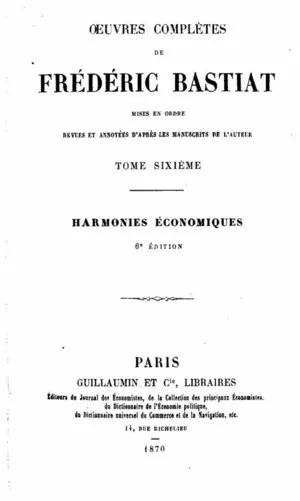
Frédéric Bastiat · 1870
Oeuvres complètes de Frédéric Bastiat, 3rd ed. vol. 6 Harmonies économiques
Volume VI of Bastiat’s collected writings in 7 volumes, which contains his longest and best known work Economic Harmonies.
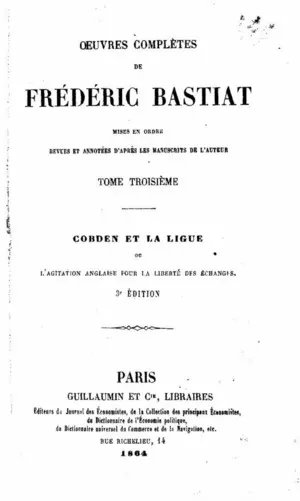
Frédéric Bastiat · 1864
Oeuvres complètes de Frédéric Bastiat, 2nd ed. vol. 3 Cobden et La Ligue
Volume III of Bastiat’s collected writings in 7 volumes, which contains his lengthy introduction on the British Anti-Corn Law League and his translations of their material and summaries of their public meetings.
Frédéric Bastiat · 1862
Oeuvres complètes de Frédéric Bastiat, 2nd ed. vol. 1 Correspondance et mélanges
Volume I of Bastiat’s collected writings in 7 volumes, which contains his correspondence and some of his earliest political writings.
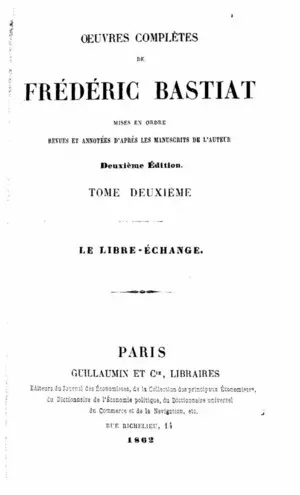
Frédéric Bastiat · 1862
Oeuvres complètes de Frédéric Bastiat, 2nd ed. vol. 2 le Libre-Échange
Volume II of Bastiat’s collected writings in 7 volumes, which contains his correspondence and some of his writings for the French Free Trade Assocaition.
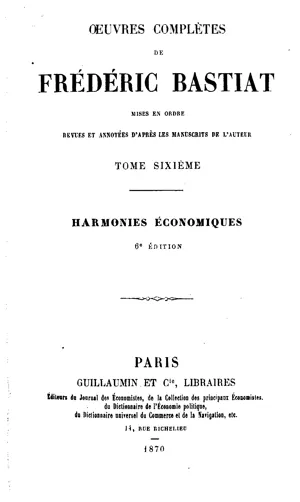
Frédéric Bastiat · 1870
Oeuvres complètes de Frédéric Bastiat, 3rd ed. 7 vols
The third edition of the 7 volume set of the works of Bastiat.
Frédéric Bastiat · 2013
The Best of Bastiat
The Best of Bastiat (BOB) is a collection of some of the best material in Liberty Fund’s 6 volume edition of The Collected Works of Frédéric Bastiat (2011-). They are chapter length extracts and have been edited as…
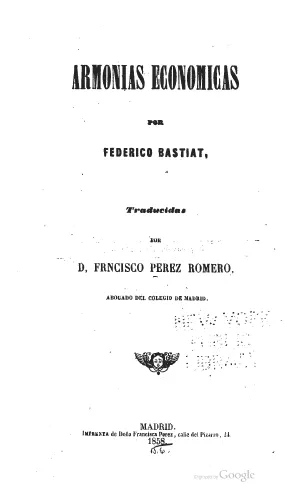
Frédéric Bastiat · 1858
Armonias Economicas
A Spanish translation of Bastiat’s best known work on “economic harmonies” in which he explains in simple terms how the free market operates to everybody’s benefit.
Frédéric Bastiat · 1877
Lettres d’un habitant des Landes
A collection of letters by Bastiat mainly to his friends the Cheuvreux family, which did not make it into the Complete Works published in 1855.
Quotes from Frédéric Bastiat
20 quotes from the library