

James Beattie
1735–1803
Beattie was professor of moral philosophy at the University of Aderdeen and a member of the Scottish School of Common Sense philosophy.


Collection
64 items in this collection
The 18th century Enlightenment was a European, even a trans-Atlantic phenomenon. Two of its main centres of intellectual activity were France and Scotland. The latter country produced an extraordinary amount of "enlightened" historical, economic, legal, and philosophical analysis by figures such as Adam Smith, David Hume, and Francis Hutcheson.
For additional information about the Scottish Enlightenment see in the Forum: Timeline on the Scottish Enlightenment.
In this collection
14 people central to Scottish Enlightenment.
1735–1803
Beattie was professor of moral philosophy at the University of Aderdeen and a member of the Scottish School of Common Sense philosophy.

1723–1816
Adam Ferguson (1723-1816) was a member of the Scottish Enlightenment who succeeded David Hume in his post as Librarian of the Advocate’s…

1711–1751
David Fordyce (1711-1751) was Professor of Moral Philosophy at Marischal College, the University of Aberdeen, from 1742 to 1751 and was a…

1711–1776
David Hume (1711-1776) was a moral philosopher and historian and a leading member of the Scottish Enlightenment.

1694–1746
Francis Hutcheson (1694-1746) was educated at the University of Glasgow, where he assumed the chair of Moral Philosophy in 1729.

1696–1782
Henry Home, Lord Kames, one of the leaders of the Scottish Enlightenment, was a judge in the supreme courts of Scotland and wrote…

1765–1832
James Mackintosh was a prominent Scottish Whig politician, a moral philosopher, and a historian of England.

1735–1801
Millar attended the University of Glasgow where he heard Adam Smith lecture. He became an advocate in 1760, and in 1761 he accepted the…

1710–1796
Reid was the professor of moral philosophy at the University of Edinburgh and founder of the Scottish School of Common Sense.

1721–1793
William Robertson (1721-1793) was a Scottish Presbyterian minister, Principal (Chancellor) of the University of Edinburgh (1762-93),…

1723–1790
Adam Smith (1723-1790) is commonly regarded as the first modern economist with the publication in 1776 of The Wealth of Nations. He wrote…

1753–1828
Stewart was a Scottish philosopher who studied at Edinburgh University, becoming first professor of mathematics and then later succeeding…

1712–1799
Josiah Tucker (1712-1799) was the Dean of Gloucester between 1758 and 1790 and an important precursor of the Physiocrats and Adam Smith. He…

1698–1748
George Turnbull (1698-1748) was a lesser-known contemporary of Hutcheson, Hume, and Smith. He taught at Marischal College, Aberdeen, then…
In this collection
From The Reading Room, Liberty Matters and the library’s other publications.
Walter Donway · Oct 25, 2023
Aeon J. Skoble · Oct 12, 2023
Peter Carl Mentzel · Aug 30, 2023
Walter Donway · Aug 23, 2023
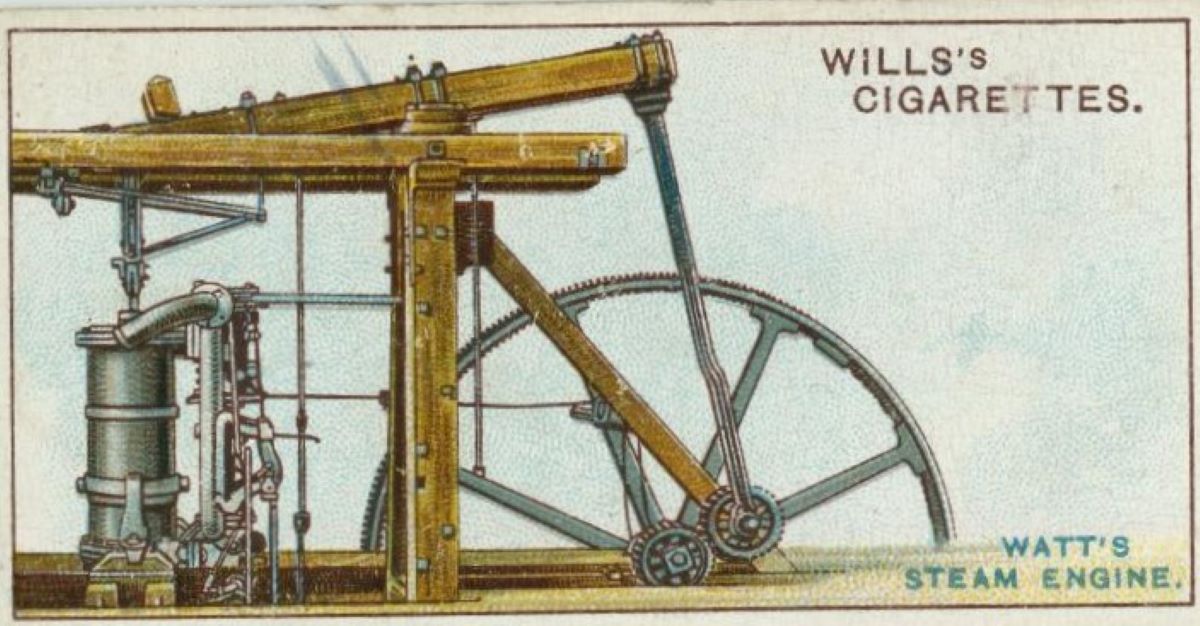
Walter Donway · Jun 28, 2023
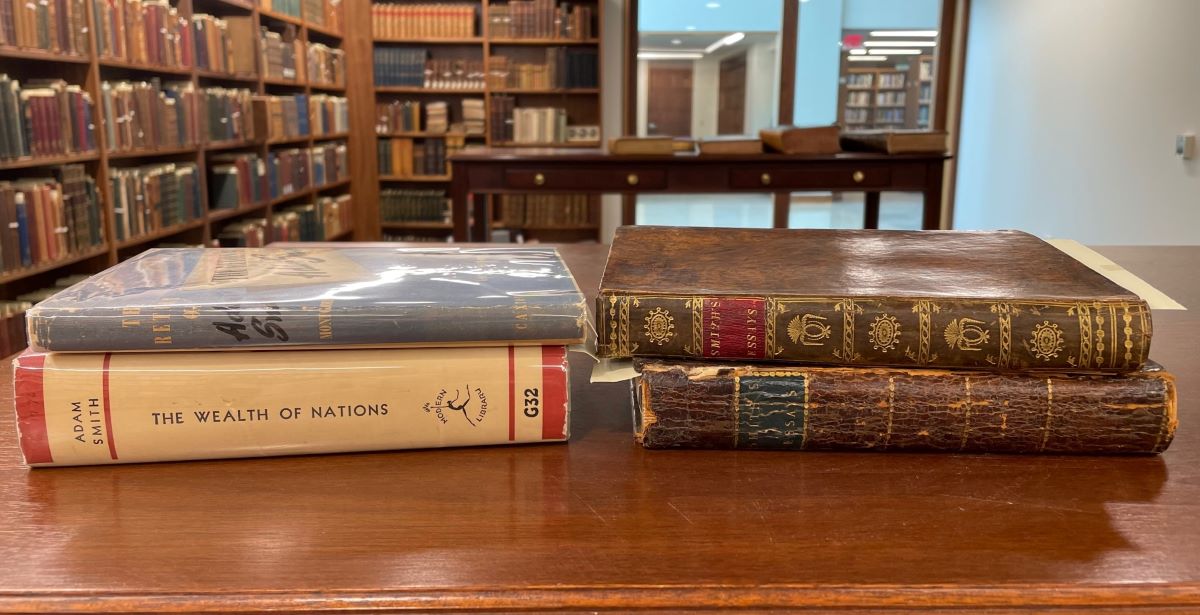
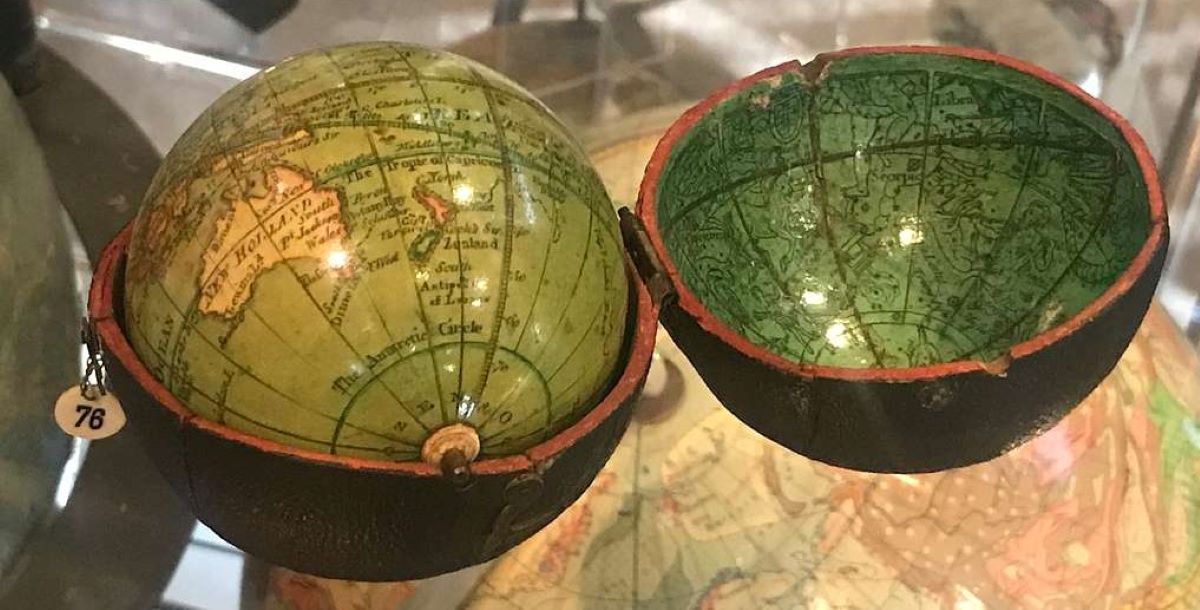
Walter Donway · May 31, 2023

Passages on this subject, chosen by OLL editors.
Man naturally desires, not only to be loved, but to be lovely; or to be that thing which is the natural and proper object of love. He naturally dreads, not only to be hated, but to be hateful; or to be that thing which is the natural and proper object of hatred. He desires, not only praise, but praiseworthiness; or to be that thing which, though it should be praised by nobody, is, however, the natural and proper object of praise. He dreads, not only blame, but blame-worthiness; or to be that thing which, though it should be blamed by nobody, is, however, the natural and proper object of blame. (TMS III.ii.1)
The opinion which we entertain of our own character depends entirely on our judgments concerning our past conduct. It is so disagreeable to think ill of ourselves, that we often purposely turn away our view from those circumstances which might render that judgment unfavourable. He is a bold surgeon, they say, whose hand does not tremble when he performs an operation upon his own person; and he is often equally bold who does not hesitate to pull off the mysterious veil of self-delusion, which covers from his view the deformities of his own conduct. Rather than see our own behaviour under so disagreeable an aspect, we too often, foolishly and weakly, endeavour to exasperate anew those unjust passions which had formerly misled us; we endeavour by artifice to awaken our old hatreds, and irritate afresh our almost forgotten resentments: we even exert ourselves for this miserable purpose, and thus persevere in injustice, merely because we once were unjust, and because we are ashamed and afraid to see that we were so. (TMS III.iv.4)
This division of labour, from which so many advantages are derived, is not originally the effect of any human wisdom, which foresees and intends that general opulence to which it gives occasion. It is the necessary, though very slow and gradual consequence of a certain propensity in human nature which has in view no such extensive utility; the propensity to truck, barter, and exchange one thing for another.
There may be good policy in retaliations of this kind, when there is a probability that they will procure the repeal of the high duties or prohibitions complained of. The recovery of a great foreign market will generally more than compensate the transitory inconveniency of paying dearer during a short time for some sorts of goods. To judge whether such retaliations are likely to produce such an effect, does not, perhaps, belong so much to the science of a legislator, whose deliberations ought to be governed by general principles which are always the same, as to the skill of that insidious and crafty animal, vulgarly called a statesman or politician, whose councils are directed by the momentary fluctuations of affairs. When there is no probability that any such repeal can be procured, it seems a bad method of compensating the injury done to certain classes of our people, to do another injury ourselves, not only to those classes, but to almost all the other classes of them.
(Wealth of Nations, Book IV, Chapter 2)
The Habeas Corpus Act is also a great security against oppression, as by it any one can procure triall at Westminster within 40 days who can afford to transport himself thither. Before this Act the Privy Councill could put any one they pleased into prison and detain him at pleasure without bringing him to triall. Now no one can be imprisoned anywhere but in the county gaol or the nearest to it where the crime is said to have been committed; he cant be sent out of Britain to Jersey, | Guernsey, or the plantations, that is, alway[s] within the extent of the Hab. Corp. Act.—This sufficiently secures the liberty of the people; for tho many could not afford the expense, yet it is not such who will be in greatest danger from the king. The rich and powerfull are most obnoxious to his displeasure; tis rich and not poor folk who are sent to the Bastile in France. No judge can oppose the Habeas Corpus Act; infamy and a high penalty are the punishment which attend it. No influence of the king could ever induce them to make any such attem[p]t. And so strict is this Act that in the time of rebellions or other exigencies of the state, when it is necessary to imprison without such speedy triall, it is commonly taken off for 6 months. But it will never be allowed to be reppealed, as that would destroy in a great measure the liberty of the subject.
It is in Britain alone that any consent of the people is required, and God knows it is but a very figurative metaphoricall consent which is given here. And in Scotland still more than in England, as but very few have a vote for a Member of Parliament | who give this metaphoricall consent; and yet this is not any where reckoned a sufficient cause of rebellion. No doubt the raising of a very exorbitant tax, as the raising as much in peace as in war, or the half or even the fifth of the wealth of the nation, would, as well as any other gross abuse of power, justify resistance in the people.
In the payment of the interest of the publick debt, it has been said, it is the right hand which pays the left. [52] The money does not go out of the country. It is only a part of the revenue of one set of the inhabitants which is transferred to another; and the nation is not a farthing the poorer. This apology is founded altogether in the sophistry of the mercantile system, and after the long examination which I have already bestowed upon that system, it may perhaps be unnecessary to say any thing further about it. It supposes, besides, that the whole publick debt is owing to the inhabitants of the country, which happens not to be true; the Dutch, as well as several other foreign nations, having a very considerable share in our publick funds. But though the whole debt were owing to the inhabitants of the country, it would not upon that account be less pernicious.
The sovereign himself can never have either interest or inclination to pervert the order of justice, or to oppress the great body of the people. In the capital his presence overawes more or less all his inferior officers, who in the remoter provinces, from whence the complaints of the people are less likely to reach him, can exercise their tyranny with much more safety.
For further information see:

