


Author
John Millar
1735–1801
Millar attended the University of Glasgow where he heard Adam Smith lecture. He became an advocate in 1760, and in 1761 he accepted the Regius Chair of civil law at Glasgow. During his career Millar enjoyed the patronage and friendship of Smith, Lord Kames, and David Hume and influenced James Mill and his son J.S. Mill.
Biography
Millar attended the University of Glasgow where he heard Adam Smith lecture. He became an advocate in 1760, and in 1761 he accepted the Regius Chair of civil law at Glasgow. During his career Millar enjoyed the patronage and friendship of Smith, Lord Kames, and David Hume and influenced James Mill and his son J.S. Mill.
Works by John Millar
4 titles in the library
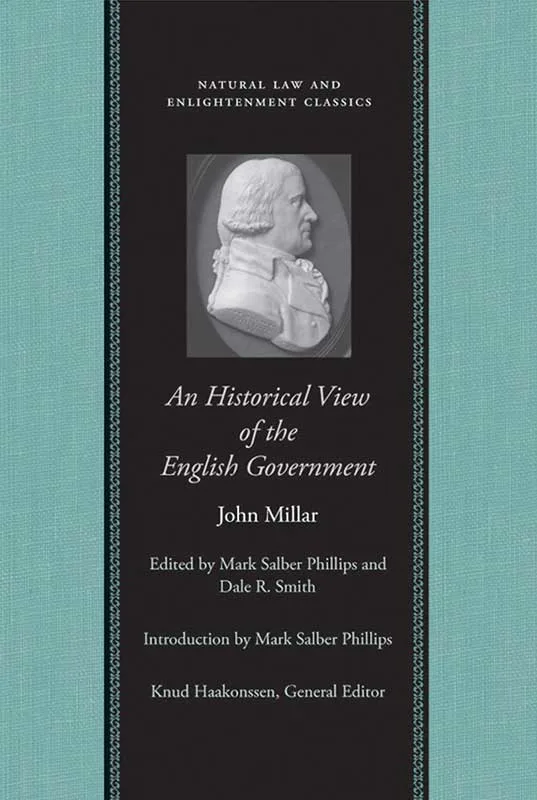
John Millar · 1803
An Historical View of the English Government
An Historical View of the English Government consists of three parts, concerned with the most substantive revolutions in English government and manners: from the Saxon settlement to the Norman Conquest, from the Norman…
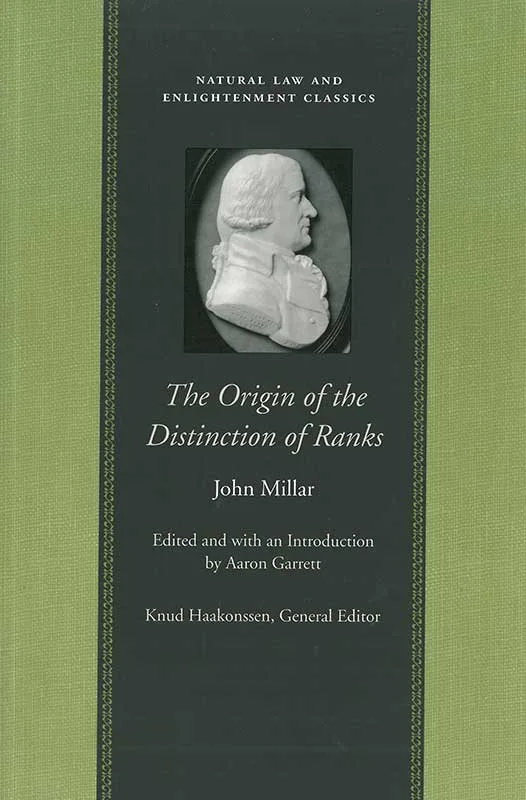
John Millar · 1771
The Origin of the Distinction of Ranks
The Origin of the Distinction of Ranks is one of the major products of the Scottish Enlightenment and a masterpiece of jurisprudence and social theory. Millar developed a progressive account of the nature of authority…
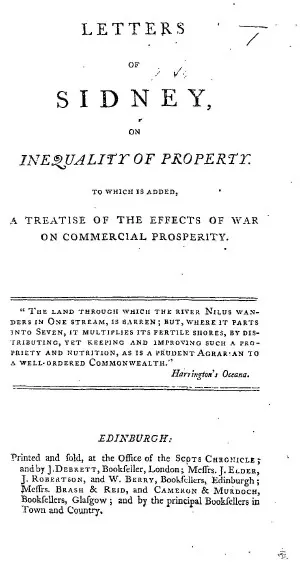
John Millar · 1796
Letters of Sidney, on Inequality of Property
Millar continues his critique of the war against France with letters to the Earl of Lauderdale.
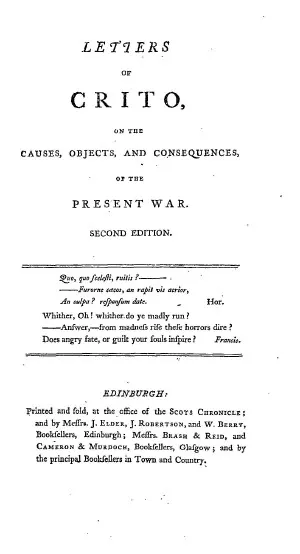
John Millar · 1796
Letters of Crito, on the Causes, Objects, and Consequences, of the Present War
Millar writes letters to the Right Honourable Charles James Fox pointing out the harmful effects the war against France will have.
Quotes from John Millar
2 quotes from the library