

Jean Barbeyrac
1674–1744
Jean Barbeyrac (1674-1744) was a Huguenot refugee from religious persecution in France. He taught in Germany, Switzerland, and Holland and…


Collection
18 items in this collection
The founder of the modern idea that the destructiveness of war could be limited by law, Hugo Grotius, wrote his great work during the Thirty Years War. It was taken up again during the Enlightenment by theorists like Vattel and reached its pinnacle in the 20th century with the Hague and Geneva Conventions.
In this collection
12 titles, earliest first.
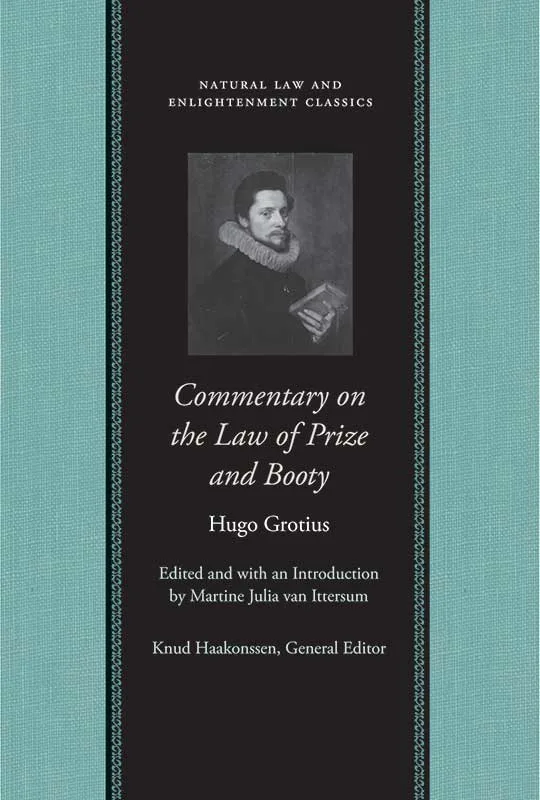
Hugo Grotius · 1603
Commentary on the Law of Prize and Booty was written in justification of the capture of the Portuguese merchantman Santa Catarina in the Strait of Singapore in February 1603. The Liberty Fund edition is based on the one…
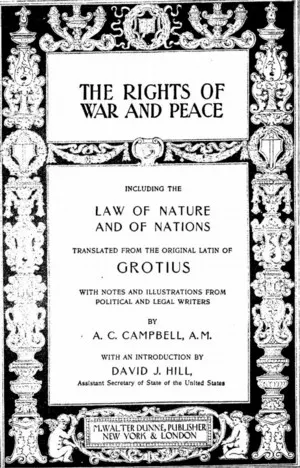
Hugo Grotius · 1625
Grotius’s magnum opus on international law and the laws of war and peace. He wrote this volume while the Thirty Years’ War raged around him in the hope that rational human beings might be able to agree to legal limits…
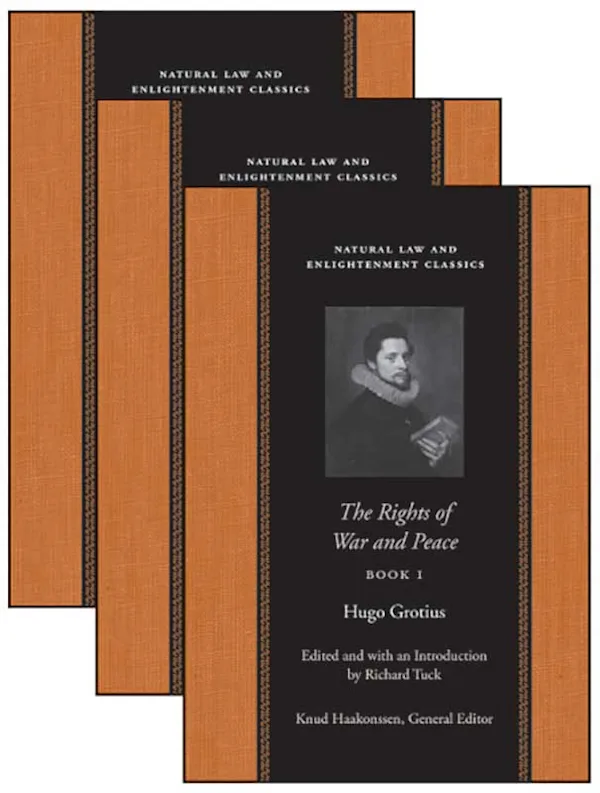
Hugo Grotius · 1625
Grotius’s Rights of War and Peace is a classic of modern public international law which lays the foundation for a universal code of law and which strongly defends the rights of individual agents - states as well as…
Hugo Grotius · 1625
Grotius’s Rights of War and Peace is a classic of modern public international law which lays the foundation for a universal code of law and which strongly defends the rights of individual agents - states as well as…
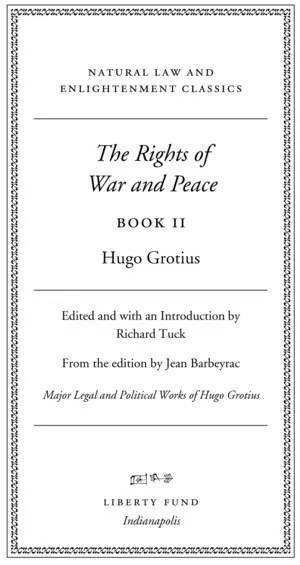
Hugo Grotius · 1625
Grotius’s Rights of War and Peace is a classic of modern public international law which lays the foundation for a universal code of law and which strongly defends the rights of individual agents - states as well as…
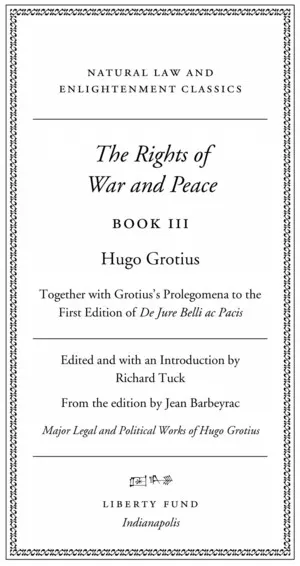
Hugo Grotius · 1625
Grotius’s Rights of War and Peace is a classic of modern public international law which lays the foundation for a universal code of law and which strongly defends the rights of individual agents - states as well as…
Emer de Vattel · 1758
A 2 volume work in which Vattel explores the application of natural law to the conduct of states and sovereigns. He discusses the rights of obligation of the state itself, those of the sovereign power, the nature of…
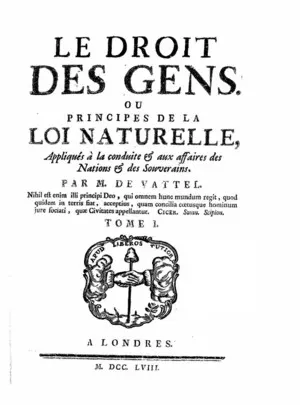
Emer de Vattel · 1758
Volume 1 of a 2 volume work in which Vattel explores the application of natural law to the conduct of states and sovereigns. He discusses the rights of obligation of the state itself, those of the sovereign power, the…
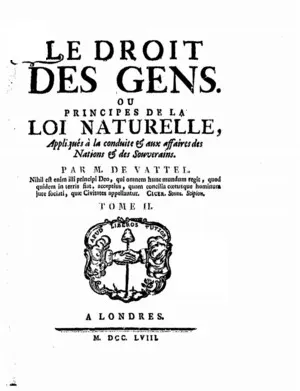
Emer de Vattel · 1758
Volume 2 of a 2 volume work in which Vattel explores the application of natural law to the conduct of states and sovereigns. He discusses the nature of war, that laws of war, neutrality, just and unjust wars, peace…
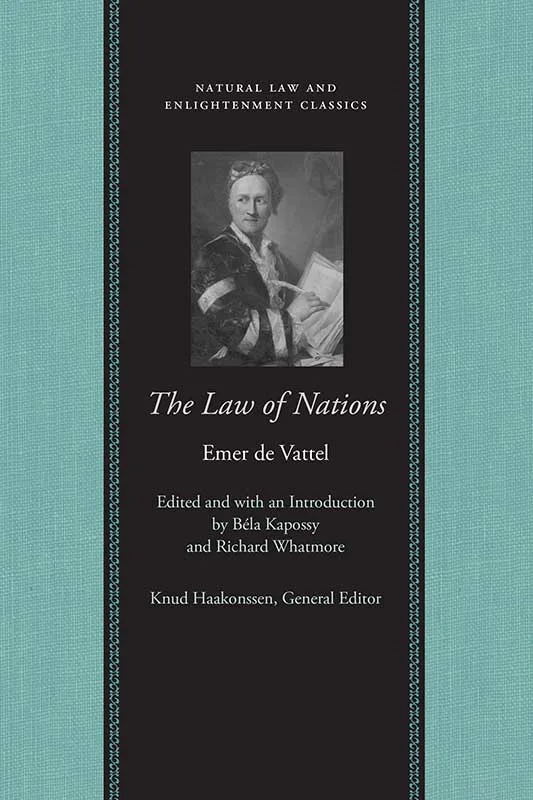
Emer de Vattel · 1797
A republication of the 1797 translation of Vattel’s work, along with new English translations of 3 early essays. Read the Liberty Classic on this title from Law & Liberty
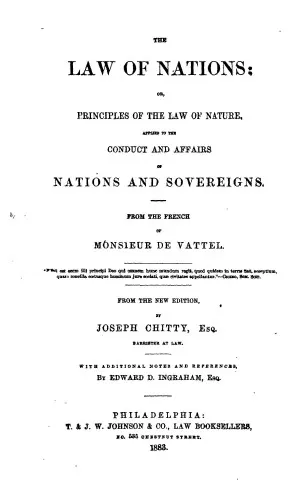
Emer de Vattel · 1833
An influential English translation of a work which had a profound impact on the ideas of the American founders. Chitty brought it to the attention of 19th century English readers and it was brought up to date with…
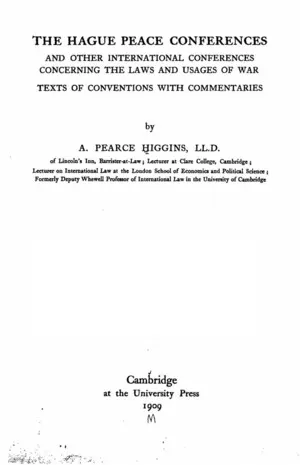
A Pearce Higgins · 1909
This volume contains the text (often in both French and English) of the major conventions concerning peace and the laws of warfare from the Declaration of Paris (1856), the Geneva Convention of 1864, of the two Peace…
In this collection
1 person central to Laws of War.
1674–1744
Jean Barbeyrac (1674-1744) was a Huguenot refugee from religious persecution in France. He taught in Germany, Switzerland, and Holland and…
In this collection
From The Reading Room, Liberty Matters and the library’s other publications.
Passages on this subject, chosen by OLL editors.
If the lower orders of the people were to act in this manner [hurting their brethren in war], some apology might be found in their supposed ignorance; if very young men were to act in this manner, the inexperience of youth might be pleaded in extenuation; if the poor laity only were concerned, the frailty of the agents might lessen the atrocity of the action: but the very reverse of this is the truth. The seeds of war are chiefly sown by those very people whose wisdom and moderation, characteristic of their rank and station, ought to compose and assuage the impetuous passions of the people.
Thus Alexander the Great, as Justin relates it, hindered his Soldiers from wasting Asia, declaring to them, that they should spare their own, and not destroy those Things, which they came to possess...
They who do otherwise, may apply to themselves the Words of Jocasta to Polynices in Seneca’s Thebais: "You ruin your Country whilst you seek it; to make it yours / Its Being you destroy; it defeats your Claim / To level, thus in Arms, the ripen’d Harvest; / Is Fire and Sword, the Vengeance of an Enemy, / Applied to Spoil and Ravage what’s ones own? / No, our deadliest Foes we thus afflict"...
Philip dared not engage in a fair Field-fight, nor come to a pitch’d Battle, but flying away burned and plundered Cities; so that the Conquered rendered useless to the Conquerors what should have been the Recompence of Victory. But the old Kings of Macedon did not use to do so, they used to come to a fair Engagement, to spare Cities as much as possible, that they might have the more wealthy Dominion. For it is not a strange Conduct, to make War in such a Manner, that at the same Time, we dispute the Possession of a Thing, we leave nothing for ourselves but War.
"We will begin with the human as more generally known. Now this is either a civil right, or a right more or less extensive than the civil right. The civil right is that which is derived from the civil power. The civil power is the sovereign power of the state. A state is a perfect body of free men, united together in order to enjoy common rights and advantages. The less extensive right, and not derived from the civil power itself, although subject to it, is various, comprehending the authority of parents over children, masters over servants, and the like. But the law of nations is a more extensive right, deriving its authority from the consent of all, or at least of many nations."
I have seen the discipline of the French armies and I have read of the despotism of the French emperor; I have witnessed, and heard of the calamities inflicted on negroes; but with the exceptions of our seamen being better fed, better clothed, and not allowed to be murdered,—what I have seen them suffer, exceeds the cruelties of Buonaparte to his army, exceeds all that the negroes have had inflicted on them: nothing could support them under their sufferings, but a great and noble consciousness, that they are the saviours of their country—that it is visibly their efforts alone, which prevent despotism from overshadowing the earth, and destroying that liberty they were in early life taught to indulge a love of, and which they still regardas sacred, though no longer permitted to taste its blessings.

Law
140 titles · 14 publications · 134 people

Language and Literature
282 titles · 6 publications · 321 people

Language and Literature
73 titles · 10 publications · 81 people
Law
49 titles · 1 publication · 69 people
Language and Literature
112 titles · 156 people

General Works
37 titles · 3 publications · 72 people