

Armen A. Alchian
1914–2013
Armen A. Alchian was one of the 20th century’s great teachers of economic science, and the co-author, with William R. Allen, of the classic…

Economic theory. Demography
75 items in this collection
These treatments of economics present the basic assumptions about economic life and human behaviour on which economics is based; the main principles of the discipline; how the different branches of economics are related; and the author’s own perspective on the discipline.
In this collection
48 titles, earliest first.
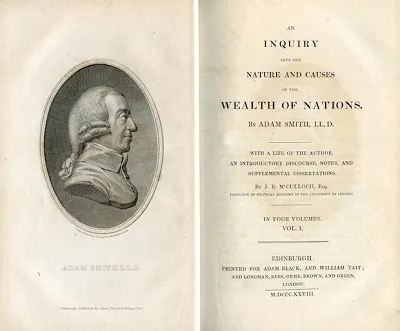
Adam Smith · 1776
Cannan’s justly famous early 20th century edition of Smith’s Wealth of Nations with his introduction and notes.
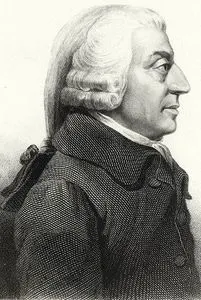
Adam Smith · 1776
Cannan’s justly famous early 20th century edition of Smith’s Wealth of Nations with his introduction and notes.
Adam Smith · 1776
Cannan’s justly famous early 20th century edition of Smith’s Wealth of Nations with his introduction and notes.
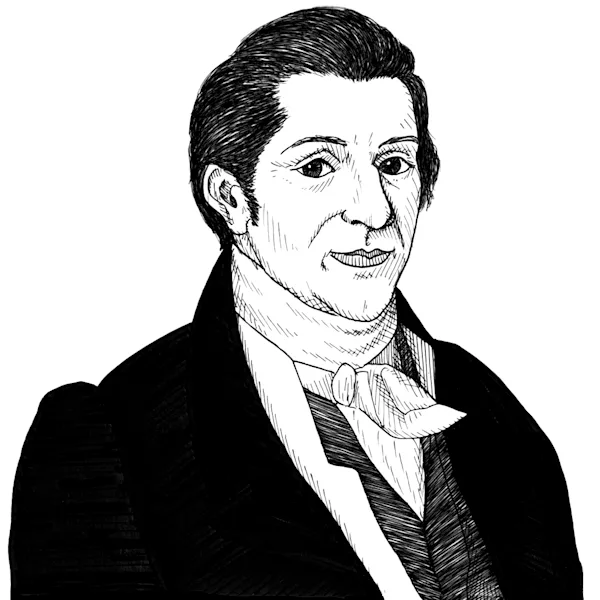
Jean-Baptiste Say · 1803
One of the most influential works on Political Economy in the 19thC. It set the stage for the development of the study of political economy in France and an early translation into English helped make it become the most…
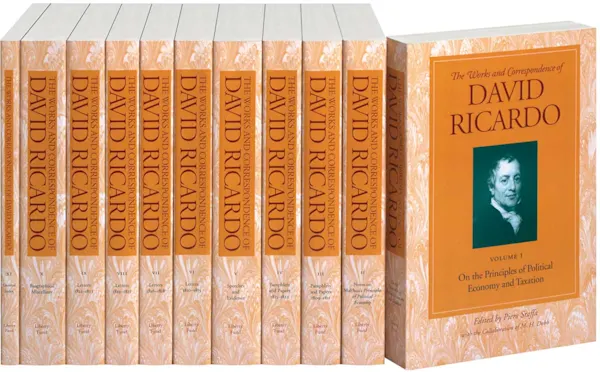
David Ricardo · 1817
On the Principles of Political Economy and Taxation provides analysis of the allocation of money between capitalists, landowners, and agricultural workers in Britain. Through this analysis, Ricardo came to advocate free…
James Mill · 1821
James Mill’s work offers excellent summaries of diminishing marginal returns in Chapter II, of comparative advantage in Chapter III, Section V, of the quantity theory of money and the market for foreign exchange in…
John Ramsay McCulloch · 1825
The first edition of McCulloch’s major treatise on the principles of political economy. This became the standard text in classical political economics until it was replaced by J.S. Mill’s Principles in 1848. it went…
Thomas Robert Malthus · 1827
Malthus criticises a number of classical economists (such as Smith, Say, Ricardo, McCulloch). Say is given particular attention over the idea of value. Malthus then offers his own definitions of 70 economic concepts.
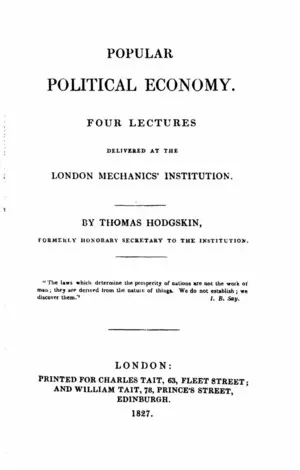
Thomas Hodgskin · 1827
Thomas Hodgskin, an officer in the British Navy who later worked for The Economist, was one of the earliest popularizers of economics for audiences of non-economists. He gave lectures on free trade, the corn laws, and…
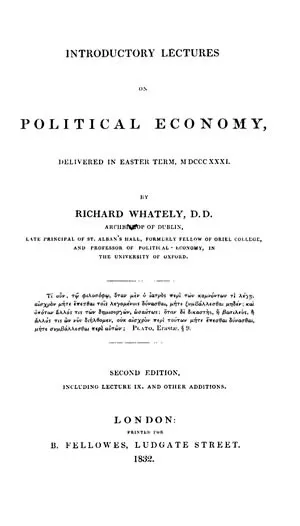
Richard Whately · 1831
Whately followed Nassau Senior as Professor of Political Economy at the University of Oxford. He brought logical clarity to the previously murky relationship between morals and the underpinnings of economics. These are…
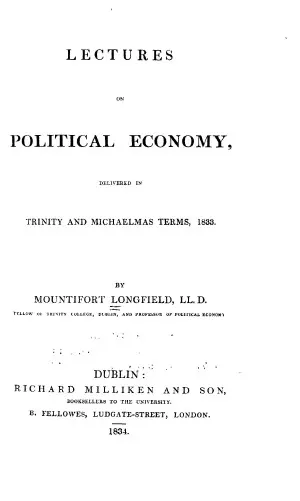
Mountifort Longfield · 1834
A series of lectures Longfield gave in 1833 at Trinity College, Dublin. One of his key points was that wages could not be raised artificially by the actions of trade unions but reflected the supply and demand for labor.
Thomas Robert Malthus · 1836
The first edition was published in 1820. This is the second edition of 1836. It is one of the major works in the classical school of political economy along with Smith’s Wealth of Nations and Ricardo’s Principles of…
Friedrich List · 1841
A German language edition of List’s work in favor of internal free trade but high protection for the national economy.
Friedrich List · 1841
A German historian who wrote in favor of protective tariffs and trade retaliations between industrial nations, even if they maintain free trade within each country. During the 1820s, he lived in Pennsylvania, where he…
John Stuart Mill · 1848
Principles of Political Economy, with some of their Applications to Social Philosophy was published in 1848 in London and was republished with changes and updates a total of seven times in Mill’s lifetime. The edition…
John Stuart Mill · 1848
Vol. 2 of the 33 vol. Collected Works contains Part 1 of Mill’s Principles of Political Economy.
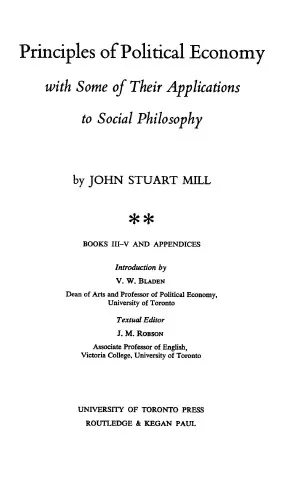
John Stuart Mill · 1848
Vol. 3 of the 33 vol. Collected Works contains Part 2 of Mill’s Principles of Political Economy.
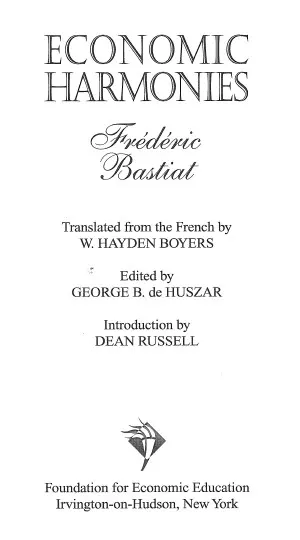
Frédéric Bastiat · 1850
This is the translation by the Foundation for Economic Education of Bastiat’s longest and best known work Economic Harmonies. A new translation of this work by Liberty Fund is in progress. See the Summary of the Bastiat…
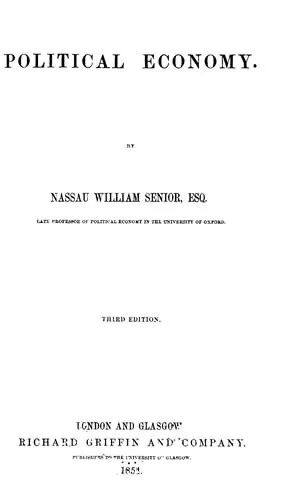
Nassau William Senior · 1850
This work is a summary statement of the nature of economic thought by one of the leading theorists of the English classical school in the mid-19th century.
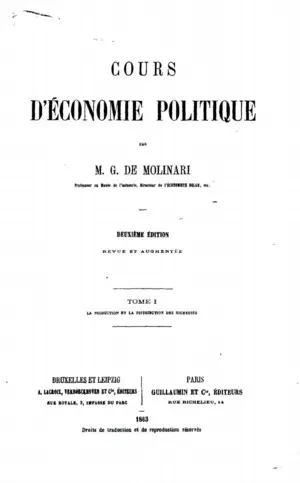
Gustave de Molinari · 1854
A 2 volume textbook on classical liberal political economy written by one of the leaders of the French laissez-faire school. It was written when Molinari was in exile in Belgium following the 1848 Revolution.
Gustave de Molinari · 1854
Vol. 1 of a 2 volume textbook on classical liberal political economy written by one of the leaders of the French laissez-faire school. It was written when Molinari was in exile in Belgium following the 1848 Revolution.
Gustave de Molinari · 1854
Vol. 2 of a 2 volume textbook on classical liberal political economy written by one of the leaders of the French laissez-faire school. It was written when Molinari was in exile in Belgium following the 1848 Revolution.
Dugald Stewart · 1855
Lectures given at the University of Edinburgh in the first decade of the 19th century. Volume 1 contains his lectures on population, productive and unproductive labour, and money. Volume 2 contains his lectures on free…
Dugald Stewart · 1855
Lectures given at the University of Edinburgh in the first decade of the 19th century. Volume 1 contains his lectures on population, productive and unproductive labour, and money.
Frédéric Bastiat · 1855
Vol. 6 of the 1st edition of Bastiat’s works contains the 3rd revised edition of Bastiat’s magnum opus Harmonies économiques. The first incomplete edition was published in early in 1850. The second was posthumously…
Dugald Stewart · 1856
Lectures given at the University of Edinburgh in the first decade of the 19th century. Volume 2 contains his lectures on free trade, taxation, the Poor Laws, education, and his theory of government.
John Elliot Cairnes · 1861
The book consists of lectures Cairnes gave to explain the basic principles behind classical economics.
John Ramsay McCulloch · 1864
A revised and expanded edition of McCulloch’s major treatise on the principles of political economy.
Karl Marx · 1867
Vol. I of the major work of criticism of the capitalist system by one of the leading theorists of socialism. Only vol. 1 appeared in Marx’s lifetime; the other two vols. were published postumously by Engels. Marx prided…
Carl Menger · 1871
One of the works which appeared independently in 1871 (along with a work by Jevons and Walras) which revolutionized thinking about economics. The theory of marginal utility and new ways of thinking about marginal value…
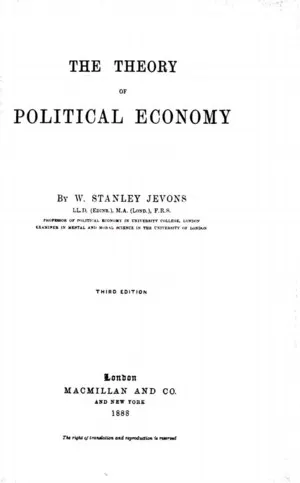
William Stanley Jevons · 1871
One of three seminal works published in 1871 (along with Walras and Menger) which introduced the idea of the marginal theory of utility and thus a revolution in economic thinking.
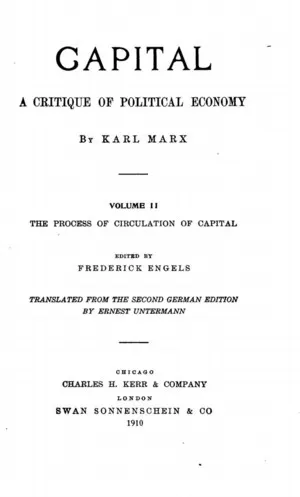
Karl Marx · 1885
Vol. II of the major work of criticism of the capitalist system by one of the leading theorists of 19th century socialism. Only vol. 1 appeared in Marx’s lifetime; the other two vols. were published postumously by…
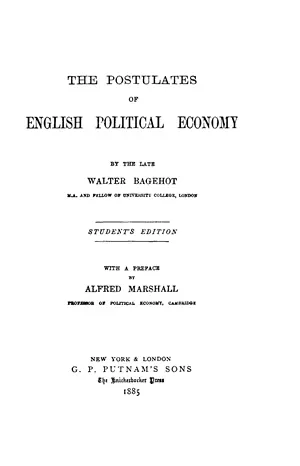
Walter Bagehot · 1885
Alfred Marshall, in his introduction to this book, argued that Bagehot provided a useful service to readers by removing the older and less understood Ricardian aspects from political economy and reworking them. Bagehot…
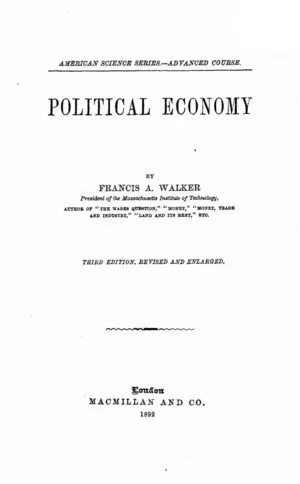
Francis Amasa Walker · 1887
One of the most widely used economics text books in 19th century America.
Eugen von Böhm-Bawerk · 1889
The second volume of Boehm-Bawerk’s monumental three volume work on Capital and Interest.
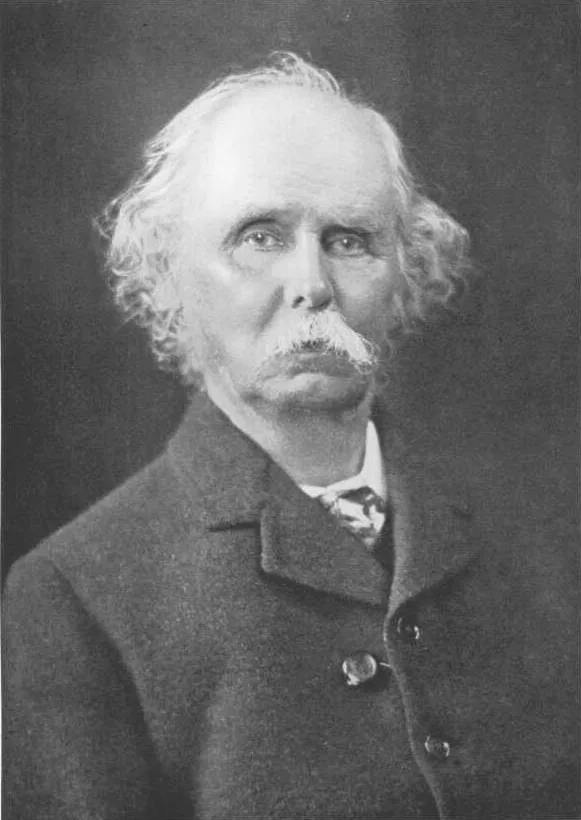
Alfred Marshall · 1890
This is the 8th edition of what is regarded to be the first “modern” economics textbook, leading in various editions from the 19th into the 20th century. The final 8th edition was Marshall’s most-used and most-cited.
Karl Marx · 1894
Vol. III of the major work of criticism of the capitalist system by one of the leading theorists of socialism. Only vol. 1 appeared in Marx’s lifetime; the other two vols. were published postumously by Engels. Marx…
John Bates Clark · 1899
This 1908 edition is the third reprinting of Clark’s path-breaking, yet widely under-read, 1899 textbook, in which he developed marginal productivity theory and used it to explore the way income is distributed between…
Philip H. Wicksteed · 1910
Contemporaneously with, though slightly following, Marshall, this book was one of the first “modern” textbooks leading from the 19th into the 20th century. Wicksteed substantively furthered the work of John Bates Clark…
Knut Wicksell · 1913
Volume 1 of a two volume set of lectures given by Wicksell. He bases his ideas on the idea of the marginal principle and covers topics such as population, value, production and distribution, and the growth of capital.…
Edwin Cannan · 1914
Cannan provides a brief survey of the basic principles of economics, the division of labour, the nature of demand, income, and concludes with his own chapter on “the wealth of nations.” It is based upon his lectures to…
Frank A. Fetter · 1915
Fetter’s 2 volume survey of economics written while he was a professor at Princeton University.
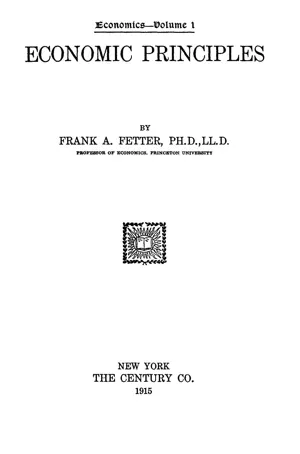
Frank A. Fetter · 1915
Volume 1 of Fetter’s 2 volume survey of economics written while he was a professor at Princeton University. Vol. 1 contains chapters on value and price, rent, wages, time-value and interest, enterprise and profit, and…
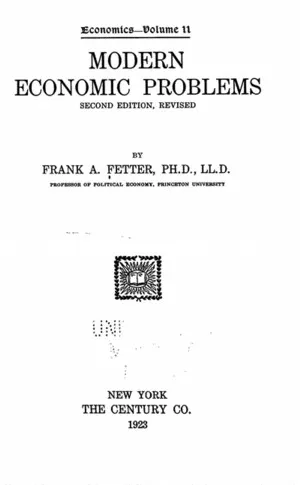
Frank A. Fetter · 1916
Vol. 2 of Fetter’s 2 volume survey of economics written while he was a professor at Princeton University. In this volume he deals the following problems: money and princes, banking and insurance, tariffs and taxation,…
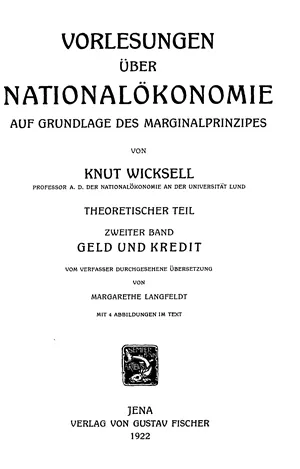
Knut Wicksell · 1922
Volume 2 of a two volume set of lectures given by Wicksell. He bases his ideas on the idea of the marginal principle and covers topics such as money, credit, and banking. It is in German.
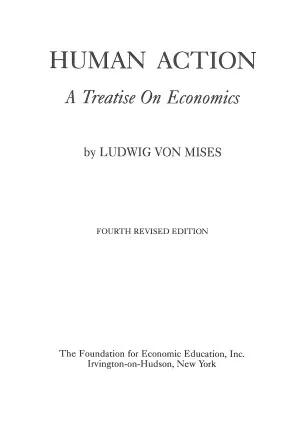
Ludwig von Mises · 1949
The first comprehensive treatise on economics written by a leading member of the modern Austrian school of economics.
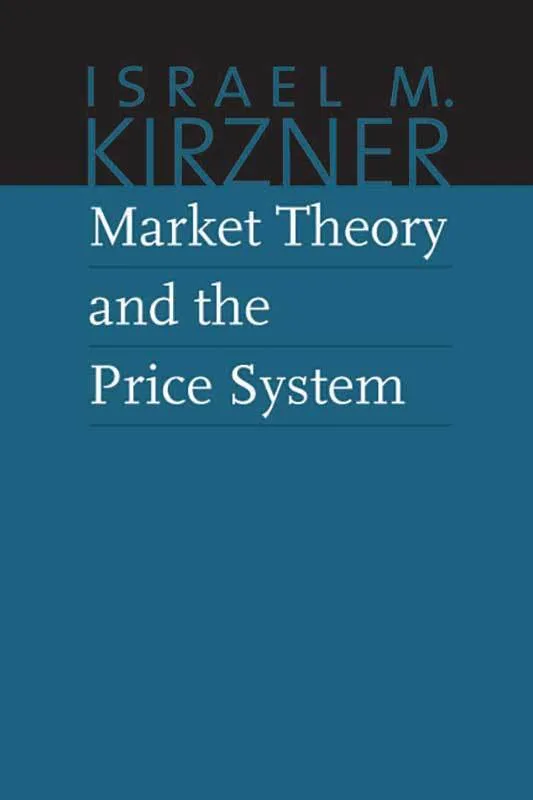
Israel M. Kirzner · 1963
The second volume in Liberty Fund’s The Collected Works of Israel M. Kirzner series, Market Theory and the Price System was published in 1963 as Kirzner’s only textbook. The basic aim of Market Theory is to utilize the…
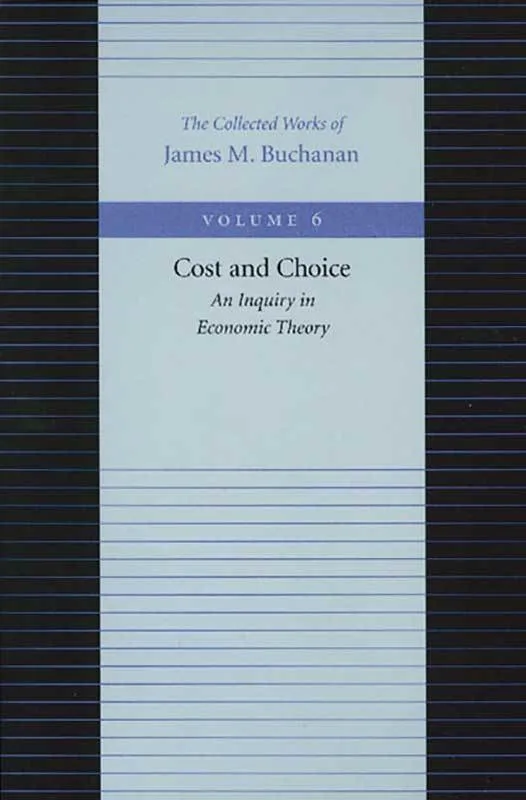
James M. Buchanan · 1969
Vol. 6 of The Collected Works. A short work in which Buchanan develops his ideas on opportunity cost. He takes an individualist and subjectivist perspective and attempts to integrate this into the orthodox classical and…
In this collection
7 people central to General Treatises on Economics.
1914–2013
Armen A. Alchian was one of the 20th century’s great teachers of economic science, and the co-author, with William R. Allen, of the classic…

1924–2021
William R. Allen taught at Washington University prior to joining the UCLA faculty in 1952. Along with research primarily in international…

1860–1927
Ashley was a prolific economic historian who wrote on the English coal industry, the British empire, German economic history, tariffs, and…

1835–1882
Jevons was born in Liverpool, England and studied chemistry and botany at University College, London before taking up the position of…

b. 1941
Jerry L. Jordan wrote his doctoral dissertation under the direction of Armen Alchian. He was Dean of the School of Management at the…

1841–1899
Lalor is best known as the editor of the mammoth three volume cyclopedia of economics and political science which he published in the late…

1835–1909
Simon Newcomb, Canadian-born, home-educated astronomer and mathematician who supervised the revamping of the telescopes at the United…
In this collection
From The Reading Room, Liberty Matters and the library’s other publications.
Passages on this subject, chosen by OLL editors.
The moving parts are men, that is, beings capable of learning, reflecting, reasoning, of making errors and of correcting them, and consequently of making the mechanism itself better or worse. They are capable of pain and pleasure, and in that respect they are not only the wheels, but the springs of the machine. They are also the motive forces, for the source of the power is in them. They are more than that, for they are the ultimate object and raison d’être of the mechanism, since in the last analysis the problems of its operation must be solved in terms of their individual pain or pleasure.*
Now, it has been observed, and, alas, the observation has not been a difficult one to make, that in the operation, the evolution, and even the progress (by those who accept the idea that there has been progress) of this powerful mechanism, many moving parts were inevitably, fatally, crushed; that, for a great number of human beings, the sum of unmerited sufferings far exceeded the sum of enjoyments.
There are no taxes which have not a tendency to lessen the power to accumulate. All taxes must either fall on capital or revenue. If they encroach on capital, they must proportionably diminish that fund by whose extent the extent of the productive industry of the country must always be regulated; and if they fall on revenue, they must either lessen accumulation, or force the contributors to save the amount of the tax, by making a corresponding diminution of their former unproductive1 consumption of the necessaries and luxuries of life. Some taxes will produce these effects in a much greater degree than others; but the great evil of taxation is to be found, not so much in any selection of its objects, as in the general amount of its effects taken collectively.
Taxation under every form presents but a choice of evils; if it do not act on profit, or other sources of income, it must act on expenditure; and provided the burthen be equally borne, and do not repress reproduction, it is indifferent on which it is laid. Taxes on production, or on the profits of stock, whether applied immediately to profits, or indirectly, by taxing the land or its produce, have this advantage over other taxes; that, provided all other income be taxed, no class of the community can escape them, and each contributes according to his means. (FROM CHAPTER IX.: TAXES ON RAW PRODUCE)
First, society is nothing but a succession of exchanges.In effect, let us begin with the first conventions on which it is founded. Every man, before entering into the state of society, has as we have seen all rights and no duty, not even that of not hurting others; and others the same in respect to him. It is evident they could not live together, if by a convention formal or tacit they did not promise each other, reciprocally, surety. Well! this convention is a real exchange; every one renounces a certain manner of employing his force, and receives in return the same sacrifice on the part of all the others. Security once established by this mean, men have a multitude of mutual relations which all arrange themselves under one of the three following classes: they consist either in rendering a service to receive a salary, or in bartering some article of merchandize against another, or in executing some work in common.
What, then, are we to think of the principles laid down by those writers, who have laboured to draw an essential distinction between public and private wealth; to show, that economy is the way to increase private fortune, but, on the contrary, that public wealth increases with the increase of public consumption: inferring thence this false and dangerous conclusion, that the rules of conduct in the management of private fortune and of public treasure, are not only different, but in direct opposition?
But personal interest is no longer a safe criterion, if individual interests are not left to counteract and control each other. If one individual, or one class, can call in the aid of authority to ward off the effects of competition, it acquires a privilege to the prejudice and at the cost of the whole community; it can then make sure of profits not altogether due to the productive services rendered, but composed in part of an actual tax upon consumers for its private profit; which tax it commonly shares with the authority that thus unjustly lends its support.
As has been pointed out already, there is no such tendency toward monopolization. It is a fact that with many commodities in many countries monopoly prices prevail, and moreover, some articles are sold at monopoly prices on the world market. However, almost all of these instances of monopoly prices are the outgrowth of government interference with business. They were not created by the interplay of the factors operating on a free market. They are not products of capitalism, but precisely of the endeavors to counteract the forces determining the height of the market prices. It is a distortion of fact to speak of monopoly capitalism. It would be more appropriate to speak of monopoly interventionism or of monopoly statism.
The fundamental social phenomenon is the division of labor and its counterpart human cooperation. Experience teaches man that cooperative action is more efficient and productive than isolated action of self-sufficient individuals. The natural conditions determining man’s life and effort are such that the division of labor increases output per unit of labor expended.
Economic theory. Demography
473 titles · 88 publications · 293 people
Economic theory. Demography
10 titles · 14 people
Socialism. Communism. Anarchism
4 titles · 16 people

Language and Literature
17 titles · 3 publications · 40 people

Sociology
62 titles · 3 publications · 35 people
Social media
25 titles · 17 publications · 22 people