

The Online Library of Liberty

Search the library

Press Enter to see all results. Esc closes.

Justice

James Mackintosh on the relationship between justice and utility (1791)

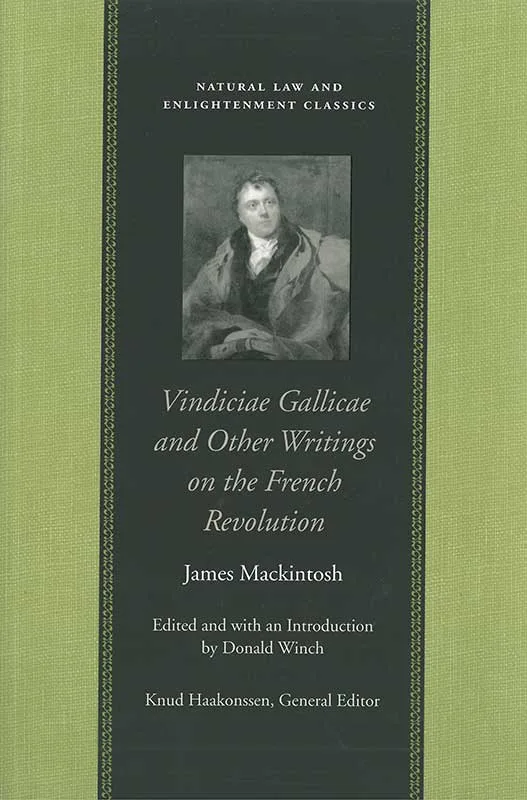
Justice is expediency, but it is expediency, speaking by general maxims, into which reason has concentrated the experience of mankind. Every general principle of justice is demonstrably expedient, and it is this utility alone that confers on it a moral obligation. But it would be fatal to the existence of morality, if the utility of every particular act were to be the subject of deliberation in the mind of every moral agent. A general moral maxim is to be obeyed, even if the inutility is evident, because the precedent of deviating more than balances any utility that may exist in the particular deviation. Political first principles are of this description.

— Sir James Mackintosh, Vindiciae Gallicae and Other Writings on the French Revolution

Context

Further thoughts

  • Justice
    “You, when you have been besieged by so illustrious a city on account of your own wickedness and crime—when you have compelled men, miserable and maddened by calamity, as if in despair of our laws and tribunals, to fly to violence, to combat, and to arms—when you have shown yourself in the towns and cities of our friends, not as a lieutenant of the Roman people, but as a lustful and inhuman tyrant—when among foreign nations you have injured the reputation of our dominion and our name by your infamy and your crimes—when you have with difficulty saved yourself from the sword of the friends of the Roman people, and escaped from the fire of its allies, do you think you will find an asylum here? You are mistaken—they allowed you to escape alive that you might fall into our power here, not that you might find rest here.”
  • Justice
    “There is, however, another virtue, of which the observance is not left to the freedom of our own wills, which may be extorted by force, and of which the violation exposes to resentment, and consequently to punishment. This virtue is justice: the violation of justice is injury: it does real and positive hurt to some particular persons, from motives which are naturally disapproved of. It is, therefore, the proper object of resentment, and of punishment, which is the natural consequence of resentment.”

    Adam Smith: Adam Smith on the legitimacy of using force to ensure justice (1759)

    The Theory of Moral Sentiments and on the Origins of Languages (Stewart ed.)

  • Justice
    “Justice being taken away, then, what are kingdoms but great robberies? For what are robberies themselves, but little kingdoms? The band itself is made up of men; it is ruled by the authority of a prince, it is knit together by the pact of the confederacy; the booty is divided by the law agreed on. If, by the admittance of abandoned men, this evil increases to such a degree that it holds places, fixes abodes, takes possession of cities, and subdues peoples, it assumes the more plainly the name of a kingdom, because the reality is now manifestly conferred on it, not by the removal of covetousness, but by the addition of impunity. Indeed, that was an apt and true reply which was given to Alexander the Great by a pirate who had been seized. For when that king had asked the man what he meant by keeping hostile possession of the sea, he answered with bold pride, “What thou meanest by seizing the whole earth; but because I do it with a petty ship, I am called a robber, whilst thou who dost it with a great fleet art styled emperor.””