The Online Library of Liberty

Search the library

Press Enter to see all results. Esc closes.

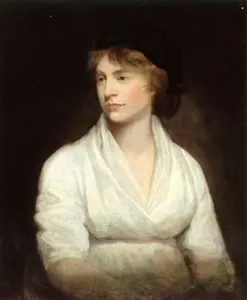
Portrait of Mary Wollstonecraft

Author

Mary Wollstonecraft

1759–1797

Quotes from Mary Wollstonecraft

5 quotes from the library

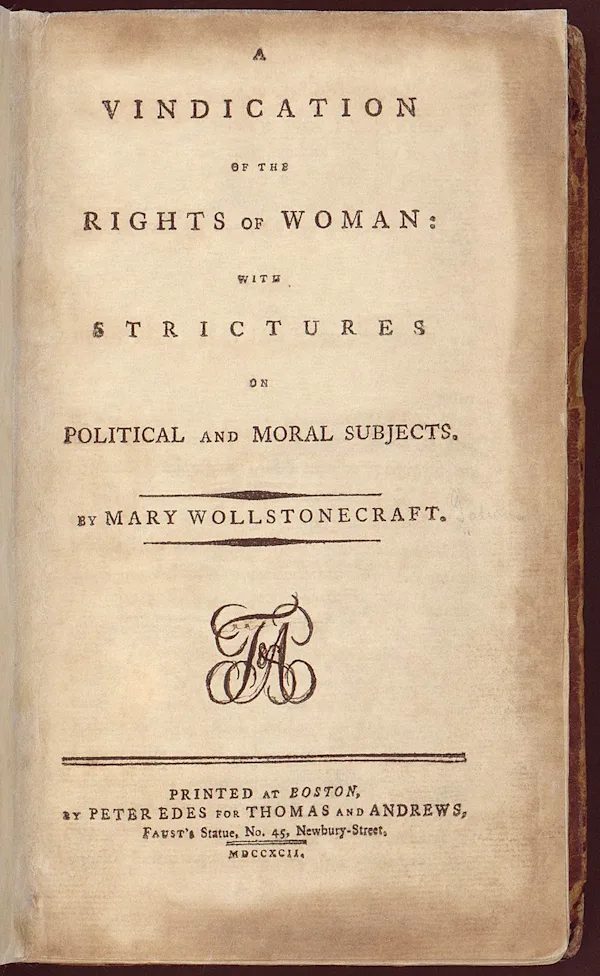
  • A Vindication of the Rights of Woman
    Standing armies can never consist of resolute, robust men; they may be well disciplined machines, but they will seldom contain men under the influence of strong passions, or with very vigorous faculties. And as for any depth of understanding, I will venture to affirm, that it is as rarely to be found in the army as amongst women; and the cause, I maintain, is the same. It may be further observed, that officers are also particularly attentive to their persons, fond of dancing, crowded rooms, adventures, and ridicule. Like the fair sex, the business of their lives is gallantry. – They were taught to please, and they only live to please. Yet they do not lose their rank in the distinction of sexes, for they are still reckoned superior to women, though in what their superiority consists, beyond what I have just mentioned, it is difficult to discover.
  • A Vindication of the Rights of Woman
    These may be termed utopian dreams. – Thanks to that Being who impressed them on my soul, and gave me sufficient strength of mind to dare to exert my own reason, till, becoming dependent only on him for the support of my virtue, I view, with indignation, the mistaken notions that enslave my sex. I love man as my fellow; but his scepter, real, or usurped, extends not to me, unless the reason of an individual demands my homage; and even then the submission is to reason, and not to man. In fact, the conduct of an accountable being must be regulated by the operations of its own reason; or on what foundation rests the throne of God?
  • A Vindication of the Rights of Woman
    Indeed, the necessity of a master’s giving the parents some sample of the boys abilities, which during the vacation is shewn to every visitor, is productive of more mischief than would at first be supposed. For it is seldom done entirely, to speak with moderation, by the child itself; thus the master countenances falsehood, or winds the poor machine up to some extraordinary exertion, that injures the wheels, and stops the progress of gradual improvement. The memory is loaded with unintelligible words, to make a shew of, without the understanding’s acquiring any distinct ideas: but only that education deserves emphatically to be termed cultivation of mind, which teaches young people how to begin to think. The imagination should not be allowed to debauch the understanding before it gained strength, or vanity will become the forerunner of vice: for every way of exhibiting the acquirements of a child is injurious to its moral character. (FROM: CHAPTER XII: on national education)
  • A Vindication of the Rights of Woman
    Contending for the rights of women, my main argument is built upon this simple principle, that if she be not prepared by education to become the companion of man, she will stop the progress of knowledge and virtue; for truth must be common to all, or it will be inefficacious with respect to its influence on general practice. And how can women be expected to co-operate unless she knows why she ought to be virtuous? unless freedom strengthens her reason till she comprehends her duty, and see in what manner is connected with her real good. If children are to be educated to understand the true principle of patriotism, their mother must be a patriot; and the love of mankind, from which an orderly train of virtues spring, can only be produced by considering the moral and civil interest of mankind; but the education and situation of woman at present shuts her out from such investigations. --Mary Wollstonecraft, A Vindication of the Rights of Women
  • A Vindication of the Rights of Woman
    That woman is naturally weak, or degraded by a concurrence of circumstances, is, I think, clear. But this position I shall simply contrast with a conclusion, which I have frequently heard fall from sensible men in favour of an aristocracy: that the mass of mankind cannot be any thing, or the obsequious slaves, who patiently allow themselves to be driven forward, would feel their own consequence, and spurn their chains. Men, they further observe, submit every where to oppression, when they have only to lift up their heads to throw off the yoke; yet, instead of asserting their birthright, they quietly lick the dust, and say, let us eat and drink, for to-morrow we die. Women, I argue from analogy, are degraded by the same propensity to enjoy the present moment; and, at last, despise the freedom which they have not sufficient virtue to struggle to attain.