The Online Library of Liberty

Search the library

Press Enter to see all results. Esc closes.

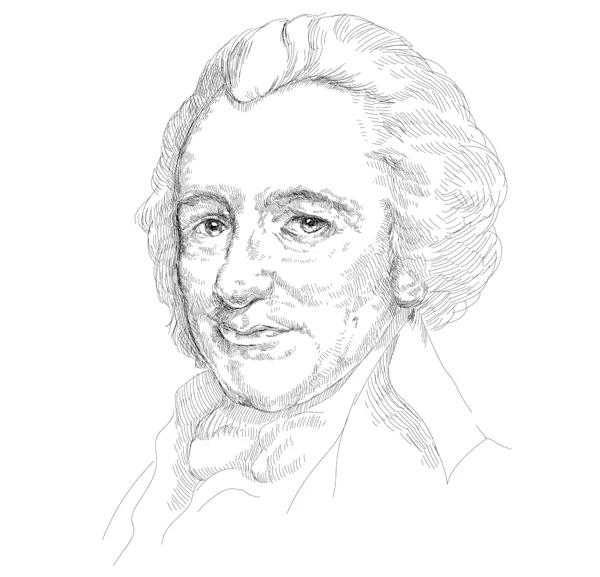
Portrait of Thomas Paine

Author

Thomas Paine

1737–1809

See more works by Paine ›6 titles in the library

Quotes from Thomas Paine

7 quotes from the library

  • The Writings of Thomas Paine, Vol. III (1791-1804)
    It is worthy of observation, that every case of failure in finances, since the system of paper began, has produced a revolution in governments, either total or partial. A failure in the finances of France produced the French revolution. A failure in the finance of the assignats broke up the revolutionary government, and produced the present French Constitution. A failure in the finances of the Old Congress of America, and the embarrassments it brought upon commerce, broke up the system of the old confederation, and produced the federal Constitution. If, then, we admit of reasoning by comparison of causes and events, the failure of the English finances will produce some change in the government of that country.
  • The Writings of Thomas Paine, Vol. II (1779-1792)
    It is impossible that such governments as have hitherto existed in the world, could have commenced by any other means than a total violation of every principle sacred and moral. The obscurity in which the origin of all the present old governments is buried, implies the iniquity and disgrace with which they began. The origin of the present government of America and France will ever be remembered, because it is honourable to record it; but with respect to the rest. even Flattery has consigned them to the tomb of time, without an inscription. It could have been no difficult thing in the early and solitary ages of the world, while the chief employment of men was that of attending flocks and herds, for a banditti of ruffians to overrun a country, and lay it under contributions. Their power being thus established, the chief of the band contrived to lose the name of Robber in that of Monarch; and hence the origin of Monarchy and Kings.
  • The Writings of Thomas Paine, Vol. IV (1791-1804)
    HAIL great Republic of the world, Which rear'd her empire in the west, Where fam'd Columbus' flag unfurl'd, Gave tortured Europe scenes of rest ; Be thou forever great and free, The land of Love, and Liberty ! Where'er the Atlantic surges lave, Or sea the human eye delights, There may thy starry standard wave, The Constellation of thy Rights! Be thou forever, &c.
  • The Writings of Thomas Paine, Vol. I (1774-1779)
    But where, say some, is the King of America? I’ll tell you, friend, he reigns above, and doth not make havoc of mankind like the Royal Brute of Great Britain. Yet that we may not appear to be defective even in earthly honours, let a day be solemnly set apart for proclaiming the Charter; let it be brought forth placed on the Divine Law, the Word of God; let a crown be placed thereon, by which the world may know, that so far as we approve of monarchy, that in America the law is king. For as in absolute governments the King is law, so in free countries the law ought to be king; and there ought to be no other. But lest any ill use should afterwards arise, let the Crown at the conclusion of the ceremony be demolished, and scattered among the people whose right it is. A government of our own is our natural right: and when a man seriously reflects on the precariousness of human affairs, he will become convinced, that it is infinitely wiser and safer, to form a constitution of our own in a cool deliberate manner, while we have it in our power, than to trust such an interesting event to time and chance. If we omit it now, some Massanello may hereafter arise [Note: Thomas Anello, otherwise Massanello, a fisherman of Naples, who after spiriting up his countrymen in the public market place, against the oppression of the Spaniards, to whom the place was then subject, prompted them to revolt, and in the space of a day became King], who, laying hold of popular disquietudes, may collect together the desperate and the discontented, and by assuming to themselves the powers of government, finally sweep away the liberties of the Continent like a deluge.
  • The Writings of Thomas Paine, Vol. II (1779-1792)
    We have heard the Rights of Man called a levelling system; but the only system to which the word levelling is truly applicable, is the hereditary monarchical system. It is a system of mental levelling. It indiscriminately admits every species of character to the same authority. Vice and virtue, ignorance and wisdom, in short, every quality, good or bad, is put on the same level. Kings succeed each other, not as rationals, but as animals. It signifies not what their mental or moral characters are. Can we then be surprised at the abject state of the human mind in monarchical countries, when the government itself is formed on such an abject levelling system?—It has no fixed character. To-day it is one thing; to-morrow it is something else. It changes with the temper of every succeeding individual, and is subject to all the varieties of each. It is government through the medium of passions and accidents. It appears under all the various characters of childhood, decrepitude, dotage, a thing at nurse, in leading-strings, or in crutches. It reverses the wholesome order of nature. It occasionally puts children over men, and the conceits of non-age over wisdom and experience. In short, we cannot conceive a more ridiculous figure of government, than hereditary succession, in all its cases, presents.
  • The Writings of Thomas Paine, Vol. I (1774-1779)
    We have it in our power to begin the world over again. A situation, similar to the present, hath not happened since the days of Noah until now. The birthday of a new world is at hand, and a race of men, perhaps as numerous as all Europe contains, are to receive their portion of freedom from the events of a few months. The reflection is awful, and in this point of view, how trifling, how ridiculous, do the little paltry cavilings of a few weak or interested men appear, when weighed against the business of a world.
  • The Rights of Man Part I (1791 ed.)
    It may with reason be said, that in the manner the English nation is represented, it signifies not where this right resides, whether in the Crown, or in the Parliament. War is the common harvest of all those who participate in the division and expenditure of public money, in all countries. It is the art of conquering at home: the object of it is an increase of revenue; and as revenue cannot be increased without taxes, a pretence must be made for expenditures. In reviewing the history of the English government, its wars and its taxes, a by-stander, not blinded by prejudice, nor warped by interest, would declare, that taxes were not raised to carry on wars, but that wars were raised to carry on taxes.