

John Quincy Adams
1767–1848
John Quincy Adams (1764-1848) was the 6th president of the United States serving 1825-1829. He was the son of John Adams, the 2nd…


World History
54 items in this collection
The anti-slavery movement emerged in the late 18th century as part of the more general movement of reform known as the Enlightenment. As major colonial powers with extensive slave colonies France and Britain both had a significant anti-slavery movement. The effort to abolish slavery began with a campaign to end the traffic in slaves from Africa across the Atlantic, and then to abolish slavery within the colonies. The arguments used against slavery and the slave trade were a mixture of religious, moral, political, and economic arguments.
In this collection
12 people central to Abolition of Slavery.
1767–1848
John Quincy Adams (1764-1848) was the 6th president of the United States serving 1825-1829. He was the son of John Adams, the 2nd…

1802–1866
Gustave de Beaumont (1802-1866) was Tocqueville’s companion on his famous trip to America in 1831 in order to observe the American prison…

1800–1859
John Brown (1800 - 1859) was an American abolitionist who would not be deterred from his mission of abolishing slavery. He organized the…

1760–1846
Thomas Clarkson (1760-1846) was the leading opponent of the slave trade and slavery in England in the late 18th and early 19th centuries.…

1818–1895
Frederick Douglass (1817-1895) was an ex-slave who wrote three accounts of his life as a slave, runaway, and campaigner for the abolition…

1803–1882
Ralph Waldo Emerson (1803-1882) was a famous writer, orator, and abolitionist. He studied at Harvard Divinity School but made his living as…

1805–1879
William Lloyd Garrison (1805 - 1879) was an American abolitionist, journalist, and social reformer. He spent his life disturbing the peace…

1809–1865
Abraham Lincoln (1809-1865) was the 16th President of the United States. He was a lawyer before becoming involved with Illinois state…

b. 1976
Timothy Sandefur is the Vice President for Legal Affairs at the Goldwater Institute.

1808–1887
Lysander Spooner (1808-1887) was a legal theorist, abolitionist, and radical individualist who started his own mail company in order to…

1758–1832
James Stephen (1758 – 1832) was an English lawyer and abolitionist. He was a defender of the mercantile system and government controlled…

1820–1913
Harriet Tubman (1820 - 1913) was an American abolitionist and social activist. She led several dozen enslaved people to freedom in the…
In this collection
From The Reading Room, Liberty Matters and the library’s other publications.
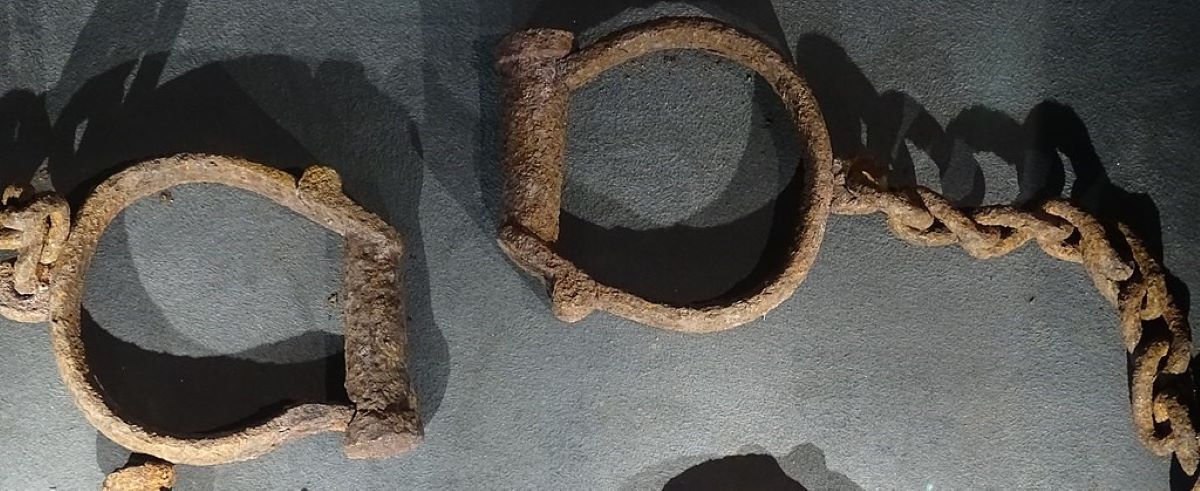
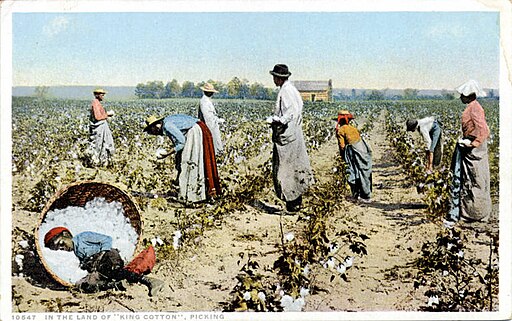
Phillip W. Magness and others · 2023
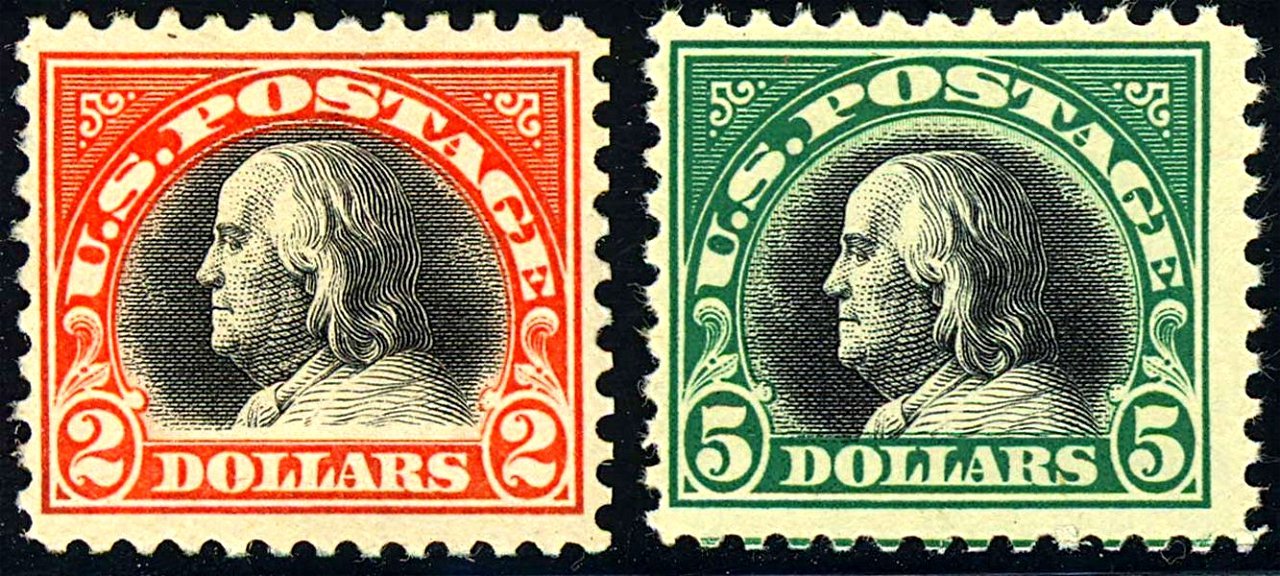

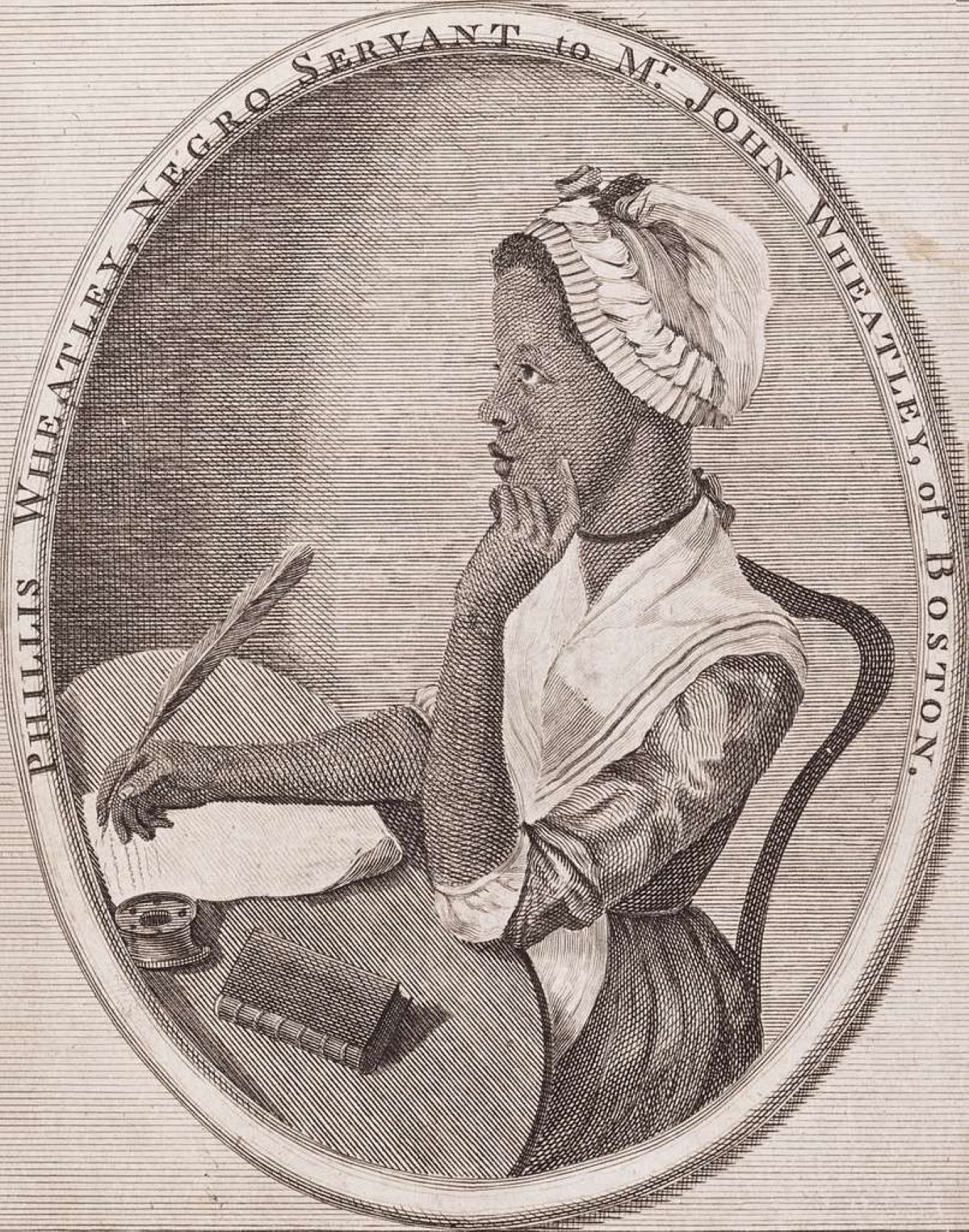
Hans Eicholz and others · 2021

Matt Zwolinski and others · 2017
Passages on this subject, chosen by OLL editors.
By this we may see what a miserable life the slaves must have led; their life and their property intirely at the mercy of another, and their liberty, if they could be said to have any, at his disposall also. But besides these hardships which are commonly taken notice of by writers, they laboured under severall others which are not so generally attended to. (FROM LJ(A) iii.94) - Adam Smith
Slavery is such an atrocious debasement of human nature, that its very extirpation, if not performed with solicitous care, may sometimes open a source of serious evils.
The unhappy man, who has long been treated as a brute animal, too frequently sinks beneath the common standard of the human species. The galling chains, that bind his body, do also fetter his intellectual faculties, and impair the social affections of his heart. Accustomed to move like a mere machine, by the will of a master, reflection is suspended; he has not the power of choice; and reason and conscience have but little influence over his conduct, because he is chiefly governed by the passion of fear. He is poor and friendless; perhaps worn out by extreme labor, age, and disease.
Under such circumstances, freedom may often prove a misfortune to himself, and prejudicial to society.
But, lay hands on another
To coin his labor and sweat,
He goes in pawn for his victim
For eternal years in debt.
To-day unbind the captive,
So only are ye unbound;
Lift up a people from the dust,
Trump of their rescue, sound!
Pay ransom to the owner
And fill the bag to the brim.
Who is the owner? The slave is owner,
And ever was. Pay him.
Although slavery was a delicate subject, and very cautiously talked about among grown-up people in Maryland, I frequently talked about it, and that very freely, with the white boys. I would sometimes say to them, while seated on a curbstone or a cellar door, “I wish I could be free, as you will be when you get to be men.” “You will be free, you know, as soon as you are twenty-one, and can go where you like, but I am a slave for life. Have I not as good a right to be free as you have?” Words like these, I observed, always troubled them; and I had no small satisfaction in drawing out from them, as I occasionally did, that fresh and bitter condemnation of slavery which ever springs from natures unseared and unperverted. (FROM [CHAPTER XI.: GROWING IN KNOWLEDGE) - Frederick Douglass
My feelings were not the result of any marked cruelty in the treatment I received; they sprang from the consideration of my being a slave at all. It was slavery, not its mere incidents I hated. I had been cheated. I saw through the attempt to keep me in ignorance. I saw that slaveholders would have gladly made me believe that they were merely acting under the authority of God in making a slave of me and in making slaves of others, and I felt to them as to robbers and deceivers. The feeding and clothing me well could not atone for taking my liberty from me. The smiles of my mistress could not remove the deep sorrow that dwelt in my young bosom. Indeed, these came in time but to deepen my sorrow. (FROM CHAPTER XI.: GROWING IN KNOWLEDGE)
I AM now at the beginning of the year—1836—when the mind naturally occupies itself with the mysteries of life in all its phases—the ideal, the real, and the actual. Sober people look both ways at the beginning of a new year, surveying the errors of the past, and providing against the possible errors of the future. I, too, was thus exercised. I had little pleasure in retrospect, and the future prospect was not brilliant. “Notwithstanding,” thought I, “the many resolutions and prayers I have made in behalf of freedom, I am, this first day of the year 1836, still a slave, still wandering in the depths of a miserable bondage. My faculties and powers of body and soul are not my own, but are the property of a fellow-mortal in no sense superior to me, except that he has the physical power to compel me to be owned and controlled by him. By the combined physical force of the community I am his slave—a slave for life.” With thoughts like these I was chafed and perplexed, and they rendered me gloomy and disconsolate. The anguish of my mind cannot be written.
The Proclamation itself was like Mr. Lincoln throughout. It was framed with a view to the least harm and the most good possible in the circumstances, and with especial consideration of the latter. It was thoughtful, cautious, and well guarded at all points. While he hated slavery, and really desired its destruction, he always proceeded against it in a manner the least likely to shock or drive from him any who were truly in sympathy with the preservation of the Union, but who were not friendly to emancipation. For this he kept up the distinction between loyal and disloyal slaveholders, and discriminated in favour of the one, as against the other. In a word, in all that he did, or attempted, he made it manifest that the one great and all commanding object with him, was the peace and preservation of the Union, and that this was the motive and main spring of all his measures. (FROM CHAPTER XII.: HOPE FOR THE NATION) - Frederick Douglass
I have met many good religious coloured people at the South, who were under the delusion that God required them to submit to slavery, and to wear their chains with meekness and humility. I could entertain no such nonsense as this; and I quite lost my patience when I found a coloured man weak enough to believe such stuff. Nevertheless, eager as I was to partake of the tree of knowledge, [59] its fruits were bitter as well as sweet. “Slaveholders,” thought I, “are only a band of successful robbers, who, leaving their own homes, went into Africa for the purpose of stealing and reducing my people to slavery.” I loathed them as the meanest and the most wicked of men. (FROM CHAPTER XI.: GROWING IN KNOWLEDGE)
For more information see:

History of the Americas
343 titles · 67 publications · 239 people
America
238 titles · 1 publication · 150 people

History of the Americas
181 titles · 80 publications · 149 people

Language and Literature
73 titles · 10 publications · 81 people

France - Andorra - Monaco
46 titles · 5 publications · 44 people

Great Britain
38 titles · 1 publication · 41 people