

The Online Library of Liberty

Search the library

Press Enter to see all results. Esc closes.

Colonies, Slavery & Abolition

Frederick Douglass on Abraham Lincoln and the Emancipation Proclamation

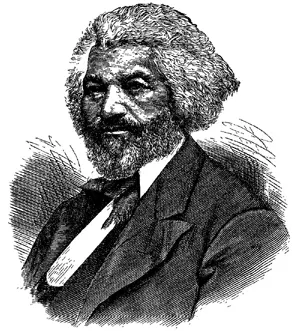
The Proclamation itself was like Mr. Lincoln throughout. It was framed with a view to the least harm and the most good possible in the circumstances, and with especial consideration of the latter. It was thoughtful, cautious, and well guarded at all points. While he hated slavery, and really desired its destruction, he always proceeded against it in a manner the least likely to shock or drive from him any who were truly in sympathy with the preservation of the Union, but who were not friendly to emancipation. For this he kept up the distinction between loyal and disloyal slaveholders, and discriminated in favour of the one, as against the other. In a word, in all that he did, or attempted, he made it manifest that the one great and all commanding object with him, was the peace and preservation of the Union, and that this was the motive and main spring of all his measures. (FROM CHAPTER XII.: HOPE FOR THE NATION) - Frederick Douglass

— Frederick Douglass, The Life and Times of Frederick Douglass: From 1817-1882

Context

Further thoughts

More on Colonies, Slavery & Abolition

  • Colonies, Slavery & Abolition
    “I have formerly observed that pure and proper slavery does not, nay, cannot, subsist in England: such, I mean, whereby an absolute and unlimited power is given to the master over the life and fortune of the slave. And indeed it is repugnant to reason, and the principles of natural law, that such a state should subsist anywhere. The three origins of the right of slavery assigned by Justinian are all of them built upon false foundations ... Upon these principles the law of England abhors, and will not endure the existence of, slavery within this nation; so that when an attempt was made to introduce it, by statute 1 Edw. VI. c. 3, which ordained, that all idle vagabonds should be made slaves, and fed upon bread and water, or small drink, and refuse meat; should wear a ring of iron round their necks, arms, or legs; and should be compelled, by beating, chaining, or otherwise, to perform the work assigned them, were it never so vile; the spirit of the nation could not brook this condition, even in the most abandoned rogues; and therefore this statute was repealed in two years afterwards. And now it is laid down, that a slave or negro, the instant he lands in England, becomes a freeman; that is, the law will protect him in the enjoyment of his person, and his property.”
  • Colonies, Slavery & Abolition
    “I see my way in the constitution. I cannot in a compromise. A compromise is but an act of Congress. It may be overruled at any time. It gives us no security. But the constitution is stable. It is a rock. On it we can stand, and on it we can meet our friends from the non-slaveholding States. It is a firm and stable ground, on which we can better stand in opposition to fanaticism, than on the shifting sands of compromise. Let us be done with compromises. Let us go back and stand upon the constitution! (FROM: SPEECH ON THE INTRODUCTION OF HIS RESOLUTIONS ON THE SLAVE QUESTION)”

    John C. Calhoun: John Calhoun on Compromises

    Union and Liberty: The Political Philosophy of John C. Calhoun

  • Colonies, Slavery & Abolition
    “The physiognomy of governments can be best detected in their colonies ... (In Canada) One might fancy one’s self in the midst of modern centralization and in Algeria. Canada is, in fact, the true model of what has always been seen there. In both places the government numbers as many heads as the people; it preponderates, acts, regulates, controls, undertakes every thing, provides for every thing, knows far more about the subject’s business than he does himself—is, in short, incessantly active and sterile. In the United States, on the contrary, the English anti-centralization system was carried to an extreme. Parishes became independent municipalities, almost democratic republics. The republican element, which forms, so to say, the foundation of the English constitution and English habits, shows itself and develops without hindrance. Government proper does little in England, and individuals do a great deal; in America, government never interferes, so to speak, and individuals do every thing.”