

Hans Eicholz
Lead essay · Jul 01, 2021
Jefferson's reputation has oscillated over the long history of the republic, tracking closely the changing tides of politics. One has to wonder, though, if it can (or perhaps better, should)[i] ever recover from the recent run of highly critical writings that focus almost exclusively on the subjects of slavery and race (Peterson 1960, 443-458; Knott 2002, 4-7).
Among the most prolific penmen of the revolutionary and founding generations, Jefferson bequeathed a trove of documents far more extensive than most any other contemporary. How historians have characterized the diversity of this material has varied substantially through the years. Adrienne Koch believed that his collaborations with Madison revealed Jefferson to be the more philosophical, but also the more impractical, of the two (Koch 1964, 291-292). That same speculative quality emanating from his hilltop abode led Joseph Ellis to the title, American Sphinx (Ellis 1998, 12, 34, 168). And many are those who have not refrained from calling him hypocrite or of "bad faith" (Levy 1973, 158-176; Ellison 2003, 781; Onuf 2007, 206). But these have been comparatively mild verdicts in contrast to more recent treatments.
Unlike Washington, Madison, or Marshall, Jefferson's extensive paper trail has left a target rich environment that opens his legacy to the full intensity of present-day censure. In her succinct but penetrating biography, Joyce Appleby framed the reasons for that intensity vis-à-vis the other leading figures of his day:
Not having raised our expectations with affirmations of natural rights, these [other] leaders have not disappointed us. Jefferson's buying, selling, and owning of men and women has disturbed the pages of our history as no other's has. But there's more to this complex situation. Jefferson also made the expansion of human liberty a realistic national goal. In that sense, he has elevated us and let us down at the same time (Appleby 2003, 139).
As we enter into the third decade of the twenty-first century this disappointment has grown more palpable, and its source is both popular and academic, uniting in calls for the removal of public monuments and the changing of curricula. In fact, the two spheres appear more closely linked than in previous eras. But why? There is little actually new in either the new histories presented in the 1619 Project or some of the other leading narrative accounts of slavery and racism. Much if not most of what is presented today, has been presented before (see these three links).
To my mind, the key difference is in the way contemporary writers regard the past and our relationship to it. There now appears to be a close alignment of public and academic opinion that past contexts ought to be judged and not simply understood. The present-day contentions over Jefferson, and by extension, the ideas and ideals of American institutions from 1776 forward, arise from fundamentally different approaches to the very concept of historical context and its role in our lives.
Until recently, the predominant mode of historical writing was dedicated to the goal of trying to interpret a period in its own terms. There was plenty of handwringing about the social construction of reality, but for all that, there remained a belief that past differences and even contradictions required multiple tellings and different narratives. Only through such pluralism could we approach a more complete picture of the past. That was the one enduring aspect of what Peter Novick called That Noble Dream (1988), and it still held sway as a distinguishing mark of historical scholarship until quite recently.
2) The New Histories of Slavery and Race
There is another way to look at context, however. Rather than the predominance of discontinuities, tensions and complexity reaching down to individual persons, this other view holds that context is composed of deeply structured relationships of thought to power, with changes coming only after certain social pressures, either material or intellectual, have reached crisis levels. The order of an age, in this sense, is deeply continuous and must be grasped first as a system or whole before the actions and thoughts of individuals can be properly situated. The terms here are essentially collective and the judgements made, more categorical in form.
Tyler Stovall, in his book, White Freedom (2021), a masterful synthesis of both secondary and primary sources, has given a particularly clear rendition of this latter approach. Stovall contends that while most "perspectives on freedom and race tend to posit them as opposites, and the relationship between them as paradoxical and ironic, one more due to human inconsistencies and frailties than to any underlying logics," his study rejects that understanding, "suggesting instead that the relationship between liberty and racism … has its own internal consistency. In short, I reject the idea of a paradoxical relationship between the two; to my mind there is no contradiction" (Stovall 2021, 5).
And in a similar vein, the historian Ibram Kendi, in his book Stamped from the Beginning: The Definitive History of Racism in America (2017) specifically interprets Jefferson and his works as a subset of just such a deeply structured view of race, status, and power. Reflecting on 1776, Kendi emphatically asserts that "Thomas Jefferson only really handed revolutionary license to his band of wealthy, White [capitalization is his], male revolutionaries. He criminalized runaways in the Declaration of Independence, and he silenced women." The interpretation is categorical, judging Jefferson's ideas and actions as "White," and gendered, or "male" (Kendi 2017, 106).
Thus, Kendi contends, "No one had to tell them that their revolutionary avowals were leaking in contradictions. Nothing could persuade slaveholding American patriots to put an end to their inciting proclamations of British slavery, or to their enriching enslavement of African people. Forget contradictions. Both were in their political and economic self-interest" (Kendi 2017, 107).
Kendi has organized his larger interpretive approach around two principal categories: racist and anti-racist thought, with no allowance for a third non-racist possibility. As he insists, there is no such third alternative, and proceeds at some length to argue that most of those who have asserted such, are simply expressing a variant form of racism, usually associated with assimilationist ideas. In this latter category it is the dominant race's characteristics that are held forth as the measure of other groups, especially in their behavioral and socio-economic forms (Kendi 2017, 5).
The focus on groups as the primary unit or category of interpretation is nothing new. It can be, and often is, blended with other forms of highly structured and holistic conceptions of context that posit a strong systemic operation of social forces. Most people are aware of the Marxist varieties of such thinking, but they tend to be less so with respect to the various ideational and cultural forms of such contextualism.[ii] Except for the primacy placed on race as opposed to categories of class, gender, or other collective qualifiers, Kendi and Stovall are in a long tradition of historical thinking.
While there is little that is actually new in the content of the new histories, they have exposed a critical lacuna in the older scholarship. Why should contradictions matter? Why should the tensions and aporias in texts be explained? Why begin with the elements of thought, rather than the structure of the whole? The reasons seem to have been largely taken for granted by earlier practitioners (Eicholz 2018, 137-157). In this context, looking at Jefferson again, and in particular, at the public documents most closely associated with the tensions in his thoughts on slavery, race and independence indicate why.
3) The Elements of Jefferson's Thoughts in Time
The less an interpretive framework requires the explicit assignment of characteristics to a presumed primacy of prior theoretical categories by the historian, the less it will depend on his or her own private judgement in the interpretation. When the interpretive framework is too all encompassing, change becomes very difficult to explain. How do individuals ever stand outside a system into which they are born? Why should there ever be the expression of inconsistency, if thought and action are presumed to be systemic in nature?
By analyzing the elements of Jefferson's thoughts from the time of the Declaration in 1776 to the time of his writing The Notes on the State of Virginia in the early to mid-1780s, we observe the critical difference time, place, and motive made in the composition of those texts. Documents should not simply be run together as Jefferson's personal ideas, but the differences in the reasons and reasoning being deployed in each instance matter. And sensitivity to chronology cannot be over emphasized in the establishment of such context.
For the ultra-contextualist who wants, from the outset, to interpret the parts from the perspective of the whole, there is always the intractable question of periodization. When is a change in time a new context? Is the evidence to be situated in a specific moment, or along a wider range of moments? And then there is the problem of authorial intention. How much continuity can we assume in the Jefferson of the Summary View in 1774, of the Declaration in 1776 or The Notes on Virginia in 1781 to 1785?
These questions challenge all historians.
In the earlier works, the slavery passages in Jefferson's draft of the Declaration were often dismissed as either personal hypocrisy or a peculiar, tortured logic of his own that Congress thankfully corrected in the final draft. In the newer histories, however, the excision of those very passages by Congress has become part of the defining characteristic of the document, and by extension the entire movement for independence. Neither has actually treated each text in its own right.
In the first instance, Summary View is often used merely as precedent to explain Jefferson's peculiar turn (Wills 1978, 64). In the second instance, the Declaration is interpreted through The Notes on Virginia to explain, in reverse order, the supposed meaning of freedom for the Revolution as a whole.
Stovall contends that the grievance against domestic insurrection in the Congressional version "refers directly" to the fear of slave revolts, and therefore "illustrates its importance for the Patriot cause. The American war for Liberty thus became equally a war for slavery." And he finds the deeper meaning of this alteration in Jefferson's Notes. "Not only slavery," he concludes, "but also Liberty was identified with race so the revolution for white freedom was firmly grounded in the social realities of colonial America" (Stovall 2021, 118-119).
Thus, both earlier and newer approaches have often revealed a fundamental inattention to chronology and authorial intention.
4) From Summary View to the Declaration
Jefferson's reference to slavery in the Summary View and then later in the first draft of the Declaration was not some personal foible or peculiar logic. It was in fact the well-recognized counter to a long-standing complaint leveled against colonial agitators in America, a complaint already well known to the members charged with drafting the Declaration. As such, it formed a part of the reason for Jefferson's selection to the committee itself. While some of the most recent and important work on the Declaration has emphasized its drafting as the work of the committee, this point has not been sufficiently stressed.
Frequently the critics of Jefferson's role in the composition of the text minimize his personal recollections of how he had been chosen, but few would ever assert that he could have served without the active approval of both Franklin and Adams. Being of the committee, they were Jefferson's most immediate audience, and this fact stands apart from any direct role the other members may have had in actually altering the document.
As a member of the committee, Jefferson could not have been otherwise than conscious of the superintendence of his fellow members. Well before the document's submission to Congress, their direct involvement is not in doubt. And here Adams' recollections carry considerable weight: "The committee had several meetings in which were proposed the Articles of which the Declaration was to consist," well before those provisions had actually been drawn up on paper (Maier 1997, 99, 100-103).
Adams had noted that Jefferson's selection for writing that initial draft was in large measure because he had already formed "the Reputation of a masterly Pen," based on the fact that he "had been chosen a Delegate in Virginia in consequence of a very handsome public Paper which he had written for the House of Burgesses, which had given him the Character of a fine writer" (see here). That public paper was The Summary View (1774).
In reasoning, Summary View and the Declaration were similar. Both had to draw from the most universally accepted premises of the time. Pulled together in this way, each strand formed part of the "harmonizing sentiments of the day,"-or, to a apply a more modern interpretive framework, an ideal typification of the concept of self-government at that moment. The main difference of course was that the former still appealed to the king for redress, while the latter indicted the king personally. But in the specific grievances being charged, there is considerable overlap, and this includes the assertion about slavery (Maier 1997, 114-115; Eicholz 2001, 46).
Though it is not known what Adams specifically thought about these portions at the time, he did later say they were among his favorite parts of the original draft (Adams to Pickering, August 6, 1822). Franklin, however, had in fact expressed and published the very same thoughts as those found in Summary View four years earlier. The significance of the charge of American hypocrisy was already well known in 1770, long before the English arch-Tory satirist Samuel Johnson had popularized it in his essay, Taxation No Tyranny (1775).
In fact, the general thrust regarding slavery in Jefferson's draft could well have been as much Franklin's as Jefferson's idea. Franklin, as Maier noted, had indeed been suffering terribly with gout, but Jefferson had sent him days before a copy for his comment. The idea that Franklin more than approved the passages on slavery fits well with his consolation of Jefferson when the younger man lamented the revisions made by Congress (Maier 1997, 101). One also needs to recall that Franklin, beginning early in 1760, was a member of a philanthropic society, "Dr. Bray's Associates," with Samuel Johnson himself, that was dedicated in large part to the education and spiritual teaching of black children throughout the colonies, north and south (Quinlan 1949, 34-44; Schelling 1939, 282-293; Joy 1998, 59-105).
And Franklin took special note of Johnson's essay in a letter shortly after his return to the colonies in 1775. It is not hard to imagine then Franklin taking pains to ensure that some response to the charge would be made, or that Jefferson was aware of Franklin's views on the subject.
Franklin's long experience in matters of colonial history, dating back well before many of the other representatives were born, came in handy here. In his 1770 dialogue published in the Public Advertiser, "A Conversation on Slavery," Franklin rebuked his English readers in London respecting the strange history of that institution:
To be sure, if you have stolen men to sell to us, and we buy them, you may urge against us the old and true saying, that the Receiver is as bad as the Thief…But the Reverse of the position was never thought necessary to be formed into a Maxim, nobody ever doubted that the Thief is as bad as the Receiver. This you have done and continue to do, but several Laws heretofore made in our Colonies, to discourage the Importation of Slaves, by laying a heavy Duty, payable by the importer, have been disapproved and repealed by your government here, as being prejudicial, forsooth, to the Interest of the African Company (Franklin 1987, 644-653).
As Franklin intimated, and Jefferson likewise noted in his draft of the Declaration, there was actual legal precedent to throw back into the face of the English. An even earlier set of historians once knew this material, though it now seems to have been largely forgotten (Fisher 1907, 257-303; Du Bois 1986, 1215-56). England had in fact frequently interdicted to disallow interference in the trade.
Whatever one may think of the literary quality of the revisions of the final congressional copy, or even of Jefferson for being a slave owner, the connection of the charge to the troubled conscience of colonials is more than evident. Americans felt the accusation of hypocrisy poignantly. That Jefferson could articulate that sentiment was evident to the other committee members. Prior to writing Summary View, he had coauthored a failed bill with Richard Bland to end the institution in Virginia. He had also represented pro bono individuals seeking manumission through the courts. These were some of his very last cases as a private practicing attorney just before reentering the House of Burgesses (Gutzman 2017, 128-129).
But why would Jefferson or Americans in general feel anything at all if the supposed deeper consistency of "White Freedom" were the primary rationale? What does the omission of those passages amount to in the final version of the Declaration? The new scholarship does not adequately address these questions.
5) From the Declaration to Notes on Virginia and Beyond
The absence of blame for the establishment and protection of slavery in the Declaration, is not in itself a positive affirmation of the institution. Surely one of the inferences to be drawn was that these passages exposed the American revolutionaries more directly to the very censure and ridicule they wished to avoid. And the reduction of the original charge to insurrection covered far more than just a fear of slave revolts as some have implied (e.g. Gary Wills 1979, 73; Stovall 2021, 118).
The charge covered all who fought for the king, including "fellow citizens" incited by the "allurements of forfeiture and confiscation," and native tribes. Three of Jefferson's original grievances were thus combined in Congress' final revision, not just the grievance concerning incitement of slave revolts. One would not expect that if in fact slavery were the understood natural outcome of the predominating ideas of race and morality.
To mention slavery in any context was an embarrassment and that fact mattered to the audiences being addressed, both domestic and foreign. The latter had a practical import in the securing of international assistance. But the first was for strengthening the bonds uniting a highly diverse population.[iii] For both of these reasons, the committee required a document that could make appeals to both audiences, drawing the most general connections of justice, morality, faith and law. The appeal to the universal was still preserved with the excision.
Notes on Virginia, however, was written for a very different purpose and readership. It was largely composed after Jefferson's time as Virginia's revolutionary governor, and just before he was again to become a delegate to Congress. He is now in his early forties and has set his career's course, with some encouragement from James Madison (Koch 1964, 4-5). From here forward, Jefferson clearly had determined to remain in public office, despite his protestations to the contrary. These factors need to be placed side by side if we are to understand the critical differences in meaning separating the two documents.[iv]
In Notes there is both the attempt to square his own inconsistencies in the elements of his thoughts with himself and the European intellectual world he is addressing, but equally important, he is speaking as a Virginian to fellow Virginians. These considerations diverted him away from the higher public reason of the Declaration. The Notes certainly contain conflicting sentiments in the chapters on manners and laws, but they permit the kind of special pleading and political maneuvering that would have signaled to other Virginians that he was perhaps not so radical after all.[v]
None of this, however, should detract from the Declaration. The text succeeded in making a higher universal appeal and it is precisely because of this that the document took on life well after the immediate conflict with England was over. And this occurred not long after the Revolution.
Among the most famous of these appeals was that of Benjamin Banneker who called Jefferson out on precisely these universal points, recognizing with unflinching directness the character of the sentiments contained in the document (Banneker to Jefferson, 19 August 1791).
Those universal references became the persistent rallying cry of every successive effort to extend liberty and the equality of rights from the earliest movements to abolish slavery throughout the former colonies up until the time of Fredrick Douglass, William Lloyd Garrison, Lysander Spooner and beyond. Their ability to do this depended exactly on the reasoned universal nature of the case being made in the text.
Contradictions and tensions do not sit comfortably in the human mind but represent the fissures in conscience by which argument and reason gain entry and efficacy. Without attention to those vital points of engagement among individuals in the past, history becomes more inexplicable and less understandable.
References:
Appleby, Joyce, Thomas Jefferson (Times Books; New York 2003).
Du Bois, W. E. B., Writings, Nathan Huggins, ed., (Library of America; New York, 1986).
Ealy, Steven D., "Thomas Jefferson Seen through the Eyes of Robert Penn Warren," in Robert C. Evans, ed., Critical Insights: Thomas Jefferson (Grey House Publishing; Ipswich MA 2020).
Eicholz, Hans L. Harmonizing Sentiments: The Declaration of Independence and the Jeffersonian Idea of Self-Government (Peter Lang; New York 2001).
Eicholz, Hans L. "The End or Ends of Social History? The Reclamation of Old-Fashioned Historicism in the Writing of Historical Narratives," in Michael J. Douma and Phillip W. Magness, eds, What is Classical Liberal History (Lexington Books; New York 2018).
Ellison, Ralph, The Collected Essays of Ralph Ellison: Revised and Updated, John F. Callahan, ed., (Modern Library Classics; New York, 2003).
Fisher, Sydney George. "The Twenty-Eight Charges against the King in the Declaration of Independence." The Pennsylvania Magazine of History and Biography 31, no. 3 (1907): 257-303. Accessed June 14, 2021. http://www.jstor.org/stable/20085387.
Franklin, Benjamin, "A Conversation on Slavery to the Printer of the Public Advertiser, January 26, 1770," in Writings, J. A. Leo Lemay, ed., (Library of America; New York 1987).
Gutzman, Kevin R. C., Thomas Jefferson, Revolutionary: A Radical's Struggle to Remake America (St. Martin's Press; New York 2017).
Joy, Neill R., "Politics and Culture: The Dr. Franklin-Dr. Johnson Connection, with an Analogue,"
Prospects, Vol. 23 (October 1998), 59 - 105.
Koch, Adrienne, The Great Collaboration (Oxford University Press; New York, 1964).
Kendi, Ibram X, Stamped From the Beginning: The Definitive History of Racist Ideas in America (Bold Type Books; New York 2017).
Knott, Stephen F., Alexander Hamilton and the Persistence of Myth (University Press of Kansas; Lawrence, KS 2002).
Levy, Leonard W., Jefferson and Civil Liberties: The Darker Side (Quadrangle; New York 1963).
Maier, Pauline, American Scripture: Making the Declaration of Independence (Alfred A. Knopf; New York 1997).
McDonald, Robert M.S., ed., Light and Liberty: Thomas Jefferson and the Power of Knowledge (University of Virginia Press; Charlottesville 2012).
Novick, Peter, That Noble Dream: The 'Objectivity Question' and the American Historical Profession (Cambridge University Press; New York 1988).
Onuf, Peter S., The Mind of Thomas Jefferson (University of Virginia Press; Charlottesville 2007).
Peterson, Merrill D., The Jefferson Image in the American Mind (Oxford University Press; New York 1960).
Post, Charles, "Review of Gerald Horne, The American Counterrevolution of 1776," Science and Society Vol. 79, No. 4 (October 2015), 614-621.
Quinlan, Maurice J., "Dr. Franklin Meets Dr. Johnson," The Pennsylvania Magazine of History and Biography Vol. 73, No. 1 (January 1949) 34-44.
Schelling, Richard I., "Benjamin Franklin and the Dr Bray Associates," The Pennsylvania Magazine of History and Biography, Vol. 63, No. 3 (July 1939), 282-293.
Stoval, Tyler, White Freedom: The Racial History of an Idea (Princeton University Press; Princeton 2021).
Wills, Gary, Inventing America: Jefferson's Declaration of Independence (Vintage Books; New York 1979)
Endnotes
[i] For a thoughtful meditation on the question of Jefferson's legacy for our time see, Ealy 2020, 151-167.
[ii] A clash between older and newer forms of systemic analysis of context can be found in Charles Post's review of Gerald Horne in Post 2015, 614-621 (My thanks to Jeff Hummel for this reference).
[iii] Indeed, it had to accomplish both, setting the fundamental basis for what would be their national identity: See Onuf 2007, 76.
[iv] On the intersection of his career and ideas on race see Appleby's postscript in McDonald, ed. 2012, 213-121.
[v] He even suspended publication of the Notes for a time for fear that it might still offend his "'countrymen' in Virginia" for going so far as he did (Wills 1979, 67).
Peter S. Onuf
Response · Jul 06, 2021 · Own page
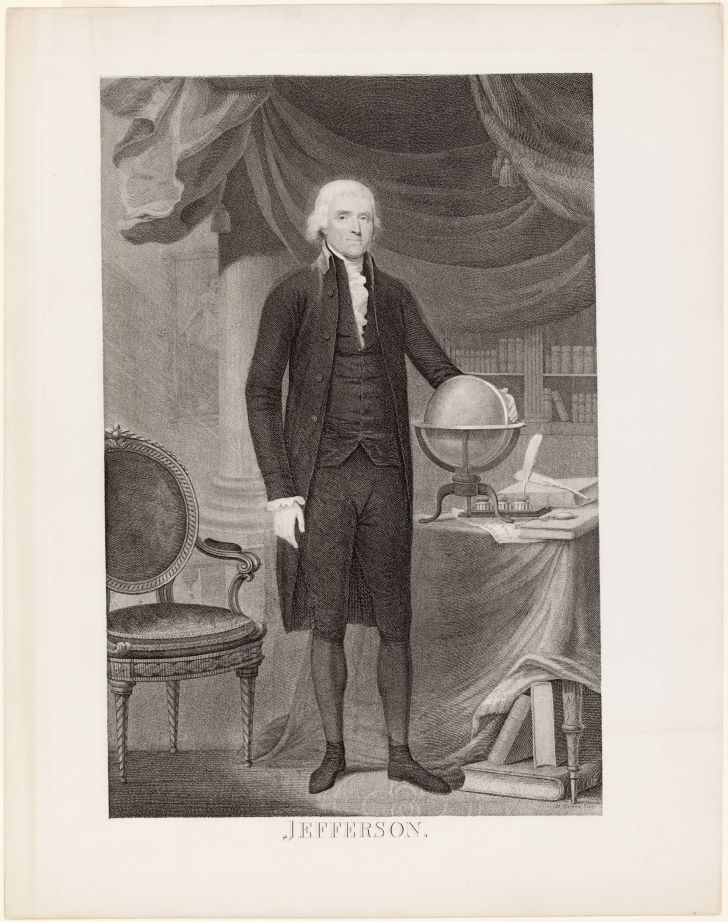
The "new historians" of race and slavery call into question the foundational significance of the principles articulated in the Declaration of Independence. They render a totalizing judgment on the American founding, discounting patriots' exalted aspirations and discovering their original, unarticulated intentions in the cruel consequences of their deeds. Breaking from Britain did not advance the cause of freedom and liberty. To the contrary, these critics assert, independence enabled enslavers to strengthen the institution of slavery and expand its domain, so making a mockery of the promises Thomas Jefferson and his fellow authors made to a "candid world" in their Declaration.
In the last few days of his life, Jefferson famously proclaimed that American independence was "the signal of arousing men to burst the chains under which monkish ignorance and superstition had persuaded them to bind themselves, and to assume the blessings and security of self-government" (Jefferson to Roger C. Weightman, June 24, 1826, in Peterson, 1984, 1517). Disenchanted critics turn Jefferson on his head. The new nation that the Continental Congress declared into existence in 1776 reinforced a pre-existing racial hierarchy, tightening the chains of an archaic and despotic-and peculiarly American-institution. The Revolution did not initiate a "new order for the ages" or a "new birth of freedom"; there is no progressive "arc" or idealized endpoint to the American story.
Hans Eicholz's analysis of Jefferson's thinking over the course of the Revolutionary crisis is a thoughtful and persuasive rejoinder to the new historians. Given their "highly structured and holistic conceptions of context," these writers banish contingency and collapse chronology, leaving no meaningful space for individual agency and discounting the very possibility of change over time. Because we already know everything that really matters, there is no good reason to waste our time seeking to reconstruct the past on its own terms or to plumb the obscure, never fully retrievable meanings, motives, or lived experiences of particular individuals or groups. They invert novelist L.P. Hartley's famous formulation, their "past is not "a foreign country." It is, instead, the all-too-familiar terrain of our own polarized moment (Hartley, 2002, 17).
By situating Jefferson's Declaration in a sequence of key texts, including his Summary View of the Rights of British America (1774) and Notes on Virginia (1781-1785), Eicholz restores our historical perspective, illuminating the rapidly changing and unpredictable succession of contexts that characterized a revolutionary age. The collapse of British rule authorized conflicting visions of the future, set into high relief by the violence and anarchic disorder of a protracted state of war. Whatever revolutionaries originally intended, the new nation's independence depended on popular political and military mobilization on an unprecedented, massive scale. Jefferson's career as Revolutionary statesman and wordsmith reflected the conceptual-and contextual-confusion of this highly contingent moment.
The "self-evident" principles he inscribed in the Declaration were shaped by its intended audiences in a feedback loop that obscured authorial originality. Jefferson did not aim "at originality of principle or sentiment," he told a late life correspondent, for "there was but one opinion on this side of the water" (Jefferson to Henry Lee, May 8, 1825, in Peterson, 1984, 1501). Of course, the civil war-in-progress belied Jefferson's premise. There was no single, monolithic "American mind" to express before Americans were forced to make the fateful choice for independence, an outcome that very few, if any patriots originally intended-and many still resisted. Jefferson invoked the "harmonizing sentiments of the day" as the source of the Declaration's authority, as if an American "public" already existed and were all of one mind. But "harmonizing" was a transitive verb, a protracted process of persuading and sometimes forcefully coercing more or less reluctant subjects of King George III to pledge allegiance to themselves as citizens of their new republics.
The claim to nationhood was aspirational, appealing beyond Britain to a "candid world" by invoking the law of nations and seeking recognition as an independent nation from "the powers of the earth." Reciprocal recognition among the new states was also critical to creating a "more perfect union" by appealing to the "higher reason" and shared interests of diverse "publics" across the continent. The need to forge alliances at home and abroad simultaneously fostered more universal, inclusive appeals-"rights-talk" in an exalted key-and down-to-earth negotiations and compromises to secure more immediate, material, and sometimes sordid interests-with "rights-talk" focusing on property claims of all sorts, including the ownership of enslaved people.
These are the multiple and proliferating contexts within which Jefferson thought and wrote about race and slavery. Without stipulating a multiplicity of "Jeffersons"-making him nothing more than the creature of these contexts-I would suggest that his acute sensitivity and responsiveness to his audiences shaped his evolving positions. Wise in their hindsight, contemporary critics read Jefferson's indictment of George III's failure to support provincial efforts to regulate the slave trade in his original draft of the Declaration as a laughably transparent exercise in blame-shifting, with white slaveowners imaginatively identifying with the Blacks they enslaved as fellow victims of his "cruel war against human nature itself, violating its most sacred rights of life and liberty in the persons of a distant people who never offended him." The problem with this controversial passage was one of timing, or what we might describe as contextual confusion.
Jefferson' complaint echoed the outdated logic of the imperial crisis, when George III supposedly still held "the balance of a great, if a well poised empire" and could render equal justice to all of his subjects throughout the empire-even including, at the very furthest stretch of the slaveholder's enlightened imagination, his own slaves. But the empire was beyond saving in the summer of 1776, and it was no longer possible to suggest-in an embarrassingly counter-suggestive rhetorical flourish-that justice could be done to the innocent victims of an unjust institution. With British liberators fomenting servile insurrections-"paying off former crimes against the LIBERTIES of one people, with crimes which he urged them to commit against the LIVES of another"-reluctant Revolutionaries could only appeal to self-preservation, the first law of nature, and mobilize against an enslaved people's bid for freedom and independence. The conflation of contexts thus made the Declaration fundamentally incoherent. The universal, natural rights principles in its opening paragraphs enabled revolutionaries to promote patriotic mobilization and gain international recognition, but they also could justify counter-revolutionary mobilization of the enslaved. With that threat in mind, Congress's call to arms served as a declaration of war against the enslaved and of its determination to uphold the institution of slavery (Onuf, 2000; Parkinson, 2016).
Slavery came to the fore during the imperial crisis as one among many issues, but by no means the most prominent or contentious one. Had successful negotiations resolved controversies over taxation, representation, commercial regulation, and the distribution of authority in the empire, the institution of slavery would have emerged unscathed, if not strengthened. Jefferson's complaints about George III's failures to cooperate with colonial efforts to regulate the slave trade reflected his own genuine, if very limited antislavery sentiments, but primarily served to underscore a broader, continental argument for provincial rights. Patriots aspired to vindicate their rights and liberties as overseas Britons within the empire and under what they understood (or imagined) to be the imperial constitution (Greene, 2011). In that context, any grievance against any encroachment on provincial rights-and particularly threats to the law-making authority of colonial assemblies-added fuel to patriot fires. But as patriots reluctantly and belatedly recognized that no such constitution existed, resistance gave way to revolution and slavery became a different and much more compelling problem for post-imperial Americans. There could be no continental union-the great desideratum of American politics-without effective constitutional guarantees of property rights in enslaved people (Van Cleve, 2010).
The Declaration might be a model for national liberation and republican self-government that other peoples could follow, but its immediate purpose in post-imperial America, Jefferson explained, was to serve as "the fundamental act of union of these States" (Minutes of the Board of Visitors, University of Virginia, March 4, 1825, in Peterson, 1984, 479). That meant, as Jefferson had written in Notes on Virginia, perpetuating slavery until a better, more enlightened day dawned and masters agreed freely (as republican principles required) to emancipate the captive nation and "declare them a free and independant people" in a country of their own (Query XIV, Notes on Virginia, in Peterson, 1984, 264).
When Jefferson first engaged with the problem in the provincial and imperial context, he could contemplate less drastic, more moderate, incremental, and ameliorative policies that might eventually lead to the institution's demise. But where the Crown had once provided for the collective security and prosperity of its distant provinces, independent Americans now had to defend their own rights and interests-against foreign and domestic enemies, and even against the federal government itself. Jefferson hoped and prayed that Virginians and Americans would eventually, at some distant day, free themselves from the incubus of slavery. In the meantime, he came to terms with the existential threat an enslaved or captive nation posed to American independence in the post-imperial geopolitical context of chronic warfare. In these dire circumstances, Revolutionaries could not assume the moral high ground, for in the race war Jefferson anticipated, "the Almighty has no attribute which can take side with us in such a context." The very idea of "revolution" itself took on a new valence when he contemplated "a revolution in the wheel of fortune" that might reverse the racial order in Virginia and throughout plantation America, leaving Black over White (Query XVIII, Notes on Virginia, in Peterson, 1984, 289). Who could foresee the future in a radically insecure and unpredictable world at war?
Jefferson's solution to the problem of slavery that confronted the new nation can only seem cruelly and pathetically inadequate to us now. Emancipation and expatriation (or colonization) reinforced an insidious link between race and nationhood and blocked the way forward toward fulfilling the promise of equal rights and inclusive citizenship. But, by his own lights, Jefferson kept the faith, sustaining a commitment to antislavery-and therefore to the natural rights principles of the Declaration-even as he aided and abetted a hardening regime of racial hierarchy and the westward expansion of America's peculiar institution.
Principles are inextricably bound up with the contexts within which they were originally articulated and the interests they were meant to serve. Jefferson became conscious of the problem of slavery as an enlightened subject of George III in provincial Virginia. Swept up in a continental campaign to vindicate provincial claims to British rights and liberties within the empire, he began to think of slavery as an imperial problem requiring empire-wide solutions. But the failure of provincial patriots to vindicate their conception of the imperial constitution and the onset of war changed everything, including Jefferson's understanding of the existential threat slavery and the enslaved posed to the security and independence of Virginia and the other new American republics. Even as that threat grew, the need to preserve, much less perfect, a tenuous union of states-all implicated, some (like Jefferson's Virginia) deeply invested in and dependent on slavery-severely limited the capacity and will of the post-imperial federal regime to take effective steps toward eradicating the institution.
Perhaps if the American provinces had remained in the empire, having successfully negotiated constitutional guarantees of their rights and liberties, slavery could have set on a gradual and peaceful course toward its ultimate extinction. That counterfactual narrative seems highly unlikely. On the other hand, it does seem clear that the collapse of the empire created conditions-a context-optimally conducive to perpetuating and expanding the institution in the post-imperial United States, notwithstanding the commitment to universal, natural rights principles that animated so many patriots.
Yet it is also true that those principles have been and will be abstracted from the compromising contexts of American nation-making and inspire campaigns for emancipation and equal rights in America and around the world (Spahn, forthcoming). And if such campaigns do not reveal the progressive arc of our history-or of History generally-they do constitute a hopeful tradition to contemplate and cultivate, even in these disenchanted times.
References
Greene, Jack P., The Constitutional Origins of the American Revolution (New York: Cambridge University Press, 2011).
Hartley, L. P., The Go-Between (1953; New York: New York Review Press, 2002).
Robert G. Parkinson, The Common Cause: Creating Race and Nation in the American Revolution (Chapel Hill: University of North Carolina Press, for the Omohundro Institute, 2016)
Onuf, Peter, Jefferson's Empire: The Language of American Nationhood (Charlottesville: University of Virginia Press, 2000)
Peterson, Merrill D. Peterson, Thomas Jefferson Writings (New York: Library of America, 1984)
Spahn, Hannah, Ambidextrous Philosophy: The Jeffersonian Enlightenment in the African American Tradition (Charlottesville: University of Virginia Press, forthcoming).
Van Cleve, George William, A Slaveholders' Union: Slavery, Politics, and the Constitution in the Early American Republic (Chicago: University of Chicago Press, 2010).
Susan Love Brown
Response · Jul 08, 2021 · Own page
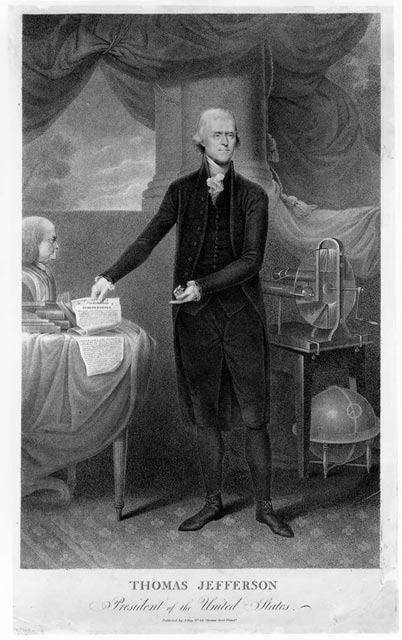
The shift in attitudes in the 21st century toward Thomas Jefferson and other founding fathers reflects the rise in consciousness of what has for so long been repressed in American conversations: race and racism. While historians have evaluated Thomas Jefferson on his contributions to freedom and individual rights and acknowledged his participation in slavery, they have rarely been straightforward about the depth and influence of his racial views. Furthermore, historians have seldom acknowledged the role that these views have played in the creation of systemic racialism that is at once invisible, differential, and often denied. To understand the impact of Jefferson on both the legacy of individual liberty and racial distress, we must examine the ways in which these opposites materialized in American culture.
In his support of the Enlightenment principles of individual rights, free trade, and democracy, Jefferson believed that the success and perpetuation of a free society depended on the regard for these principles by the people. He doubted that this could ever be the case for the people of France or Spain. But Jefferson believed that the American people had absorbed these principles in their struggle and forging of their society. Having fought a revolution and presided over the formation of a democratic republic, Jefferson seemed always plagued by the possibility of the union dissolving. Indeed, this became one of his excuses for not eliminating slavery immediately, for entertaining the colonization of free blacks, and for failing to recognize St. Domingue (Haiti) as an independent nation. Thus, Jefferson's concern for the nation's survival supplemented his skepticism about the compatibility of blacks and whites as social equals.
But if historians attempt to judge or even to interpret the legacy of Thomas Jefferson, they must first address the problem of race, which has been excluded from most discussions of Jefferson and his legacy. Race is gotten at indirectly through discussions of slavery or of Notes on the State of Virginia. But in looking through the indexes of many books about Jefferson, the terms "race," "racism," "racial," or "racial discrimination" are not even indexed. The absence of race as a primary category attests to the fact that outside of the discussion of slavery, the concept of race or racism (or any of its other derivative terms) does not enter into interpretations of Jefferson.
As Annette Gordon-Reed has stated (2021:63-67), leaving race out of American history (which also entails leaving black people out of the history) has been a major factor impeding our understanding of the effects of race on the country itself. Historians need to examine the way that slavery and race were intertwined and how race became a major feature of American culture.
2. Culture and Consequence: Slavery, Race, and Mythology
The first African in the Americas came with Christopher Columbus and other European explorers. "Juan las Canarias was a black sailor who served on Columbus' flagship, the Santa Maria, during the first transatlantic voyage in 1492" (Deagan & MacMahon 1995:9). The initial slaves were introduced by the Spanish. However, eventually the English adopted chattel slavery in their American colonies as well. One of those colonies was Virginia.
"By the end of the seventeenth century the outcome of quite considered decisions taken by eminent planters in the southern mainland and the English Caribbean was not simply slaveholding societies but slave societies. What differentiated them from the slaveholding colonies of New England and the Middle Atlantic was the extent to which an ideology of racial difference was fast becoming deeply entrenched. Racial slavery had become central and, from the elite perspective, an indispensable institution. By 1700 there was no longer any uncertainty, let alone any serious misgivings, about the status of Africans anywhere in English America" (B. Wood 1998:8).
Into this environment, Thomas Jefferson was born in 1743 to an elite Virginia family whose predecessors had immigrated from southern regions of England and were what Fischer called "distressed cavaliers" (1989). Indeed, Beran tells us: "We shall not get far in understanding Jefferson and other high Virginians of his day if we do not grasp that they aimed always to be cavaliers..." (2003:38). The planter class of the Virginia tidewater was patriarchal, family-oriented, and agrarian at its base and dedicated to the institution of slavery, justified by the Athenian model of democracy and slavery (Fischer 1989: 207-418).
After being schooled in French, Greek, and Latin by tutors, Jefferson attended the College of William and Mary where he encountered the ideas of the Scottish Enlightenment through William Small. At the same time, his presence in Williamsburg, then the capital of Virginia, meant he also became acquainted with Virginia's political elite and studied law for five years with George Whyte. His incessant studies of British history and debates with other intellectuals prepared him to write A Summary View of the Rights of British America in 1774 (Eicholz 2001: 31-36).
Jefferson's political participation, first in the affairs of Virginia and later as a member of the Continental Congress led him to his future legacy as a revolutionary and founding father of a new nation. His major contribution was as a member of the committee of five charged with composing The Declaration of Independence, which Jefferson drafted, albeit with changes by others, and which was finally adopted on July 4, 1776, the beginning of a revolution that changed the world by bringing the idea of individual rights and democracy into being. This founding moment would become the origin story of the United States of America.
But in contradiction to the values put forth in the Declaration, the plantation owners of the southern slave societies created false myths about Africans designed to rationalize and justify the institution of slavery itself and, in doing so, cemented the association of these myths with blacks. In her book, Race in North America (1999), Smedley traces the development of this mythology or worldview into a belief system about race and blackness that would be internalized deeply in the South and spread across the United States, becoming a fundamental part of American culture.
"Jefferson's life exemplifies the agonizing ambiguities and contradictory impulses that came to warp American thought. Indeed, he was central to the formulation and dissemination of American attitudes about race...Specifically, he was instrumental in casting the whole question of racial inferiority into the arms of science. But Jefferson represented a great deal more than that. He articulated better than almost anyone else the concepts of human rights, individual liberty, and justice - an enlightened ideology diametrically opposed to the growing ideology of race. As a slave owner, he vividly reflected and internalized these opposing forces" (Smedley 1999:189).
3. Confronting the Problem of Race in the 21st Century
The lingering problem of race in the United States has managed to stay beneath the surface of history, even among historians of slavery, although scientific theories about race were clearly present in the 18th, 19th, and 20th centuries. Even though genetics has shown that race has no basis in biology, Americans still cling to racial identities as if they did. Books, such as Ivan Hannaford's Race: The History of an Idea in the West (1996), represented a rising interest in race that has continued into the 21st century. That books by Kendi (2016) and Stovall (2021) should call out Thomas Jefferson for his complicity in the racism that has been pervasive but effectively kept under wraps can be considered the contextualizing of this problem of race.
The principles of individual rights - unalienable rights - on which the United States of America was ultimately founded are contrary to the slavery that existed even as they were being declared. It is unfortunate that new ideas often enter an existing society imperfectly and take time to become fully integrated into its operation. The fact that the men who proposed to design a country based on these principles were only able to apply them in a limited fashion at first, is not a testament that these ideas were somehow aligned with a slavery. It would be presentistic to expect that a society in conflict with the natives whose land it usurped, with each other over differing religious practices, and with the general subordination of others by class, gender, and color - a society floundering under the strictures of a monarch foreign to its shores - would suddenly change its most fundamental understandings overnight and apply these new ideals holistically. That they were encouraged by a specific group of men incensed at the limitations on their own freedom should not surprise or scandalize us. Personal interests generally motivate human beings, sometimes for the better. That Thomas Jefferson was able to find a way to live with these contradictions should also not surprise us. We can be grateful for the beginnings of individual liberty and pissed off that those same men did not abolish the institution that most contradicted it. Nevertheless, attention needs to be called to all of the elements of our national story.
Ironically, as I completed this response, a survey of historians conducted by C-Span concerning the best presidents was released. Thomas Jefferson ranked 7th in esteem, a status unchanged from several previous years. It will be interesting to see whether Jefferson's ranking is sustained as more and more historians begin to deal with the issue of race and his views about it.
References
Beran, Michael Knox. Jefferson's Demons: Portrait of a Restless Mind. New York: Free Press, 2003.
Deagan, Kathleen and Darcie MacMahon. Fort Mose: Colonial America's Black Fortress of Freedom. Gainesville, FL: University Press of Florida/Florida Museum of Natural History, 1995.
Eicholz, Hans L. Harmonizing Sentiments: The Declaration of Independence and the Jeffersonian Idea of Self-Government. New York: Peter Lang, 2001.
Fischer, David Hackett. Albion's Seed: Four British Folkways in America. New York: Oxford University Press, 1989.
Gordon-Reed, Annette. On Juneteenth. New York: Liveright/W. W. Norton, 2021.
Jefferson, Thomas. A Summary View of the Rights of British America, 1774. Library of Congress. Accessed June 30, 2021. https://dl.wdl.org/117/service/117.pdf
Jefferson, Thomas. The Declaration of Independence, 1776.
Jefferson, Thomas. Notes on the State of Virginia. Edited by Frank Shuffelton. New York: Penguin Books, [1785] 1996.
Kendi, Ibram X. Stamped From the Beginning: The Definitive History of Racist Ideas in America. New York: Bold Type Books, 2016.
Smedley, Audrey. Race in North America: Origin and Evolution of a Worldview. Boulder, CO: Westview Press, 1999.
Stovall, Tyler. White Freedom: The Racial History of an Idea. Princeton, NJ: Princeton University Press, 2021.
Wood, Betty. The Origins of American Slavery: Freedom and Bondage in the English Colonies. New York: Hill and Wang/Farrar, Straus and Giroux, 1998.
Lucas E. Morel
Response · Jul 13, 2021 · Own page
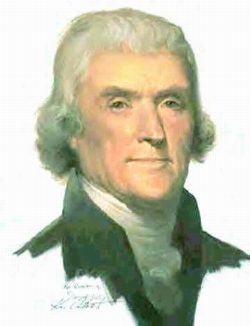
"Whereas Almighty God hath created the mind free . . ."
Thomas Jefferson, Virginia Statute for Religious Freedom, 1786
Eicholz titles his essay, "Understanding Jefferson: Slavery, Race, and the Declaration of Independence." Understanding Jefferson, the chief draftsman of the Declaration, should help us understand the meaning of the text that best encapsulates the American political way of life. Moreover, it should also help us make sense of how race and slavery shaped the birth of the new American nation. Disputing historians today who seek to "judge," i.e., condemn, rather than "understand," i.e., makes sense of, the past, Eicholz argues that by examining the Declaration in light of two others penned by Jefferson (before and after), historians would have a better grasp of the meaning of the Declaration and perhaps a greater appreciation for Jefferson's achievement in articulating why American colonists decided to separate from Great Britain and become their own nation.
Specifically, Eicholz seeks to do this by highlighting the "inconsistencies," "contradictions," "tensions," and "aporias" in the thought of Jefferson. This is quite different from the almost universal approach to understanding Jefferson, and the slaveholding founders generally, which focuses on the inconsistencies of thought and practice. As Samuel Johnson's quipped, "How is it that we hear the loudest yelps for liberty among the drivers of negroes?" Eicholz argues that what has undermined current attempts to interpret the past is the increasing seduction of academic minds-especially the "New Historians"-by a view of history as the product of structural rather than individual causes, the "strong systemic operation of social forces" that obviate any need to consider the reasons any great figure of history (like Jefferson) offered to justify a particular course of action. Given that the most famous and authoritative justification for American action was the Declaration of Independence, Eicholz thinks that situating Jefferson's drafting of the Declaration within the context of two other documents he wrote provides a more reliable interpretation of the Declaration.
Jefferson's other two documents, "A Summary View of the Rights of British America" (1774) and Notes on the State of Virginia (1785), bear close readings in their own right, but Eicholz's main purpose is to show that the Declaration, and therefore Jefferson, survive the current scrutiny of those who portray the document and especially the man as unworthy of respect in our wizened times. By considering the three documents in chronological order, Eicholz seeks to show how the specific historical context of each document's production helps shed light on their respective meanings. In particular, he argues that in approaching them this way, the Declaration still stands as a presentation of timeless truths that ought to guide later generations of Americans (not to mention other nations) as they pursue the protection of their rights within a constitutional system of self-government.
Eicholz quotes Joyce Appleby to good effect: "Jefferson also made the expansion of human liberty a realistic national goal." First, Jefferson was responsible for articulating American liberty in a way that the citizens of the diverse American colonies could unite philosophically. When the Declaration of Independence states that it is "one people" who are establishing their political independence, that oneness represents a common or "national" understanding of the grounds for their independence, which is another way of saying a common understanding of justice. Given that the slavery controversy would eventually drive an ostensibly United States of America to civil war, antebellum history confirmed Aristotle's observation that opposing definitions of justice produced factions and eventually revolutions or civil wars.[1]
Second, for the goal of liberty and independence to be a "realistic" one on American soil, the War for Independence had to be prosecuted in a manner that accommodated the specific circumstances of each American colony. The most challenging situation was the antecedent existence of slavery. Put simply, American freedom required independence; American independence required union; and American union required compromise, especially over slavery. Understanding the American founding in this way, Eicholz argues that the concessions made to slavery can be understood as compromises with an institution that contradicted the professed grounds of American independence, and not affirmations of the peculiar institution. Responding to the British resistance against American independence required, as the Declaration argued, prudence. This meant in their attempt to free themselves of British tyranny, Americans did not believe they could also free their slaves at the same time. This would make an already audacious enterprise even more difficult to succeed. While some enslaved black Americans did achieve their freedom by virtue of fighting on behalf of American independence, manumission of American slaves by colonial legislative authority never became a general policy during the Revolutionary War.[2] The federal nature of the American union complicated the effort to make freedom a universal, practical reality during both the war and the constitution-making of the states and federal union of the early American republic.
However, for historians who take a "critical" turn in their analysis of the past, historical context becomes simply "composed of deeply structured relationships of thought to power." Here the mind is not truly free to evaluate ideas or arguments for their truth or falsity but simply expresses where a person sits in the existing hierarchy of society. Eicholz identifies the "Marxist varieties" of this interpretation of history-to wit, one is either a member of the bourgeoisie or proletariat, either oppressor or oppressed. Where Eicholz thinks context includes a consideration of the intentions of a political actor as he writes for specific audiences, and sometimes multiple audiences simultaneously, the New Historians go big and make context the sum and substance of the dominant mindset of a particular age or era. As the Communist Manifesto asserts, "The ruling ideas of each age have ever been the ideas of its ruling class."
Ibram Kendi has popularized this under the rubric of race. As quoted by Eicholz, Kendi argues that both American revolutionary overtures to British tyranny and reticence to emancipate their own slaves "were in their political and economic self-interest." However, Kendi cannot explain how emancipation occurred in any of the American colonies-turned-states. If Eicholz is correct that Americans in the 1770s and '80s "felt the accusation of hypocrisy poignantly," then the charge of systemic injustice or racism becomes complicated by the fact that many white Americans saw the gap between their profession and practice and tried to align their practices more consistently with their noblest professions.
For example, enslaved blacks sued for their freedom by appealing to the Massachusetts Constitution-in particular, its declaration of rights, which states, "All men are born free and equal, and have certain natural, essential, and unalienable rights." A white judge interpreted a constitution written by white men as abolishing slavery and therefore ruled in favor of the black plaintiffs. Chief Justice Gray of the Massachusetts Supreme Judicial Court argued as follows:
[A] different idea has taken place with the people of America, more favorable to the natural rights of mankind . . . And upon this ground our Constitution of Government . . . sets out with declaring that all men are born free and equal-and that every subject is entitled to liberty, and to have it guarded by the laws, as well as life and property-and in short is totally repugnant to the idea of being born slaves.[3]
Gray concluded that "the idea of slavery is inconsistent with our own conduct and Constitution; and there can be no such thing as perpetual slavery of a rational creature." That ruling in 1783 not only freed Quack Walker, and Mum Bett in a parallel case, but also effectively abolished slavery as an institution in the Commonwealth of Massachusetts.[4]
Bringing Ben Franklin into the discussion highlights the extent to which Americans, even those of the ostensibly oppressive class, apparently were free to question the status quo and express that questioning as a reflection of their "troubled conscience" and not seek their liberty and independence as a mere desire to secure their white privilege as Kendi, Robin DiAngelo, Nikole Hannah-Jones et al now claim. In fact, the widespread condemnation of slavery despite only sporadic manumission of slaves was generally attributed to a fear of retribution by the justly aggrieved former slaves. Jefferson made this explicit in an 1820 letter to John Holmes, where he pictured the predicament of white enslavement of black people as a case of holding a "wolf by the ears, and we can neither hold him, nor safely let him go."[5] He went on to explain that emancipation for the enslaved had been trumped by the concern of white masters for their self-preservation: "Justice is in one scale, and self-preservation in the other." During the Missouri crisis, Jefferson put the question frankly to John Adams: "Are our slaves to be presented with freedom and a dagger?"[6] Today's abolitionists simply cannot fathom how a slaveowner could believe that slavery is wrong and yet not immediately free his slaves. They perceive no personal, social, economic, or political obstacles to doing the right thing.
Eicholz argues that inconsistencies in the thought of a historical figure, like Jefferson, indicate greater freedom of thought and reason than those who see only domineering economic or "ideational and cultural" systems that leave little room for "tensions" within a person's thoughts. He asks, "How do individuals ever stand outside a system into which they are born?" This echoes Leo Strauss's observation that "the mere fact that we can raise the question of the worth of the ideals of our society show that there is something in man that is not altogether enslaved to his society."[7] Rejecting the reductionist view of historical development, Eicholz believes that a closer examination of apparent inconsistencies in the reasoning of public figures like Jefferson reflect different intentions and audiences at different times in history, and can provide a more accurate account, in Jefferson's case, of the role that race and slavery played at the founding of the American constitutional republic.
I would like to have seen clearer examples of Jefferson's inconsistencies as a thinker, especially regarding slavery. On my reading, not only the three texts written by Jefferson that Eicholz cites but many others display a remarkable consistency regarding Jefferson's affirmation of the injustice of slavery. Even in the Notes on the State of Virginia, where Jefferson suggests that blacks might be "inferior in the faculties of reason and imagination," he adds that his tentative conclusion "must be hazarded with great diffidence."[8] Moreover, on the fundamental question of the natural right of every person to be ruled only by his consent, Jefferson never equivocated. Reflecting on the "doubts he expressed on the grade of understanding allotted to . . . [black people] by nature," he confessed his observations were parochial to slaveholding Virginia, "where the opportunities for the development of their genius were not favorable, and those of exercising it still less so."[9] More importantly, he hastened to add that "whatever be their degree of talent it is no measure of their rights. Because Sir Isaac Newton was superior to others in understanding, he was not therefore lord of the person or property of others." Although he freed very few of the enslaved at Monticello, on the central claim by the Declaration, "that all men are created equal" in their rights to "life, liberty, and the pursuit of happiness," Jefferson never wavered in principle.[10]
Endnotes
[1] See Aristotle, Politics, Book 5, Sec. 1305a.
[2] See for example Douglas R. Egerton, Death or Liberty: African Americans and Revolutionary America (New York, NY: Oxford University Press, 2009) and John U. Rees, 'They Were Good Soldiers': African-Americans Serving in the Continental Army, 1775-1783 (From Reason to Revolution) (Warwick, UK: Helion and Company, 2019).
[3] See "The Commonwealth v. Nathaniel Jennison: Note by Chief Justice Gray," Proceedings of the Massachusetts Historical Society (April 1874), 294; https://www.jstor.org/stable/25079475?refreqid=excelsior%3A7b9980fb60084a4c831278987164866a&seq=13#metadata_info_tab_contents (accessed July 2, 2021).
[4] See Arthur Zilversmit, "Quok Walker, Mumbet, and the Abolition of Slavery in Massachusetts," The William and Mary Quarterly Vol. 25, No. 4 (Oct. 1968), 614-24.
[5] Thomas Jefferson to John Holmes (April 22, 1820), in The Works of Thomas Jefferson, ed.
Paul Leicester Ford, 12 vols. (New York and London: G.P. Putnam's Sons, 1904-5), 12:159, https://oll.libertyfund.org/title/ford-the-works-vol-12-correspondence-and-papers-1816-1826#lf0054-12_head_064 (accessed July 2, 2021).
[6] "From Thomas Jefferson to John Adams, 22 January 1821," Founders Online, National Archives, https://founders.archives.gov/documents/Jefferson/98-01-02-1789 (accessed July 2, 2021). Cf. Thomas Merrill, "The Later Jefferson and the Problem of Natural Rights" in The Political Thought of the Civil War, ed. Alan Levine, Thomas W. Merrill, and James R. Stoner, Jr. (Lawrence, KS: University Press of Kansas, 2018), 27-47.
[7] Leo Strauss, Natural Right and History (Chicago, IL: University of Chicago Press, 1953).
[8] Thomas Jefferson, Notes on the State of Virginia, "Queries 14 and 18," in The Founders' Constitution, ed. Philip B. Kurland and Ralph Lerner, 5 vols. (Indianapolis, IN: Liberty Fund, Inc., 2001), 1:536.
[9] Thomas Jefferson to Henri Gregoire (February 25, 1809), https://www.loc.gov/resource/mtj1.043_0836_0836/?st=text (accessed July 2, 2021).
[10] "Slaves Who Gained Freedom," Thomas Jefferson Encyclopedia, https://www.monticello.org/site/research-and-collections/slaves-who-gained-freedom (accessed July 2, 2021).
Hannah Spahn
Response · Jul 15, 2021 · Own page
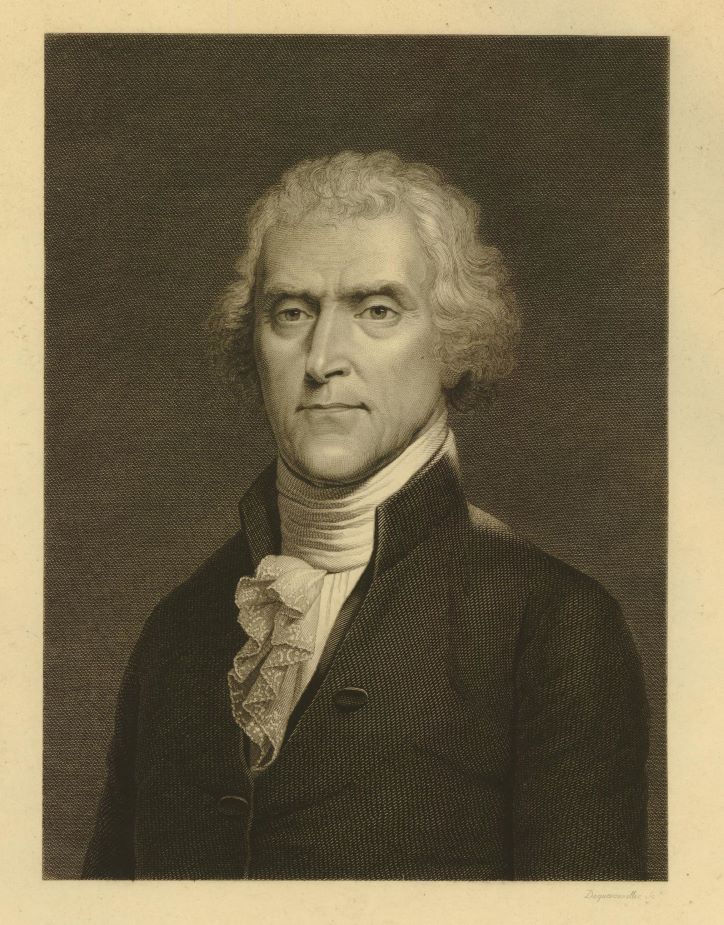
Thomas Jefferson belongs to a small group of philosophers, including René Descartes, Isaac Newton, and Karl Marx, whose names have posthumously been turned into "isms" intended to describe worldviews that included, but also went beyond, their own ideas. Jeffersonianism is the dialectical result of what he himself did and wrote, and what has been made of his life and writings by many other thinkers. Among these, eighteenth- and nineteenth-century Black intellectuals were often the first to express now-familiar assumptions about Jefferson. For instance, a long tradition of writers including William Hamilton, David Walker, William Wells Brown, Frederick Douglass, and James McCune Smith were on the forefront of crafting today's view of Jefferson as the contradictory personification of both America's greatest sin and America's greatest promise. From early on, this tradition drew attention to Jefferson's interracial family with Sally Hemings. And beginning with Lemuel Haynes's Liberty Further Extended (1776), the tradition was influential in shaping what has come down to us as the Jeffersonian Enlightenment, offering what has today become the leading interpretation of the Declaration of Independence. By placing transformative rational constraints on Jefferson's laissez-faire empiricism, or so I argue in my new book, writers in this tradition decisively influenced the hermeneutics of what became known as the "principles" of the Declaration of Independence. Thus, when we interpret the universalism of Jefferson's Declaration of Independence today, we necessarily do so through the lens of a prominent tradition of Black writing - or to appropriate the title of Merrill D. Peterson's classic study The Jefferson Image in the American Mind (1960), what we see now was originally, to a significant extent, the Jefferson image in the early African American mind.
With this argument, as became much clearer to me when I read Hans Eicholz's illuminating essay, I am not following the influential scholarly trend that he identifies as the "new histories of slavery and race." Whereas I would see the history of the Enlightenment as a complex process of transformation and change, in which ideas have been continually appropriated and reappropriated in diverse and unpredictable directions, in the "new histories" it has become the default assumption that Enlightenment concepts such as universal reason, liberty, equality, natural rights, etc., primarily served one major purpose: to hide and "normalize" the oppressive particularities of a White identity, or of a transhistorical whiteness, behind the smokescreen of what looks like a universalist language.
This view of things is not altogether new. At bottom, it is a racialized update on the formula long familiar, for instance, from Michel Foucault's Discipline and Punish: The Birth of the Prison (1975), according to which we live in an impersonal but all-powerful system that seems intent on punishing less, but is, in truth, only intent on punishing better. In this sense, the "new histories of slavery and race" go back to a longstanding critique of the liberal Enlightenment, coming from both the radical left and radical right in early to mid-twentieth-century European philosophy. From these overlapping perspectives, the American Declaration of Independence has now come to be read as a prime example of a masked but all-pervasive White identity. And if Frederick Douglass was right in describing the Declaration's "saving principles" as the "ringbolt" of US history (Douglass 2016, 53), it may be worthwhile to inquire further into the thesis of the Declaration's hidden whiteness as a key to today's understanding of the American past.
Like any other historical approach, of course, the "new histories of slavery and race" include less, and more, sophisticated examples, and what Eicholz fittingly describes as the "masterful synthesis" achieved by Tyler Stovall's erudite White Freedom: The Racial History of an Idea (2021) is an obvious instance of the latter, intellectually inspiring class. Thus, Stovall's thesis that the modern coexistence of freedom and racism is not paradoxical, but forms a logically consistent whole if viewed through whiteness, shows itself open to the concession that, nevertheless, "the histories of both race and freedom are replete with paradoxes," not least concerning the perspectives of Black Patriots on the "paradox" of revolutionary liberty and slavery or concerning Jefferson's own insight into his contradictory position (Stovall 2021, 18, 116, 118, 132-133). However, it is important to point out with Eicholz that the discussion of the Declaration of Independence in terms of a transhistorical whiteness misses crucial aspects of both Jefferson's philosophy and the Declaration's history.
What Eicholz plausibly holds against the streamlining of the Declaration's language of liberty with an oppressive whiteness in the "new histories" is that this approach unduly freezes historical time and agency. On the premise of the supposedly clandestine maneuvers with which a collective White identity ceaselessly seeks to mask its true nature, the approach refuses to take seriously the limited perspectives, contingent motivations, and imagined futures of historical individuals. This programmatic neglect often leads to a radical flattening of source criticism. In the case of the long and complicated history of the Declaration of Independence, whose drafting process went through several stages, such simplifications have caused serious misunderstandings. "It is impossible to know for sure whether Jefferson meant to include his enslaved laborers (and women) in his "all Men." Was he merely emphasizing the equality of White Americans and the English?", insinuates Ibram Kendi in a book that serves as Eicholz's second example (Kendi, 104). Not only is it indeed possible to know for sure, but it has been known for a long time whom Jefferson meant to include. In the "original Rough draught" of the Declaration, preserved in his handwriting, one of the few capitalized words, including "UNITED STATES OF AMERICA," was "MEN" (source). In an oft-discussed passage that to Jefferson's chagrin was eventually removed by Congress, "MEN" referred to the men, women, and children who were the victims of the Atlantic slave trade. It is rare that a historical intention can be reconstructed with as much certainty as concerning this point in Jefferson's Declaration.
How "White," then, was Jefferson's Declaration of Independence? The answer should probably be: Not very. As a declaration of national independence from Britain, the document was obviously not concerned with the liberty and independence of all people (or peoples) of European descent that tend to be lumped together under the category of whiteness in today's "new histories." And while the Declaration's long second phrase beginning with "We hold these truths to be self-evident" remained epistemologically vague, it turned out to be precisely its flexible combination of subjective opinion and universal inclusiveness that could be transformed into the normative basis of a fundamental human equality, first and foremost, by the tradition of Black intellectuals to whom I alluded in the beginning.
As Eicholz reminds us in his analysis of Jefferson's changing priorities in the 1770s and 1780s, it is misleading to interpret the Declaration as if by 1776 he had already written his only book, Notes on the States of Virginia (1781-1785). Jefferson became more directly invested in what was evolving into a modern concept of race in the decade following the Declaration. In his efforts to design an American perspective on a world at war, he fatefully conjured into existence separate "white" and "black" nations (Onuf 2007, 205-237). At least two major aspects of Notes on Virginia are worth mentioning here that cannot be understood through the lens of the "new histories." Jefferson's experiential concept of whiteness emerged, not in a binary opposition to blackness, but in a triangular constellation: It was part of a war effort to distinguish a new national identity from groups he had by then come to regard as external (European) and internal (Black) enemies (Onuf 2000, 147-188, Taylor 2014). This specifically American (or even Virginian) whiteness did not hide itself behind a universalist screen but to the contrary emphasized the "odious peculiarities" of White Virginia slaveholders including their culturally ingrained racism, or in Jefferson's words, their "deep rooted prejudices," of which he chose to give a personal performance in the text (Jefferson 1982, 162-163, 138-143). Jefferson's subjectivist racism is not only disturbing today, but already alarmed several of his correspondents, including the astronomer Benjamin Banneker, as mentioned by Eicholz, or the historian David Ramsay. Unlike in the grand narrative told by the "new histories," however, Jefferson's racism could not be separated from his acute awareness of his own intellectual and moral limitations, or in other words, from his self-conscious failures to inhabit a position associated with universal reason. Moreover, unlike that of later thinkers, Jefferson's racism never functioned in his argument as an attempted justification of slavery, but "only" of what he hoped would be quasi-national separation or what he called "expatriation."
In North Carolina on the day following the elections on November 8, 1898, a text went on record that identified itself, in contradistinction to the original of 1776, as a "White Declaration of Independence." It was part of the horrific eruption of anti-Black mob violence that became known as the Wilmington Race Riot, fictionalized in Charles Chesnutt's magnum opus, The Marrow of Tradition (1901). Far from developing a universalist argument, the "White Declaration of Independence" consisted in a set of resolutions by white supremacists inside and outside the Democratic party, elaborating on the theme "that we will no longer be ruled, and will never again be ruled by men of African origin" (Chesnutt 2012, 276-278). The "White Declaration" actively sought to suppress Black voting and minimize Black employment. Moreover, it helped encourage the violent overthrow of the municipal Fusion government, in what Chesnutt described in the novel as a "coup d'état" (Chesnutt 2012, 146).
From today's perspective, it is of vital importance to come to terms with this history. At present, however, the "new histories of slavery and race" may not have the sufficient analytical tools for this project. Interpreting Jefferson's Declaration of Independence in 1776 as driven by the same whiteness that motivated the "White Declaration of Independence" in 1898 has a paradoxical effect: While this method of levelling historical differences has been unable to provide new critical insights into Jefferson's Declaration, it inadvertently tends to upgrade the intellectual prestige, and downplay the brutally aggressive character, of the "White Declaration," ultimately making it impossible to get a sense of the existential threat posed by such a statement. Although the stark simplifications made by the "new histories" may perhaps be seen as a laudable effort to finally get some order into the mess that is history, they risk eliminating the very stuff of which history is made especially if, in the final analysis, historical difference and complexity are themselves coming under suspicion of being on the wrong side of a given political divide. Historical approaches organized too tightly by timeless binaries may thus not be doing enough to strengthen our ability to learn from the complex legacies of the American past for what will hopefully become a better future.
References
Chesnutt, Charles W., The Marrow of Tradition. A Norton Critical Edition, ed. Werner Sollors (New York: Norton, 2012).
Douglass, Frederick, "What to the Slave is the Fourth of July?" a speech delivered in Rochester, New York on July 5, 1852 and published as a pamphlet (Rochester, 1852), The Essential Douglass: Selected Writings & Speeches, ed. with introd. Nicholas Buccola (Indianapolis: Hackett Publishing, 2016), 50-71.
Foucault, Michel, Discipline and Punish: The Birth of the Prison, trans. Alan Sheridan (New York: Vintage, 1979).
Kendi, Ibram X., Stamped From the Beginning: The Definitive History of Racist Ideas in America (New York: Nation Books, 2016).
Onuf, Peter S., Jefferson's Empire: The Language of American Nationhood (Charlottesville: University of Virginia Press, 2000).
---, The Mind of Thomas Jefferson (Charlottesville: University of Virginia Press, 2007).
Jefferson, Thomas, Notes on the State of Virginia, ed. William Peden (Chapel Hill: University of North Carolina Press, 1982).
Peterson, Merrill D., The Jefferson Image in the American Mind (New York: Oxford University Press, 1960).
Stovall, Tyler, White Freedom: The Racial History of an Idea (Princeton: Princeton University Press, 2021).
Taylor, Alan, The Internal Enemy: Slavery and War in Virginia, 1772-1832 (New York: Norton, 2014).
Hans Eicholz
My Response to the Responses · Jul 20, 2021
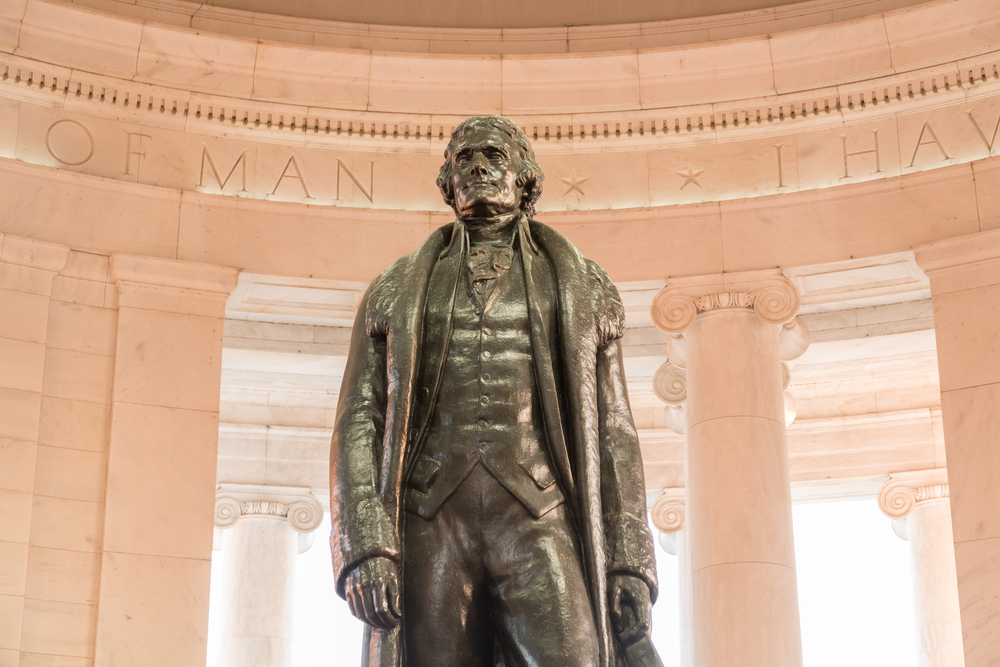
Let me begin by thanking my respondents for their thoughtful comments, and address each in turn.The key passages in Onuf's treatment, to my mind, are those that stress the question of tension and conflict in the ideas and experiences of contemporaries at the time of the Declaration. As I tried to indicate in the lead essay, there are logical reasons why historians should be attentive to these points to gain a proper sense of context.As Onuf notes, "There was no monolithic 'American Mind' to express before Americans were forced to make the fateful choice for independence, an outcome that very few, if any patriots originally intended-and many still resisted." This point I heartily agree with, and it prompted me to think again about the reasons I originally undertook writing Harmonizing Sentiments in the late 90s.Not long after the paradigmatic model of culture had passed from the scene, a model of social thought that had undergird much of the old Classical Republican Synthesis of the Revolution and Founding, it was replaced by efforts that to my mind went too far in the other direction to the almost exclusive embrace of aporias, conflicts, tensions and contradictions. Here I think most especially of works by such scholars like Drew McCoy and Isaac Kramnick.My concern back then was that this approach left the picture of the Revolution so fractured as to make understanding of that event altogether too obscure, problematic, even mysterious to modern readers. There is to my way of thinking always sufficient coordination of thoughts and actions on which to base some degree of meaningful interpretation. I fully concur with Onuf's observation that "The need to forge alliances at home and abroad simultaneously fostered more universal, inclusive appeals."But what reminds me of the earlier historiography is the sentence two paragraphs on: "The conflation of contexts thus made the Declaration fundamentally incoherent. The universal, natural rights principles in its opening paragraphs enabled the revolutionaries to promote patriotic mobilization and gain international recognition, but they also could justify counter-revolutionary mobilization of the enslaved" (Emphasis added). My question is simply, where does the incoherence arise?The notion of slavery as a positive moral good was not the majority opinion, which is why calling attention to the incoherence of slave owning in the Declaration was an embarrassment not easily born even by those most dependent on the institution. This is not to say that individuals cannot hold contradictory opinions, but contradictions do not sit comfortably in the mind, once stated and brought to awareness. They pick at the conscience until some means of resolution or reconciliation is found.Doubtless, some persons did read the Declaration as consistent with slavery, but the reasons for this were themselves varied and took different forms of rationalization and justification. Some saw it as an evil that had been imposed and about which little could be done. A good many went further seeing it as a condition soon to be ameliorated by the separate legislatures. And a few did in fact affirm slavery as a positive good. Thus, Charles Cotesworth Pinkney from South Carolina was initially among the most prominent defenders of slavery, but this last variant was, at least in this moment and on this continent, very much an outlier position.Thus, I would say, the contradictions and tensions did not inhere so much in the text itself but between the text and the lived experience of some of those who read it. But there were other far more coherent readings of the text that interpreted the bill of particulars against the king through the lens of the opening paragraphs as a case for universal liberty. It was this less cumbersome and easier construction that gave the document its enduring appeal both here and abroad.In this way, the "harmonizing sentiments" of the document comprised a synthesis of the various conceptions of freedom at the time, forming an ideal typical composite of various legal, philosophical, and political notions of self-government. The point is that there was an immanent consistency of thought that facilitated the coordination of individual actions to move in a particular direction, in this instance, towards independence.To my understanding, the real advantage of focusing on the variability of thought and the formation of ideal types for historical interpretation is that it allows for continual revision and investigation of the facts. A drawback of any a too systematic conception of social context, however, makes it very hard to work outside the categories of the model being imposed. These two points about the approximate nature of ideal types, ties in directly to Susan Love Brown's comments.I take her three key points as follows: 1) Race had established itself early on in the America's as a critical factor in the mental furniture of the colonists from the earliest years of the 18th century forward; 2) until quite recently historians, especially of Jefferson, have largely ignored race, excluding it even from their indexes; and finally, 3) whatever else one might say of the newer scholarship, it has at the very least, put this subject on the radar of scholarly attention.I actually do not disagree with any of these points. My real concern is how they are to be understood and situated within the context of time and place. Race as a concept had indeed very much established itself early on in the colonies, but it would be incorrect to say that it was a simple universally understood idea.Great disparities of thinking about race permeated all levels of society, running the gamut from those who believed that environment was the source of difference to those who contended for the polygenesis of types. And each thinker on race might hold to very different ideas about the implications of these views for moral philosophy. One need not look very far beyond Jefferson in this regard to see such variety of thought. Benjamin Rush or Franklin illustrate the differences well and their thinking changed over the course of time too.At the same time that Franklin worked for the improvement of the conditions of enslaved children, he also worried about the influence of swarthy German immigrants coming over by the droves. The point is, race and its implications was a highly shifting and variable category, and attitudes often differed dramatically where one happened to be in the north Atlantic world, not least of all in the thirteen English colonies of the North American continent.I suspect it was the focus on the variability and tensions in the content of thought that led earlier scholarship away from listing race as a primary category in their indexes and subsuming the category under other seemingly more specific listings such as immigration, native Americans or slavery. This I would argue is what often happened in the case of Jefferson scholarship. A glance at the index of the old classic treatment of Jefferson and slavery by John Chester Miller, A Wolf by the Ears (1991) originally published in 1977, reveals that that is precisely what happened. Race does appear, but it is listed under the more general heading of slavery.Still, I take the point to heart, that the newer treatments have placed the concept of race front and center in a way that the older more liberal and pluralist approaches did not. They have done this, however, through a very interesting theoretical orientation that posits a degree of consistency and function in thought and action that I do not think can ultimately be sustained. Let me suggest an example that points to a significant challenge to their approach.Two sets of English settler slave societies existed in the Americas. One was the Caribbean island colonies, and the other was the southern coastal plantations of Georgia, the Carolinas, and to a lesser degree Virginia and Maryland. If there was the sort of systemic operation that is posited between notions of race and the practices of exploitation as argued for in the newer histories of Stovall, Kendi, Baptiste, Beckert, Horne, Johnson, etc., why do we not find a greater similitude of thought between the regions?Each of these authors posits a deep linkage connecting thought, society and economy, though each lays stress on different aspects of that continuum. There were, however, contemporary oppositional ideas well developed and articulated that would actually have fit better with the arguments being proffered by the new historians, but they are not to be found principally in the colonies that rebelled.Let me sharpen the question: If independence were motivated in large part by the defense of slavery, why did the ideas that predominated among the slave owners of the Caribbean not also predominate among their brethren on the Continent? The ideas expressed in these slave societies were very much along the lines contended for among the newer historical interpretations. And these thoughts were equally directed against the central authority of the Empire, king, and parliament.Two important textual examples of this kind of thinking are to be found in the third volume of the Greene and Yirush collection, Exploring the Bounds of Liberty (2018) pages 2149-2230, by the Caribbean agents Edward Long and Samuel Estwick. And the latter was quite explicitly racial in his argument. Given the oft noted close familial and social ties of the Caribbean planters with their American continental counterparts, and given that the latter had been actively attempting to encourage the former to cooperate with them in the resistance movement, why would these ideas not have predominated on the Continent as well?It was in fact in the Caribbean Island colonies, where you would find the most sustained arguments against the often-cited Somerset decision (that case freed a slave brought into the English realms and proclaimed slavery illegal throughout the kingdom), but you will not find very many representatives of that position in the thirteen colonies. If there was no actual conflict either in interests or ideas, at least none that mattered, would not the path of least resistance have led most Americans to embrace those arguments? But the thirteen colonies did not, by and large, go in this direction, and so we must try to understand why not.Another troubling aspect that derives from the desire to see deeper machinations at work in historical processes, are the implications often drawn from those arguments respecting present political considerations. This is especially the case with Kendi's work, who published a follow-on popular book to his more substantial historical account. His is perhaps the clearest case to be made with respect to the idea of judging rather than merely understanding the past. My fear though is, that such judging often tends to close off rather than open discussion, given the categorical nature of the terms begin employed.Kendi has quite explicitly tied his interpretation of power and exploitation in history to a very particular plan of concentrated institutional authority to intervene politically in the present. Wholly apart from the question of the viability of limiting such power simply to questions of race, comes the question of power's susceptibility of abuse when it requires so high a degree of subjective interpretation in the evaluation of motives, interests, and actions of those to be regulated.From my perspective, it is a great advantage of the older mode of historical investigation that it tried for the most part to eschew such presentism. Indeed, by doing so, I would say it generally opened up debate in the present by allowing many different political viewpoints to draw what meaningful materials they might from the highly diverse records of the past.Here is where Lucas Morel's comments are particularly important. His observations clearly derive from his grounding in the fields of political philosophy and theory. As such they illustrate nicely how those domains, the domains of both the citizen and the philosopher, can find meaning in the elements of the past.The historian who tries to understand the past in its own terms is serving very much as a translator between eras. If the aim of illumination is achieved, such history permits us, in the present, to either accept, reject or modify those understandings from the past as we think best meets the needs of our current conditions, and thus Morel writes that the timeless truths of the Declaration "ought to guide later generations of Americans (not to mention other nations) as they pursue the protection of their rights within a constitutional system of self-government." This of course is to wear the hat of citizen and not historian. And Morel does not make the mistake of confusing the two.What his comments show is that one can draw legitimate usufruct from the past to illustrate how hopeful meanings can be derived that invite further discussion. While I am very much inclined to this particular interpretation of the implications for the present, I recognize that others among the practitioners of the more liberal and pluralist approaches can draw other conclusions. That openness of interpretation needs to be preserved.On the question of Jefferson's inconsistencies in thought which Morel would like more fully demonstrated, my point was rather to draw attention to those aspects in his writing which others cited as justifications or rationalizations for his continuing to own, buy, and sell slaves. It was Jefferson's actions that spoke a contradiction that needed explanation in light of what he himself had previously written.Ideas of race and the animosities born of the memory of past abuses were his particular way of answering those charges of inconsistency. My point was to both illustrates that such charges of inconsistency do not sit comfortably in the mind, and also to show that the Notes on Virginia had a very different role than the higher public reason expressed in the Declaration.Finally, I hesitate to argue that history is equivalent to irony, but it is very often the case that ironic is the best way to characterize the unintended consequences of so much intentional action, past or present. Here I have to admit that my attention was suddenly and powerfully arrested by the deeply insightful comments of Hannah Spahn.One aspect of a too systemic interpretation of power and ideas is to miss or gloss over the vitality and variety that bursts forth in every moment in time, not least of which is the rich narrative histories within African American communities themselves. Their own uses of the Declaration stand in stark contrast to the constructions being asserted by the new histories.But what is far more troubling, it is not only this more hopeful narrative that is being ejected, but the worst aspects of the arguments of their postbellum opponents that are being affirmed! These latter did in fact argue for a deeply racist reading of the Declaration and that their position should now so closely coincide with the treatments of the new histories is the great irony of the view that the true meaning and implications of the Declaration and Revolution are racist and exploitative.This is not the first time of course that such disturbing parallels have been raised (Magness 2020), but Spahn has done so with a care and consideration that I think few will be able to ignore, based as her work is, on her deep engagement with the sources from within the African American past itself.There is always so much more to be said, but in the interests of conversation, let me stop here and see where my fellow discussant would like to take our exploration. And again, I thank each of them for their thought-provoking insights.ReferencesGreene, Jack P. and Craig Yurish, Exploring the Bounds of Liberty: Political Writings of Colonial British America from the Glorious Revolution to the American Revolution, vol. III (Liberty Fund Inc, Indianapolis; 2017).Magness, Philip W., The 1619 Project: A Critique (AIER, Great Barrington MA; 2020).Miller, John Chester, The Wolf by the Ears: Thomas Jefferson and Slavery (The University of Virginia Press, Charlottesville, 1991).Hannah Spahn
Closed Systems and Open Futures · Jul 22, 2021
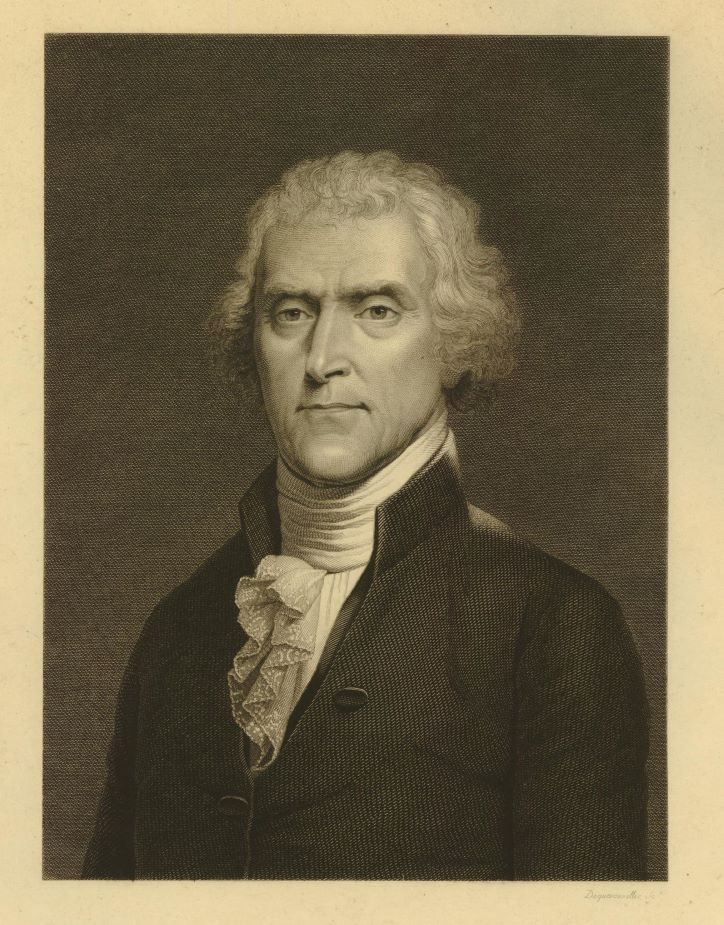
I would like to thank Hans Eicholz and my fellow respondents for a conversation that for me has been very helpful and instructive and that I hope will continue in some form in the future. What appears to be at issue in today's debates about Thomas Jefferson, the Declaration of Independence, and the American Revolution is not the importance of slavery and race in this history: these topics have been studied with great sophistication for several decades, and, of course, still merit further study.[i] What appears to be at issue instead is the question of how the history of American slavery and racism should be approached. If our view of the past is primarily structured by static binaries such as White and Black, Racist and Antiracist, as in the approaches Eicholz describes as the "new histories of slavery and race," something fundamental is in danger of being lost. While arguments on timelessly "systemic" oppression may seem to be corroborating themselves in this manner, we risk being deprived of a great achievement of modern historical thought: the idea of history as a complex, open-ended process of change, including conceptual change. This idea is relevant on at least two levels. On the level of the historical subject matter, we cannot understand the past if we lose from view the open futures of the contemporaries, i.e., their necessary ignorance of the long-term consequences of their thought and actions. For instance, Jefferson was certainly a man who tried his best to envision the American future and anticipate the responses of future generations to the American Revolution, but he turned out to be so mistaken in predicting the moral preferences of his future audiences that the moments in his writings when he tried most intently to explain away the contradictions of his position on slavery are typically the moments when his views appear most glaringly contradictory today.On the level of historical method, it is likewise crucial to insist on the open-endedness of historical research. In this case, the open future of history implies a dialectical process that is not threatened by the discussion of conflicting sources and contradictory views, but existentially depends on it. However, in approaches premised on a system of timeless binaries that is questioned only at the peril of being identified with the wrong side of an eternal moral divide, this open-endedness is no longer guaranteed. In the closed systems of the "new histories," the only possibility for intellectual innovation tends to consist in throwing the same moral binaries into ever sharper relief. This sharpening of contrasts is best achieved by scanning the past for the worst possible examples of whiteness and racism and then elevating these examples to the status of prime movers of the universe. Also as a result of this paradoxical method, we are witnessing today the uncanny phenomenon of reactionary ideas returning through the back door into what purport to be radically progressive works of history. For instance, while seemingly critical interpretations of the Civil War are dangerously leaning toward "Lost Cause" arguments that privilege a White way of life and downplay the abolition of slavery, the actual Confederate motivation of preserving slavery now tends to be displaced on Whitened caricatures of the American Revolution.In his response essay, Eicholz discusses the unintended consequences of the "new histories," following Philip Magness's argument on the proslavery propaganda of "King Cotton" reemerging in some of today's economic histories (Magness 2020), in terms of situational irony. The "new histories" may even be understood as doubly ironic, since they themselves tend to be emphatically averse to conceding the possibility of unintended consequences to their own historical protagonists. However, Eicholz hesitates to reduce the problem to irony, and I would follow him in this. History consists in the lives and liberties of real people and thus goes beyond the primarily textual category of irony. When nineteenth-century African Americans writing in Freedom's Journal and elsewhere discussed the question of whether or not to celebrate the Fourth of July, they partly did so, less because they were afraid that some future historian would accuse them of assimilationism and complicity with "White" values (and thus, following Kendi 2016, of racism), than because they had to fear the very real danger of being attacked by White Supremacist mobs. These mobs were as opposed as are some of today's self-ascribed antiracists to the idea of African Americans identifying with the Declaration of Independence. That both racist mobs and antiracist ideologues, while differing in their means, should concur in their ends is more than just ironic. The concurrence exemplifies the dynamics of a heavily polarized political world whose radical opposites appear to be greatly in need of one another.ReferencesGordon-Reed, Annette, and Peter S. Onuf, "Most Blessed of the Patriarchs": Thomas Jefferson and the Empire of the Imagination (New York: Liveright, 2016).Kendi, Ibram X., Stamped From the Beginning: The Definitive History of Racist Ideas in America (New York: Nation Books, 2016).Magness, Philip W., The 1619 Project: A Critique (AIER, Great Barrington, MA, 2020).Endnotes[i] For a recent work on Jefferson that has condensed this research also for a larger public, see, e.g., Gordon-Reed and Onuf, 2016.Lucas E. Morel
Final Response · Jul 27, 2021
Regarding Jefferson's "justifications or rationalizations for his continuing to own, buy, and sell slaves," I am unaware how his critics could cite even his notorious Notes on the State of Virginia as evidence that he justified the enslavement of black people because of the physiognomy he observed between the races. His most troubling comments do not directly or indirectly justify enslavement; instead, they justify in Jefferson's mind the colonization of blacks away from Virginia in order to avoid a race war (see my original reply to Eicholz). Put differently, while Jefferson consistently wrote that black people possessed natural rights[1] and that justice demanded their emancipation,[2] he did not conclude that this entitled them to become equal citizens of Virginia upon emancipation-an emancipation that Jefferson included in his proposed "alterations" of Virginia's laws.[3] Of black colonization, Jefferson explained that they should be supplied "with arms, implements of household and of the handicraft arts, seeds, [and] pairs of the useful domestic animals." He added that Virginia should, in that event, "declare them a free and independent people," and that Virginians should "extend to them our alliance and protection, till they have acquired strength."In short, Jefferson did not use his comments about the inferiority of superficial characteristics of black people to justify his own enslavement of them. As Jefferson put it, "whatever be their degree of talent it is no measure of their rights. Because Sir Isaac Newton was superior to others in understanding, he was not therefore lord of the person or property of others."[4] This is not to excuse his legal ownership and commodification of black people. It is only to argue that I have not come across any statement where he justifyied his enslavement of blacks according to any principle of right, justice, or nature.On this reading, I do not think that the different audiences that Eicholz cites for the Declaration of Independence and Notes on the State of Virginia best refute the critics' charges of inconsistency in Jefferson's mind. As Eicholz states, "The historian who tries to understand the past in its own terms is serving very much as a translator between eras" (emphasis in original). That translation starts with a due humility by historians who seek to discern the reasons offered for particular actions. Those words, those arguments, are the best reflection of the thought or reasoning for political actions. Ceteris paribus, these should constitute at minimum the beginning of one's understanding of the past. Thus, to bolster his point about different audiences dictating different arguments that Jefferson offers on the slavery question, Eicholz might say more about the character of Jefferson's arguments in his Notes that distinguish it from the arguments of the Declaration.In 1776, Jefferson wrote that black people possessed "sacred rights."[5] I cannot think of a stronger way of saying that someone deserves to be free than to say that in the eyes of their Creator they possess the rights of "life and liberty." In 1781, Jefferson commented on the "unhappy influence on the manners of our people produced by the existence of slavery among us," describing the practice as "tyranny."[6] He was just warming up. "Indeed," he concluded, "I tremble for my country when I reflect that God is just: that his justice cannot sleep forever." He went on to contemplate that "an exchange of situation" might occur by "supernatural interference," where the "Almighty" would side with the enslaved rather than the enslavers.Nevertheless, Jefferson continued to enslave black people, and justified to himself the legal (but not natural) right to do so on the basis of the natural right of self-preservation-namely, his and fellow white slaveholders' fear of reprisal, in addition to the servile condition of Virginia slaves ill-equipping them for life in civil society.[7] Thomas W. Merrill has described this as "an irreconcilable conflict of rights," which at least in Jefferson's case, led him to justify his continued legal ownership of black people on the basis of a concern for white people's self-preservation.[8]Historians duly attentive to the arguments of influential figures of the past, even self-serving arguments like Jefferson's, do well to consider them as essential components of understanding both the explanations and motives of important political actors. Eicholz rightly indicates how an older approach to understanding old things may very well remain a more accurate way of doing history.Endnotes[1] Draft of the Declaration and Thomas Jefferson to Henri Gregoire (February 25, 1809).[2] Thomas Jefferson to John Holmes (April 22, 1820).[3] Thomas Jefferson, Query XIV: On Laws, Notes on the State of Virginia.[4] Thomas Jefferson to Henri Gregoire (February 25, 1809).[5] Draft of the Declaration.[6] Thomas Jefferson, Query XVIII: On Manners, Notes on the State of Virginia.[7] Thomas Jefferson to Edward Coles (August 25, 1814).[8] Thomas W. Merrill, "The Later Jefferson and the Problem of Natural Rights" in The Political Thought of the Civil War, ed. Alan Levine, Thomas W. Merrill, and James R. Stoner, Jr. (Lawrence, KS: University Press of Kansas, 2018), 44.Peter S. Onuf
Final Response · Jul 29, 2021
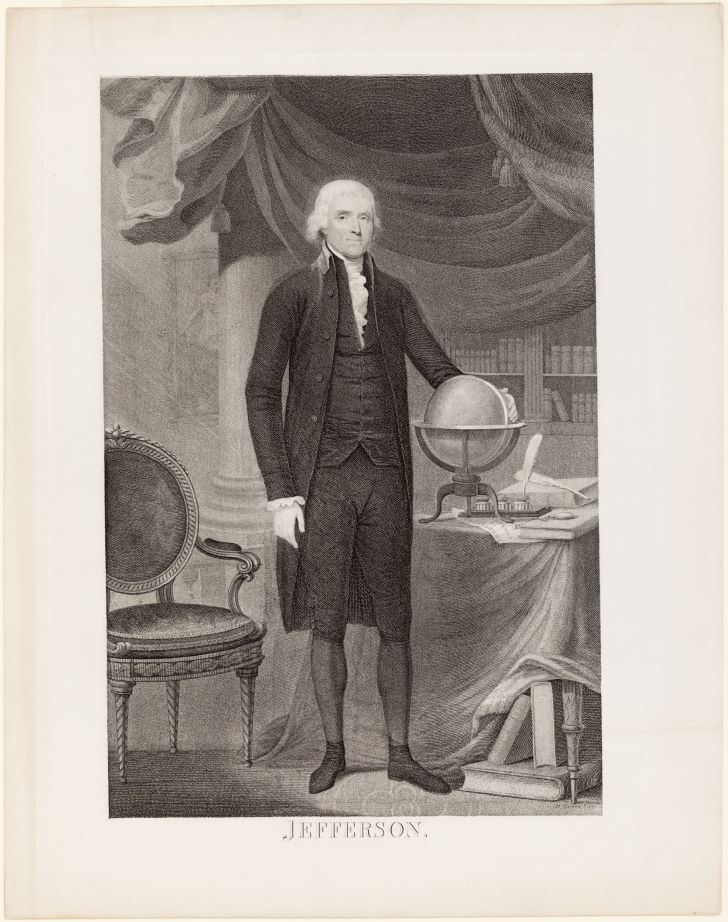
The writers in this exchange agree that the principles Jefferson so eloquently articulated in the Declaration of Independence have had a powerful and enduring impact on American and world history. As Susan Love Brown writes, they marked "the beginning of a revolution that changed the world by bringing the idea of individual rights and democracy into being." All of us reject the reductive, anti-historical logic of "new historians" for whom Enlightenment universalism is a sham and delusion, masking and enabling white supremacy on a global scale. What is most remarkable to me is that we should now feel provoked and compelled to declare this agreement, to affirm principles that have seemed so "self-evident" to successive generations of Americans from July 4, 1776 to the present day. Why, at this late date, would the new historians' demoralizing demolition of our national "origin story" gain such traction? Is it that we have begun to doubt our very existence as a nation or people in these polarized times? If so, any origin story would be seen as a mystifying, mythic cover for dominant, self-serving, hegemonic interests.Progressives traditionally juxtaposed the "people"-the real America-to the "interests" of alien enemies and home-grown aristocrats and plutocrats. But where, in the midst of today's nativist, right-wing populist insurgency, can we find the "people"? Jefferson and his fellow patriots faced a similar challenge in 1776, for there was no people-"imagined" or otherwise-until provincial Anglo-Americans declared themselves to be one. The context was of course radically different, but revolutionaries had to overcome extraordinary obstacles in order to mobilize reluctant countrymen in a seemingly endless war, forge continental union, and gain recognition from the "powers of earth." Recognizing the need to build a diverse and inclusive common front, Revolutionaries necessarily appealed to what Hans Eicholz calls "higher public reason," or abstract, commonsensical principles that transcended-but did not obliterate-differences among self-declared "Americans." The Revolutionary coalition was jeopardized by conflicts of interest that also evoked abstract claims to liberty and rights-including constitutionally-sanctioned "property" rights in enslaved persons. The immanent contradictions in the new regime were thus obvious from the outset, particularly to hostile foreigners and increasingly to reform-minded domestic critics who drew inspiration from the Declaration.We now rightly insist that all rights claims are not created equal. In the context of our own times, it makes good civic sense to focus on the opening paragraphs of the Declaration and emphasize, with Lucas Morel, Jefferson's unwavering commitment to human equality and opposition to slavery. As an historian, however, I am wary of abstracting and decontextualizing Jeffersonian principles from their original rhetorical and political contexts. Eicholz wants to find "consistency" and "coherence" in the Declaration, distinguishing that nation-making text from The Summary View and Notes on Virginia and privileging the first paragraphs from the grievances that constitute most of the text. "The contradictions and tensions did not inhere so much in the text itself," he writes, "but between the text and the lived experience of some of those who read it." Seen "through the lens of the opening paragraphs," there is "an immanent consistency of thought" in the Declaration, as "the bill of particulars against the king" makes "a case for universal liberty." But I would be inclined to reverse the focus. The litany of grievances, as Robert Parkinson persuasively demonstrates, enabled readers to see themselves and their own "lived experiences" in the text and so identify with fellow sufferers across the continent.The Declaration came to life-and its principles became meaningful-as patriots made the fateful choice, not for "universal liberty," but rather for national independence. They fought and died so that their new-found countrymen could claim their place, as a people, "among the powers of earth." In the state of nature (or war), the first law of nature for any nation aspiring to independence and an equal standing was self-preservation: individual citizens could only enjoy and exercise the rights to which all men were entitled by nature within a particular civic or national context. The Declaration therefore invoked universal natural rights principles instrumentally, to mobilize-and bring into existence-a new, independent people and to secure those rights for that people against the world. Jefferson and his editors certainly believed that the principles they embraced were applicable elsewhere (we might say, immanently universal) and that the independent United States might be, in the fullness of time, a model and inspiration for other benighted and oppressed peoples around the world. But the immediate effect of American independence was to draw and enforce boundaries among peoples within and beyond Britain's breakaway provinces. Whatever Jefferson may have intended, the unhappy result was to strengthen the hands of slaveholders in order to avert the dissolution of the union and prevent the recolonization of the newly and not truly independent United States of America.As Hannah Spahn persuasively argues, the "epistemologically vague" truths the Declaration so confidently articulated constituted a "flexible combination of subjective opinion and universal inclusiveness that could be transformed into the normative basis of a fundamental human equality." "Black intellectuals" have played a leading, if generally neglected role in revealing the Declaration's interpretative potential, adapting its principles to their particular, historically contingent contexts-and to the contemporary circumstances all Americans, if they would be a people, now face. Understanding the "conflation of contexts" that defined the Revolutionary moment and shaped the drafting and original reception of the Declaration of Independence offers Americans the kind of history-progressively inclusive, immanently universal-that can enable to imagine themselves as a people and mobilize to meet the existential threats and opportunities of their own uncertain times.Susan Love Brown
Final Response · Aug 03, 2021
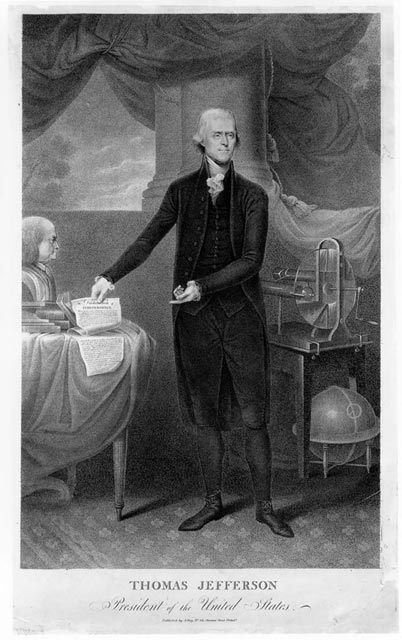
Hans Eicholz in his initial essay and Morel, Onuf, and Spahn in their responses have all presented approaches to the problem of Thomas Jefferson, the Declaration, and Slavery and detailed discussions that could go on far beyond the scope of this project. I have learned a lot and will be thinking about the issues raised well into the future. However, for my final response, I would like to return to Notes on the State of Virginia (1785/1999), because Jefferson's racial views, as expressed there, have become as much his legacy as the Declaration.Hans Eicholz argues, in his lead article:"In Notes there is both the attempt to square his own inconsistencies in the elements of his thoughts with himself and the European intellectual world he is addressing, but equally important, he is speaking as a Virginian to fellow Virginians. These considerations diverted him away from the higher public reason of the Declaration. The Notes certainly contain conflicting sentiments in the chapters on manners and laws, but they permit the kind of special pleading and political maneuvering that would have signaled to other Virginians that he was perhaps not so radical after all..."
I have no doubt that this assessment identifies a prime motivation that Jefferson had in calculating what he needed to do to assume office, for politics was as alive and well in the 18th century as it is today. But what is revealing in Jefferson's assessment of people of African descent (blacks) is how it reflects the attitudes of many Virginians and other southerners - attitudes that became institutionalized in southern culture and spread to American culture as a whole, forming much of the basis for the systemic racism that so many people want to deny. If Jefferson's words sound contemporaneous, that's because the ideas that he proffers in Query XIV of Notes reflect attitudes from that era that have been passed on from one generation to the next through American culture.Jefferson believed that whites and blacks could not exist in the same national space, primarily because of those "deep rooted prejudices" by whites and "ten thousand recollections, by the blacks, of the injuries they have sustained (145)." And while this appears to be a reasonable assumption, in the text that follows, Jefferson reveals his own racial prejudices, and, finally, the real reason for this imagined incompatibility.Jefferson elaborates on physical differences, such as "colour" as "a difference fixed in nature," which is responsible, according to Jefferson for the "greater or less share of beauty in the two races," plus the inability to see emotions in blacks because of their dark skins, while they show readily in blushing whites with their fair skins. To this Jefferson adds differences in hair and the supposed preference of blacks themselves for whites, which he disgustingly compares to the supposed preference of "Orantootan" (presumably Orangutan apes) for black women "over those of his own species (145)." Jefferson assigns "superior beauty" to whites. To this he adds less body hair on blacks and "a very strong and disagreeable odour," which he attributes to differing internal functions, along with more tolerance to heat and less to cold. He states that "they seem to require less sleep" since they stay up late after working hard all day, though later he will attribute the tendency to fall asleep to their lack of intellectual vigor (146).While Jefferson attributes comparable braveness and adventurousness to blacks, he then undermines these attributes in blacks by stating that blacks lack the ability to assess dangers ahead of time. He also denies blacks the ability to love, stating that blacks mostly display desire. According to Jefferson, blacks also do not grieve as much or as long as whites, feeling much less and quickly forgetting their misfortunes. "In general, their existence appears to participate more of sensation than reflection. To this must be ascribed their disposition to sleep when abstracted from their diversions, and unemployed in labour. An animal whose body is at rest, and who does not reflect, must be disposed to sleep of course" (146).The physical characteristics of blacks that Jefferson writes about remain a part of the stereotype of blacks in the United States, promoting their physical prowess, only to use it to intimate a more animalistic nature, or to add another item to the list of black inferiorities.The following equations are established by Jefferson between blacks and whites: memory, equal to whites; reason, inferior to whites; imagination, "dull, tasteless, and anomalous." But Jefferson also holds to the mistaken notion that black qualities are improved to the extent that they mix (read interbreed) with whites. "The improvement of the blacks in body and mind, in the first instance of their mixture with the whites, has been observed by everyone, and proves that their inferiority is not the effect merely of their condition of life" (148).Jefferson then reiterates the necessity of removing blacks to a separate place from whites: "When freed, he is to be removed beyond the reach of mixture" (151). Thus, the real reason why Jefferson thought blacks and whites needed to be separated. Anti-miscegenation laws reflecting this idea persisted in many states until shot down in Loving v. Virginia 1967.There is not only a willful ignorance expressed in Jefferson's assessment of blacks, but his own lack of reasoning in connecting some of the behavior he describes with the lives that blacks are forced to live. A man who spent hours and hours reading in the comfort of his home, taking exercise at his own convenience, and retiring at night when he desired, nevertheless shows an amazing lack of empathy for the people who provided his livelihood through their labor.Jefferson's words serve as irrefutable evidence of his own racial views, but they also serve as a marker of time and place that allows us to conclude that these ideas have migrated across time through American culture. There has been great progress in American society since Jefferson's time largely due to the insistence of blacks and whites alike that the Enlightenment principles put forth by the founders are the basis upon which rights can be claimed and must be acknowledged. But many of the attitudes from Jefferson's time linger on. These twin streams - individual liberty and the racial oppression of blacks by law and by custom - are both unwitting legacies of Thomas Jefferson, and we will continue to grapple with them intellectually, even as activists grapple with them in Congress, in the courts, and in the streets of the United States of America.Hans Eicholz
Final Response · Aug 05, 2021
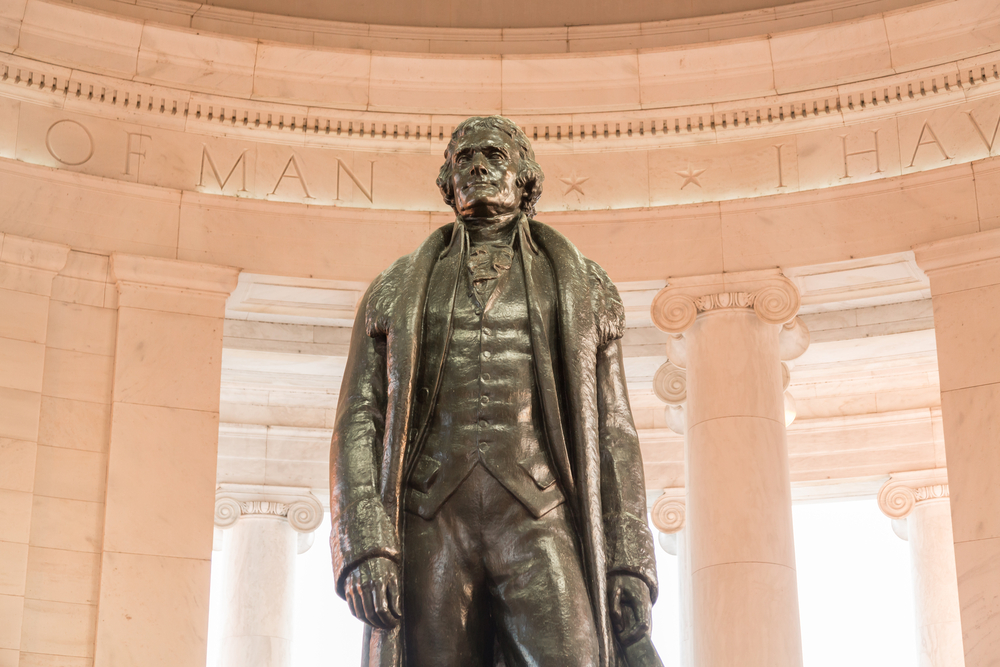
It is rare to find outright contradictions in thought occupying the same moment in the same text of any author who is even remotely concerned with making a reasoned appeal to others. Conflictual statements do occur, but more commonly over time and when the author is made aware of such, there is usually an effort at explanation, even if only by way of confession that one has had a change of mind.Jefferson's intellectual consistency is thus well contended for by Lucas Morell. And so, I emphasized that historians should be acutely aware of tensions and aporias through time and especially tensions between thoughts and actions. It is here that creative engagement takes place among persons and groups, and where authentic and enduring change occurs- at the historical margins of individual choices.Jefferson was acutely aware of these margins in his own personal engagements. He was not allowed to forget them. I mentioned one-Benjamin Banneker. Another even closer to home, came from his neighbor and fellow Virginian, Edward Coles. I won't go into the details of Cole's life and his exchange with Jefferson. Kevin Gutzman goes into some of this in his book Jefferson, Revolutionary (2017) if one is interested to discover more.But with regard to the so-called New Histories, the lack of concern for the important nuances of context is a real point of difference that goes to matters of historical accuracy. And here Hannah Spahn has correctly noted the nature of the problem. There are better and worse forms of dialectical reasoning at play in the minds of the new historians. The very worst sort is that which insists upon a binary imposition of categories. Here is where the critical details of context rightly perceived are simply lost and understanding is sacrificed in the rush to judgement.The usual way in which such details become washed out or distorted is in the assertion that all relations are power relations and that no variation in thought matters except those that illustrate the machinations of structure and system, and hence the interest in judging moments of only macro-systemic revolutionary change.But change can come peacefully, and I would assert, more often, at the margins of choices made by individuals. I take what Peter Onuf says to heart, that in the near term anyway, "the unhappy result" of independence was to give masters a more powerful hold over their slaves, but this was predominantly in one region.We should not underestimate, however, the power of the ideals of the Declaration, at those critical individual margins of decision, in the early years of the republic in the immediate aftermath of the Revolution. A major illustration of this is precisely the great wave of emancipations and ultimate abolition that was washing down from New England, over the mid-Atlantic states and up onto the shores, even if ultimately unsuccessful, of Maryland and Virginia.It was largely because of this northern and mid-Atlantic abolition that so many of the founding period and early republic could honestly believe that the days of slavery were soon to end. That history is well told in a classic book on that subject that perhaps ought to be reprinted: Arthur Zilversmit's The First Emancipation: The abolition of slavery in the North (1967).Finally, Susan Love Brown's comments raise a fundamentally important point about Jefferson's specific views of race. As she notes, these prejudices were not simply his, but were shared and extended well beyond his immediate circle. Indeed, such views came to infuse large segments of American society right up to our own time. I am certainly not denying this. My only concern is that the use of the term "systemic" invites an analogy of process in historical and social causation that is all too deterministic and begs the question of where change actually originates.In its origins, the word "systemic" goes to biological and medical uses that imply a "system-wide" permeation. I understand that certain institutional structures, most especially of course the visible structures of direct governmental intervention, have played their tragic part in the history of race and racism. But the way systemic is used today, it has generally meant something far more amorphous and with such broad over-arching application, that invites altogether too much subjectivity and therefore misunderstanding.The historian has to remain sensitive to all those instances where individuals rose above prejudices and threats and these stories are to be found from the earliest moments of the republic (see for example Joyce Lee Malcom's "Slavery in Massachusetts and the American Revolution," Journal of the Historical Society [December 2010], 414-436) right through the bitterest days of segregation and Jim Crow. Here the uses of state power to counter individual choices was real, and institutional differences mattered with respect to the decisions individuals made as Jennifer Morse's classic essay showed (See Jenifer Morse, "The Political Economy of Segregation: The Case of Segregated Streetcars," The Journal of Economic History [December 1986], 893-917). But in this instance, it was not the function of an all-pervasive system, per se, but rather the imposition of very specific political structures.Perhaps the best set of essays on historical analysis and causation relevant to this debate, remains the two-part treatment by Thomas L. Haskell, "Capitalism and the Origins of the Humanitarian Sensibility," Parts 1 and 2 in The American Historical Review, (April and June 1985), 339-361, 547-566. Where Haskell spoke in his day about the limitations of reductionist arguments concerning exploitation, I believe the current assertions of system and systemic now apply and are very closely if not exactly analogous. The details of these differences cannot be fully developed here but have to be left to the reader's own efforts at further exploration.Before I forget, I must thank my colleague and friend Steve Ealy for his close reading and reduction of the initial essay which had exceeded too many bounds of both word count and themes, and I thank all of my respondents once more for their rich and insightful comments.