Political Theory1883
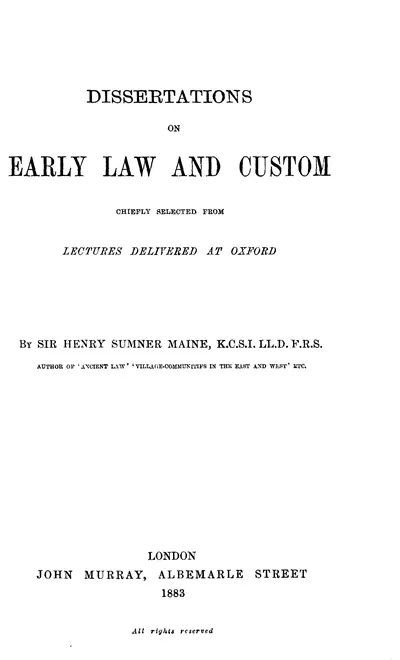
Dissertations on Early Law and Custom
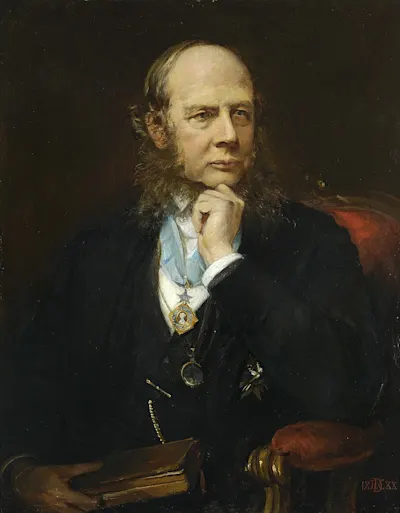
- Sir Henry Sumner Maine(author)
A third volume consisting of Maine’s lectures at the University of Oxford. The first was Village Communities in the East and West”; the second was The Early History of Institutions. This volume is drawn from a number of his courses and deals with a range of topics as religion and the law, the Salic law, feudal property and the classification of property.
About This Edition
Citation
Maine, Sir Henry Sumner. Dissertations on Early Law and Custom, chiefly selected from Lectures delivered at Oxford (London: John Murray, 1883).
Maine, Sir Henry Sumner. Dissertations on Early Law and Custom. John Murray, 1883. Online Library of Liberty, https://oll.libertyfund.org/titles/maine-dissertations-on-early-law-and-custom.
Maine, S. H. S. (1883). Dissertations on Early Law and Custom. John Murray. https://oll.libertyfund.org/titles/maine-dissertations-on-early-law-and-custom
@book{maine1883custom,
  author = {Sir Henry Sumner Maine},
  title = {Dissertations on Early Law and Custom},
  publisher = {John Murray},
  address = {London},
  year = {1883},
  url = {https://oll.libertyfund.org/titles/maine-dissertations-on-early-law-and-custom},
  note = {Online Library of Liberty}
}TY - BOOK AU - Maine, Sir Henry Sumner TI - Dissertations on Early Law and Custom PY - 1883 CY - London PB - John Murray UR - https://oll.libertyfund.org/titles/maine-dissertations-on-early-law-and-custom DB - Online Library of Liberty ER -
Copyright
The text is in the public domain.

About the author
Sir Henry Sumner Maine 1822–1888
Sir Henry Sumner Maine (1822-1888) was one of the great intellects of the Victorian era. He trained as a lawyer, taught Civil Law at Cambridge University, served at the Inns of Court in London, worked on law reform in India, and was a professor of Jurisprudence at Oxford University. He wrote several books including Ancient Law (1861) and Popular Government (1885).
Related People
James Fitzjames Stephen
Author
James Fitzjames Stephen, a British legal historian, Anglo-Indian administrator, judge, and author noted for his criminal-law reform proposals was a close friend of Maine. In 1855, he became a contributor to the Saturday Review, in company with Maine, and when he accepted the post of legal member of the Colonial Council in India, his friend Maine was his immediate predecessor in this office.
Max Weber
Author
Max Weber was a German sociologist and philosopher who is best known for his ideas on social stratification and the sociology of religion. Both Maine and Weber believed that society was evolving in a particular direction, with law and rationalization playing key roles in this process. However, while Maine focused on the evolution of law from status to contract, Weber focused on the evolution of society from traditional to rational.
Savigny was a German Philosopher, the father of the Historical school. Maine agreed with Savigny’s view, but he went beyond Savigny in understanding law by comparative studies of legal institutions in primitive as well as progressive societies.
Edmund Burke
Author
Edmund Burke’s liberal thought heavily influenced Maine’s form of liberal jurisprudence, especially Maine’s 1885 work Popular Government.
Woodrow Wilson
Author
Woodrow Wilson, the progressive 28th President of the United States heavily praised Sir Maine’s writing and legal thought.
Jean-Jacques Rousseau
Author
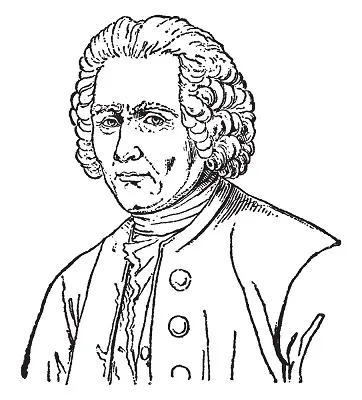
Jean-Jacques Rousseau, the Swiss philosopher inspired Sumner Maine’s work, particularly Popular Government, although Maine did disagree with Rousseau’s conceptions of the social contract and natural rights.


Critical Responses
Works that answer or challenge this text.
 Book
Orientalism
Edward W. SaidVisit site ↗Edward W. Said, is a Middle Eastern political and historical study, where Edward Said coined the phrase ‘Orientalism’ to describe the West's often reductive and derisive portrayal of "The East." This book is an explanation of this concept and the application of this framework to understand the global power dynamics between the East and the West.
Connected Readings
What to read next.
 Book
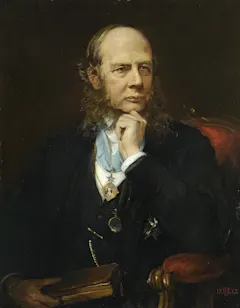
Ancient Law
Sir Henry Sumner MaineView title >Maine examines the history of law in the Western world, with a focus on the development of legal institutions in ancient Rome and Europe. He discusses the effects of legal fiction, equity, and legislation in making Western law flexible to meet changing circumstances.
 Book
The Origin of the Family, Private Property and the State
Friedrich EngelsVisit site ↗Friedrich Engels is partially based on notes by Karl Marx to Lewis H. Morgan’s book “Ancient Society”. In his book, Engels traces the evolution of family forms and links them to changes in technology and arrangements for the ownership of property and he also explores the connection between early law and ancient religion.
 Book
The Social Contract and Discourses
G.D.H. ColeView title >Forming a nation requires citizens to give up certain freedoms that they still had in the state of nature, it replaces these freedoms with the far more valuable “civil freedom” of living in society, which allows citizens to more fully develop themselves morally and rationally. Rousseau also explains how people can figure out what is in their best interests, analyzes examples from the history of the Roman Republic to show why all citizens should directly participate in lawmaking.
 Book
The English Works, vol. III (Leviathan)
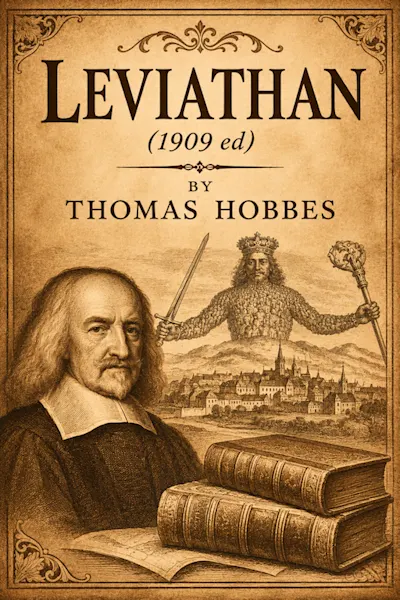
Thomas HobbesView title >While both books deal with political philosophy and the nature of government, they approach these topics from different perspectives and historical contexts. Leviathan focuses on the justification of political authority through a social contract, while “Dissertations on Early Law and Custom” explores various topics related to law and custom.
 Book
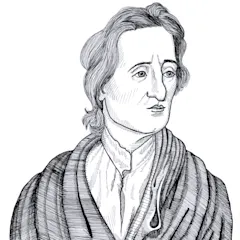
The Works of John Locke, vol. 4 Economic Writings and Two Treatises of Government
John LockeView title >In this book, Locke argues that every man is born free and has the ability to govern himself according to reason and God’s law. Locke also discusses the differences between the state of nature and the state of war, the definition and function of property, and the organization of government.
 Book
Sapiens: A Brief History of Humankind
Yuval HarariVisit site ↗A Brief History of Humankind by Yuval Noah Harari. In his book he discusses the role of religion in human history. According to Harari, religion is the third great unifier in the world, alongside money and empires. He defines religion as a set of values based on “a belief in a superhuman order”. Harari also believes that religions can unify people when they are “universal” and “missionary,” like Islam and Buddhism.
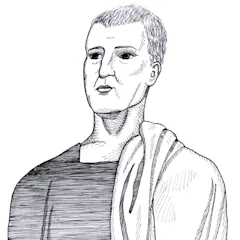 Book
Institutes of Roman Law
GaiusView title >Gaius is a well known work which became the authoritative legal text during the late Roman Empire. Maine reffers to it a lot in his book.
More in Political Theory
See all >The Political Writings of Jean Jacques Rousseau vol. 1
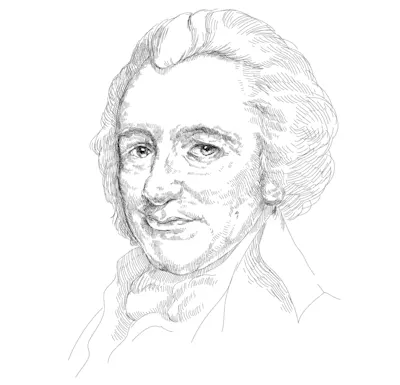
Jean-Jacques RousseauThe Writings of Thomas Paine, Vol. I (1774-1779)
Thomas PaineAncient Law
Sir Henry Sumner MaineThe Political Writings of Jean Jacques Rousseau, 2 vols.
Jean-Jacques RousseauLeviathan (1909 ed)
Thomas HobbesPatriarcha, or the Natural Power of Kings
Sir Robert FilmerThe Man versus the State (1885 ed.)
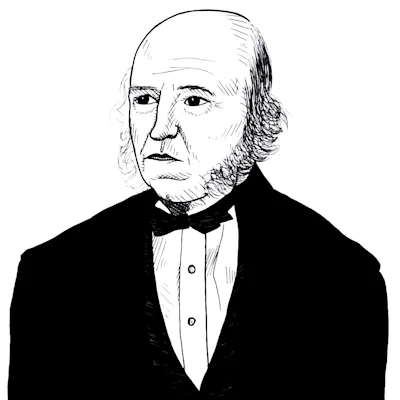
Herbert SpencerThe Man versus the State, with Six Essays on Government, Society and Freedom (LF ed.)
Herbert SpencerSelect Works of Edmund Burke, vol. 1
Edmund Burke