


Author
John Locke
1632–1704
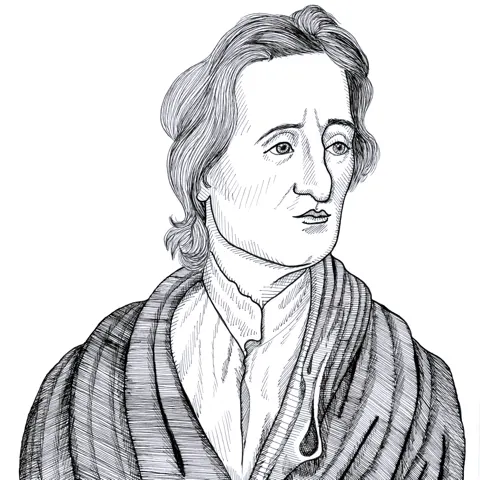
John Locke (1632-1704) was an English philosopher who is considered to be one of the first philosophers of the Enlightenment and the father of classical liberalism. In his major work Two Treatises of Government Locke rejects the idea of the divine right of kings, supports the idea of natural rights (especially of property), and argues for a limited constitutional government which would protect individual rights.
Biography
See also our collection of extracts, essays, and other resources on Locke.
See the Liberty Matters online discussions of John Locke on Property, John Locke on Commercial Society and John Locke on Commercial Society
For additional information about John Locke see the following:
- Timeline on the Life and Work of John Locke
- Bibliographical Essay on John Locke and Property
- Reading List on An Introduction to the Political Thought of John Locke
- Topic on The English Revolution
- Debate on The Divine Right of Kings
- Debate on Religious Toleration
Works by John Locke
15 titles in the library
John Locke · 1691
The Works of John Locke, vol. 4 Economic Writings and Two Treatises of Government
Volume 4 of the 1824 edition of the collected works of John Locke. This volume contains his essays on money and a version of the Two Treatises of Government.
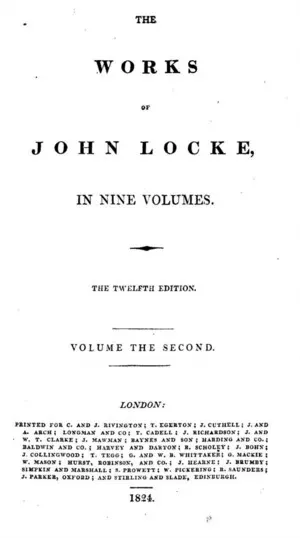
John Locke · 1689
The Works, vol. 2 An Essay concerning Human Understanding Part 2 and Other Writings
The second part of Locke’s most important work of philosophy. Continued from volume 1. It also contains some of his shorter writings, especially the Elements of Natural Philosophy.
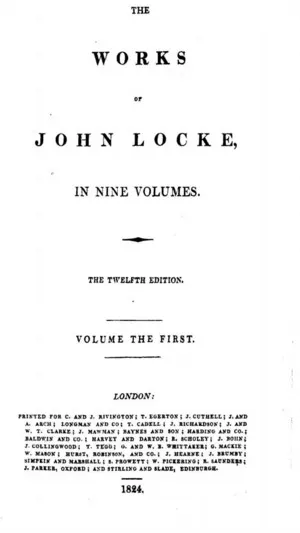
John Locke · 1689
The Works, vol. 1 An Essay concerning Human Understanding Part 1
The first part of Locke’s most important work of philosophy. Continued in volume 2.
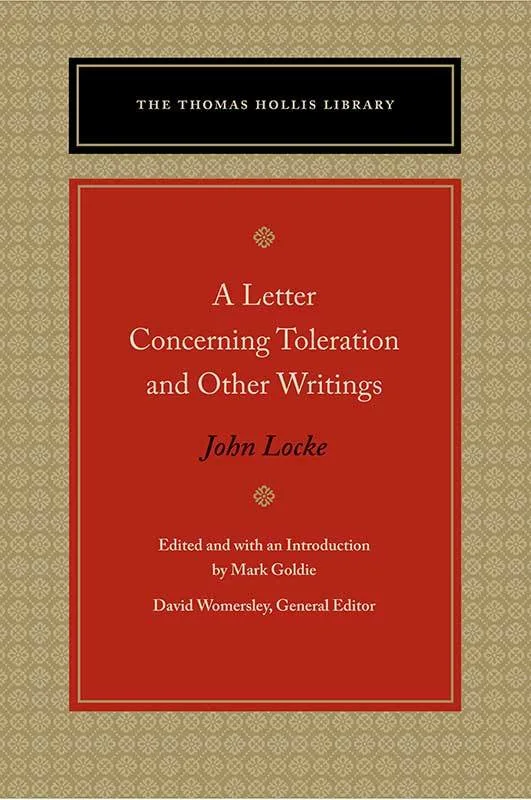
John Locke · 2010
A Letter concerning Toleration and Other Writings
Part of the Thomas Hollis Library published by Liberty Fund. This volume contains A Letter Concerning Toleration, excerpts of the Third Letter, An Essay on Toleration, and various fragments.
John Locke · 1697
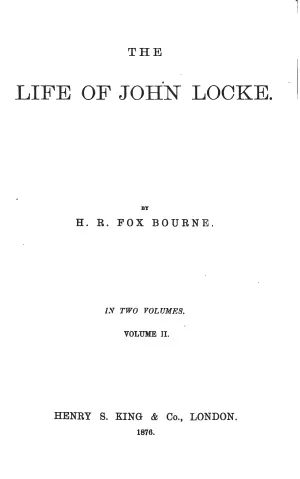
Encouragement of Irish Linen Manufacture (August 1697)
Locke’s detailed proposals to encourage the Irish linen industry which was quoted in full in Fox Bourne’s The Life of John Locke (1876), vol. 2, pp. 363-372.
John Locke · 1697
Proposed Poor Law Reform (October 1697)
Locke’s detailed proposals for the reform of the Poor Laws which was quoted in full in Fox Bourne’s The Life of John Locke (1876), vol. 2, pp. 377-391.
John Locke · 1685
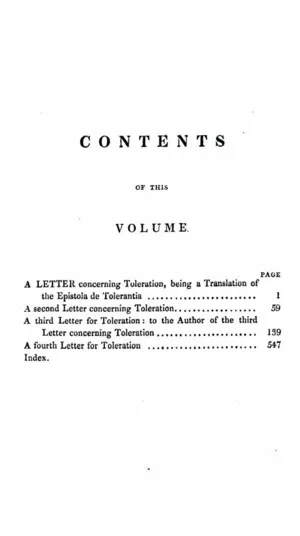
The Works, vol. 5 Four Letters concerning Toleration
Locke was an early advocate of religious toleration. Collected in this volume are his letters or essays on this topic.
John Locke · 1689
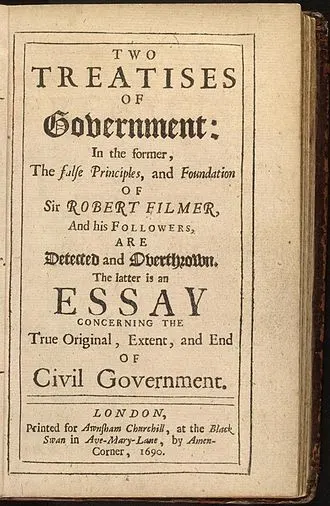
The Two Treatises of Civil Government (Hollis ed.)
Locke’s most famous work of political philosophy began as a reply to Filmer’s defense of the idea of the divine right of kings and ended up becoming a defense of natural rights, especially property rights, and of…
Thomas Hobbes · 1897
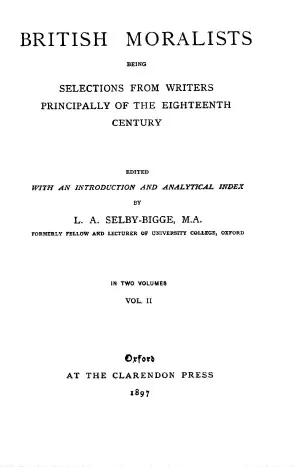
British Moralists vol. 2
Vol. 2 contains works by Samuel Clarke, Balguy, Richard Price, Hobbes, Kames, Locke, Wollaston, and others.
John Locke · 1685
The Works of John Locke, vol. 9 (Letters and Misc. Works)
Ths volume contains a number of letters, an essay on the constitution of Carolina, and miscellaneous works on vine growing, navigation, and travel.
John Locke · 1696
Works of John Locke, vol. 3
Locke’s responses to criticism of his Essay of Human Understanding by the Bishop of Worcester.
John Locke · 1824
The Works, vol. 7 (Essays and Notes on St. Paul’s Epistles)
This volume contains what Locke calls his paraphrases and notes on Paul’s Epistles.
John Locke · 1690
The Works, vol. 8 (Some Thoughts Concerning Education, Posthumous Works, Familiar Letters)
This volume contains Some Thoughts Concerning Education, his posthumous works, and a number of letters.
John Locke · 1695
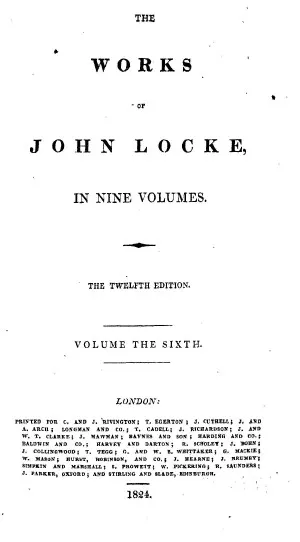
The Works, vol. 6 (The Reasonableness of Christianity)
This volume contains three pieces by Locke on the reasonableness of Christian belief.
John Locke · 1824
The Works of John Locke in Nine Volumes
A nine volume collection of the works of John Locke.
Quotes from John Locke
6 quotes from the library