The Coal Question; An Inquiry concerning the Progress of the Nation, and the Probable Exhaustion of our Coal-mines
- William Stanley Jevons(author)
A warning that Britain would face rising costs for coal as other nations industrialized and that this would have a deep impact on the British economy and way of life.
About This Edition
Citation
Jevons, William Stanley. The Coal Question; An Inquiry concerning the Progress of the Nation, and the Probable Exhaustion of our Coal-mines (London: Macmillan and Co., 1866). 2nd edition, revised.
Jevons, William Stanley. The Coal Question. Macmillan, 1866. Online Library of Liberty, https://oll.libertyfund.org/titles/jevons-the-coal-question.
Jevons, W. S. (1866). The Coal Question. Macmillan. https://oll.libertyfund.org/titles/jevons-the-coal-question
@book{jevons1866question,
  author = {William Stanley Jevons},
  title = {The Coal Question},
  publisher = {Macmillan},
  address = {London},
  year = {1866},
  url = {https://oll.libertyfund.org/titles/jevons-the-coal-question},
  note = {Online Library of Liberty}
}TY - BOOK AU - Jevons, William Stanley TI - The Coal Question PY - 1866 CY - London PB - Macmillan UR - https://oll.libertyfund.org/titles/jevons-the-coal-question DB - Online Library of Liberty ER -
Copyright
The text is in the public domain.

About the author
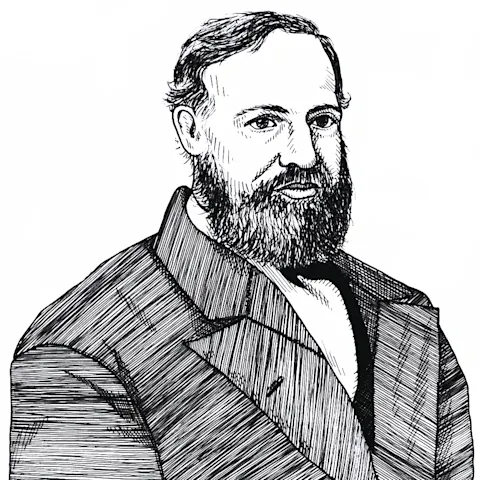
William Stanley Jevons 1835–1882
Jevons was born in Liverpool, England and studied chemistry and botany at University College, London before taking up the position of assayer at the Mint in Sydney, Australia. He was later appointed to the post of chair in political economy at his alma mater and retired from there in 1880. He is one of three economists (along with Walras and Menger) who came up with a theory of marginal utility in 1871, thus transforming our understanding the theory of value.
Related People
Karl Popper
Author
Jevons significantly influenced the prominent Austrian philosopher. Popper expanded upon and applied Jevons’ theories and methods in his own work, such as Jevons’ hypothetico-deductive method.
Adam Smith
Author
Smith’s economic theory greatly influenced Jevons’ own. Before Jevons died in 1882, he was drafting a prefaced version of Smith’s The Wealth of Nations.
John Stuart Mill
Author
Mill and Jevons were two of the most prominent economists of the 19th centur. They routinely challenged each other’s philosophy and theories of political economy, and criticized each other’s work.
John Maynard Keynes
Author
Keynes greatly admired much of Jevons’ work, especially in Jevons’ theories of price indexes and marginal utility. Keynes described Jevons as “one of the minds of the century.”
David Ricardo
Author
The prominent British classical economist was one of Jevons’ main influences. Jevons built off and challenged Ricardo’s work with the application of statistical methods to economic research.


Critical Responses
Works that answer or challenge this text.
 Book
The Ultimate Resource
Julian SimonVisit site ↗Simon’s work directly challenges Jevons’ predictions of rapid resource depletion and lower population growth. Simon states that human ingenuity alleviates the problem of scarcity through the development of substitutes and use of new resources.
 Podcast
Marian Tupy on Superabundance, The Great Antidote Podcast, AdamSmithWorks
Marian Tupy and Juliette SellgrenThe Great Antidote
Visit site ↗Tupy makes the case that humans live in a time of consistent resource growth, instead of scarcity, and explains how population growth contributes to prosperity.
- Article
Resourceship: Expanding ‘Depletable’ Resources
Robert BradleyVisit site ↗Resources grow with improving knowledge, expanding capital, and capitalistic policies—including privatization of the subsoil—that encourage market entrepreneurship. Resource availability decreases with war, revolution, strife, nationalization, taxation, price controls, and restrictions on access. Man is the creator of resources, but man-qua-government can destroy and immobilize resources.
Connected Readings
What to read next.
 Book
An Essay on the Principle of Population, 2 vols. [1826, 6th ed.]
Thomas Robert MalthusView title >Malthus’ work similarly touches on key themes in The Coal Question to make the claim that population growth will cause drastic resource depletion and economic disaster.
 Book
Appalachian Fall: Dispatches from Coal Country on What’s Ailing America
Jeff Young and the Ohio Valley ReSourceVisit site ↗Where Jevons examines the macroeconomic problems of Britain’s reliance on coal, Young explores the sociological, environmental, and microeconomic condition of Appalachia during the decline of the coal industry.
- Book
The Myth of Resource Efficiency: The Jevons Paradox
John M. Polimeni, Kozo Mayumi, Mario Giampietro, and Blake AlcottVisit site ↗The Myth of Resource Efficiency affirms the Jevons Paradox to make the claim that resource efficiency doesn’t solve the problem of scarcity, and seeks to apply this to natural resource usage policy.
 Podcast
Leif Wenar on Blood Oil
Leif Wenar and Russ RobertsVisit site ↗Jevons didn’t predict the development of new resources, one of those being oil. However Weinar sees similar problems with oil such as the resource curse, non renewability, and immorality.
More in Industries. Land use. Labor
See all >Planning for Freedom: Let the Market System Work. A Collection of Essays and Addresses
Ludwig von MisesLetters on the Factory Act
Nassau William SeniorWhere and Why Public Ownership has Failed
Yves GuyotA Policy of Free Exchange
Thomas Mackay