King Lear
Part of The Complete Works of William Shakespeare (The Oxford Shakespeare)
- William Shakespeare(author)
- William James Craig(editor)
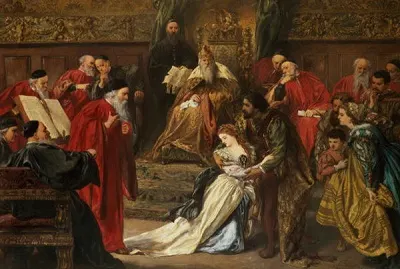
Shakespeare’s King Lear may be his greatest tragedy. It presents a dark picture of aging, of an uncaring universe, and the dangers of an unstable king struggling to understand his own power. This edition comes from the 1916 Oxford University Press edition of all of Shakespeare’s plays and poems.
About This Edition
Citation
The Complete Works of William Shakespeare (The Oxford Shakespeare), ed. with a glossary by W.J. Craig M.A. (Oxford University Press, 1916).
Shakespeare, William. King Lear. Edited by William James Craig, Oxford University Press, 1916. Online Library of Liberty, https://oll.libertyfund.org/titles/craig-king-lear.
Shakespeare, W. (1916). King Lear. Oxford University Press. https://oll.libertyfund.org/titles/craig-king-lear
@book{shakespeare1916lear,
  author = {William Shakespeare},
  editor = {William James Craig},
  title = {King Lear},
  publisher = {Oxford University Press},
  address = {Oxford},
  year = {1916},
  url = {https://oll.libertyfund.org/titles/craig-king-lear},
  note = {Online Library of Liberty}
}TY - BOOK AU - Shakespeare, William A2 - Craig, William James TI - King Lear PY - 1916 CY - Oxford PB - Oxford University Press UR - https://oll.libertyfund.org/titles/craig-king-lear DB - Online Library of Liberty ER -
Copyright
The text is in the public domain.

About the author
William Shakespeare 1564–1616
William Shakespeare (1564-1616) is probably the best known poet and playwright of the English language. He is considered by many to be the greatest poet and dramatist of all time. The plays he wrote nearly four hundred years ago for a small theater in London are now performed in more countries and more often than those of any other playwright.
Related People
Geoffrey Chaucer
Author
The greatest English writer before Shakespeare, Chaucer pioneered the use of English, rather than French or Latin, for serious literary works. He also brought all classes of society onto the page together, particularly in his masterwork, The Canterbury Tales.
Christopher Marlowe
Author
Marlowe and Shakespeare were the top two poets and playwrights of their day. They referenced one another’s work and competed with and inspired each other.
John Dryden
Author
One of the great English poets and playwrights who followed Shakespeare, Dryden is similarly interested in portraying the importance of English history for English audiences. Dryden was also deeply interested in establishing the theater as a legitimate art form rather than just a popular entertainment.
Alexander Pope
Author
A great poet in his own right, Pope also edited Shakespeare’s work, regularizing and “smoothing” it to accord with 18th century aesthetic judgements.


Critical Responses
Works that answer or challenge this text.
 Book
A Thousand Acres
Jane SmileyVisit site ↗Jane Smiley’s novel A Thousand Acres reimagines the story of King Lear as a tale about a modern American family farm.
- Film
Ran
Akira KurosawaVisit site ↗Japanese film director Akira Kurosawa revisioned the story of King Lear as a samurai epic.
Connected Readings
What to read next.
- Website
The Holinshed Project
Visit site ↗One of the most frequent sources for Shakespeare’s plays is the Holinshed’s Chronicles, a collaborative history of England. The source material for Lear is available here.
- Website
Sources for King Lear
Visit site ↗Shakespeare drew from a wide range of sources for his plays, and the sources for Lear are particularly rich and varied. Read a few of them here.
- Audio
Listen to Lear
The Folger ShakespeareVisit site ↗Listen to some selections from a performance of King Lear at the Folger Shakespeare Library.
 What to read next.
In Praise of Folly
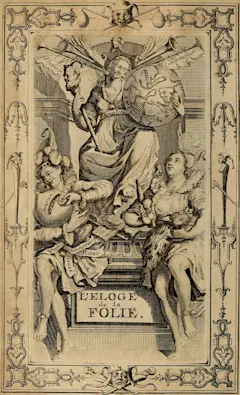
Desiderius ErasmusView title >Shakespeare’s comedies are known for their use of fools who are sometimes truly foolish, and sometimes foolish in a way that reveals a deep and important wisdom. The Fool in King Lear comes from that tradition of comic fools, but his wisdom is painful for himself and all who hear it. Inspiration for Shakespeare’s fools can be traced to Erasmus’s Praise of Folly.
More in English literature
See all >The First Part of King Henry the Sixth
William ShakespeareThe Tragedy of King Richard the Second
William ShakespeareHamlet Prince of Denmark
William ShakespeareThe First Part of King Henry the Fourth
William ShakespeareThe Merchant of Venice
William ShakespeareThe Third Part of King Henry the Sixth
William ShakespeareTwelfth-Night: or, What You Will
William ShakespeareThe Second Part of King Henry the Fourth
William ShakespeareThe Winter’s Tale
William Shakespeare