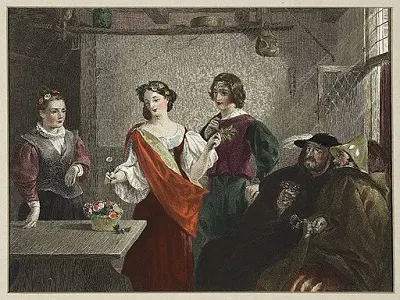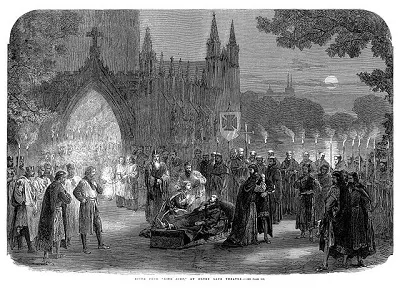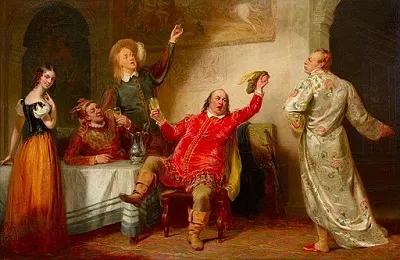
Twelfth-Night: or, What You Will
Part of The Complete Works of William Shakespeare (The Oxford Shakespeare)
- William Shakespeare(author)
- William James Craig(editor)
Complicated, merry, and slightly mad, the convoluted disguises and secret identities of Twelfth Night capture the pains and comic madness of love. This edition comes from the 1916 Oxford University Press edition of all of Shakespeare’s plays and poems.
About This Edition
Citation
The Complete Works of William Shakespeare (The Oxford Shakespeare), ed. with a glossary by W.J. Craig M.A. (Oxford University Press, 1916).
Shakespeare, William. Twelfth-Night: or, What You Will. Edited by William James Craig, Oxford University Press, 1916. Online Library of Liberty, https://oll.libertyfund.org/titles/craig-twelfth-night-or-what-you-will.
Shakespeare, W. (1916). Twelfth-Night: or, What You Will. Oxford University Press. https://oll.libertyfund.org/titles/craig-twelfth-night-or-what-you-will
@book{shakespeare1916will,
  author = {William Shakespeare},
  editor = {William James Craig},
  title = {Twelfth-Night: or, What You Will},
  publisher = {Oxford University Press},
  address = {Oxford},
  year = {1916},
  url = {https://oll.libertyfund.org/titles/craig-twelfth-night-or-what-you-will},
  note = {Online Library of Liberty}
}TY - BOOK AU - Shakespeare, William A2 - Craig, William James TI - Twelfth-Night: or, What You Will PY - 1916 CY - Oxford PB - Oxford University Press UR - https://oll.libertyfund.org/titles/craig-twelfth-night-or-what-you-will DB - Online Library of Liberty ER -
Copyright
The text is in the public domain.

About the author
William Shakespeare 1564–1616
William Shakespeare (1564-1616) is probably the best known poet and playwright of the English language. He is considered by many to be the greatest poet and dramatist of all time. The plays he wrote nearly four hundred years ago for a small theater in London are now performed in more countries and more often than those of any other playwright.
Related People
Alexander Pope
Author
A great poet in his own right, Pope also edited Shakespeare’s work, regularizing and “smoothing” it to accord with 18th century aesthetic judgements

Critical Responses
Works that answer or challenge this text.
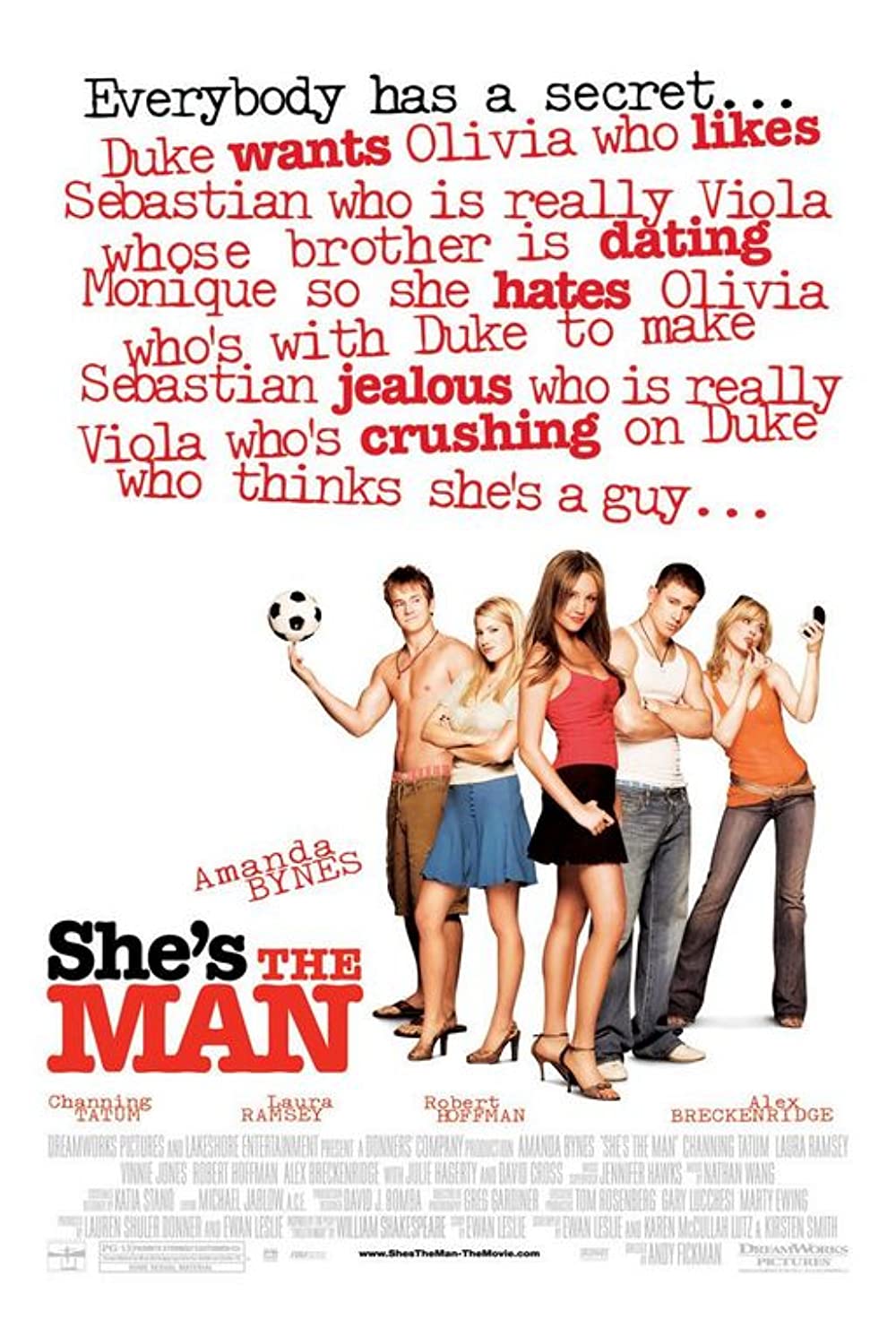 Film
She's the Man
Visit site ↗The teen romantic comedy She’s the Man retells Twelfth Night as set in a modern high school.
- Music
O Mistress Mine
Roger QuilterVisit site ↗Music is a vital part of Twelfth Night, and composers have enjoyed setting and re-setting Shakespeare’s song lyrics. Quilter’s setting for “O Mistress Mine” is probably the most well known version of this song from Twelfth Night.
Connected Readings
What to read next.
Shakespearean Cross Dressers
Visit site ↗Twelfth Night has a famously complicated plot, with many of its complexities arising from men falling in love with women who are masquerading as men…and played by the boy actors of Shakespeare’s time. Untangle some of those complications with this helpful and slightly silly graphic.
- Video
The Globe Theatre
Visit site ↗A side plot in Twelfth Night is the love of Malvolio the steward for his employer Olivia. Other servants trick him into thinking she would like to see him in fancy yellow stockings. This clip from a traditional performance at Shakespeare’s Globe helps modern audiences get the joke.
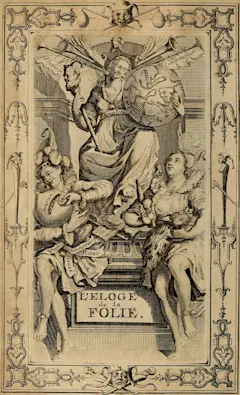
In Praise of Folly
Desiderius ErasmusView title >Shakespeare’s comedies are known for their use of the “fool.” His fools are sometimes truly foolish, and sometimes foolish in a way that reveals a deep and important wisdom. Inspiration for the wise fool can be traced to Erasmus’s Praise of Folly.
More in English literature
See all >The First Part of King Henry the Sixth
William ShakespeareThe Tragedy of King Richard the Second
William ShakespeareHamlet Prince of Denmark
William ShakespeareThe First Part of King Henry the Fourth
William ShakespeareThe Merchant of Venice
William ShakespeareThe Third Part of King Henry the Sixth
William ShakespeareThe Second Part of King Henry the Fourth
William ShakespeareThe Winter’s Tale
William ShakespeareThe Life and Death of King John
William Shakespeare