

Mustafa Akyol
b. 1972
Mustafa Akyol is a senior fellow at the Cato Institute, where he focuses on the intersection of public policy, Islam, and modernity.


Collection
21 items in this collection
The French King, Louis XIV, revoked the laws that granted religious toleration to the Calvinists - also known as the the Huguenots - the Edict of Nantes, in 1685. This sparked a debate throughout Europe about the benefits and costs of a tolerant religious policy. John Locke wrote a series of "letters on toleration" and he was joined by the German jurist Samuel Pufendorf. The wars and revolutions in England from the 1640s to 1689 were concerned with questions of the religious persecution and toleration of Protestants and Catholics. William Penn was active in the 1670s and 1680s in arguing for religious liberty.
In this collection
5 titles, earliest first.
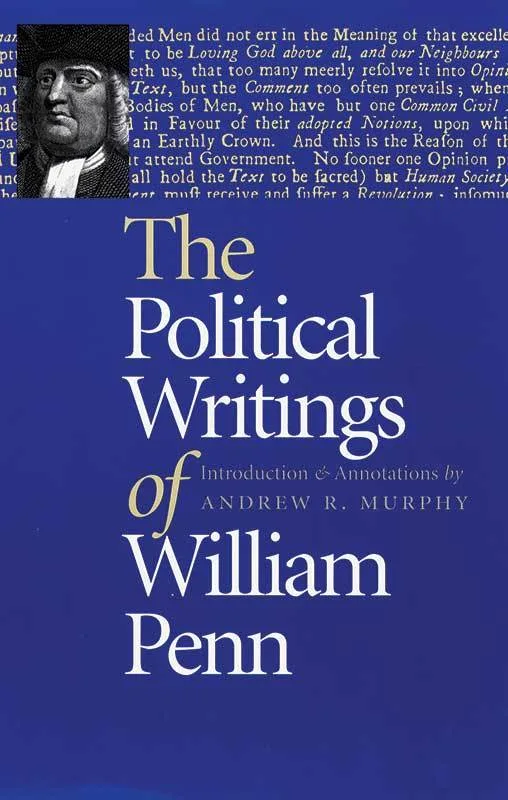
William Penn · 1670
This volume illuminates the origins and development of Penn’s thought by presenting complete and annotated texts of all his important political works. Penn’s early political writings illuminate the Whig understanding of…
John Locke · 1685
Locke was an early advocate of religious toleration. Collected in this volume are his letters or essays on this topic.
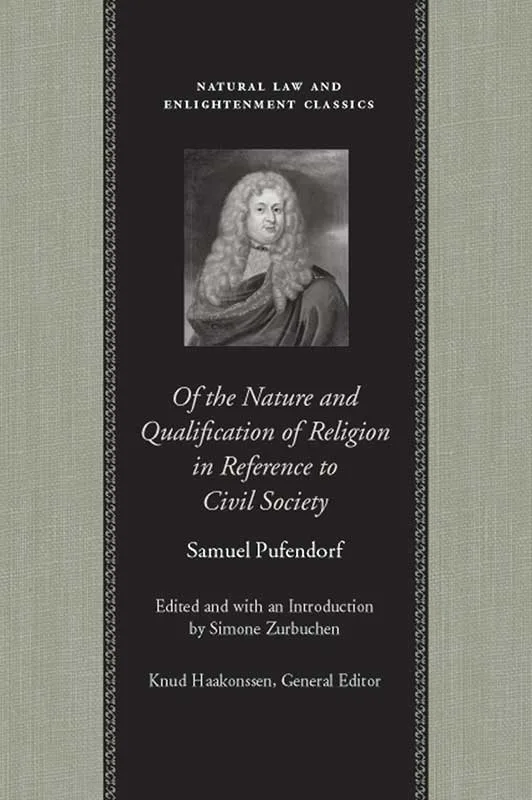
Samuel von Pufendorf · 1687
In this work Pufendorf argues for the separation of politics and religion. Written in response to the revocation of the Edict of Nantes by the French king, Louis XIV, Pufendorf contests the right of the sovereign to…
William Findley · 1812
Observations on “The Two Sons of Oil” was written in 1811 in response to the Reverend Samuel B. Wylie’s work, The Two Sons of Oil, which was published in 1803. Wylie pointed out what he considered to be deficiencies in…
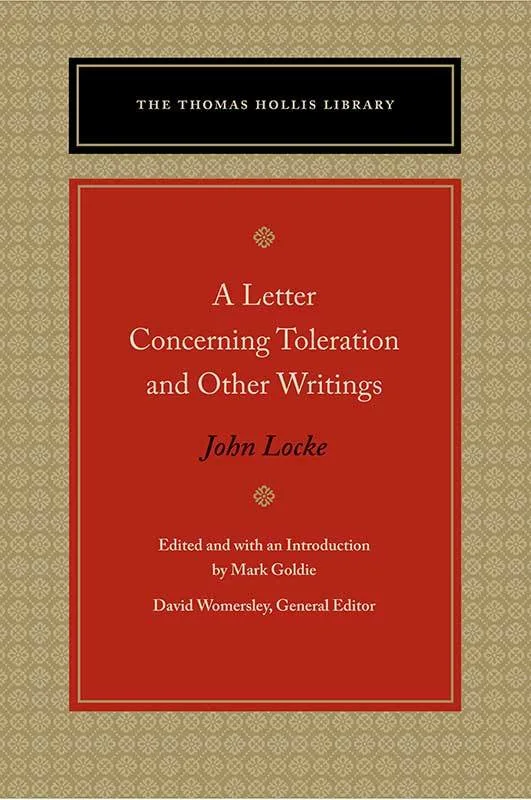
John Locke · 2010
Part of the Thomas Hollis Library published by Liberty Fund. This volume contains A Letter Concerning Toleration, excerpts of the Third Letter, An Essay on Toleration, and various fragments.
In this collection
5 people central to Religious Toleration.
b. 1972
Mustafa Akyol is a senior fellow at the Cato Institute, where he focuses on the intersection of public policy, Islam, and modernity.

1647–1706
Pierre Bayle (1647-1706) was a Protestant philosopher and critic who was born in France. In 1675 he became professor of philosophy at Sedan…

1615–1657
John Lilburne (1615-1657) was a leader in the Leveller movement of the 1640s. A prolific pamphleteer, he was imprisoned several times for…

1644–1718
William Penn (1644-1718) lived during the two great political and religious upheavals in seventeenth-century England: the Civil Wars of the…

1655–1728
Christian Thomasius (1655-1728) was professor of natural law at Leipzig University. He was a follower of Hugo Grotius and an ardent…
In this collection
From The Reading Room, Liberty Matters and the library’s other publications.


Walter Donway · Jan 17, 2023
Peter Carl Mentzel · Nov 28, 2022
Passages on this subject, chosen by OLL editors.
The chief arguments that are urged against an established religion, may be used with equal force against an established charity. The dissenter submits, that no party has a right to compel him to contribute to the support of doctrines, which do not meet his approbation. The rate-payer may as reasonably argue, that no one is justified in forcing him to subscribe towards the maintenance of persons, whom he does not consider deserving of relief. The advocate of religious freedom, does not acknowledge the right of any council, or bishop, to choose for him what he shall believe, or what he shall reject. So the opponent of a poor law, does not acknowledge the right of any government, or commissioner, to choose for him who are worthy of his charity, and who are not. … So the dissenter from established charity, objects that no man has a right to step in between him and the exercise of his religion.
... it does not follow, that because it is a sin it ought therefore to be punished by the magistrate. For it does not belong unto the magistrate to make use of his sword in punishing every thing, indifferently, that he takes to be a sin against God. Covetousness, uncharitableness, idleness, and many other things are sins, by the consent of all men, which yet no man ever said were to be punished by the magistrate. The reason is, because they are not prejudicial to other men’s rights, nor do they break the public peace of societies.
If, then, persons could be trained, as we see they were, not only to believe in theory that the good of their country was an object to which all others ought to yield, but to feel this practically as the grand duty of life, so also may they be made to feel the same absolute obligation towards the universal good. A morality grounded on large and wise views of the good of the whole, neither sacrificing the individual to the aggregate nor the aggregate to the individual, but giving to duty on the one hand and to freedom and spontaneity on the other their proper province, would derive its power in the superior natures from sympathy and benevolence and the passion for ideal excellence: in the inferior, from the same feelings cultivated up to the measure of their capacity, with the superadded force of shame. This exalted morality would not depend for its ascendancy on any hope of reward; but the reward which might be looked for, and the thought of which would be a consolation in suffering, and a support in moments of weakness, would not be a problematical future existence, but the approbation, in this, of those whom we respect, and ideally of all those, dead or living, whom we admire or venerate.
Thus the whole Body of Divines, of what Party soever, after having cry'd up Revelation, the Meritoriousness of Faith, and Profoundness of Mysterys, till they are quite out of breath, come to pay their homage at last at the Footstool of the Throne of Reason, and acknowledg, tho they won't speak out (but their Conduct is a Language expressive and eloquent enough) That Reason, speaking to us by the Axioms of natural Light, or metaphysical Truths, is the supreme Tribunal, and final Judg without Appeal of whatever's propos'd to the human Mind. Let it ne'er then be pretended more, that Theology is the Queen, and Philosophy the Handmaid; for the Divines themselves by their Conduct confess, that of the two they look on the latter as the Sovereign Mistress: and from hence proceed all those Efforts and Tortures of Wit and Invention, to avoid the Charge of running counter to strict Demonstration. Rather than expose themselves to such a Scandal, they'l shift the very Principles of Philosophy, discredit this or that System, according as they find their Account in it; by all these Proceedings plainly recognizing the Supremacy of Philosophy, and the indispensable obligation they are under of making their court to it; they'd ne'er be at all this Pains to cultivate its good Graces, and keep parallel with its Laws, were they not of Opinion, that whatever Doctrine is not vouch'd, as I may say, confirm'd and register'd in the supreme Court of Reason and natural Light, stands on a very tottering and crazy Foundation.
Human law must in every case be based on natural law. All over the earth the great principle of both is: Do not unto others what you would that they do not unto you. Now, in virtue of this principle, one man cannot say to another: "Believe what I believe, and what thou canst not believe, or thou shalt perish." Thus do men speak in Portugal, Spain, and Goa. In some other countries they are now content to say: "Believe, or I detest thee; believe, or I will do thee all the harm I can. Monster, thou sharest not my religion, and therefore hast no religion; thou shalt be a thing of horror to thy neighbours, thy city, and thy province" ... The supposed right of intolerance is absurd and barbaric. It is the right of the tiger; nay, it is far worse, for tigers do but tear in order to have food, while we rend each other for paragraphs.
Unhappy mortals! Dark and mourning earth!
Affrighted gathering of human kind!
Eternal lingering of useless pain!
Come, ye philosophers, who cry, "All's well,"
And contemplate this ruin of a world.
Behold these shreds and cinders of your race,
This child and mother heaped in common wreck,
These scattered limbs beneath the marble shafts—
A hundred thousand whom the earth devours,
Who, torn and bloody, palpitating yet,
Entombed beneath their hospitable roofs,
In racking torment end their stricken lives.
To those expiring murmurs of distress,
To that appalling spectacle of woe,
Will ye reply: "You do but illustrate
The iron laws that chain the will of God"?
Say ye, 'er that yet quivering mass of flesh:
"God is avenged: the wage of sin is death"?
What crime, what sin, had those young hearts conceived
That lie, bleeding and torn, on mother's breast?
Did fallen Lisbon deeper drink of vice
Than London, Paris, or sunlit Madrid?
Enter into the Royal Exchange of London, a place more respectable than many courts, in which deputies from all nations assemble for the advantage of mankind. There the Jew, the Mahometan, and the Christian bargain with one another as if they were of the same religion, and bestow the name of infidel on bankrupts only... Was there in London but one religion, despotism might be apprehended; if two only, they would seek to cut each other’s throats; but as there are at least thirty, they live together in peace and happiness.

Political Science
618 titles · 60 publications · 383 people

Philosophy, Psychology, and Religion
209 titles · 81 publications · 198 people

Language and Literature
282 titles · 6 publications · 321 people
Law
49 titles · 1 publication · 69 people
6 titles · 1 publication · 11 people