

Henry St. John, 1st Viscount Bolingbroke
1678–1751
Henry St. John, 1st Viscount Bolingbroke (1678 – 1751) was a prominent Tory politician in England and later became a major political…


Great Britain
25 items in this collection
According to Caroline Robbins, the 18thC Commonwealthmen built upon the Old or Real Whig tradition and were active from the Glorious Revolution of 1688 to the eve of the American Revolution in 1776. They believed in natural rights, limited government, republicanism, parliamentary reform, the rule of law, religious toleration, the reform or ending of mercantilist economic regulation, increased independence for the colonies, secularized education, and of course, individual liberty.
In this collection
20 people central to 18th Century Commonwealthmen.
1678–1751
Henry St. John, 1st Viscount Bolingbroke (1678 – 1751) was a prominent Tory politician in England and later became a major political…

1632–1718
Richard Cumberland (1632-1718) is perhaps one of the unsung heroes of the natural law tradition. He was a liberal Anglican theologian and…

1723–1816
Adam Ferguson (1723-1816) was a member of the Scottish Enlightenment who succeeded David Hume in his post as Librarian of the Advocate’s…

1655–1716
Fletcher was a Scottish writer who opposed the 1707 union with England and was staunchly opposed to standing armies which he saw as a means…

1692–1750
Thomas Gordon (1692-1750) was a radical Whig and Commonwealthman who, along with his collaborator John Trenchard (1662-1723), were…

1611–1677
James Harrington (1611-1677) was a leading English Republican political theorist of the 17th century. His views on voting by ballot and the…

1720–1774
Thomas Hollis (1720-1774) came from a radical family and was an important member of the so-called eighteenth century commonwealth men. He…

1694–1746
Francis Hutcheson (1694-1746) was educated at the University of Glasgow, where he assumed the chair of Moral Philosophy in 1729.

1735–1801
Millar attended the University of Glasgow where he heard Adam Smith lecture. He became an advocate in 1760, and in 1761 he accepted the…

1608–1674
John Milton (1608-1674) ranks among the greatest poets of the English language. He is best known for the epic poem Paradise Lost (1667),…

1810–1855
Molesworth was a member of the House of Commons and stood as the liberal candidate for Southwark. He edited the works of Thomas Hobbes.

1656–1698
Molyneux wrote an influential work which defended the right of Irish independence from the British Crown and opposed British mercantilist…
1723–1791
Richard Price was a Welsh-born liberal Presbyterian minister and moral philosopher. Price is perhaps best known for his vigorous defence of…

1733–1804
Priestley was a leading theologian, scientist, and advocate of liberty in late 18th century Britain. He was a supporter of the American…

1671–1713
Anthony Ashley Cooper, the Third Earl of Shaftesbury (1671-1713) was the grandson of a founder and leader of the English Whigs, and was…

1622–1683
Algernon Sidney (1622-1683) was a radical English republican political theorist who challenged Filmer’s theory of the divine right of…


1662–1723
John Trenchard (1662-1723) was a radical Whig and Commonwealthman who, along with his collaborator Thomas Gordon (1692-1750), were…

1642–1718
Tyrrell was a Commonwealthman and a friend of John Locke and Richard Cumberland, and a popularizer of their ideas. He is best known for his…
1694–1755
Elisha Williams (1694-1755) was educated at Harvard and served as the 4th Rector of Yale College from 1726-39. He was a minister, jurist,…
In this collection
From The Reading Room, Liberty Matters and the library’s other publications.
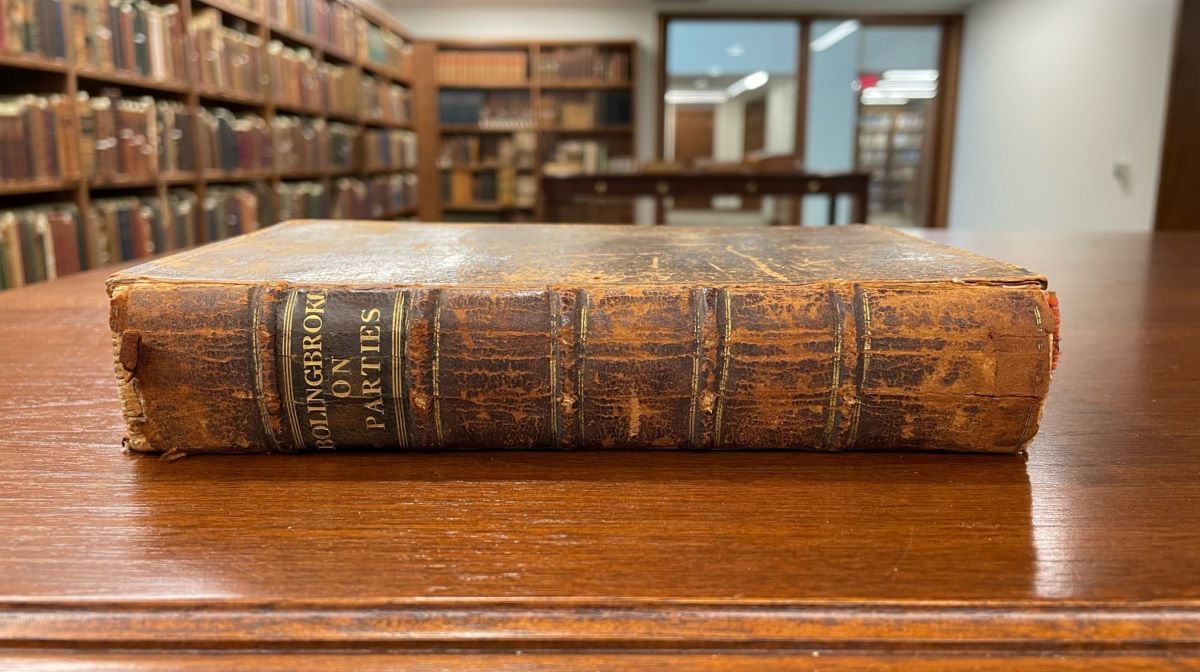
Sarah Skwire · Dec 30, 2022
Passages on this subject, chosen by OLL editors.
’Tis not therefore upon the uncertain will or understanding of a prince, that the safety of a nation ought to depend. He is sometimes a child, and sometimes overburden’d with years. Some are weak, negligent, slothful, foolish or vicious: others, who may have something of rectitude in their intentions, and naturally are not incapable of doing well, are drawn out of the right way by the subtlety of ill men who gain credit with them. That rule must always be uncertain, and subject to be distorted, which depends upon the fancy of such a man. He always fluctuates, and every passion that arises in his mind, or is infused by others, disorders him. The good of a people ought to be established upon a more solid foundation. For this reason the law is established, which no passion can disturb. ’Tis void of desire and fear, lust and anger. ’Tis mens sine affectu [mind without passion], written reason, retaining some measure of the divine perfection. It does not enjoin that which pleases a weak, frail man, but without any regard to persons commands that which is good, and punishes evil in all, whether rich or poor, high or low. ’Tis deaf, inexorable, inflexible.
Manus haec inimica tyrannis
Einse petit placidam cum libertate quietem.
(This hand, enemy to tyrants,
By the sword seeks calm peacefulness with liberty.)
“’Tis not the same with Goodness as with other Qualitys, which we may understand very well, and yet not possess. We may have an excellent Ear in Musick, without being able to perform in any kind. We may judg well of Poetry, without being Poets, or possessing the least of a Poetick Vein: But we can have no tolerable Notion of Goodness, without being tolerably good. So that if the Praise of a Divine Being be so great a part of his Worship, we shou’d, methinks, learn Goodness, were it for nothing else than that we might learn, in some tolerable manner, how to praise. For the praise of Goodness from an unsound hollow Heart, must certainly make the greatest Dissonance in the world. (FROM: SECTION V)
Though this word is used in various senses, I mean by it here, only that liberty which is opposed to external force and constraint, and to such force and constraint only, as we may suffer from men. Under the term liberty, taken in this sense, may naturally be comprehended all those advantages which are liable to be destroyed by the art or power of men; every thing that is opposed to temporal slavery.
This liberty has always been accounted one of the greatest natural blessings which mankind can enjoy. Accordingly, the benevolent and impartial Father of the human race, has given to all men a right, and to all naturally an equal right to this blessing.
For more information see:
Caroline Robbins, The Eighteenth-Century Commonwealthman: Studies in the Transmission, Development, and Circumstance of English Liberal Thought from the Restoration of Charles II until the War with the Thirteen Colonies (Indianapolis: Liberty Fund, 2004).
For additional information about the 18thC Commonwealthmen see the following:

History of the Americas
343 titles · 67 publications · 239 people

Language and Literature
73 titles · 10 publications · 81 people

France - Andorra - Monaco
46 titles · 5 publications · 44 people

Great Britain
38 titles · 1 publication · 41 people

France - Andorra - Monaco
19 titles · 4 publications · 19 people

History of scholarship and learning. The humanities
9 titles · 4 publications · 92 people