Ethics1893
The Nicomachean Ethics
- Aristotle(author)
- F.H. Peters(translator)
In his ethical treatises Aristotle offers a defense of the idea of eudaimonism (human flourishing or happiness) which is achieved as a result of human choice in search of excellence and the good life.
About This Edition
Citation
The Nichomachean Ethics of Aristotle, trans. F.H. Peters, M.A. 5th edition (London: Kegan Paul, Trench, Truebner & Co., 1893).
Aristotle. The Nicomachean Ethics. translated by F.H. Peters, Kegan Paul, Trench, Trubner, and Company, 1893. Online Library of Liberty, https://oll.libertyfund.org/titles/peters-the-nicomachean-ethics.
Aristotle. (1893). The Nicomachean Ethics. Kegan Paul, Trench, Trubner, and Company. https://oll.libertyfund.org/titles/peters-the-nicomachean-ethics
@book{aristotle1893ethics,
  author = {Aristotle},
  title = {The Nicomachean Ethics},
  publisher = {Kegan Paul, Trench, Trubner, and Company},
  address = {London},
  year = {1893},
  url = {https://oll.libertyfund.org/titles/peters-the-nicomachean-ethics},
  note = {Online Library of Liberty}
}TY - BOOK AU - Aristotle A3 - Peters, F.H. TI - The Nicomachean Ethics PY - 1893 CY - London PB - Kegan Paul, Trench, Trubner, and Company UR - https://oll.libertyfund.org/titles/peters-the-nicomachean-ethics DB - Online Library of Liberty ER -
Copyright
The text is in the public domain.

About the author
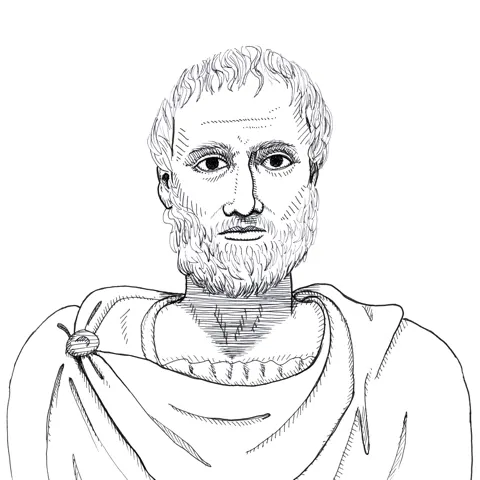
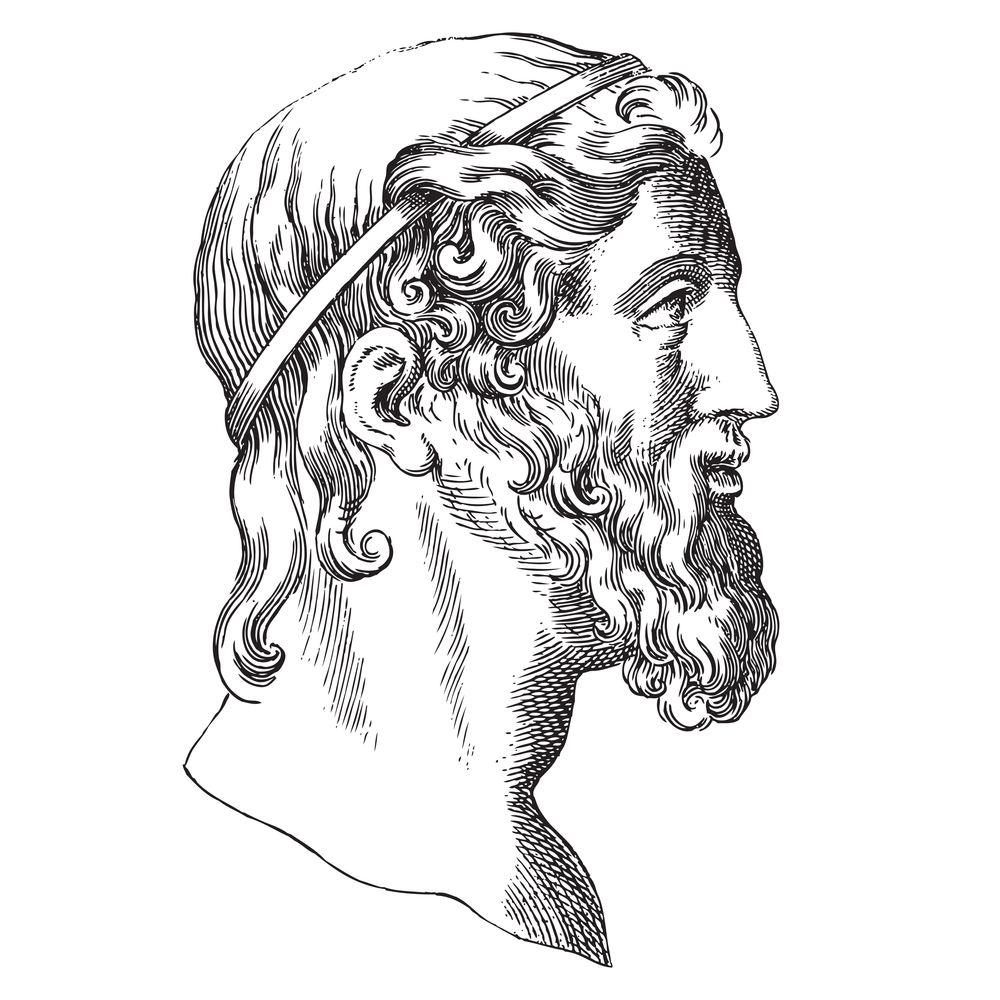
Aristotle 384 BCE–322 BCE
Aristotle was an ancient Greek philosopher who set up a rival academy, The Lyceum, to challenge Plato’s Academy. Aristotle wrote influential works in a range of disciplines - politics, physics, ethics, economics - and had a profound impact on Western thought.
Related People
Plato
Author
Plato, a students of Socrates, was Aristotle's teacher.

Critical Responses
Works that answer or challenge this text.
Ethics in Aristotle and Adam Smith
Elaine SternbergVisit site ↗Aristotle and Adam Smith both understand ethics in ways that differentiate them sharply from most other moral philosophers. Their common sense attitudes are substantially compatible, and many of their evaluations coincide. Nevertheless, the differences between Smith and Aristotle are profound, largely because of Smith's modern assumptions and impoverished metaphysics.
Connected Readings
What to read next.
 Book
The Republic (1888 ed.)
PlatoPlato's Republic
View title >The Republic is a Socratic dialogue, authored by Plato around 375 BC, concerning justice, the order and character of the just city-state, and the just man.[2] It is Plato's best-known work, and has proven to be one of the world's most influential works of philosophy and political theory, both intellectually and historically.
 Book
Posterior Analytics
AristotleAristotle and Science
View title >Aristotle sets out the conditions under which scientific arguments will provide true knowledge; where true conclusions are deduced from first principles and basic principles are used to explain more complex ones.
- Liberty Matters
Why Read the Ancients Today?
Roosevelt Montás, Anika Prather, Aeon J. Skoble, and Jennifer A. Frey
View title >Why have ancient texts fallen out of favor today? Once read widely- both in homes and schools- texts by "dead white men" are looked upon today with disfavor. Yet some scholars- and readers- insist upon their enduring significance, even when they reflect a time and place foreign to what we know today.
More in Ethics
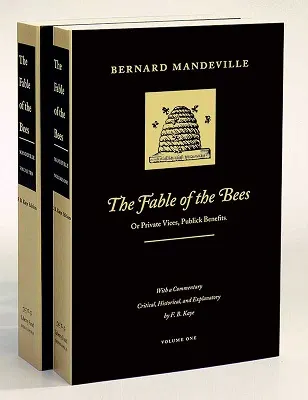
See all >The Fable of the Bees or Private Vices, Publick Benefits, 2 vols.
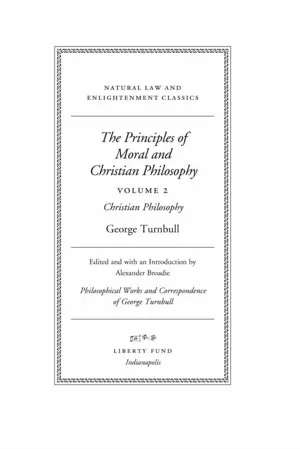
Bernard MandevilleThe Principles of Moral and Christian Philosophy. Vol. 2: Christian Philosophy
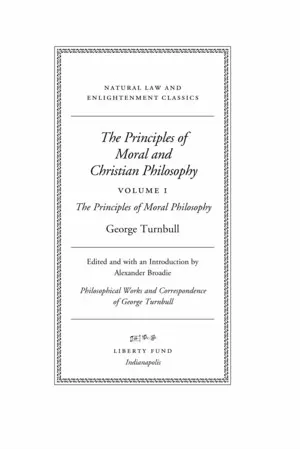
George TurnbullThe Principles of Moral and Christian Philosophy. Vol. 1
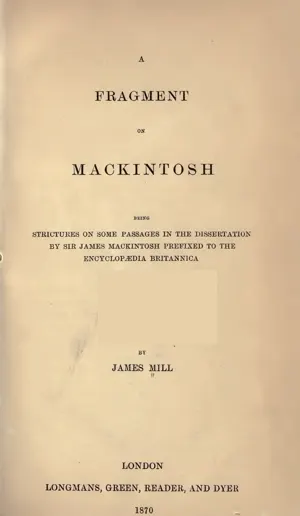
George TurnbullA Fragment on Mackintosh (1870)
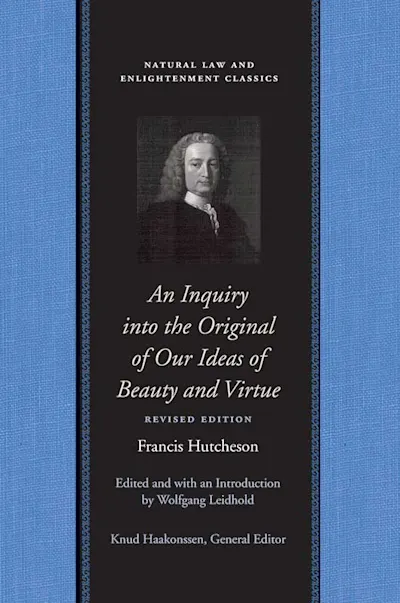
James MillAn Inquiry into the Original of Our Ideas of Beauty and Virtue (1726, 2004)
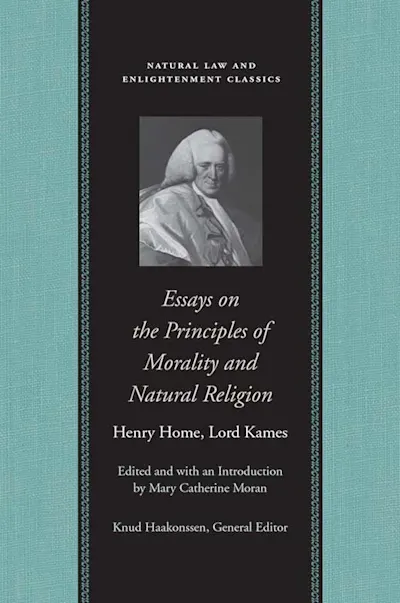
Francis HutchesonEssays on the Principles of Morality and Natural Religion
Henry Home, Lord KamesAn Inquiry into the Original of Our Ideas of Beauty and Virtue (old version)
Francis HutchesonThe Fable of the Bees or Private Vices, Publick Benefits, Vol. 2
Bernard MandevilleThe Fable of the Bees or Private Vices, Publick Benefits, Vol. 1
Bernard Mandeville