

Roosevelt Montás
Lead essay · Nov 22, 2022

Sitting in my modest post-war apartment in Washington Heights in upper Manhattan, I have in my hand a book written in the fourth century BC by an Athenian general named Xenophon. Xenophon is sometimes described as a historian and philosopher because he wrote so widely about the ancient world and because he spent a lot of time with and wrote about an even more remarkable Athenian named Socrates. The book I am holding is known as the Memorabilia.[1] It’s a vigorous defense of the philosophic life Socrates exemplified and features him in conversation with various interlocutors. It is a delightful little book that adds human texture to the often wooden image we get from Socrates’s most famous student, Plato.
My hand does not tremble when I hold the book, but it might as well. It is a matter of astonishment that from a distance of more than two millennia, in a culture, language, and world that would have been inconceivable to Xenophon, a 21st-century Dominican immigrant to the United States can commune directly with his ancient and captivating mind. I can, quite literally, think the thoughts that Xenophon thought and through his eyes, catch glimpses of a world that no longer exists and a way of living that is at once alien and oddly similar to my own. Apart from everything I might learn about the ancient world from reading Xenophon, my mind delights in the mere miracle of reading his words; John Keats before his Grecian urn has nothing on me.
Amy Willis and the editors at the Online Library of Liberty were very kind to invite me to write an essay on the value of reading ancient books. I confess that I hesitated before accepting the task. Not long ago, I stepped down from a decade-long directorship of Columbia University’s Center for the Core Curriculum. I have since published a book arguing for the indispensability of “great books” in undergraduate general education. I am inescapably identified as an advocate of the study of ancient texts. But my position is more extreme than simply arguing that ancient texts have a particular and unique value for contemporary readers. My position is outside the academic mainstream in at least two respects: First, I argue that reading and discussing ancient texts—those often described as “great books”—should be a required part of every student’s undergraduate curriculum; and second, that general education courses devoted to this purpose should be offered outside of the traditional academic disciplines, i.e., that such courses should not be offered within or as introductions to the disciplines. Liberal education should be essentially non-disciplinary, focused on fundamental questions pertinent to students by virtue of their humanity, regardless of their professional or scholarly ambitions. In other words, my view is that courses in which students have direct encounters with ancient texts should be part of the general education of all undergraduates and that such courses should be truly liberal—pursued for the affirmative value of the activity of inquiry itself, liberated as much from professional pursuits (i.e. preparation for the job market) as from disciplinary training (i.e. preparation to academic specialization).
Probably no one would argue explicitly that reading ancient texts isn’t valuable today. At least I’ve never encountered anyone who would put it quite like that. Yet the role of ancient texts in the undergraduate curriculum, and especially the matter of whether they are required in general education, is rife with controversy, so much so that only a handful of colleges and universities have required courses that focus on such texts. Why this should be the case might be a mystery to those unacquainted with the ideological turmoils of academia and the fossilized institutional structures in which they play out.
One common ideological objection to emphasizing ancient texts in general education stems from the view that such texts are freighted with and perpetuate a legacy of exclusion, exploitation, misogyny, and often enough, white supremacy. A second and more bureaucratic impediment emerges from the discipline-based structure of the university, which leaves little room for general education courses that incorporate texts that “belong” to a given discipline but are not taught by scholars of that discipline. A third obstacle, perhaps the most potent one and related to the previous two, results from the lack of consensus among faculty about what students should learn in a general education curriculum. In the absence of consensus on substantive content—and the reluctance of faculty and administrators to engage in the sometimes vexed debates required to forge such consensus—institutions have typically adopted “learning outcomes” that describe general cognitive, rhetorical, and argumentative competencies as the goals of general education.
So the study of ancient texts has become more and more rare in required general education curricula. One can of course still find ancient texts in disciplinary offerings: if you major in Classics or choose to take courses in the Classics department, you will encounter them—though perhaps not in the service of liberal education, but as the foundation for advanced work in the discipline. You might also encounter ancient texts in disciplinary pockets within departments, such as courses in medieval literature in the various literature departments, or courses in the history of philosophy in philosophy departments. But for most undergraduate degrees, students can, and increasingly do, fulfill their course requirements without meaningful engagement with ancient texts. General education—the place where students, regardless of their career ambitions, academic major, or intellectual comfort zones, receive a common education—has been largely emptied of specific content in favor of an emphasis on skills. To be more precise, general education increasingly leaves it up to faculty members and ultimately, students, to determine what content will serve as vehicles for developing general skills described in the vacuous jargon of “learning goals,” “core competencies,” and the like.
Although colleges and universities typically have many “liberal arts” courses that fulfill general education requirements, they tend to be disciplinary courses in “liberal arts disciplines.” The term “liberal arts discipline” has an oxymoronic quality to it. “Liberal education” actually means non-specialized education, which is why the term is often used synonymously with the blander “general education.” Liberal education is liberal in the sense that it is not subordinate to any specific professional or vocational goal. When academic disciplines have been formalized and professionalized as they have in the contemporary university, liberal education means non-disciplinary education—education free from epistemological compartmentalization, specialized procedures, and professional scholarly aims. The Roman playwright Terence's famous dictum—"I am human, and I think nothing human is alien to me”—captures the non-disciplinary and unbounded character of liberal inquiry. True liberal education—including the non-disciplinary study of ancient texts—has been virtually squeezed out of the undergraduate curriculum by the bureaucratic organization of universities into departments that correspond to academic disciplines. Most undergraduates have only disciplinary courses from which to assemble a “general” education—they can study philosophy, classics, literature, art history, etc., but almost never a course that pursues liberal inquiry heedless of disciplinary boundaries.
************
The selection of any particular set of ancient texts constitutes a canon. In the case of general education, a canon might aim to capture the textual foundations of contemporary civilization. Compared to the prevalence of texts in contemporary life, texts in antiquity were rare artifacts. The threshold for what was worth writing down and copying was considerably higher before the invention of the printing press than it is today. Only a fraction of the already rare texts produced in antiquity has descended to modern times. This in itself makes them precious objects of attention.
While the label “ancient texts” is fairly innocuous, the selection of any list or set of works from the past in an educational context immediately invites controversy. “The canon” is a site of ideological contest. It’s a natural feature of intellectual life that the contours of any canon be contested, especially if we claim to be engaged in liberal education and free thinking, rather than in the administration of an orthodoxy. We can—and should—reasonably disagree about what texts should be classified as belonging to a set of “core texts” or “great books” or “classics.” And we should debate with seriousness and zeal what texts should be singled out as special objects of attention for young people pursuing a formal education.
But the place of ancient texts in general education is sometimes challenged on more fundamental grounds. This deeper ground concerns not whether this or that text should be classified as “canonical” and included in the general education of undergraduates, but whether liberal education should be organized around any canon at all. Does not the very idea of a canon, or a hierarchical valuation of texts, encode systems of social power, exclusion, perhaps even of domination and exploitation? Is not “the canon,” as it has come down to us, precisely a codification of power, and does it not embody and perpetuate a particular arrangement of power? Is it not oppressive? Is it not patriarchal? Is it not Eurocentric? Is it not racist? Is it not a tool of white supremacy?
When we debate the canon and its place in general education, these are the right questions to ask. But we cannot adequately interrogate the canon without reading the canon. It stands to reason that many aspects of the contemporary world are visible and in some cases emerge quite directly from the textual tradition embodied in “the canon.” This is true of aspects of our contemporary reality that we embrace and struggle to realize more fully, and also true of aspects that we reject and struggle to leave behind. The canon is there for critical examination, revision, and debate. It captures in unique and irreplaceable ways what our world has been and how it has come to be what it is, and gives us singularly powerful tools for thinking beyond the narrow confines of our lived experience. Ancient texts, whether holy or secular, have been interpreted, appropriated, used, and abused in countless ways. While it’s important to grapple with the histories of reception and deployment that canonical texts carry with them, we have to read the texts themselves and subject them to our own interpretations and appropriations. No text is univocal.
************
I still have Xenophon’s Memorabilia here next to me. I’ve just opened it and read an exchange in which Antiphon asks Socrates why he doesn’t charge a fee to those who engage him in the philosophical inquiries for which he was well known. Socrates replies that, like beauty, wisdom can be offered shamefully or honorably. Offering beauty for money to all comers essentially constitutes prostitution. Offering wisdom for money is sophism. Socrates follows a different path, nourishing friendships anchored on shared exploration and discovery: “the treasures that the wise men of old have left us in their writings I open and explore with my friends. If we come on anything good, we extract it, and we set much store on being useful to one another.” Socrates, those many centuries ago, was engaged in a text-based form of inquiry that in today’s university we would call a “great books seminar.” In the university, formal structures, bureaucratic processes, and careerism have crusted over this approach to learning and made it rare, but where it still exists, it makes for the most liberal form of education an undergraduate curriculum can deliver.
But the question arises—as it did for a student the other day after hearing me lecture at a liberal arts college—“which are the right books and how do we choose them?” The question becomes vastly more complex the closer we get to our own time. With the ancients, if for no other reason than the relative paucity of sources, it is easier to see one’s way through the question of which texts are the right ones to foreground as part of a general education. Yet even within the limited corpus of ancient texts that have survived to the present, the sources are too rich and varied for any individual, no matter how learned, to form anything like comprehensive or definitive judgements about which texts are most worth the attention of today’s readers. Yet—as I suggested to the student who asked this incisive question—with the collective knowledge of a college faculty like the one at the school where we were gathered that evening, one can answer the question as well as it can be answered. There is, in any competent faculty, sufficiently broad and sufficiently deep engagement with the works that have come down to us from antiquity, to propose workable, if tentative, judgments about which works from the past are most deserving the attention of undergraduate students and teachers. But this, of course, requires open conversation, non-territoriality, and transcendence of what Freud called “the narcissism of minor differences”—intellectual dispositions which the academic profession, despite its professed commitments, systematically stamps out of many of its practitioners.
Here is Machiavelli, not technically an ancient writer, but occupying the same ground in the discussion of great books as the true ancients. In a famous letter to his friend and benefactor Francesco Vettori, introducing his most influential work, The Prince, Machiavelli describes his daily routine in the semi-exile in which he lived after his ouster from Florentine politics.
When evening comes, I go back home, and go to my study. On the threshold I take off my work clothes, covered in mud and filth, and put on the clothes an ambassador would wear. Decently dressed, I enter the ancient courts of rulers who have long since died. There I am warmly welcomed, and I feed on the only food I find nourishing, and was born to savor. I am not ashamed to talk to them, and to ask them to explain their actions. And they, out of kindness, answer me. Four hours go by without my feeling any anxiety. I forget every worry. I am no longer afraid of poverty, or frightened of death. I live entirely through them.[2]
The communion with powerful ancient minds that Machiavelli describes, and the nourishment and pleasure he draws from it, continue to be available to us in today’s hyperconnected and overstimulated world. And as it was for the exiled Machiavelli, such communion can be a respite from the limitations, indignities, and injustices of our daily lives. These old texts allow us, as they did James Baldwin, to understand our own trials not as unique in human existence but as, in fact, links that bind us in our common humanity: “You think your pain and your heartbreak are unprecedented in the history of the world, but then you read. It was books that taught me that the things that tormented me most were the very things that connected me with all the people who were alive, or who have been alive.”[3] Paradoxically, communion with the ancients both enlarges our human experience and cuts it down to size.
Here’s W.E.B. DuBois writing in the Souls of Black Folks, pointing in the same direction as Machiavelli and Baldwin:
I sit with Shakespeare, and he winces not. Across the color line I move arm and arm with Balzac and Dumas, where smiling men and welcoming women glide in gilded halls. From out of the caves of evening that swing between the strong-limbed Earth and the tracery of stars, I summon Aristotle and Aurelius and what soul I will, and they come all graciously with no scorn nor condescension. So, wed with Truth, I dwell above the veil.[4]
Nearly everyone who has spent time with ancient texts can express similar sentiments. We neglect a precious aspect of our humanity when we abandon the form of wealth that ancient texts offer us for free.
Endnotes
[1] Memorabilia. I.6.14, Loeb Classical Library, E.D. Marchant and O.J. Todd, translators, revised by Jeffrey Henderson, Harvard UP, Cambridge, London, 2013.
[2] Machiavelli, Selected Political Writings, David Wooton, Ed. Hackett Publishing Company, Indianapolis, Indiana, 1994, p. 3.
[3] LIFE magazine, May 24, 1963, p. 89
[4] “Of the Training of Black Men,” Dover Thrift Editions, 1994, p. 67.
Anika Prather
Response · Nov 29, 2022 · Own page
Roosevelt Montás beautifully captures the relevance of the canon to all people, and his thoughts cause me to reflect on a passage in Rudyard Kipling’s The Second Jungle Book. In the book there is a list of the various laws that govern life in the jungle. One of those laws is “The Water Truce.” Because all creatures in the jungle have a common need for water, the law states, “By the law of the jungle it is death to kill at the drinking places.”[1] When it comes to hunting or eating, a creature can find something to sustain them, even if there is a scarcity of prey, but for water there is no substitute. Everyone needs water. Everyone uses water to survive. So the Water Truce provides a safe space for all creatures of the jungle to drink safely in order that all living creatures can sustain the cycle of life and progress.
Classics could be a “Water Truce” of sorts. Because a plethora of people have connected to these texts, they provide a neutral space. Many have come to this space of classics to “drink and be refreshed.” This is possibly the one thing humanity has in common. Even though the stories that bring us to the texts may all be different, the texts still enlighten us about our shared humanity and seem to neutralize the often conflicted spaces of diverse peoples.
Montás mentions a passage from one of W.E.B. DuBois’ essays in The Souls of Black Folk. DuBois describes a version of a “Water Truce” when he describes a vision of himself dancing with some of the authors. DuBois wrote profusely on the topic of the relevancy of classics to Black people. Many of his writings found in The Souls of Black Folk and The Education of Black Peopleintroduce us to a world where Black people were able to find refreshment at the same watering hole that the Founding Fathers, Phillis Wheatley, Abraham Lincoln, Frederick Douglass, Martin Luther King, Harriet Beecher Stowe, Huey P. Newton, Chinua Achebe, John Locke, Wole Soyinka, Paulo Freire, and many others drank from. By drinking from this same water source, many were able to engage in a dialogue which gave space to be heard, because the source of language and understanding was the same.
I am especially drawn to the story of classics in the Black story. DuBois was the first to open my eyes to this narrative. In the essay “Of the Training of Black Men,” from Souls of Black Folk, he articulates why classics is a way Black people can free their minds from the stigmas chained to them by their oppressors. In reading these texts, the ancestors did not seek to reject their African heritage, but they saw these texts as a gateway to gaining literacy in the foreign land where they were forced to live. Du Bois does not argue that reading the texts grants us a way to say, “Hey, we are just as smart as you because we can understand these texts too.” Instead, he posits that in these texts he found a world where all men WERE equal, with common experiences to be shared. This is representative of the “Water Truce.” At the watering hole all animals were equal, requiring the nourishment of water to thrive. Like the watering hole connecting prey and predator, these experiences connect us and solidify our understanding of our common humanness. Their brilliance is that they are not only particular, but universal. These texts tell the human story, not just the “white” story.
Montás shared one of my favorite passages from DuBois. In the essay “Of the Training of Black Men”, DuBois writes a sort of “opus” to his belief in the power of these books:
…I summon Aristotle and Aurelius and what soul I will, and they come all graciously with no scorn nor condescension. So, wed with Truth, I dwell above the Veil. Is this the life you grudge us, O knightley America? Is this the life you long to change into the dull red hideousness of Georgia? Are you so afraid lest peering from this high Pisgah, between Philistine and Amalekite, we sight the Promised Land?[2]
This passage reveals that classics could be a common ground, a watering hole, a place to discover oneself, and a connection to other human beings. The work of classical study could be something other than the chore of treading through line after line of complex text; it could be a labor of love, even a dance. In Du Bois’ metaphor, he is dancing with the authors in a joyful exchange, where he feels nothing but equality and acceptance. The authors engaged in the dance did not know or experience what America has been like for Black Americans. The authors were coming from a completely different place. Of course, that place was not devoid of prejudice, but modern American racism, with its history of chattel slavery and Jim Crow oppression, would have been utterly foreign to it. These authors were not writing to promote a racist worldview, but they were writing to move people, to teach them, to tell the human story.
I end with a quote by James Baldwin, who reveals an interesting perspective on why he engaged with the culture of “the West”:
…I brought to Shakespeare, Bach, Rembrandt, to the stones of Paris, to the cathedral at Chartres, and to the Empire State Building, a special attitude. These were not really my creations, they did not contain my history; I might search in them in vain forever for any reflection of myself. I was an interloper; this was not my heritage. At the same time I had no other heritage which I could possibly hope to use--I had certainly been unfitted for the jungle or the tribe. I would have to appropriate these white centuries, I would have to make them mine--I would have to accept my special attitude, my special place in this scheme--otherwise I would have no place in any scheme.
These books are a part of the story of how all of our ancestors obtained the key to understanding the shared history of all humans. They are a life-giving spring of wisdom from those who have walked life’s path before us. I know that many names of color and women have been left off of the list of authors, but I will expand the list. The Watering Hole I see is a vast mountain spring of refreshing water that flows with the wisdom of diverse human beings. When I read these texts, I do not just see a white heritage, but I learn the stories of how my ancestors connected to these texts to comprehend and articulate their painful and beautiful story in the language of a foreign land. As prey drank beside the predator in The Second Jungle Book, may we all come together and drink from the watering hole of wisdom found in classical texts, the collection of wisdom left for us by ALL of our ancestors.
Endnotes
Aeon J. Skoble
Response · Dec 01, 2022 · Own page
People who think it’s a good idea to read classical texts are sometimes challenged with “Why should I read something like that? It isn’t relevant to my life.” There are a couple of wrong-headed ideas baked into such a challenge. One is the presupposition that a work from another culture 2000 years ago cannot be relevant. Another is the idea that only one sort of relevance would count as a justification for reading something that old. Both of these are false: classical texts can be worthwhile even if they lack topical relevance, but also, they tend to contain more relevance than people realize.
Roosevelt Montas’ lead essay does a great job articulating the ways in which many classical texts transcend time and place, and speak to the human condition in a broad way, and I couldn’t agree more that “communion with the ancients both enlarges our human experience and cuts it down to size….We neglect a precious aspect of our humanity when we abandon the form of wealth that ancient texts offer us for free.” Sadly, I fear that few people will listen to him, for reasons his essay explains: the increase in both disciplinary specialization and the pre-professional ethos of higher education today. If the “point” of higher education is preparation for the high-tech job market, why should anyone bother with Aristotle?
It's actually even worse than Montas thinks. Even within the discipline of philosophy, many contemporary philosophers have advanced the argument that we shouldn’t teach, or even care about, ancient philosophers. For some of them, the reasons are the ones Montas notes, that they’re misogynistic or racist and so on (e.g., don’t bother with Aristotle because he thinks women are mentally inferior to men). For others, the objection is that the ancients lacked the scientific advances that have led to today (e.g., don’t bother with Aristotle because he didn’t know about Arrow’s theorem). But while it’s certainly true that ancient philosophers may be wrong about this or that empirical matter, it’s fallacious to infer that we therefore have nothing to learn from them.
In one sense, this is the answer to the “relevance” question: if there’s anything at all to be learned from something, that makes it relevant. Do we have anything to learn from the ancients? Of course we do. Outside of the natural sciences, it simply isn’t the case that “newer” implies “truer.” Sometimes older wisdom is shown to be flawed, other times it proves itself to be enduring. Imagine a great and powerful nation that fancied itself to be committed to freedom and democracy, but because it was at odds with other quasi-imperial powers, found itself obliged to disregard human rights and curtail some freedoms, focusing perhaps too many of its resources on combat action despite the dubious rationale for the long war it was in. The classically-minded reader will have perceived that I am referring not to the United States, but to classical Athens, as documented in Thucydides’ account of the Peloponnesian War. It’s impossible to think Thucydides has no relevance for the modern world unless one has never read Thucydides. His insights into power, justice, and freedom are not locked into his time, but are timeless. That’s not to say that he, or any other ancient thinker, should be presumed wise because he is from ancient times. But it’s also false that he should be presumed foolish or useless because he is from ancient times. As long as there is political power, it will always be relevant to think about its justification and proper scope. As long as there are people, it will always be relevant to think about how we should live and interact with each other.
The counter-argument is, yes of course we need to keep asking those questions – that’s why reading the classics is useless; we have new, better sources. But that begs the question. Some people justify the history of philosophy on the grounds that it’s helpful to contextualize contemporary inquiry by reference to where those inquiries originate. And that’s true, but it is not the sole, or most important reason. The more important reason, I would argue, is the sort of reason I suspect Montas would agree with – that there is in fact enduring wisdom in so much of the classics. Plato’s grand analogy of the soul-as-city, Aristotle’s account of practical reason and its role in human virtue, Thucydides’ reflections on power – these are worth reading for their insight, not as mere historical curiosities.
And of course, Montas’ argument isn’t limited to philosophical works. Literature too can be appreciated across time and place. A beautiful poem or a moving drama is something that speaks to the human condition in some way, or excites the imagination, or hits an emotional chord. The idea that there is an expiration date on a work’s ability to do this is ridiculous, so in one sense, it’s sad that Montas even felt obliged to refute it. But on the other hand, since people do make this ridiculous argument, I am glad he did, and he does an eloquent job doing so.
There is the question, which Montas speaks to, of which books in particular should count as “the canon.” I wonder if that’s a question we need to answer. If I claim that there’s some great value in reading Aristotle, that’s either true or false on its own merits, and isn’t a function of whether something else another person might name is also of great value. If we took the idea of “liberal education” seriously, as Montas recommends, we would be glad to have an ever-expanding canon, and it wouldn’t be zero-sum. But – and this is one of his points – there are countervailing pressures in the academy that make it become zero-sum. Many majors are facing pressure from accreditation boards to increase the total credits required for the major, leaving fewer opportunities for study of anything not within that major. And “general ed” requirements, which one might think would be a safe haven for “great books,” have often been distorted by turf wars which elevate departmental advantage over student benefit.
Sadly, there are no obvious and simple solutions to this problem. Until some of those start to appear, the best we can hope for is that those who appreciate the insights of the ancients continue to defend the value in reading them.
Jennifer A. Frey
Response · Dec 06, 2022 · Own page
Few people have written more powerfully, passionately, and poignantly about the value of liberal learning than Roosevelt Montás. For Montás, the issue of liberal education is deeply personal: liberal learning, grounded in the classical texts of the Western tradition, transformed his life. It is not just that such an education took him from poverty to the halls of power at one of the most elite institutions in the country; far more importantly, it helped him to articulate and begin to answer the most fundamental questions that he faced as a young person with his life ahead of him. These questions are not just about career paths, pleasures, or talents, but what it means to be a good human being and citizen generally. The liberal education that Columbia University offered afforded him the opportunity to explore what the meaning and purpose of his life was, which is the beginning of the sort of practical wisdom necessary to flourish and live a happy life.
One of Montás’s major claims about a properly liberal education is that it should take place outside the confines of disciplinary boundaries. It should be focused on fundamental questions pertinent to students by virtue of their shared humanity, regardless of their professional ambitions (even if those ambitions are scholarly). Such education is “truly liberal” in that it is “pursued for the affirmative value of the activity of inquiry itself,” liberated from the tyranny of outcomes, including the uninspired and skill based ‘learning outcomes’ that dominate our syllabuses today.
But the issue of the liberatory potential of study for its own sake may seem orthogonal to the question of what to study—in particular, to the question of whether we should study a “canon” or the classical texts of a specific intellectual tradition. In this brief reflection, I want to try to bring these two aspects of liberal learning together. To do that, I want to pose a more fundamental question: what is the goal of education? Does it have an internal aim—one that both defines and measures it as a specific form of learning? And if it does, how does that goal help us to think about what is worthy of our attention in higher education?
Education is much more than the transmission of knowledge and skills. Education is the formation of human nature—specifically human potential—into a certain characteristic shape that we easily recognize as exemplifications of human goodness. Its goal is nothing more nor less than human flourishing.
I’ve never met anyone who thinks that an education in merely surviving life is the best or highest kind. The whole concept of higher education rests upon the notion that we are made for more than a life of work. We want to create and appreciate what is beautiful and meaningful; we want to enjoy and rest in what is really and truly excellent, and we want to know what is true, not in piecemeal fashion, but in a way that fits into an integrated system of knowledge that makes sense to us as a whole. These higher aspirations in us go well beyond the life of work—of what is pursued as a means to a further end, like money, status, or power. And these higher aspirations are only pursued freely when we understand why they are worthy of being pursued by us—when we have an account or understanding of how and why they exemplify real human excellence.
In order to unpack these claims, a few distinctions are in order. The first is between contemplative and practical study or learning. Contemplative study simply aims at the acquisition of knowledge, or the rationally apprehended truth. For instance, one may simply want to study and contrast Euclidian and non-Euclidian geometries, with no ulterior purpose in mind other than knowing and understanding. Or, one may study various forms of geometry to use it in the practice of civil engineering. In the latter case, geometrical knowledge is sought practically; in the former case, contemplatively.
One can study anything contemplatively. Perhaps one wants to count the number of cracks in the sidewalk in the neighborhood or study the driving rules in one’s state. While such study is contemplative rather than practical, I very much doubt we would call such study higher or liberal. It is clear that when we think about higher education the objects of study matter—and we think that some objects are more worthy of our time and attention than others. A higher and truly liberal education helps us, at minimum, to think about who and what we are and what sort of person we should want to become; for without some understanding of this, we are unable to live well: to think, choose, and act in a manner that exemplifies human flourishing. Everyone will, of course, have to live, choose, and act under some conception of who and what they are, and of what is most valuable in human life; but unless one understands the reasons why they pursue what they do, they are not truly free. Such a person may realize one day that they are simply living the life their parents want for them, or the life that the broader culture values. Their reasons will not be their own in some deep sense.
A general, liberal arts education that focuses on classical texts is aimed at helping us gain the requisite self-knowledge to live well. It invites students to reflect upon these questions together, by studying those texts that have raised the fundamental questions of our intellectual tradition, and that have put forward the most influential answers. A liberal education does not “teach the truth” as if it is fixed for all time, nor does it teach students to be experts about these authors or texts. Rather, it teaches students to search for wisdom together as a common end. The conceit of such an education isn’t that Plato was correct, but that Plato, Aristotle, Cicero, Augustine, and the like are among the proper starting points of the journey that is liberal learning—the search for truth and wisdom as common goods, pursued cooperatively rather than competitively by members of a community of learners. Classical texts are valuable because they pose the perennial questions of human life—questions that transcend the time and place of their authors, and address readers on the most fundamental level: as human beings and citizens. A truly higher and liberal education must address its students at this level if it wants to remain truly higher—i.e., focused on human flourishing.
Roosevelt Montás
Why Read the Ancients Today?: A Response · Dec 08, 2022
Roosevelt Montás, Why Read the Ancients Today?: A ResponseI want to thank Jennifer Frey, Anika Prather, and Aeon Skoble for their attentive and generous reading of my lead essay.There seems to be broad agreement among the four of us in our appreciation for the importance of ancient texts in undergraduate education. With this response, I simply want to touch on some of the more salient points of contact between my lead essay and my colleagues’ perceptive responses.I was tickled to read Jennifer Frey saying that I traffic “in the halls of power at one of the most elite institutions in the country.” Someone should tell my Dean. And my mother. My own experience of the matter is closer to that of an endangered species in hunting season.I appreciate Frey’s clear-eyed focus on the fact that young people enter college facing fundamental and inescapable questions about who they are and what way of life is most worth living for them. These are, at bottom, existential questions and “the humanities” and “liberal education” condemn themselves to sterility and irrelevance unless they take those questions seriously and organize their task around the student’s encounter with them. As Frey notes, the ultimate goal of liberal education is “human flourishing.” The point is not merely to understand what people have said about human flourishing and to examine competing visions of what the good life looks like, but to integrate that knowledge into one’s own pursuit of a meaningful life. I love Frey’s statement that “unless one understands the reasons why they pursue what they do, they are not truly free.” Because humans are the kind of creatures that they are, genuine flourishing involves self-conscious reflection on the nature of the human good.Anika Prather gets at something similar with the “Water Truce” metaphor—a neutral space of nourishment that is accessible to all. She recognizes that what makes a Classic a Classic is its capacity to speak to our common humanity and to inspire a kind of reflection that can enrich the life of any individual. One wonders whether it is perhaps too much to hope that professional academics would exercise the kind reasonableness Kipling proposes among the jungle animals. Prather aptly highlights the importance of the Classical tradition in the long struggle by African Americans to win social equality and to assert their dignity and place in the American story. And she reminds us that “the canon” is not a closed list, but an invitation to each of us to add our voices and contributions to an ongoing conversation.Aeon Skoble offers a sober assessment of the state of play in higher education with regard to the study of ancient texts by non-specialists: “It's actually even worse than Montas thinks,” he notes. I don’t often come across the suggestion that I understate the prevalence of the professional, institutional, and ideological vices that relegate the study of ancient texts to the margins of undergraduate education. But Skoble points to a line of argument that I don’t consider in my lead essay. It is an argument that claims, essentially, that inasmuch as ancient philosophical knowledge has been superseded by new and better knowledge, it is not worth our time. In his essay, Skoble refutes this argument effectively, and I would only add that, like art, liberal learning does not get better as time goes on—the latest war novel is not an improvement on the Iliad and Richter is not an improvement on Renoir.Again, I thank my thoughtful responders and the Online Library of Liberty for sponsoring this rich exchange.Anika Prather
Why Read the Ancients Today?: A Response · Dec 13, 2022
There is one main message that seems to be present in each of the responses. Jennifer Frey and Aeon Skoble supported Roosevelt’s thoughts on how the old texts are here to teach us. They are the voices of those who have gone before us calling for us to drink from this fount of wisdom. These thoughts mirror the words of a poem I wrote years ago, entitled “In These Pages.”In These Pages There is so much to glean from the ancient folk There is so much to learn from those who spoke Centuries ago. It is different for every person How the books connect to your soul But they will if you let them And it may take time to reflect them Doesn’t matter the color of your skin Look deep inside you will find that you are in The pages spoken of by the sages of your humanity It’s plain to see and if you can’t I understand You see others have struggled too But we all had to invite Hurston, DuBois, Woodson or Wheatley To speak for us, so let them guide you Let them ask the questions that reveal How these books speak what’s true About your humanness Let the process cultivate your mind To be able to know beyond what’s read between the lines Talk about it, with a friend or not Draw close to a stranger of a different shade Or not but is of the same specie—Woman or man the whole lot Of humanity Can be found in these pages(Prather, 2016)
I wrote that poem after reflecting on how these texts still teach and inspire. When I first discovered the canon, I was shocked that all of the commentary I heard about them revealed a total misunderstanding of what these texts are.We can learn from the words of Aristotle who explains how the parts of animals collectively reveal their essential being and in turn reveals that each of us has an essential being or purpose. We can learn from the tragedy of Antigone, by understanding the importance of being willing to sacrifice our life to stand on our convictions. They help us understand ourselves and the world in which we live, so that we can make better decisions. They are a gift to us from those who have gone before, a guide to lead us through the maze of life.This is what fascinates me about my ancestors and how they tapped into that wellspring of wisdom from the ancients. It led them to mental, emotional, spiritual, and eventually physical freedom. The words of these texts are so powerful that they were able to break the chains of oppression for so many who have paved the way for me. If these texts are that powerful, so full of the wisdom found from human failings and victories, then just maybe their magic spell can awaken our souls and set us all free.Aeon J. Skoble
Conversation Isn’t Hegemony · Dec 15, 2022
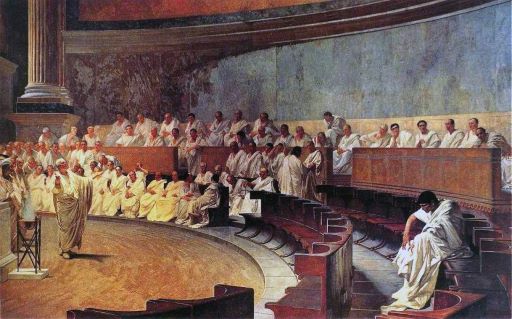
Jennifer Frey observes that “the whole concept of higher education rests upon the notion that we are made for more than a life of work…. A higher and truly liberal education helps us, at minimum, to think about who and what we are and what we sort of person we should want to become; for without some understanding of this, we are unable to live well: to think, choose, and act in a manner that exemplifies human flourishing.”I agree with this, of course. What’s astonishing is how many people disagree. On the one hand, we have those who denigrate liberal learning as impractical and hence a waste of time and resources, and on the other hand, we have those who caricature liberal learning as oppressive. It’s hard to decide which of these is missing the point harder, but clearly they both are missing the point. Perhaps coincidentally, the former misunderstanding is mostly common on the traditional right and the latter on the left. While one might expect the traditional right to embrace classics because tradition is to be venerated, there’s also an antipathy to the mind-expanding virtues of liberal learning, the inquisitiveness that characterizes its practitioners. And ultimately, there’s the waste-of-resources argument: sure, a little Aquinas will keep you on the straight and narrow, but whether it’s family money or taxpayer money, surely the whole point is “ROI.”But equally puzzling is the left’s assumption that to care about Aristotle or Thucydides is to engage in oppressive cultural hegemony - as if all the classical authors share the same view. Aristotle doesn’t even agree with Plato, to say nothing about dozens of other thinkers of antiquity, not only in Greece and Rome, but also in India and China. It’s not as though there’s this single thing called “Greek thought” or “Indian thought” – what we see instead is many different schools of thought, often in dialogue with each other. To learn about those conversations is the opposite of cultural hegemony, it’s the very essence of open-mindedness.Anika Prather emphasizes that the value of the classics is tied to our shared humanity. In other words, objecting to the classics because they’re parochial is as mistaken as one can get. Although we’re different individuals living in different times and places, we’re all human beings, so there are some things about humanity that transcend culture. I appreciated the metaphor of the watering hole – while the creatures in the jungle eat different things, they all drink water. Prather notes that “Black people were able to find refreshment at the same watering hole that the Founding Fathers” and others did, and by “drinking from this same water source, many were able to engage in a dialogue which gave space to be heard.” That seems to me to be exactly right: we can engage in trans-cultural dialogue precisely because there are some trans-cultural realties, starting with our shared humanity. She rightly characterizes this as joyful, as well as being something that promotes, rather than hinders, equality.Jennifer A. Frey
Liberal Learning and Dialectical Inquiry · Dec 20, 2022
In her response to Montás, I am pleased to see Dr. Prather make the connection between classical texts, wisdom, and self-knowledge in a way that emphasizes how the careful reading of such texts can draw us closer together in ways that markers of gender, class, or race, cannot. It is precisely because classical texts transcend the boundaries of time, place, and circumstance that so many of us who do not “see ourselves” in their authors according to such identifiable markers are nevertheless able to relate to their works so deeply. I see myself in the works of St. Augustine, Aristotle, and Aquinas, despite their culture-bound views about women as intellectually and morally inferior.While the emphasis on classical texts is critically important, a truly liberal education cannot and should not be reduced to the study of a canon. Liberal learning must be undertaken in the right spirit—with passionate love for wisdom as the common good of those who study together for its sake. The search for wisdom and self-knowledge will never go well as an isolated endeavor—community is necessarily its proper context. In addition to the proper objects of study, it requires dialectical exchange.In order to understand what dialectical exchange is, we can start with the nature of dialectical questions: they are questions that leave us free to take either side of a contradiction. It is the very nature of a dialectical question that it calls forth disagreement and exchange of arguments. If I ask my students what time it is, they may give different replies, but I’m just looking for the correct answer, not a discussion. But consider the dialectical question: Is time linear? This sort of question assumes that time might not be linear, that we need to consider the arguments on both sides if we are to truly understand our answer. A dialectical question is the sort where we do not assume we know the answer in advance, and that the contrary case will surely have merits we need to address. We need a dialectical exchange of argument and counter-argument if we are to make progress on dialectical questions taken up in classical texts. Dialectical exchange takes up dialectical questions in earnest. Dialectical exchange is a distinctive way of searching for the truth—by way of looking critically at arguments for both sides, with an openness to the veracity of either. We cannot do it well without knowing what constitutes good and bad thinking and argument generally, which are good habits of mind, but we also cannot do it well without certain habits of moral character. Communities of liberal learners only function well when each participant feels that their contributions are respected, heard, and understood. Therefore, dialectical exchange requires intellectual and moral virtues, among them: humility, civility, patience, generosity, and studiousness. If we are serious about liberal learning for its own sake—as we should be—we must be serious about virtue in the service of dialectical exchange as we approach classical texts. If we take this connection seriously, we will understand Montás’s plea for liberal learning outside the confines of disciplinary bounds more clearly and deeply.