Ethics-44
Ethical Writings I (On Moral Duties)
- Marcus Tullius Cicero(author)
- Andrew P. Peabody(translator)
Part of a collection of Cicero’s writings which includes On Old Age, On Friendship, Officius, and Scipio’s Dream.
Key Quotes
Passages from this text chosen by OLL editors.
- Presidents, Kings, Tyrants, & Despots“
... [L]et those who are to preside over the state obey two precepts of Plato, — one, that they so watch for the well-being of their fellow-citizens that they have reference to it in whatever they do, forgetting their own private interests; the other, that they care for the whole body politic, and not, while they watch over a portion of it, neglect other portions. For, as the guardianship of a minor, so the administration of the state is to be conducted for the benefit, not of those to whom it is intrusted, but of those who are intrusted to their care.
- Philosophy“
Every one ought to hold fast, not his faults, but his peculiarities, so as to retain more easily the becomingness (propriety) which is the subject of our inquiry. We ought, indeed, to act in such a way as shall be in no respect repugnant to our common human nature; yet, holding this sacred, let us follow our individual nature, so that, if there are other pursuits in themselves more important and excellent, we yet may measure our own pursuits by the standard of our own nature. For it is of no avail to resist nature, or to pursue anything which we cannot reach. ... Let us therefore bestow our diligence chiefly on those concerns for which we are the best fitted. But if at any time necessity shall have forced us to undertake things outside of our specialty, we must employ all possible care, thought, and diligence, that we may be able to dispose of them, if not becomingly, yet with the least degree of unbecomingness; nor ought we in that case to endeavor to attain capacities not our own, so much as to avoid mistake or failure.
About This Edition
Citation
Cicero De Officiis, translated with an Introduction and Notes by Andrew P. Peabody (Boston: Little, Brown, and Co., 1887).
Cicero, Marcus Tullius. On Moral Duties (De Officiis). translated by Andrew P. Peabody, Little, Brown, and Company, 1887. Online Library of Liberty, https://oll.libertyfund.org/titles/cicero-on-moral-duties-de-officiis.
Cicero, M. T. (1887). On Moral Duties (De Officiis). Little, Brown, and Company. https://oll.libertyfund.org/titles/cicero-on-moral-duties-de-officiis
@book{cicero1887officiis,
  author = {Marcus Tullius Cicero},
  title = {On Moral Duties (De Officiis)},
  publisher = {Little, Brown, and Company},
  address = {Boston},
  year = {1887},
  url = {https://oll.libertyfund.org/titles/cicero-on-moral-duties-de-officiis},
  note = {Online Library of Liberty}
}TY - BOOK AU - Cicero, Marcus Tullius A3 - Peabody, Andrew P. TI - On Moral Duties (De Officiis) PY - 1887 CY - Boston PB - Little, Brown, and Company UR - https://oll.libertyfund.org/titles/cicero-on-moral-duties-de-officiis DB - Online Library of Liberty ER -
Copyright
The text is in the public domain.

About the author
Marcus Tullius Cicero 106 BC–43 BC
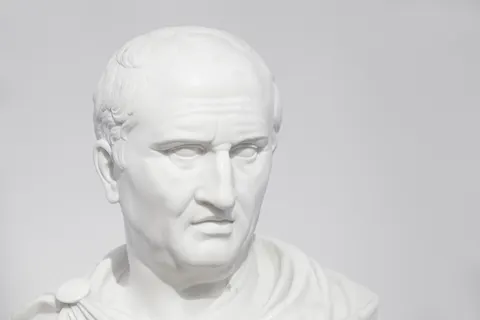
Marcus Tullius Cicero (106-43 BC) was a Roman lawyer and statesman who was active during the late Republic in resisting the rise of dictatorship. His polished style of writing Latin greatly influenced later generations.
Related People
Panaetius
Author
Panaetius was a Stoic philosopher whose teachings greatly influenced Cicero. On Moral Duties was written to emulate the style and structure of Panaetius’s On Duties.
Aristotle
Author
Cicero was greatly influenced by the philosophy and ethics of Aristotle.
Gaius Julius Caesar
Author
Cicero served as a consul under Julius Caesar. He strongly supported the old Republic and criticized Caesar’s authoritative politics. The assassination of Julius Caesar marked the end of the Republic
On Moral Duties was written to Cicero’s son, Cicero the Younger. The Younger studied in Athens and served as a consul and governor under Octavian.


Critical Responses
Works that answer or challenge this text.
 Book
Utilitarianism
John Stuart MillVisit site ↗Mill presents an opposing ethical theory to Aristotlian virtue - utilitarianism.
 Book
Groundwork of the Metaphysics of Morals
Immanuel KantVisit site ↗Kant proposes a moral system built on a categorical imperative instead of virtue.
Connected Readings
What to read next.
 Book
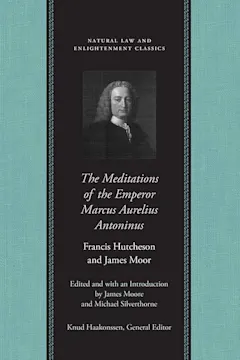
The Meditations of the Emperor Marcus Aurelius Antoninus (2008)
Marcus Aurelius AntoninusView title >Marcus Aurelius was known as the last of the five good Roman emperors. Meditations is his private journal where he reflected on life, virtue, and ruling from a stoic perspective.
 Book
The Nicomachean Ethics
AristotleView title >Aristotle’s Ethics lays out Aristotle’s virtue theory and his understanding of virtue, happiness, and the good life.
 Book
Cicero: The Life and Times of Rome’s Greatest Politician
Anthony EverittVisit site ↗In this engaging biography of Cicero, Everitt brings to life the cutthroat politics, the upheaval of the dying Roman Republic, and the courageous political career of Cicero.
 Book
The History of Rome by Titus Livius, in 6 vols.
Titus Livius (Livy)View title >This historical document tells the story of Rome - its founding, its kings, and the establishment of the Republic.
 Book
The Conquest of Gaul
Julius CaesarVisit site ↗Caesar recounts his conquests into Britain and his military exploits across Central Europe.
 Book
The Republic (1888 ed.)
PlatoView title >In this Socratic dialogue, Plato discusses the definition of justice.
More in Ethics
See all >The Nicomachean Ethics
AristotleThe Principles of Moral and Christian Philosophy. Vol. 2: Christian Philosophy
George TurnbullThe Principles of Moral and Christian Philosophy. Vol. 1
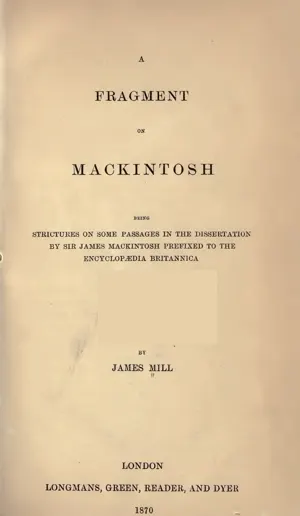
George TurnbullA Fragment on Mackintosh (1870)
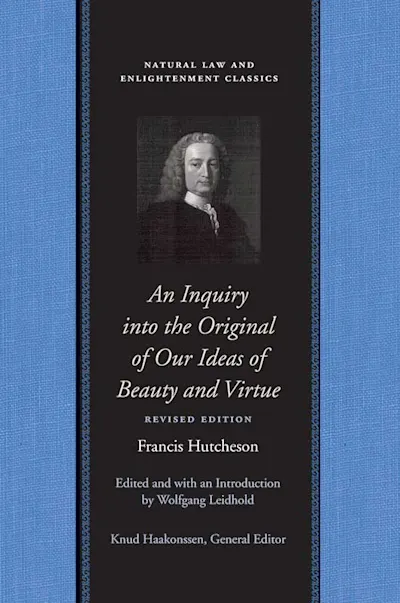
James MillAn Inquiry into the Original of Our Ideas of Beauty and Virtue (1726, 2004)
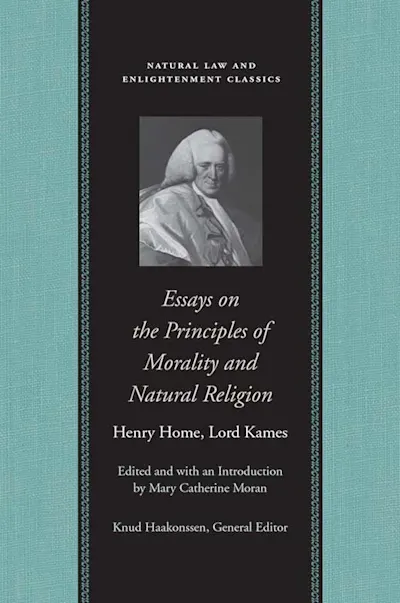
Francis HutchesonEssays on the Principles of Morality and Natural Religion
Henry Home, Lord KamesAn Inquiry into the Original of Our Ideas of Beauty and Virtue (old version)
Francis HutchesonThe Fable of the Bees or Private Vices, Publick Benefits, Vol. 2
Bernard MandevilleThe Fable of the Bees or Private Vices, Publick Benefits, Vol. 1
Bernard Mandeville