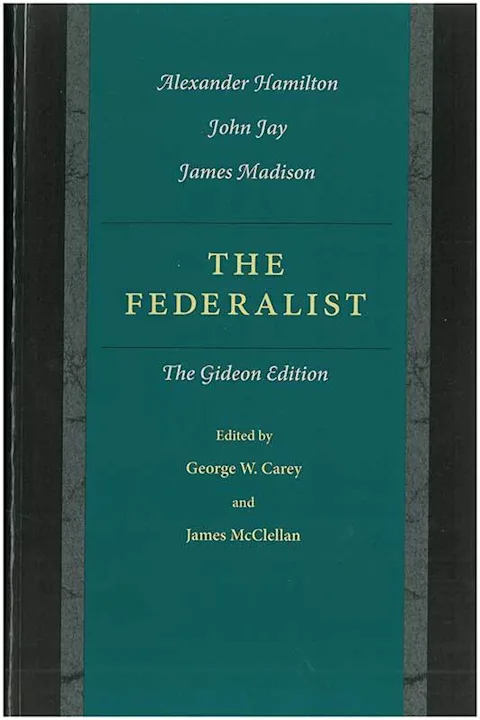
The Federalist (Gideon ed.)
- Alexander Hamilton(author)
- John Jay(author)
- James Madison(author)
- James McClellan(introduction)
- George W. Carey(introduction)
The Federalist, by Alexander Hamilton, James Madison, and John Jay, constitutes a text central to the American political tradition. Published in newspapers in 1787 and 1788 to explain and promote ratification of the proposed Constitution for the United States, which up to then were bound by the Articles of Confederation, The Federalist remains today of singular importance to students of liberty around the world.
Key Quotes
Passages from this text chosen by OLL editors.
- Politics & Liberty“
The internal effects of a mutable policy are still more calamitous. It poisons the blessings of liberty itself. It will be of little avail to the people, that the laws are made by men of their own choice, if the laws be so voluminous that they cannot be read, or so incoherent that they cannot be understood: if they be repealed or revised before they are promulg[at]ed, or undergo such incessant changes, that no man who knows what the law is to-day, can guess what it will be to-morrow.
- Politics & Liberty“
But the great security against a gradual concentration of the several powers in the same department, consists in giving to those who administer each department, the necessary constitutional means, and personal motives, to resist encroachments of the others... Ambition must be made to counteract ambition. The interest of the man, must be connected with the constitutional rights of the place. It may be a reflection on human nature, that such devices should be necessary to control the abuses of government.
About This Edition
Citation
Hamilton, Alexander. The Federalist (The Gideon Edition), Edited with an Introduction, Reader’s Guide, Constitutional Cross-reference, Index, and Glossary by George W. Carey and James McClellan (Indianapolis: Liberty Fund, 2001).
Hamilton, Alexander, et al. The Federalist (Gideon ed.). Liberty Fund, 2001. Online Library of Liberty, https://oll.libertyfund.org/titles/jay-the-federalist-gideon-ed.
Hamilton, A., Jay, J., & Madison, J. (2001). The Federalist (Gideon ed.). Liberty Fund. https://oll.libertyfund.org/titles/jay-the-federalist-gideon-ed
@book{hamilton2001ed,
  author = {Alexander Hamilton and John Jay and James Madison},
  title = {The Federalist (Gideon ed.)},
  publisher = {Liberty Fund},
  address = {Indianapolis},
  year = {2001},
  url = {https://oll.libertyfund.org/titles/jay-the-federalist-gideon-ed},
  note = {Online Library of Liberty}
}TY - BOOK AU - Hamilton, Alexander AU - Jay, John AU - Madison, James TI - The Federalist (Gideon ed.) PY - 2001 CY - Indianapolis PB - Liberty Fund UR - https://oll.libertyfund.org/titles/jay-the-federalist-gideon-ed DB - Online Library of Liberty ER -
Copyright
The copyright to this edition, in both print and electronic forms, is held by Liberty Fund, Inc.

About the author
Alexander Hamilton 1757–1804
Alexander Hamilton (1755-1804) was secretary and aide-de-camp to Washington in 1777-81, a member of the Continental Congress in 1782-83 and 1787-88, a representative from New York to the Annapolis Convention in 1786 and to the Constitutional Convention in 1787, first U. S. secretary of the treasury in 1789-95, and inspector general of the army, with the rank of major general, from 1798 to 1800.
Related People
James Wilson
Author
He was was one of six men to sign both the Declaration of Independence and the Constitution. His influence was second only to that of James Madison.
Melanchthon Smith
Author
He argued against ratification of the Constitution. He was among the most articulate of the Anti-Federalists and a chief opponent of ratification in New York.
Alexander Hamilton
Author
He was the most prolific of the three authors of The Federalist Papers. He is also considered among the most brilliant of the founding generation.
Fisher Ames
Author
He was considered to be among the greatest Federalist statesmen and orators of his day. His ideas shed light on how early Federalists understood the Constitution.
Gouverneur Morris
Author
He was an outspoken member of the Constitutional Convention in Philadelphia and a leading advocate for a stronger national government.
St. George Tucker
Author
He was a professor of law at the College of William and Mary, St. George Tucker in 1803 published View of the Constitution and one of the first commentators on the nature and operation of the Constitution.


Critical Responses
Works that answer or challenge this text.
 Book
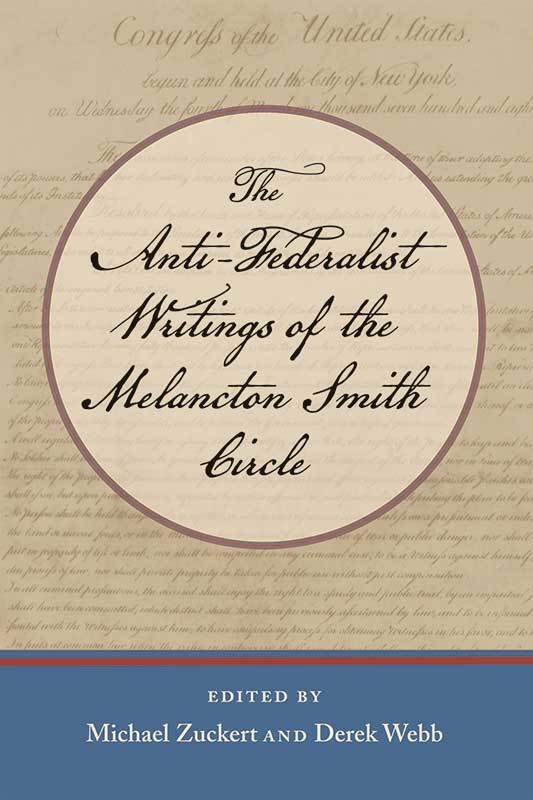
The Anti-Federalist Writings of the Melancton Smith Circle
Melancton SmithVisit site ↗The Anti-Federalist Writings of the Melancton Smith Circle is a collection of Anti-Federalist writings closely connected to Melancton Smith and his associates in New York, who wrote extensive and penetrating critiques of the proposed constitution. Their writings often contrasted sharply with the arguments of Publius.
 Book
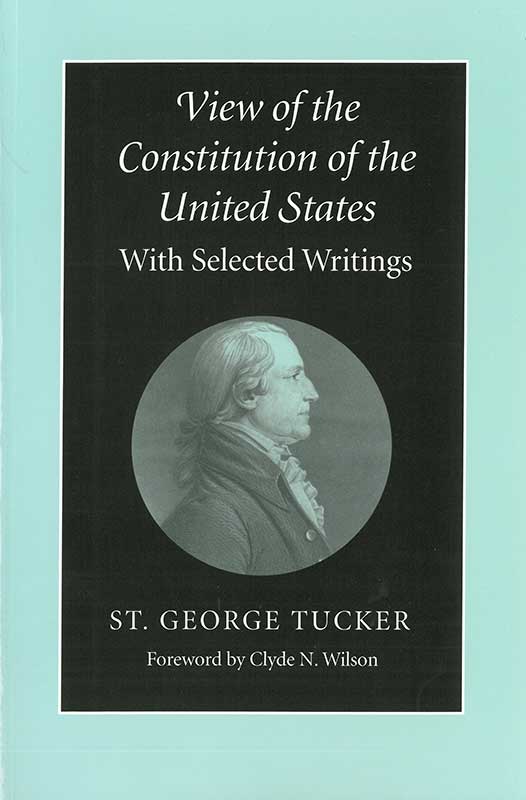
View of the Constitution of the United States with Selected Writings
St. George TuckerVisit site ↗View of the Constitution of the United States with Selected Writings of St. George Tucker presents one of the first critical appraisals of the Constitution to be written after ratification. Tucker’s views were often more in line with the decentralized and limited forms of federalism favored by Anti-Federalist writers.
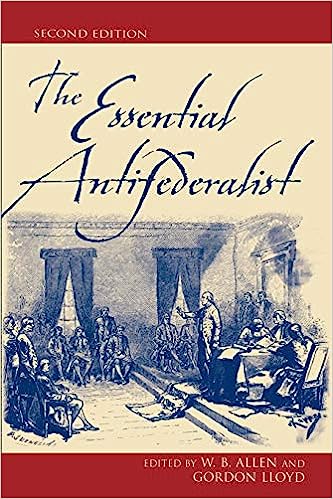 Book
The Essential Antifederalist: Second Edition
William B. Allen and Gordon Lloyd, editorsVisit site ↗The Essential Antifederalist Second Edition, presents the main themes of the principal critics of the Constitution. It organizes the oppositional writings thematically which makes possible a ready comparison with the writings of Publius.
Connected Readings
What to read next.
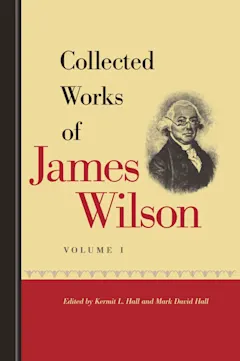 Book
Collected Works of James Wilson, 2 vols.
James WilsonView title >Besides Wilson’s famous Lectures on Law, this edition includes noteworthy speeches and essays with his opinions in several Supreme Court Cases that further elucidate his thoughts on the Constitution.
- Book
The Anti-Federalist Writings of the Melancton Smith Circle
Melancton SmithVisit site ↗This book of Anti-Federalist writings presents a collection of texts critical of the Constitution as it was originally proposed. The book makes avaiable in a single volume essays that are commensurate in political brilliance and significance with The Federalist.
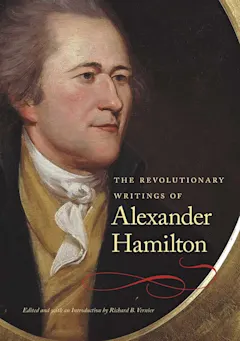 Book
The Revolutionary Writings of Alexander Hamilton
Alexander HamiltonView title >In this volume, the essays that helped make Hamilton’s reputation as a writer and thinker prior to the ratification of the Constitution are collected. Here one will discover his earliest thoughts is support of the American Revolution and his initial ideas respecting the need for a stronger national government.
- Book
Works of Fisher Ames
Fisher AmesVisit site ↗This collection brings together the speeches and letters of one of the most influential Federalists of the Founding Era. They reveal the core sets of ideas that distinguished the Federalists from their Jeffersonian Republican opponents.
- Book
To Secure the Blessings of Liberty: Selected Writings of Gouverneur Morris
Gouverneur MorrisVisit site ↗This collection of Morris’ writings includes public letters, documents, and speeches presented in chronological order. The collection sheds light on Morris ideas and his influence on the writing and spirit of the Constitution.
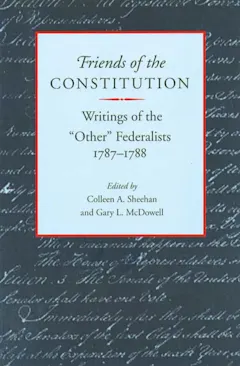 Book
Friends of the Constitution: Writings of the “Other” Federalists, 1787-1788
Colleen A. SheehanView title >There were many writers other than John Jay, James Madison, and Alexander Hamilton who, in 1787 and 1788, argued for the Constitution’s ratification. In a collection central to our understanding of the American founding, Friends of the Constitution brings together forty-nine of the most important of these “other” Federalists’ writings.
 Book
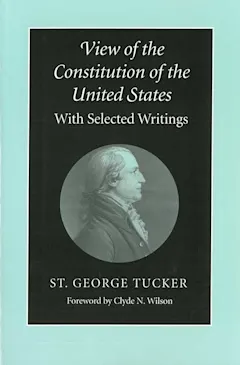
View of the Constitution of the United States with Selected Writings
St. George TuckerView title >This book was the first extended commentary on the US Constitution. It was originally part of Tucker’s “Americanized” or “republicanized” edition of the multivolume Commentaries on the Laws of England by Sir William Blackstone.
- Book
The Essential Antifederalist: Second Edition
William B. Allen and Gordon Lloyd, editorsVisit site ↗This Revised Edition of The Essential Antifederalist continues the original, important contribution to the history and thought of the founding. Thematically organized, this work helps in making direct comparisons with the arguments presented in the Federalist essays.
More in United States
See all >Collected Works of James Wilson, vol. 2
James WilsonCollected Works of James Wilson, vol. 1
James WilsonThe Records of the Federal Convention of 1787, vol. 3
Max FarrandThe Records of the Federal Convention of 1787, vol. 2
Max FarrandThe Records of the Federal Convention of 1787, vol. 1
Max FarrandFriends of the Constitution: Writings of the “Other” Federalists, 1787-1788
Colleen A. SheehanIn Defense of the Constitution
George W. CareyColonial Origins of the American Constitution: A Documentary History
Donald S. LutzThe Federal and State Constitutions, 7 vols.
Francis Newton Thorpe