The Thirteen Principal Upanishads
- Misc (Upanishads)(author)
- Robert Ernest Hume(translator)
These are commentaries on the Hindu sacred texts known as the Vedas.
About This Edition
Citation
(Upanishads), Misc. The Thirteen Principal Upanishads, translated from the Sanskrit with an outline of the philosophy of the Upanishads and an annotated bibliography, by Robert Ernest Hume (Oxford University Press, 1921).
(Upanishads), Misc. The Thirteen Principal Upanishads. translated by Robert Ernest Hume, Oxford University Press, 1921. Online Library of Liberty, https://oll.libertyfund.org/titles/hume-the-thirteen-principal-upanishads.
(Upanishads), M. (1921). The Thirteen Principal Upanishads. Oxford University Press. https://oll.libertyfund.org/titles/hume-the-thirteen-principal-upanishads
@book{upanishads1921upanishads,
  author = {Misc (Upanishads)},
  title = {The Thirteen Principal Upanishads},
  publisher = {Oxford University Press},
  address = {Oxford},
  year = {1921},
  url = {https://oll.libertyfund.org/titles/hume-the-thirteen-principal-upanishads},
  note = {Online Library of Liberty}
}TY - BOOK AU - (Upanishads), Misc A3 - Hume, Robert Ernest TI - The Thirteen Principal Upanishads PY - 1921 CY - Oxford PB - Oxford University Press UR - https://oll.libertyfund.org/titles/hume-the-thirteen-principal-upanishads DB - Online Library of Liberty ER -
Copyright
The text is in the public domain.

About the author
Misc (Upanishads)
The Upanishads, the commentaries in verse of the great teachers of Hinduism on the sacred texts of the Vedas, are central to the Hindu religious canon. The name Upanishad roughly translates to “sitting at the feet of the teacher.” The names of 108 of the teachers are known. The first were active around 1000 B.C., and the largest number sometime around 600 B.C.
Related People
Buddha
Author
The founder of Buddhism. His teachings and philosophy can be seen as revisions, sometimes significant, of the principles in the Upanishads.
Yajnavalkya
Author
ne of the later contributors to the Upanishads. Featured in the Minor Upanishads.
Aitareya Upanishad
Author
An important figure in the composition of the Upanishads.


Critical Responses
Works that answer or challenge this text.
 Journal Article
The Relation Between Buddhism and the Upanishads
A. K. SharmaVisit site ↗While the article doesn’t explicitly list “the thirteen principles of the Upanishads” as such, it implicates many of the core Upanishadic doctrines and offers a critique (or at least a comparative commentary) of them via the Buddhist vantage.
Connected Readings
What to read next.
 Book
Thirty Minor Upanishads
K Narayanaswami AiyarView title >The Minor, or Sumanya, Upanishads are so called because they cover more general topics than the Major, or Mukhya, Upanishads, and were composed later.
 Book
The Ramayana and the Mahabharata
MahabharataView title >Together, these are the two great epics of classical Indian history and mythology.
 Book
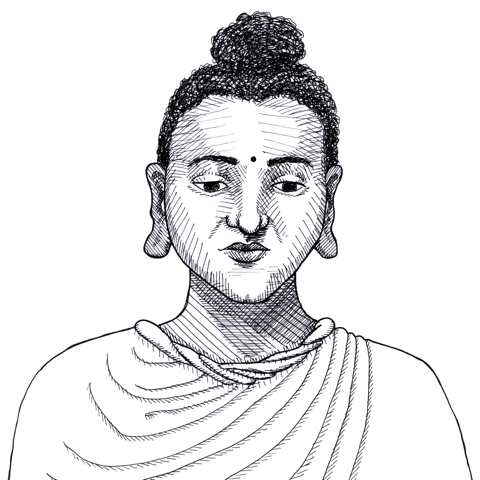
The Gospel of Buddha
BuddhaView title >Written in 1894 by the German-American philosopher Paul Carus, this work reformulates and explicates various Buddhist beliefs and teachings in the style of the New Testament.
 Book
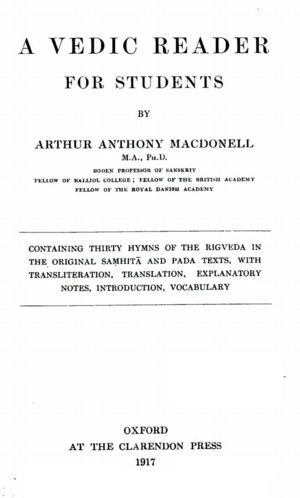
A Vedic Reader for Students
Arthur Anthony MacdonellView title >A collection of hymns from the Rigveda, the oldest Vedic text.
 Website
Wisdom of the Upanishads
View title >This article offers a celebratory and interpretive overview of the Upanishads, presenting how their teachings can be applied to modern life.
More in Religions. Mythology. Rationalism
See all >History of the Rise and Influence of the Spirit of Rationalism in Europe, vol. 1
William Edward Hartpole LeckyOn Religion Considered in Its Source, Its Forms, and Its Developments
Benjamin ConstantThe Bhagvat-Geeta, or Dialogues of Kreeshna and Arjoon
Charles WilkinsThe Ramayana and the Mahabharata
MahabharataAn Elegant and Learned Discourse of the Light of Nature
Nathaniel CulverwellThe Alchemy of Happiness
Al GhazaliThe Natural History of Religion
David HumeThe Sacred Books of China. The Texts of Confucianism, Part IV. The Li Ki, XI-XLVI
ConfuciusHistory of the Rise and Influence of the Spirit of Rationalism in Europe, 2 vols.
William Edward Hartpole Lecky