Law-320
Constitution of Athens
- Aristotle(author)
- Thomas J. Dymes(translator)
Probably written by a pupil of Aristotle, it is the first history of Athens as a model democracy, how it came into existence, and how it operated in practice.
About This Edition
Citation
Aristotle’s Constitution of Athens, trans. Thomas J. Dymes (London: Seeley and Co., 1891).
Aristotle. Constitution of Athens. translated by Thomas J. Dymes, Seeley and Company, 1891. Online Library of Liberty, https://oll.libertyfund.org/titles/dymes-constitution-of-athens.
Aristotle. (1891). Constitution of Athens. Seeley and Company. https://oll.libertyfund.org/titles/dymes-constitution-of-athens
@book{aristotle1891athens,
  author = {Aristotle},
  title = {Constitution of Athens},
  publisher = {Seeley and Company},
  address = {London},
  year = {1891},
  url = {https://oll.libertyfund.org/titles/dymes-constitution-of-athens},
  note = {Online Library of Liberty}
}TY - BOOK AU - Aristotle A3 - Dymes, Thomas J. TI - Constitution of Athens PY - 1891 CY - London PB - Seeley and Company UR - https://oll.libertyfund.org/titles/dymes-constitution-of-athens DB - Online Library of Liberty ER -
Copyright
The text is in the public domain.

About the author
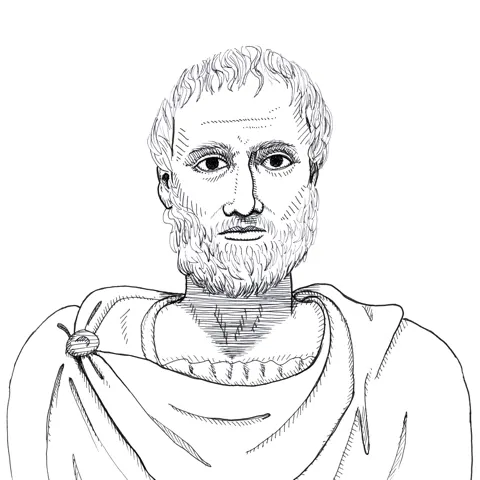
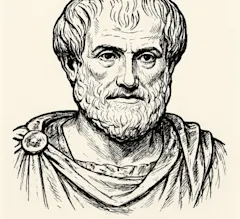
Aristotle 384 BCE–322 BCE
Aristotle was an ancient Greek philosopher who set up a rival academy, The Lyceum, to challenge Plato’s Academy. Aristotle wrote influential works in a range of disciplines - politics, physics, ethics, economics - and had a profound impact on Western thought.
Related People
Plato
Author
Plato was Aristotle’s tutor and colleague at the Academy in Athens. While many of Plato’s works survived the centuries, Aristotle’s contributions have arguably been more influential, particularly when it comes to science and logical reasoning. Plato’s philosophy is abstract and utopian, whereas Aristotle’s is empirical, practical, and commonsensical.
St. Thomas Aquinas
Author
Aquinas was perhaps the most influential thinker of the medieval period. He wrote several commentaries and interpretations of Aristotle’s works. One of Aristotle’s ideas that particularly influenced Thomas was that knowledge is not innate but is gained from the reports of the senses and from logical inference from self-evident truths.
Albertus Magnus
Author
Magnus was known for his work in natural philosophy, theology, and metaphysics. He was a teacher of Aquinas who was heavily influenced by Aristotle. He is known for his commentaries on Aristotle’s works, which helped to spread Aristotelianism throughout Europe.
Avicenna
Author
Avicenna was influenced by Aristotelian philosophy. His texts played a key role in the Arabic to Latin translation movement that brought Aristotle’s philosophy back into Western thought. In the Islamic world, he is called “The Preeminent Master” after Aristotle, whom Avicenna called “The First Teacher.”
Alexander the Great
Author
Alexander the Great was Aristotle’s most famous student. Aristotle was invited by Philip II to become the tutor to his son Alexander in 343 BC. Aristotle was assigned as the head of the royal academy of Macedon and encouraged Alexander toward eastern conquest.


Critical Responses
Works that answer or challenge this text.
- Video
DEMOCRACY: Ancient & Modern
Ryan ChapmanVisit site ↗In this video Ryan gives an in-depth explanation of democracy in ancient Athens and the United States of America. He is using the greatest sources and explores the differences, origins of these democracies, and how they are or not democratic, giving a conclusion at the end.
- Article
Critics and Critiques of Athenian Democracy
Paul CartledgeVisit site ↗The article discusses the foundation of democratic society by the Greek empire and the development of Athenian democracy. It also talks about the invention of political theory by the Greeks and how they applied critical theory to politics.
Connected Readings
What to read next.
- Video
Constitution of the Athenians by Aristotle
British LibraryVisit site ↗See a copy of the original writings of Aristotle or one of his students preserved on two leaves of a papyrus codex discovered at Oxyrhynchus, Egypt, in 1879.
 Book
The Republic (1888 ed.)
PlatoView title >Plato’s best-known and most influential work is a Socratic dialogue where Plato explores the topic of justice by describing various actual and hypothetical approaches to government including his utopian city-state that is governed by a philosopher-king.
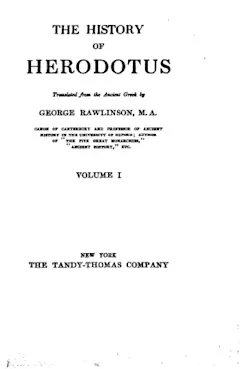 Book
The History, 4 vols.
HerodotusView title >The Histories is a collection of stories that describes the expansion of the Persian Empire and the Greco-Persian War in the 5th century BCE. It is considered the founding work of history in Western literature and the first prose masterpiece in European literature.
 Book
The Politics 2 vols.
AristotleView title >The Politics examines the nature and purpose of political communities and the best forms of government. Criticizing Plato’s Republic Aristotle proposes his own theory of how a city should be organized to promote the common good and individual happiness.
- The Reading Room
In The Reading Room with Aristotle
Aeon J. SkobleView title >This essay highlights the importance of reading and understanding the ancient philosophy and thinking, especially Aristotle’s thought process. They’re a short yet fun and interesting way to find out more about ancient philosophy.
- Liberty Matters
Why Read the Ancients Today?
Roosevelt Montás, Anika Prather, Aeon J. Skoble, and Jennifer A. FreyView title >This online discussion highlights the importance of reading and understanding the ancient philosophy and thinking, especially Aristotle’s thought process.
More in Law
See all >Introduction to the Study of the Law of the Constitution (LF ed.)
Albert Venn DiceyFreedom and the Law (1961 ed.)
Bruno LeoniFreedom and the Law (LF ed.)
Bruno LeoniThe Ideal Element in Law
Roscoe PoundInstitutes of Divine Jurisprudence. With Selections from Foundations of the Law of Nature and Nations
Christian ThomasiusThe Concise Magna Carta: The 63 Clauses in Latin, English, and with Commentary
David M. HartTwo Books of the Elements of Universal Jurisprudence
Samuel von PufendorfThe Writings of Gershom Carmichael
Gershom CarmichaelJustice and Its Surroundings
Anthony de Jasay