Political Theory-320
The Politics 2 vols.
- Aristotle(author)
- Benjamin Jowett(translator)
A 2 volume set of Benjamin Jowett’s translation of one of Aristotle’s most influential writings. The editor provides detailed marginal annotations and lengthy introductions to each book.
Volumes in this Set
About This Edition
Citation
The Politics of Aristotle, trans. into English with introduction, marginal analysis, essays, notes and indices by B. Jowett. Oxford, Clarendon Press, 1885. 2 vols.
Aristotle. The Politics 2 vols.. translated by Benjamin Jowett, Clarendon Press, 1885. Online Library of Liberty, https://oll.libertyfund.org/titles/aristotle-the-politics-2-vols.
Aristotle. (1885). The Politics 2 vols.. Clarendon Press. https://oll.libertyfund.org/titles/aristotle-the-politics-2-vols
@book{aristotle1885vols,
  author = {Aristotle},
  title = {The Politics 2 vols.},
  publisher = {Clarendon Press},
  address = {Oxford},
  year = {1885},
  url = {https://oll.libertyfund.org/titles/aristotle-the-politics-2-vols},
  note = {Online Library of Liberty}
}TY - BOOK AU - Aristotle A3 - Jowett, Benjamin TI - The Politics 2 vols. PY - 1885 CY - Oxford PB - Clarendon Press UR - https://oll.libertyfund.org/titles/aristotle-the-politics-2-vols DB - Online Library of Liberty ER -
Copyright
The text is in the public domain.

About the author
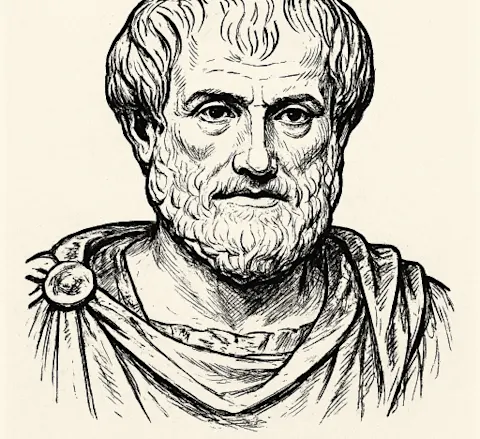
Aristotle 384 BCE–322 BCE
Aristotle was an ancient Greek philosopher who set up a rival academy, The Lyceum, to challenge Plato’s Academy. Aristotle wrote influential works in a range of disciplines - politics, physics, ethics, economics - and had a profound impact on Western thought.
Related People
Plato
Author
Plato was Aristotle’s teacher and greatly influenced his philosophical foundations. Much of Aristotle’s work deals heavily (though often elliptically) with Plato’s thought.
Boethius
Author
Boethius was a key figure in the preservation and transmission of Aristotle’s works throughout the medieval world and beyond via his translations and commentaries. He bridged classical philosophy and Christian thought by integrating Aristotle’s ideas with his theology.
Averroes (Ibn Rushd)
Author
Averroes extensively commented on Aristotle’s works, earning him the title "The Commentator." He helped revive and interpret Aristotle’s philosophy, influencing both Islamic and Western medieval thought.
St. Thomas Aquinas
Author
Thomas Aquinas deeply integrated Aristotle’s philosophy with Christian theology, using Aristotelian logic and metaphysics to explain and support religious doctrine. His work helped establish Aristotle as a foundational thinker in medieval scholasticism.
Francisco Suárez
Author
Francisco Suárez built upon Aristotle’s metaphysics and natural philosophy while critically engaging with scholastic traditions. He refined and adapted Aristotelian concepts to address theological and philosophical issues of the late Renaissance.
Jacques Maritain
Author
Jacques Maritain drew extensively on Aristotle’s philosophy, especially his ethics and politics to develop a Christian humanist vision grounded in natural law.


Critical Responses
Works that answer or challenge this text.
 Book
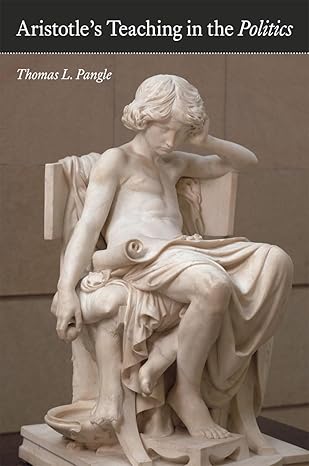
Aristotle's Teaching in the "Politics"
Thomas L. PangleVisit site ↗Pangle argues that Politics was structured as a pedagogical dialogue—Aristotle’s teaching tool—revealing rhetorical layers that explain internal tensions in the text and inform deeper interpretation.
 Book
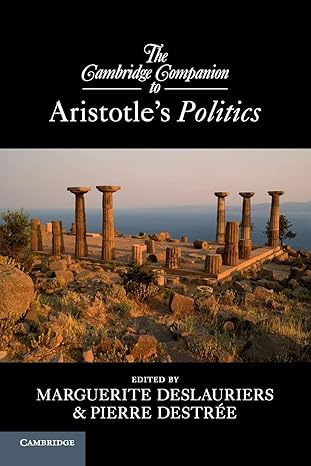
The Cambridge Companion to Aristotle's Politics (Cambridge Companions to Philosophy)
Marguerite Deslauriers (Editor), Pierre Destrée (Editor)Visit site ↗The Cambridge Companion to Aristotle’s Politics provides modern scholarly analysis and interpretation of the themes, context, and impact of Aristotle’s Politics. It deepens understanding of Aristotle’s political thought by examining its historical background, key concepts, and relevance today.
Connected Readings
What to read next.
 Book
The Nicomachean Ethics
AristotleView title >The Nicomachean Ethics explores the nature of virtue and the good life for individuals, while the Politics extends this inquiry to the organization communities and states.
 Book
The “Summa Theologica” of St. Thomas Aquinas. Part I. 10 vols.
St. Thomas AquinasView title >Summa Theologica integrates Aristotle’s political thought into a Christian framework, choosing to emphasize the role of divine law in governance.
 Book
The Republic (1888 ed.)
PlatoView title >Aristotle’s Politics can be read in significant ways as a response to his teacher Plato’s Republic, the latter’s chief political work.
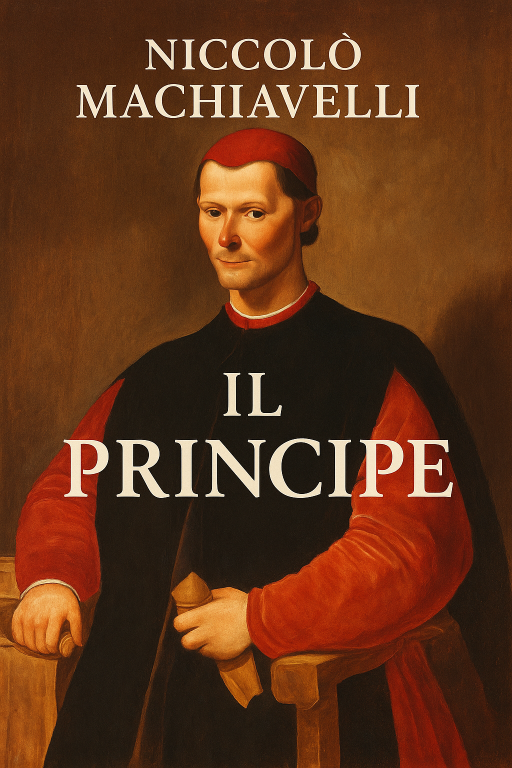 Book
Il Principe
Niccolo MachiavelliView title >Machiavelli’s The Prince draws on Aristotle’s Politics by examining power and statecraft, but takes a pragmatic view on the role of the sovereign, contrasted with Aristotle’s emphasis on virtue and the common good.
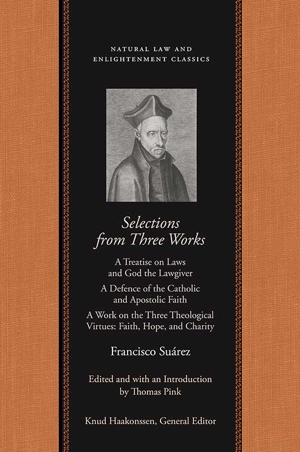 Book
Selections from Three Works
Francisco SuárezView title >In A Treatise on Laws and God the Lawgiver, Francisco Suárez builds on Aristotle’s Politics by exploring the nature and purpose of law within a rational political community. He incorporates Aristotelian thought into a more theologically grounded legal philosophy.
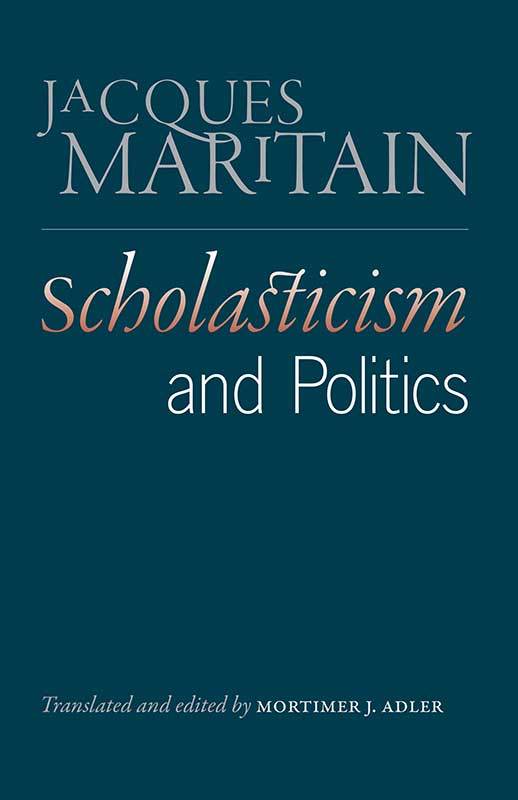 Book
Scholasticism and Politics (1940, 2011)
Jacques MaritainView title >Scholasticism and Politics draws on Aristotle’s Politics to argue for a political order rooted in natural law and human dignity. He integrates Aristotelian principles with Christian philosophy to advocate for a just, pluralistic society.
More in Political Theory
See all >The Political Writings of Jean Jacques Rousseau vol. 1
Jean-Jacques RousseauThe Writings of Thomas Paine, Vol. I (1774-1779)
Thomas PaineDissertations on Early Law and Custom
Sir Henry Sumner MaineAncient Law
Sir Henry Sumner MaineThe Political Writings of Jean Jacques Rousseau, 2 vols.
Jean-Jacques RousseauLeviathan (1909 ed)
Thomas HobbesPatriarcha, or the Natural Power of Kings
Sir Robert FilmerThe Man versus the State (1885 ed.)
Herbert SpencerThe Man versus the State, with Six Essays on Government, Society and Freedom (LF ed.)
Herbert Spencer